Concur with what @jimmysong said. In fact, @ElastosInfo and @Be_Layer2 strive to build The New Bretton Woods Sustem based on #btc which ultimately allows everyone to “Be Your Own Bank”.
Bitcoin developer and advocate @jimmysong pulled no punches, criticizing the presence of TradFi players like BlackRock and a focus on BTC and ETH ETFs:
"I hate that this is what the Bitcoin conferences are talking about - banking, ETFs, BlackRock."
Computing infrastructure projects of particular interest to the P2P Foundation:
https://t.co/Thp1eWgqf9
Society Protocol: universal accounting and value infrastructure, based on permanently shareable Synchronized States.
Holochain, truly distributed P2P infrastructure for bottom-up self-organizing without world computer infrastructure; includes HoloRea, universal 3-dimensional supply chain software based on Open Value Accounting
Reticulum, as the post-internet infrastructure for the dark forest internet phase (protection against universal surveillance)
https://t.co/wQcrBfE1Yb: the operating system for the internet
https://t.co/ANemAk6dDK: universally distributed compute infrastructure
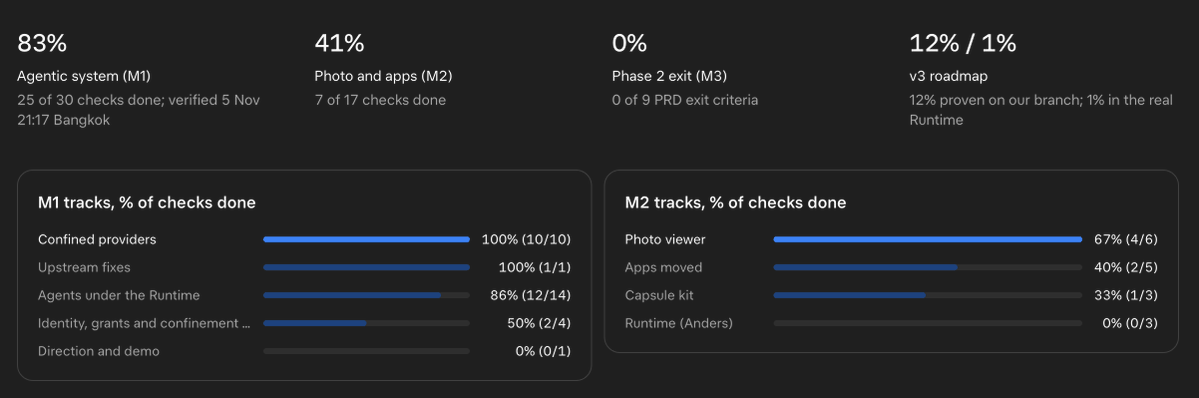
Some big Agentic upgrades (M1) being worked on atm for ElastOS, having both local AI harness and computer opens up lots of possibilies, similar to Grok Bot but all local.
Hey Michel! Thanks :) Here's what we're building, starting with the why.
The internet never got an operating system. Your laptop has one, and it gives you a home for your files and apps that you control. The internet only connects computers, so the big platforms filled that gap and became the internet's operating system by default.
That's why your photos, playlists, contacts, chats and now your AI sit on their computers, under their rules. They can change the price, change the rules, lock your account or shut down, and your stuff goes with them. We rent our digital lives.
ElastOS is an open attempt at that missing layer. It's software on your own computer, not a hosted service. You install ElastOS, sign in with a passkey, and Home opens, a desktop in your browser where your apps, files and AI model run on your own machine (Mac or Linux). The difference is it's yours, not theirs.
Behind Home, the Runtime works like a key desk: before an app acts, it checks the app's key. You add people by their DID, a signed ID you own, not a company login, and share files with them. No platform landlord in the middle.
That's the first layer, and your Home already reaches other Homes over Carrier, Elastos's own network, by identity rather than server. The bigger aim is the full stack Elastos has worked toward for years: identity and rights anchored on a public blockchain instead of a company's database, and the same rules covering your data, your money and the rights to what you make. One sovereign computing environment that you own, end to end.
At the base of Elastos is its own blockchain, backed by Bitcoin merged mining: Bitcoin miners can mine it with the same work they already do, the idea Satoshi described for BitDNS in 2010. Its coin is ELA, and it's governed by an elected community council, the Elastos DAO (formerly Cyber Republic), not a company.
The design comes from Rong Chen (@chen2rong2): "the highest design principle of an operating system should be 'non-interference' (Wu Wei)." The system stays out of your business instead of being the business.
The aim is one narrow key per app that you can take back, nothing with power by default, and apps named by their content, not by the server they sit on.
v2.0.0, the first stable release, just shipped, MIT open source: https://t.co/tZpXEd1nb8
Introducing ElastOS V2, built from the ground up for the Elastos World Computer.
A new Rust Runtime brings identity, local AI, storage, communication and blockchain access into one system, with permissions controlled by you.
Elastos is fully back and aligned on it's 2017 internet OS mission. This is sovereign, local-first computing in a new internet layer, and the home for the World Computer!
I really hope everyone can not just see that we officially now have an ElastOS computer, but where this is also headed, check out the new website too: https://t.co/DuY3tvbZZi
Thankyou to all those involved, let's keep building. ethereum:0xe6fd75ff38adca4b97fbcd938c86b98772431867
The Elastos World Computer is built on a four-dimensional trustworthy computing model, organized from top to bottom as follows:
1. AppCapsules (Apps & Agents),
2. WebSpaces (Data & Networking),
3. PC2 Hosts (Users & Computes),
4. Blockchains (Time, Money & Consensus).
The first version is scheduled for release on Monday, November 1, 2026. Like the earliest release of the World Wide Web, it is not presented as complete—many areas still require refinement and improvement.
In principle, this four-dimensional model is designed to raise the bar for tamper resistance and reliability across the Internet.
It also enables apps to function as limited-edition digital goods, helping make a genuine peer-to-peer cyber economy possible.
Human civilization began through peer-to-peer exchange. We believe the emerging AI agents economy should similarly empower individuals rather than concentrate power in the hands of a few global entities.
On your laptop, nothing touches your files unless you say so, your operating system is the referee. Online, every app takes what it wants, and more of them get hacked every week.
The internet never got a referee that works for you. ElastOS is building the internet OS, thE Last OS. AI agents make it urgent.
The ElastOS Browser runs every website inside its own tiny virtual machine on your computer.
You see a live stream of the page. Your clicks go in; trackers, downloads and site code stay in the box. No direct internet, no access to your home network. Your logins belong to your Home. Early, a bit slow, very private.
Video repost below shows how the runtime creates a clear layer boundary to protect you.
Creators must become asset holders! We must turn our digital value into digital property, we can’t be tenants in the new age forming.
If you are a creator and want to test our new system before release please reach out, if you know creators and wish to help onboard you can earn 5% trading fees in USDC + build up a portfolio of on-chain royalties, please also reach out.
This mission is very important. Onchain data vending machines anyone can issue and control. Immediate settlement to tradable royalty holders. Direct creator buyer relationships. Digital participation!
Starting with image, audio, video and ebook markets later this month - games and software will follow. Learn more 👇
In the traditional thin-client / fat-cloud model of the older Web, computation takes place on the cloud operator’s servers—and nowhere else.
In practice, three parties generally shape business transactions: consumer, producer, and intermediary. Online, these correspond roughly to the user, the app vendor, and the platform operator.
We can now identify where computation might occur: in the consumer’s WebSpace, such as localhost://; in the vendor’s WebSpace, such as Nintendo•com://; or in the intermediary’s WebSpace, such as Netflix•com://.
We prefer WebSpace to familiar terms such as PC, machine, server, or website because modern computation may be virtualized inside WebAssembly sandboxes and may span hardware across the mobile–edge–cloud continuum.
The core point is that applications should run inside the data owner’s WebSpace. That principle must be clear to all parties, and it is secured by the ElastOS Internet OS.
To achieve self-sovereign data ownership, running code must validate access rights independently of claims made by other parties.
To ease the burden on creators, content is wrapped in a trusted Capsule Runtime of the creator’s choice, akin to plastic packaging on supermarket goods. We therefore label digital goods DigitCapsules rather than applications.
To ensure longevity, DigitCapsules must avoid third-party software dependencies, including reliance on the brand or version of an underlying hardware operating system.
This observation departs from the standard teaching that an operating system exists to facilitate application execution.
ElastOS enables virtual-machine operations such as creating WebAssembly sandboxes and linking them peer-to-peer across the Internet. Virtual machines run capsules; capsules unwrap applications that render content.
ElastOS is a fully sovereign operating system coming to market. Strip the jargon and a computer does three things: it stores stuff, it does the thinking, and it talks to other computers.
Forty years ago, all three happened on hardware you owned. Today storage is in someone's cloud, computing runs in someone's datacenter, and every message routes through someone in the middle. You don't own a computer anymore. You own a window into someone else's.
That was fine when the internet was for browsing. It breaks now that your money, identity, work, and soon your AI live there. The architecture is unfinished, and finishing it is the next step the internet must take. That's what ElastOS is, powered by ELA.
EIP-8141 is huge for both ElastOS and Elacity.
Native account abstraction means users can pay directly in stablecoins, without holding ETH or relying on costly relayers. If something costs $5 USDC, you just pay gas too in USDC. Much cleaner for users, businesses and card settlement.
Protocol-level atomic transactions let us combine approve, mint, list and all kinds of previously silo'd actions into one click. That is powerful for creator onboarding, AI markets and more advanced DeFi.
The biggest piece is post-quantum account upgrades without moving funds. We’re already building quantum-secure dKMS key delivery system for decrypting off-chain assets tied to Ethereum-validated rights, so quantum-secure EVMs strengthens the whole stack beneath.
Ethereum and its L2s become easier, safer and less dependent on third parties, while privacy, sovereign compute and data markets sit above it in our Soverign OS. The user enjoys whilst the protocol does the work.
Using ElastOS toolsets we've been built a completely quantum resistant peer-to-peer chat app. Fully private and peer to peer.
Encrypted DMs and groups, with files, photos, reactions and search. Video and voice ride QUIC streams straight between devices, encrypted end-to-end, carried by no one. Group calls mesh peer-to-peer. There is no media server, ever.
There are no IP addresses, ports, or gateways in Hyper's UI code. The app addresses everything by name; the Runtime and Carrier resolve it.
Native Android app and a desktop app for Linux, Windows and macOS coming, chat, social, wallet and Verse, where the server is your device.
The point isnt as much the chat app, its the infrastructure we've built that enables it, and this is just the start for ElastOS, a new framework we've built from the ground up for a new decentralized internet.
This will be completely open-sourced under MIT licence. The goal is a beautiful AI harness for local AI community with a special computer inside. It gives you all the toolsets for a truly sovereign world, with Web3 toolsets for trade too. No third-party clouds, all local execution, and the internet is simply a line connecting dots p2p.
Welcome to the arena. Local AI never looked so good. My goal is to have local and open frontier AI running as my brain inside ElastOS (see attached vid). AI will end up open and on edge devices because technology drives efficiency and empowerment.
Why connect to a third-party AI cloud, pay and hand away data when you can run it privately on your own device or connected cloud at home. Expensive today, agreed, but cheap tomorrow, agree?
Progress! Check out the blend between classic OS and Agentic, you will be in control of 100% of your digital life with our system. Why?
The internet has no operating system. Apps touch secrets they shouldn't. AI runs with no containment. We are building the fix, a sovereign OS for the internet, 26 years in the making. Four pillars:
- the Runtime (the secure engine in Rust),
- PC2 (your personal cloud),
- Carrier (the private network),
- the Blockchain (identity and rights),
All converging into one system, every app running as a sealed capsule in a beautiful local and Agentic OS you can download and run.
What we’re building isn’t another app. It’s an operating system you own, local-first.
This matters because software today can touch your files, identity, and network just because it’s installed. That’s ambient authority: automatic power, without asking. In the age of AI, that architecture is dangerous.
It feels like a normal computer, as it should. But nothing gets power by default. Every app, every AI, every tool is an isolated capsule. It gets only the permission you give it, including permission to talk to other capsules, so you can connect them for specific tasks, and take that back anytime.
Your world lives on your machine. The internet is a wire, not the owner. Everyone gets digital property with a security system: every room has a lock, and you choose what opens and closes. Simple idea. You stay in control. Everything else has to ask.
It’s early. It’s open source and the base layer is coming together, a sovereign OS with local AI, peer-to-peer networking, and markets for apps and data, a business model for agentic builders, a personal OS for everyone. Anything can run it. The ecosystem on top is built to power the next digital economy.
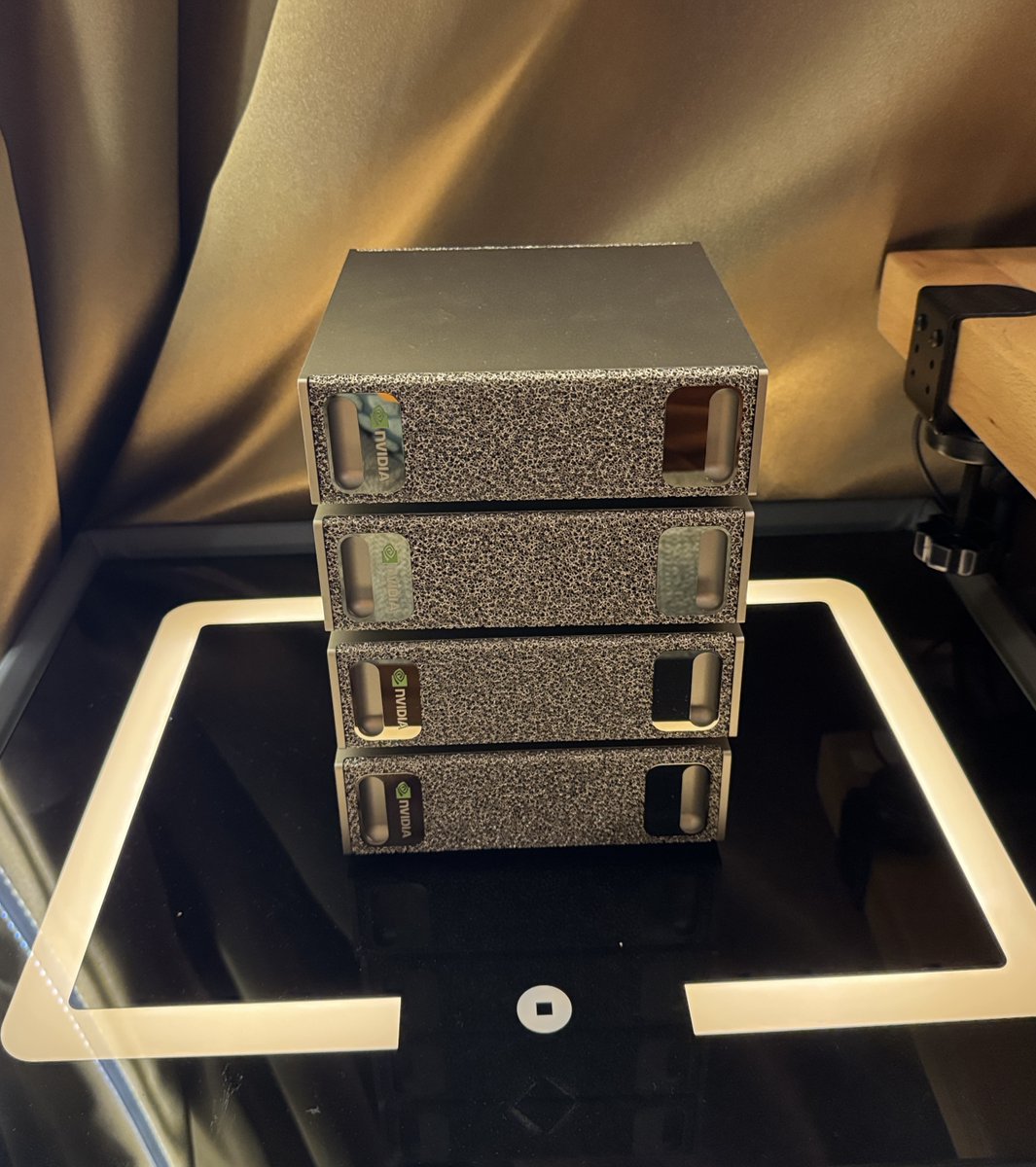
Next: I’ll be experimenting with four NVIDIA Sparks to build the local AI intelligence layer in, while the team advances our market system, the technology, and an open dapp store, which will make this fun, vast, and open for anyone to contribute.
A computer that answers to you. We are pleased to share that Elacity has been accepted into the NVIDIA Inception program, building sovereign computing on NVIDIA Jetson today, with DGX Spark next.
Own the hardware. Own the AI. Own your work. Learn more here! https://t.co/ACqALlRi43