New in Ecology and Earth Systems from Rebecca Chmiel & @MakASaito: The potential of anthropogenic cobalt to perturb the natural biogeochemical cycle https://t.co/oW8efkzhtx
New in Ocean Science: Integrating modeling and in situ imagery at the individual level to reveal the phenotypic plasticity of Arctic copepod communities https://t.co/HewUDvf6RX
New in Ocean Science: Benthic mineralization and nutrient retention in fjord systems with marine- and land-terminating glaciers (Southwest Greenland) https://t.co/jLmUe4ZgIS
New in our special feature on climate and air quality impacts of landfill emissions: "Informing landfill emission reporting programs through remote sensing" https://t.co/2s2jgZfyzX
New in @IGACProject's International Global Atmospheric Chemistry 35-year Anniversary Special Feature: Tropospheric ozone assessment report: Missions, developments, and outlook https://t.co/RWvVAw0W0m
New in Deep-Sea Mining of Polymetallic Nodules: The DORD multi-decadal time series of the deep-sea sediment environment in the Clarion-Clipperton Zone https://t.co/3jKYMAk4Kt
New in our Deep-Sea Mining of Polymetallic Nodules Special Feature, from @CaraBGJames et al.: Effect of initial source mixing on lock-release turbidity currents with application to deep-sea mining collector plumes https://t.co/YUFjtbZXSW
The importance of power, cultural context, and hazard psychology in southwestern Washington communities, where a wolf pack established in 2022 after an 80-year absence in an area with a divisive history of human-carnivore conflict. https://t.co/TP5j5Cj0dP
New in Ecology and Earth Systems: Influence of land use change on soil physical and chemical characteristic in Gibe district, Hadiya zone, central Ethiopia https://t.co/NhRlJYRunm
1/2 New in Ocean Science: Impact of deployment duration of surface-tethered sediment traps on downward flux rates of chlorophyll a and particulate organic carbon https://t.co/ky1QQ6eNCe
New research in our "Deep-Sea Mining of Polymetallic Nodules: Environmental Baselines and Mining Impacts from the Surface to the Seafloor" Special Feature looks at toxicity of deep-sea mining effluent and potential ecotoxicological effects https://t.co/eKDUjJK9GF
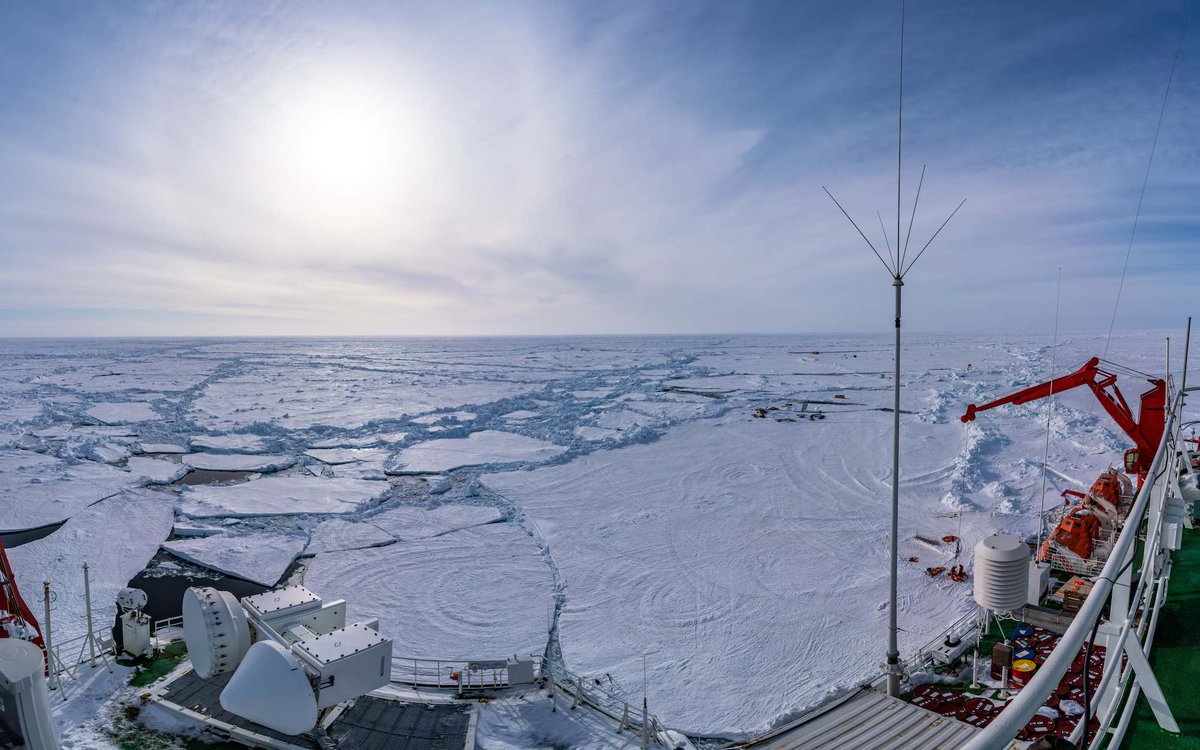
Also new in the @MOSAiCArctic Special Feature: Influence of warm and moist air intrusions on black carbon deposition and snowmelt in the central Arctic https://t.co/g1cAtjm6C1
New from Matthew Shupe et al.: The two radiative states of the #Arctic atmosphere and their impacts on the surface energy budget of #seaice https://t.co/GxWSwRA5oj
Elementa is proud of the continued run of new research in our @MOSAiCArctic Special Feature: The Multidisciplinary Drifting Observatory for the Study of Arctic Climate (MOSAiC). New 👇 https://t.co/nP5iIQmUdG
NSIDC researchers have established a new standard for air-sea ice observations in the Arctic, representing a significant step towards improving sea ice prediction models by incorporating surface energy measurements from the year-long MOSAiC expedition. https://t.co/VsIdVy2bLN
@soilsandbees .@StevenDAllison: Farms with higher crop diversity in CA's Central Valley could be more resilient to drought than farms with only a single species. That's why it's surprising that during California's 2012-2016 mega-drought, crop diversity actually declined https://t.co/0LDk5QPgbi
New in Sustainability Transitions: Constraints on crop diversification under drought: Multi-scale evidence from California’s San Joaquin Valley. From @soilsandbees et al. https://t.co/0LDk5QPgbi
Intermediaries are important agents of change, and their advocacy can maintain, reform, or transform systems - so tracking their activities can better illuminate whom, what, and where is being sustained in a given agri-food transition. https://t.co/N3pV19wzmN
New in Sustainability Transitions, from @Lkshumaine, @AdamZwickle et al.: Building trust for collaborative natural resource management through participatory modeling https://t.co/vuNr9CWjnM