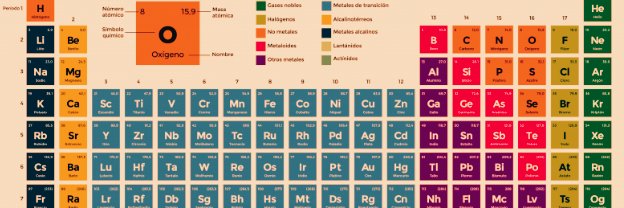
🌍🧪 Can you spot the most abundant element on Earth? 👀
All 118 elements, visualized by their estimated natural abundance. Zoom in, explore, and see which one surprises you!
https://t.co/ADlULU7UwM
#Chemistry#PeriodicTable#Science#EarthScience#STEM
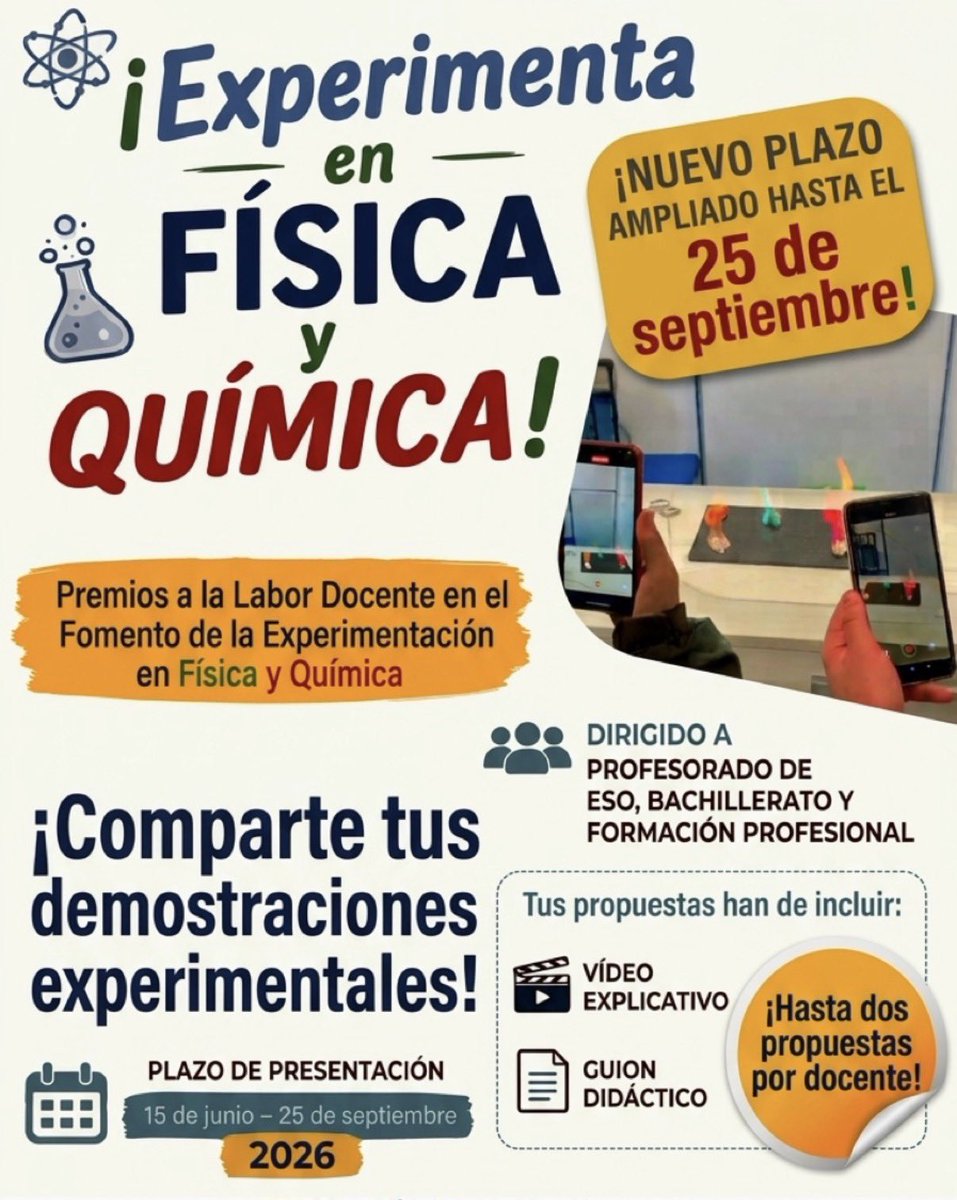
Hemos ampliado el plazo de envío de propuestas a los Premios a la Labor Docente en el Fomento de la Experimentación en Física y Química, convocados por el @GEDHFQ de la @RSEF_ESP y la @RSEQUIMICA, hasta el 25 de septiembre. Dado que el inicio de curso siempre está especialmente repleto de tareas para el profesorado, hemos querido así favorecer su participación en este certamen, que pretende reconocer públicamente su gran labor e impulsar el empleo de demostraciones experimentales en las aulas de Física y Química, valiosas aliadas para la enseñanza y la divulgación de la ciencia y emblema de su historia.
Cada docente podrá enviar un máximo de dos demostraciones, una a cada categoría (Física/Química) o dos a la misma categoría.
Se concederán 3 premios en cada categoría y menciones de honor.
Los centros premiados recibirán dotaciones económicas para la compra de materiales.
Se darán ayudas de viaje a los docentes cuyas experiencias resulten premiadas para la asistencia a una jornada de profesores en Madrid.
Las demostraciones experimentales presentadas (sean o no premiadas) serán publicadas en un número especial de «Faraday» dedicado a la experimentación en Física y Química, que se publicará en noviembre. Queremos así contribuir a la creación de materiales educativos útiles para el día a día del profesorado.
La resolución del Jurado se hará pública a lo largo de la primera quincena de octubre.
Toda la información sobre los premios está disponible en: https://t.co/m9fsTsiktB
¡Súmate al @GEDHFQ, experimenta en clase, participa y comparte tus experiencias con otros compañeros!
Se agradece difusión entre docentes interesados.
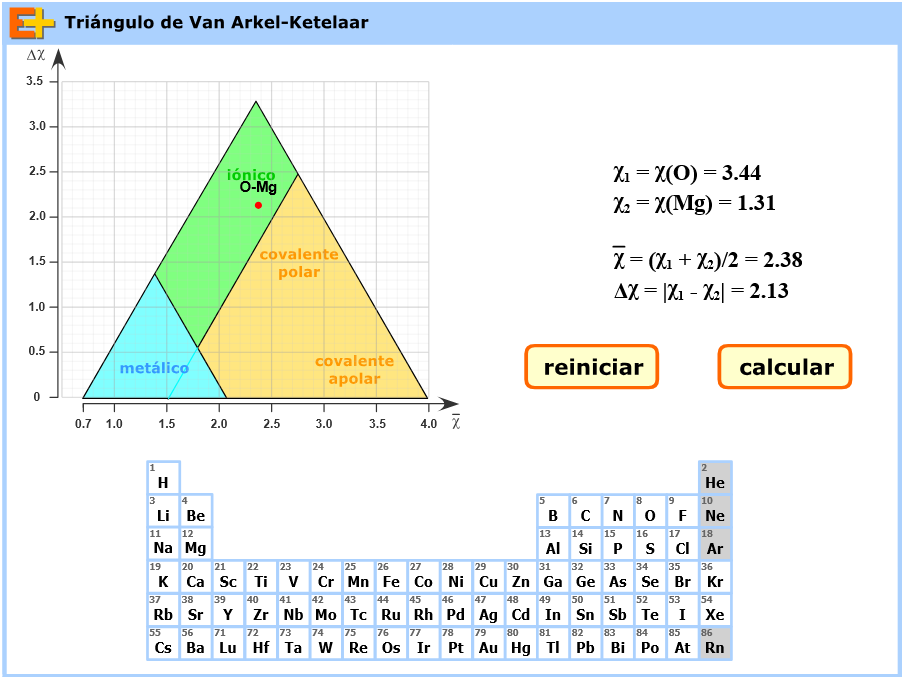
¿Un enlace químico es iónico, covalente o metálico? La respuesta no siempre es tan simple como parece… 👀
Explora el Triángulo de Van Arkel–Ketelaar y descubre cómo cambia el carácter del enlace según las electronegatividades de los elementos. https://t.co/5espXfxin4
¡Comparte!
#MinCup26 Round 1 Match 4:
Cogwheels of #Bournonite are up against colourful #Vesuvianite in a battle of unexpected chemical compositions.
VOTE: https://t.co/xGVAJa4eeD
RESULTS: https://t.co/uDJj6rr7fg
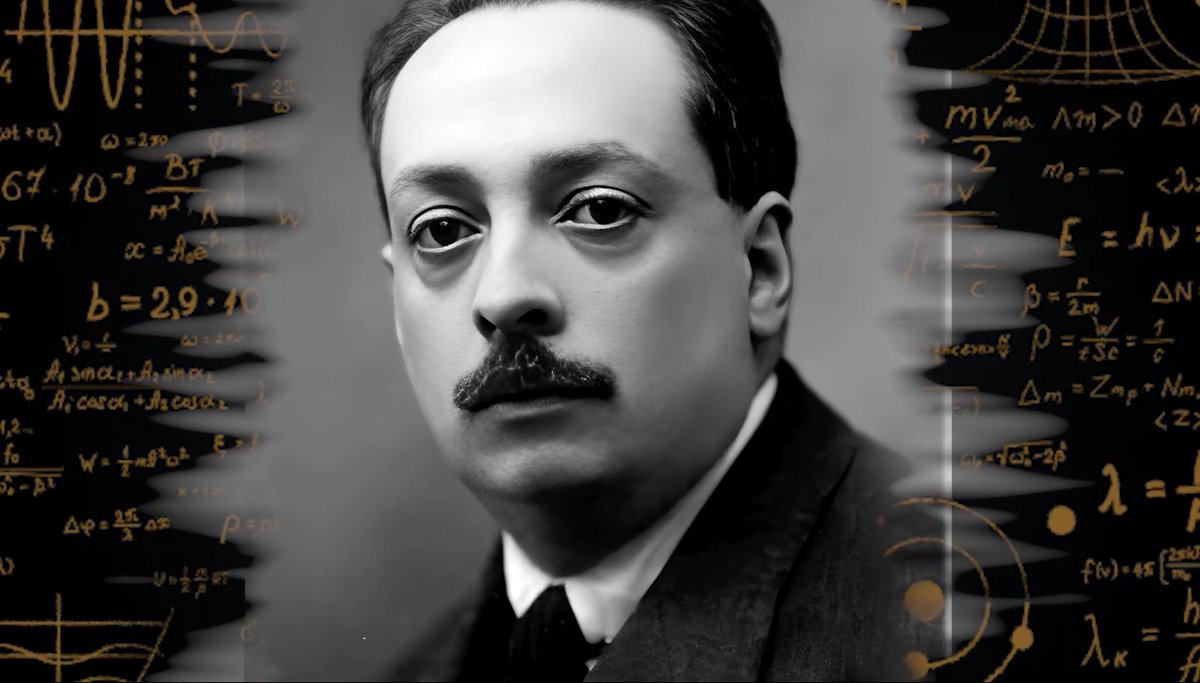
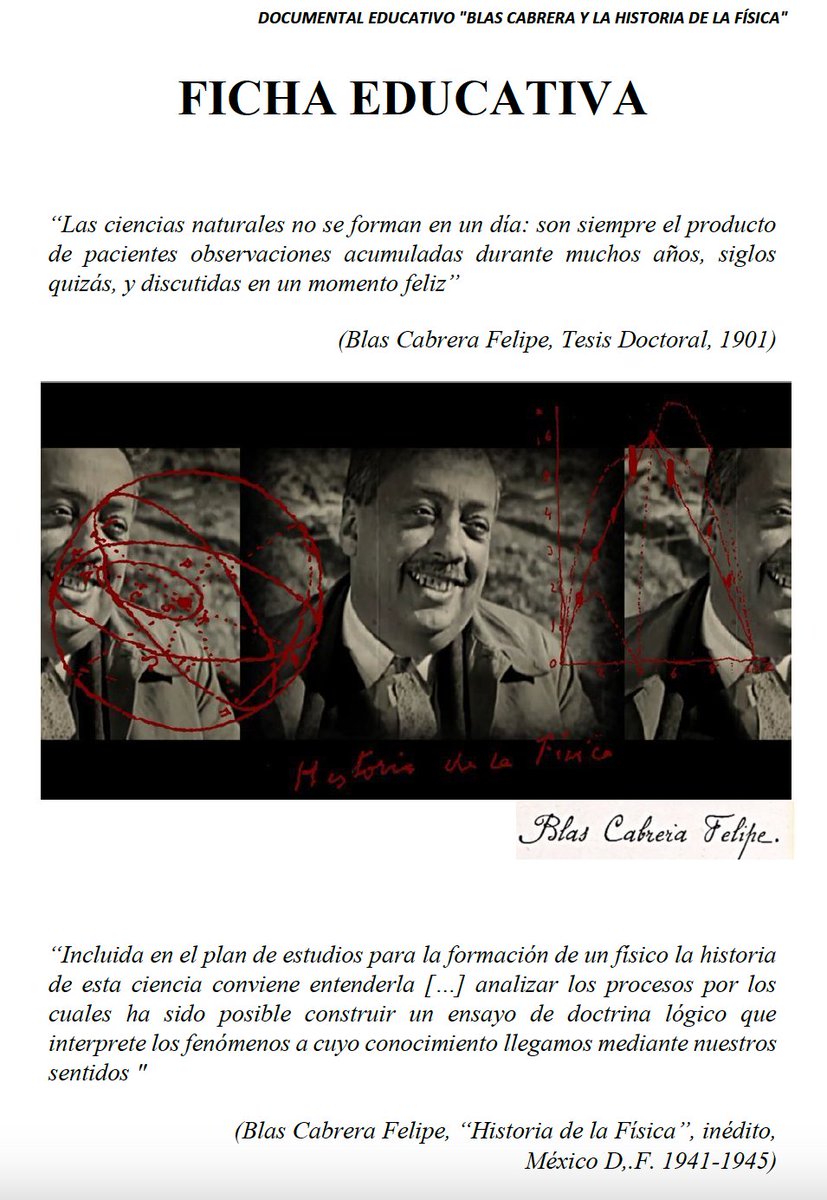
El 1 de agosto de 1945 fallecía Blas Cabrera Felipe, ilustre figura de la historia de la ciencia española. El documental «Blas Cabrera y la historia de la física», impulsado por el profesor @JorgeMendezRam3, es un estupendo recurso para divulgar la biografía y el legado de este gran físico, empezando por las aulas: https://t.co/SVqbevIftq
La skutterudita debe su interés no solo a los elementos que la forman, sino también a su estructura cristalina. Sus pequeños huecos han inspirado el desarrollo de nuevos materiales con aplicaciones termoeléctricas.
En mineralogía, la estructura también importa.
Naica keeps coming back to my mind lately, probably because the mechanism is specific enough that it almost sounds made up. That cave sits above a magma chamber a few kilometers down, and for a very long stretch the water in there parked itself right around 55 to 58C, basically hovering on the anhydrite-gypsum phase boundary. Above that line calcium sulfate wants to be anhydrite. Drop below it and it wants to be gypsum, pulling water into its structure and rearranging into selenite.
Naica did not blow past that line, it idled on it for something like 500,000 years to close to a million, and that's the actual trick. Most evaporite basins or lab setups shove past a phase boundary fast: quick nucleation, lots of small crystals fighting for space, cloudy fabric. Naica did the opposite. Low supersaturation, almost no competition, a growth front that barely moved. One team measured it directly on a crystal face and got something like 1.4 x 10^-5 nanometers per second, which is the slowest crystal growth rate anyone has directly clocked in any mineral system. Do that math and a face creeping along at that pace needs hundreds of thousands of years just to stack up into an 11 meter beam weighing around 12 tons.
Compare that to a gypsum crust forming in a drying playa lake, which can throw up centimeter blades in weeks because the solution is racing toward equilibrium instead of camping next to it. Same mineral, same chemistry, wildly different pace depending on how patient the system gets forced to be.
What gets me every time is that stability is the whole story. Not exotic ingredients, not rare elements, just calcium sulfate and water sitting at a nearly frozen temperature window for geologic ages.
I've got a chunky selenite blade from a New Mexico gypsum deposit on my shelf, maybe 9 inches, and it already feels substantial in the hand. Next to a Naica beam it's a toothpick.
What's the biggest single crystal you personally own, doesn't have to be gypsum, and do you know anything about how fast or slow the conditions were that grew it?
Link in 🧵
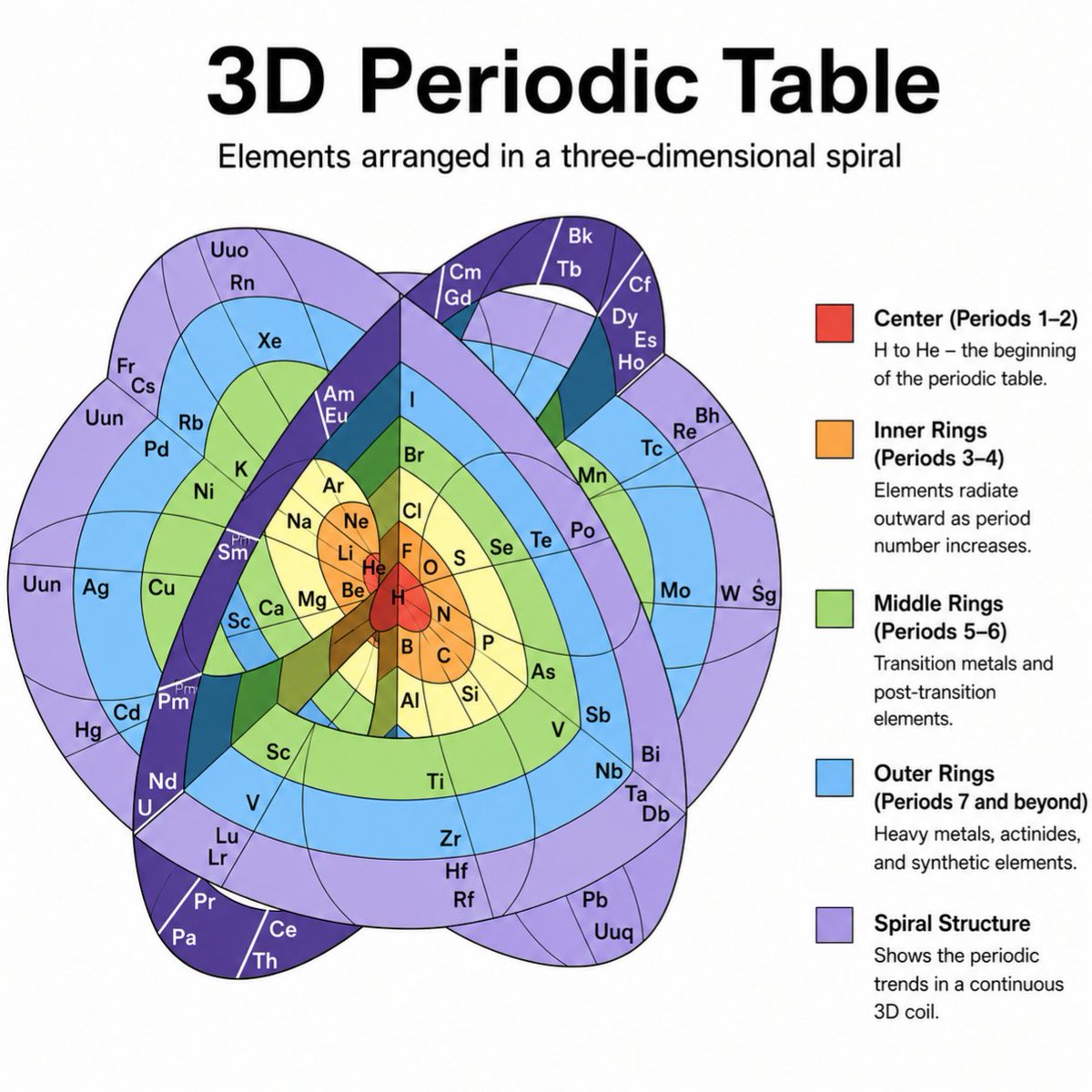
A different way to visualize the building blocks of matter.
This 3D spiral arranges the elements in order of increasing atomic number, forming a continuous path from the lightest elements at the center to transition metals, lanthanides, actinides, and the heaviest known elements toward the outer layers. The color-coded regions highlight periodic patterns and relationships, making the structure of the periodic table easier to explore from a new perspective.