We Are Not Anti-Hindu. We Are Asking for Compassion. 🐘
Whenever We speak about the suffering of captive elephants in the name of tradition and culture, We are sometimes labelled anti-Hindu.
It saddens us that concern for an animal's freedom can be interpreted as hostility towards someone's faith. We understand that these traditions hold deep spiritual, cultural and emotional meaning for many people, and We do not wish to dismiss or disrespect that connection.
We are not asking anyone to abandon their beliefs, disrespect their deities or reject their culture. We are simply asking us, with humility and care, to look at the life of an elephant beyond its religious symbolism.
An elephant is not merely a symbol of divinity. It is a living, sentient being with its own needs, emotions, social bonds and natural instincts. Like us, elephants can feel fear, pain, loneliness and distress, and they deserve to be treated with gentleness and dignity.
Can We not respect our faith while also compassionately questioning practices that may cause suffering? Can We not preserve the meaning of our traditions while finding kinder ways to celebrate them?
Our concern is not with the faith of the devotee, but with the welfare of the elephant. Our appeal is not to create division or blame, but to invite understanding, reflection and positive change.
Please do not judge our compassion for elephants as hatred towards a religion. Instead, let us listen to one another with open hearts and have an honest, respectful conversation about their suffering.
We may see tradition differently, but We can still meet in compassion. We can acknowledge the importance of faith while also recognising that cruelty deserves our attention and every living being deserves care.
Faith and compassion need not stand on opposite sides. Let us choose a path where devotion is expressed with kindness, and where celebration does not come at the cost of an elephant's dignity, wellbeing and freedom. ❤️🐘
#FaithAndCompassion #CompassionOverCruelty #TraditionWithCompassion
#DevotionWithCompassion #CultureWithKindness #SpeakForTheVoiceless
#ElephantsDeserveBetter #LetElephantsBeElephants #EndCaptiveElephantSuffering
A Zoo Is Not a Sanctuary: Survival Is Not Living
An animal surviving in captivity is not the same as an animal living a life of freedom.
A zoo may provide food, water and medical care, but does that mean an animal is truly living well? Keeping an animal alive is not the same as respecting its right to live freely.
Elephants are intelligent, social animals who travel long distances, form strong family bonds, explore their surroundings and make choices about their lives. In a zoo, their world may be reduced to a confined enclosure, with limited movement, restricted choices and little opportunity to express their natural behaviours.
Many captive elephants display repetitive behaviours such as swaying, head-bobbing and pacing. These behaviours can indicate stress, frustration or unmet needs. Foot and joint problems, social isolation and a lack of environmental stimulation can further affect their well-being.
Other zoo animals face similar challenges. Animals evolved to fly, climb, roam, dive or travel across vast landscapes may struggle when their natural lives are restricted. An enclosure that looks attractive to visitors may not meet the needs of the animal living inside it.
Is a zoo really conservation?
Zoos can contribute to research, education and endangered-species breeding. But keeping animals on display is not, by itself, conservation. Genuine conservation means protecting natural habitats, supporting wild populations and preserving ecosystems. Captive breeding contributes meaningfully only when it produces real conservation benefits.
A sanctuary should prioritise animal welfare over entertainment, providing appropriate space, social companionship, enrichment and freedom from unnecessary exploitation. The name alone is not enough; the animal's quality of life must come first.
Let us rethink our relationship with animals
Animals do not exist merely to entertain us, attract visitors or satisfy our curiosity. They have their own needs, relationships and natural behaviours that matter independently of human interests.
We must demand better welfare standards, transparent monitoring, responsible rehabilitation and greater investment in protecting animals in the wild.
True conservation is not about collecting animals. It is about protecting the world in which they belong.
Let us move from captivity to compassion, from exhibition to genuine conservation, and from keeping animals alive for our pleasure to respecting their right to live with dignity.
Survival is not living. And a zoo is not a sanctuary simply because an animal is fed and protected.
#ZooIsNotASanctuary #EndAnimalCaptivity #FreedomForElephants #CaptivityIsNotConservation #AnimalsAreNotExhibits #SurvivalIsNotLiving #AnimalWelfare #ConservationNotCaptivity
The people of Tamil Nadu also include animal activists and animal lovers who look to CM Vijay with hope. The suffering captive elephants, too, await a compassionate and favourable action on the alleged illegal transfer of elephant calves from Assam to Tamil Nadu.
Let this hope not remain just a promise. Let hope turn into action, and let that action bring justice, freedom and genuine welfare to elephants. Their silent suffering deserves to be heard, and their lives deserve to be protected. 🙏🐘
தமிழக மக்களில் விலங்கு நல ஆர்வலர்களும், விலங்குகள் மீது அன்பு கொண்டவர்களும் அடங்குவர். அவர்களும் முதல்வர் விஜய் அவர்கள் மீது நம்பிக்கை வைத்துக் காத்திருக்கிறார்கள். அஸ்ஸாமிலிருந்து தமிழகத்திற்குக் கொண்டுவரப்பட்ட யானைக் குட்டிகளின் சட்டவிரோதப் பரிமாற்றம் தொடர்பாக முதல்வர் அவர்கள் கருணையுடன் தலையிட்டு உரிய நடவடிக்கை எடுக்க வேண்டும் என்று எதிர்பார்க்கிறார்கள்.
சிறைப்பிடிக்கப்பட்டு துன்பங்களை அனுபவிக்கும் யானைகளும் ஒரு நல்ல முடிவுக்காகக் காத்திருக்கின்றன.
இந்த நம்பிக்கை வெறும் நம்பிக்கையாகவே நின்றுவிடக் கூடாது. நம்பிக்கை செயலாக மாற வேண்டும்; அந்தச் செயல்கள் யானைகளுக்கு நீதி, சுதந்திரம் மற்றும் உண்மையான நலவாழ்வை வழங்க வேண்டும்.
தங்கள் துயரத்தைச் சொல்ல இயலாத யானைகளின் மௌனக் குரலுக்குச் செவிசாய்த்து, அவற்றின் வாழ்வைப் பாதுகாப்பது நம் கடமை. 🙏🐘
@drtkprabhu_TVK@CMOTamilnadu@TVKVijayHQ@RameshOffcl@tnforestdept@RvRanjithtvk@tnhrcedept
#NoElephantsInTemples
#WhyTheChains
#StopElephantCaptivity
#NoElephantsinZoo
#CaptiveElephantWelfare
#ElephantRehabilitation
Captive elephants are denied the freedom to live as elephants. They cannot freely socialize with their own kind, roam as nature intended, or engage in their natural behaviours. Even the simple freedom to move their ears without discomfort can be taken away when riders press their legs against them.
Worse, some elephants endure beatings and painful handling, even near their sensitive eyes, forcing them to live in fear.
Their every activity, and every moment of their lives is controlled by humans. Their well-being depends on the mercy of those who hold power over them.
Surviving is not the same as living. Food and shelter cannot replace freedom, companionship, dignity, and the ability to express natural behaviours.
Elephants are sentient beings, not possessions meant to serve human needs. They deserve a life beyond chains, fear, and control.
Let us move from keeping elephants alive in captivity to giving them the opportunity to truly live.
#NoElephantsInTemples
#WhyTheChains
#StopElephantCaptivity
#NoElephantsinZoo
#CaptiveElephantWelfare
#ElephantRehabilitation
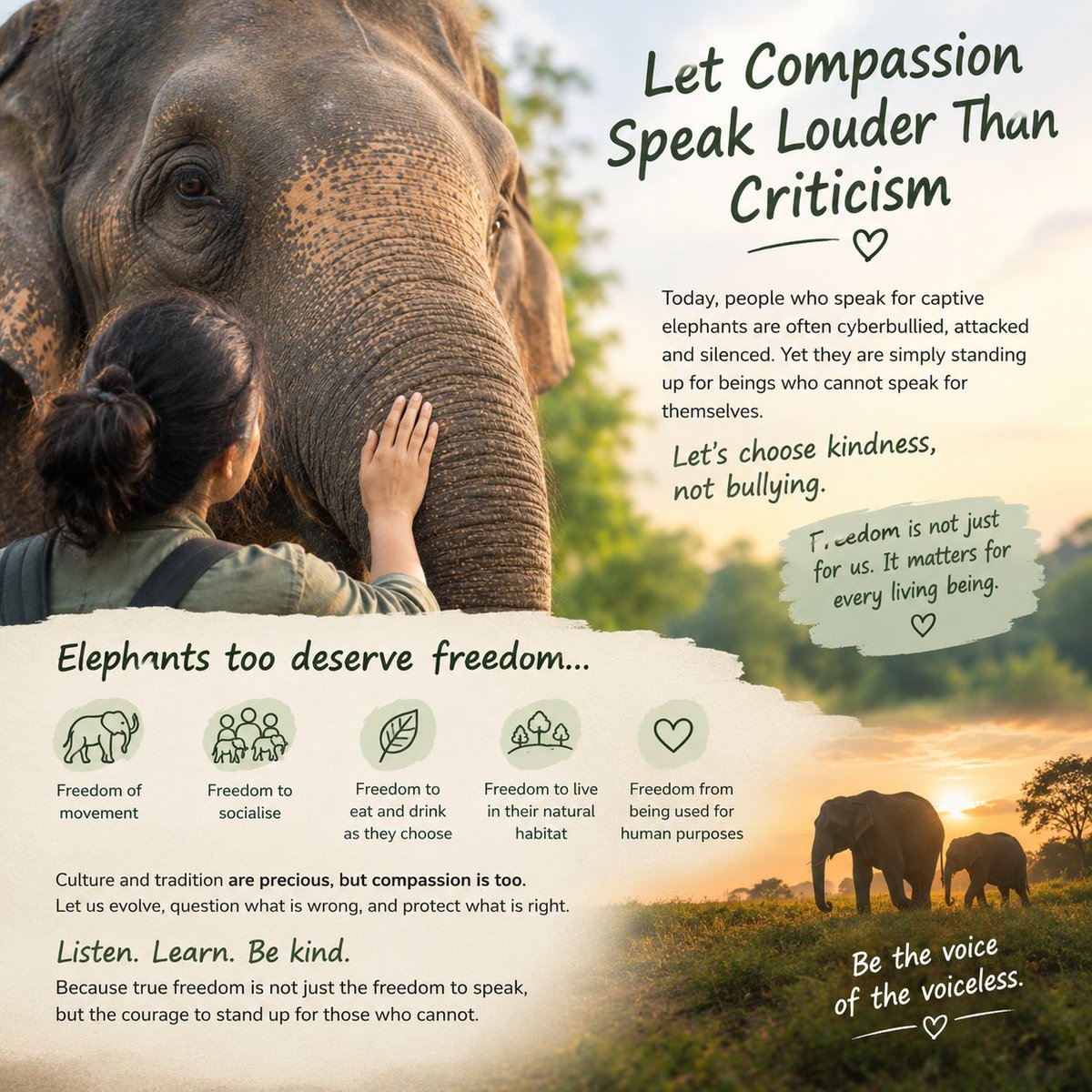
❤️ Let Compassion Speak Louder Than Criticism
In today’s world of social media, it is heartbreaking to see people being cyberbullied, personally attacked, or ridiculed simply because they choose to speak up for captive elephants — gentle, intelligent beings who cannot speak for themselves.
We are fortunate to enjoy the freedom to express our thoughts, move freely, make our own choices, spend time with our loved ones, and live our lives with dignity. But have we ever paused to think about the elephants who are denied these simple joys of life?
Many captive elephants cannot move freely, choose their companions, forage according to their natural needs, or live peacefully in their own social groups. Their world is shaped by human decisions, while their own needs, emotions, and natural instincts are so often overlooked.
When someone raises their voice for these beautiful beings, it comes from a place of compassion and concern. They are not necessarily trying to hurt anyone’s beliefs, insult a culture, or disrespect a tradition. They are simply asking us to look at the world through the eyes of another living being.
Culture and tradition are precious, but compassion is precious too. As society grows in understanding, we can lovingly reflect on our practices and make room for greater kindness and respect for all living beings.
We may not always agree with one another, and that is perfectly human. But disagreement should never become an excuse to bully, shame, or silence someone. We can listen, learn, and discuss our differences with empathy.
Elephants cannot explain their longing for freedom in our language. They cannot defend themselves against the choices we make for them. Those who speak for them are simply asking us to hear what their silence may leave unspoken.
Let us choose understanding over hostility, kindness over judgment, and compassion over the need to prove ourselves right.
The true beauty of our humanity lies not only in the freedoms we enjoy, but also in the compassion we extend to those who cannot ask for freedom themselves.
May we learn to celebrate traditions in ways that honour life, respect nature, and protect the dignity of every living being. 🐘❤️
Be kind to those who speak for the voiceless. Their intention is not to divide us, but to inspire a more compassionate world for all.
#NoElephantsInTemples
#WhyTheChains
#StopElephantCaptivity
#NoElephantsinZoo
#CaptiveElephantWelfare
#ElephantRehabilitation
If IFS Officers Have the Will, They Can Make a Difference for Captive Elephants
The Indian Forest Service (IFS) is entrusted with protecting India's wildlife. Yet captive elephants continue to face confinement, physical restraint and stressful human activities.
Many IFS officers share wildlife conservation messages on social media. Awareness is important, but conservation must go beyond publicity and translate into meaningful action.
Officers with relevant authority and expertise can make a real difference by:
* Advocating legal reform: Recommend reviewing Section 40 of the Wildlife (Protection) Act, 1972, and related provisions to address loopholes and strengthen safeguards against unnecessary elephant transfers and continued captivity.
* Developing welfare policies: Push for independent welfare assessments, better living conditions, appropriate social contact and enforceable standards for captive elephants.
* Enforcing existing laws: Investigate credible complaints, verify transfer documents, monitor compliance and ensure violations receive appropriate legal attention.
* Prioritising rehabilitation: Advocate government-funded sanctuaries, expert-led rehabilitation and sustainable lifetime care for elephants who cannot return to the wild.
* Challenging harmful practices: Encourage alternatives to using live elephants in processions and ceremonies, while promoting compassion that respects both cultural traditions and animal welfare.
* Listening to citizens: Respond constructively to representations from conservationists, researchers and animal-welfare organisations instead of allowing genuine concerns to go unanswered.
Not every IFS officer has the authority to take every action. However, those without direct powers can still raise concerns through appropriate channels, contribute research and recommend policy changes.
The question is simple.
If officers have the knowledge to understand elephant suffering, the authority to enforce existing protections and the professional standing to influence government policy, what concrete steps are they taking to end that suffering?
An elephant cannot submit a representation, challenge an administrative decision or demand freedom from unnecessary restraint. Humans have created the systems that determine its life, and humans must take responsibility for changing them.
If wildlife conservation is a genuine commitment, let it be reflected not merely in social media posts, but in stronger laws, effective enforcement, meaningful rehabilitation and lives transformed.
Captive elephants do not need more symbolic expressions of concern. They need action from those empowered to protect them.
#IndianForestServcie
#CaptiveElephantRehabilitation
#StopElephantCaptivity
@CentralIfs@moefcc@assamforest@tnforestdept@DisttForester
We Are Not Anti-Hindu. We Are Asking for Compassion. 🐘
Whenever We speak about the suffering of captive elephants in the name of tradition and culture, We are sometimes labelled anti-Hindu.
It saddens us that concern for an animal's freedom can be interpreted as hostility towards someone's faith. We understand that these traditions hold deep spiritual, cultural and emotional meaning for many people, and We do not wish to dismiss or disrespect that connection.
We are not asking anyone to abandon their beliefs, disrespect their deities or reject their culture. We are simply asking us, with humility and care, to look at the life of an elephant beyond its religious symbolism.
An elephant is not merely a symbol of divinity. It is a living, sentient being with its own needs, emotions, social bonds and natural instincts. Like us, elephants can feel fear, pain, loneliness and distress, and they deserve to be treated with gentleness and dignity.
Can We not respect our faith while also compassionately questioning practices that may cause suffering? Can We not preserve the meaning of our traditions while finding kinder ways to celebrate them?
Our concern is not with the faith of the devotee, but with the welfare of the elephant. Our appeal is not to create division or blame, but to invite understanding, reflection and positive change.
Please do not judge our compassion for elephants as hatred towards a religion. Instead, let us listen to one another with open hearts and have an honest, respectful conversation about their suffering.
We may see tradition differently, but We can still meet in compassion. We can acknowledge the importance of faith while also recognising that cruelty deserves our attention and every living being deserves care.
Faith and compassion need not stand on opposite sides. Let us choose a path where devotion is expressed with kindness, and where celebration does not come at the cost of an elephant's dignity, wellbeing and freedom. ❤️🐘
#FaithAndCompassion #CompassionOverCruelty #TraditionWithCompassion
#DevotionWithCompassion #CultureWithKindness #SpeakForTheVoiceless
#ElephantsDeserveBetter #LetElephantsBeElephants #EndCaptiveElephantSuffering
If an captive elephant's suffering is brought to our attention, should our first response be to defend a tradition or to understand the suffering? Compassion for an animal should not be treated as hostility towards a faith.
#NoElephantsInTemples#WhyTheChains
#StopElephantCaptivity
#NoElephantsinZoo
#CaptiveElephantWelfare
#ElephantRehabilitation
If IFS Officers Have the Will, They Can Make a Difference for Captive Elephants
The Indian Forest Service (IFS) is entrusted with protecting India's wildlife. Yet captive elephants continue to face confinement, physical restraint and stressful human activities.
Many IFS officers share wildlife conservation messages on social media. Awareness is important, but conservation must go beyond publicity and translate into meaningful action.
Officers with relevant authority and expertise can make a real difference by:
* Advocating legal reform: Recommend reviewing Section 40 of the Wildlife (Protection) Act, 1972, and related provisions to address loopholes and strengthen safeguards against unnecessary elephant transfers and continued captivity.
* Developing welfare policies: Push for independent welfare assessments, better living conditions, appropriate social contact and enforceable standards for captive elephants.
* Enforcing existing laws: Investigate credible complaints, verify transfer documents, monitor compliance and ensure violations receive appropriate legal attention.
* Prioritising rehabilitation: Advocate government-funded sanctuaries, expert-led rehabilitation and sustainable lifetime care for elephants who cannot return to the wild.
* Challenging harmful practices: Encourage alternatives to using live elephants in processions and ceremonies, while promoting compassion that respects both cultural traditions and animal welfare.
* Listening to citizens: Respond constructively to representations from conservationists, researchers and animal-welfare organisations instead of allowing genuine concerns to go unanswered.
Not every IFS officer has the authority to take every action. However, those without direct powers can still raise concerns through appropriate channels, contribute research and recommend policy changes.
The question is simple.
If officers have the knowledge to understand elephant suffering, the authority to enforce existing protections and the professional standing to influence government policy, what concrete steps are they taking to end that suffering?
An elephant cannot submit a representation, challenge an administrative decision or demand freedom from unnecessary restraint. Humans have created the systems that determine its life, and humans must take responsibility for changing them.
If wildlife conservation is a genuine commitment, let it be reflected not merely in social media posts, but in stronger laws, effective enforcement, meaningful rehabilitation and lives transformed.
Captive elephants do not need more symbolic expressions of concern. They need action from those empowered to protect them.
#IndianForestServcie
#CaptiveElephantRehabilitation
#StopElephantCaptivity
@CentralIfs@moefcc@assamforest@tnforestdept@DisttForester
WE TORTURE ELEPHANTS FOR OUR DEVOTION, THEN PUNISH THEM FOR REACTING TO OUR CRUELTY. WHEN WILL WE LEARN?
A temple elephant, forced to endure a procession filled with crowds, deafening noise, and immense stress, ran away. But before blaming the elephant, let us question the humans who put it in that situation.
We force these magnificent, intelligent beings to stand for hours amidst chaos, carry heavy loads, and participate in unnatural activities for our rituals and celebrations. We expect them to endure everything silently, without fear, distress, or resistance. And when their suffering finally manifests as a reaction, we poke them with bullhooks, punish them, and blame them for being dangerous.
How can we inflict suffering on a living being and then punish it for expressing that suffering?
An elephant running away is not necessarily an act of aggression. It may be an attempt to escape an overwhelming situation. Instead of asking why the elephant reacted, we must ask why we forced it to endure such distress in the first place.
If elephants are considered representatives of the divine, shouldn't our devotion inspire compassion, respect, and protection? How can we claim to honour a sacred being while denying it freedom, dignity, and the right to live without fear?
Devotion should never be an excuse for cruelty. Tradition should never be a justification for suffering.
Elephants are not slaves, ceremonial objects, or instruments of religious celebration. They are sentient beings with their own needs, emotions, and natural behaviours.
It is time we stopped forcing elephants to suffer in the name of devotion. Let our faith be reflected not in how we use these magnificent beings, but in how compassionately we treat them.
If we truly respect the divine, let us stop making its representatives suffer. Elephants deserve freedom, not chains; compassion, not bullhooks; and dignity, not captivity.
@CMOTamilnadu@TVKVijayHQ@RameshOffcl@tnforestdept@RvRanjithtvk@tnhrcedept@animalwelfareb1@moefcc@ShobanaRaviNews
#NoElephantsInTemples
#WhyTheChains
#StopElephantCaptivity
#NoElephantsinZoo
#CaptiveElephantWelfare
#ElephantRehabilitation
நமது பக்திக்காக யானைகளைத் துன்புறுத்துகிறோம். பின்னர், அந்தத் துன்பத்தால் அவை எதிர்வினையாற்றும்போது தண்டிக்கிறோம். நாம் எப்போது இதைப் புரிந்துகொள்ளப் போகிறோம்?
கோயில் ஊர்வலத்தின்போது, மக்கள் கூட்டம், காதைப் பிளக்கும் சத்தம், கடுமையான மன அழுத்தம் ஆகியவற்றைத் தாங்க முடியாமல் ஒரு கோயில் யானை ஓடித் தப்பித்துள்ளது. ஆனால், யானையைக் குறை கூறுவதற்கு முன், அதை இத்தகைய சூழலுக்குள் தள்ளிய மனிதர்களை நாம் கேள்வி கேட்க வேண்டும்.
மணிக்கணக்கில் கூட்ட நெரிசலுக்கும் இரைச்சலுக்கும் நடுவே நிற்கவும், அதிக எடைகளைச் சுமக்கவும், இயற்கைக்கு மாறான செயல்களில் ஈடுபடவும் இந்தப் பிரம்மாண்டமான, அறிவும் உணர்வுகளும் கொண்ட உயிரினங்களை நாம் கட்டாயப்படுத்துகிறோம். இவை அனைத்தையும் எந்தவித அச்சமோ மன உளைச்சலோ எதிர்ப்போ இன்றி அமைதியாகத் தாங்கிக்கொள்ள வேண்டும் என்று எதிர்பார்க்கிறோம். ஆனால், அவற்றின் துன்பம் எதிர்வினையாக வெளிப்படும்போது, அங்குசத்தால் குத்தித் துன்புறுத்துகிறோம்; தண்டிக்கிறோம்; ஆபத்தானவை என்று பழி சுமத்துகிறோம்.
ஒரு உயிரைத் துன்புறுத்திவிட்டு, அந்தத் துன்பத்திற்கு அது எதிர்வினையாற்றியதற்காகத் தண்டிப்பது என்ன நியாயம்?
யானை ஓடித் தப்பிப்பது எப்போதும் ஆக்கிரமிப்பின் வெளிப்பாடு அல்ல. தாங்க முடியாத சூழலிலிருந்து தன்னை விடுவித்துக்கொள்ளும் முயற்சியாகவும் அது இருக்கலாம். யானை ஏன் எதிர்வினையாற்றியது என்று கேட்பதற்குப் பதிலாக, அது தாங்க முடியாத துயரத்தை அனுபவிக்கும் சூழலுக்குள் நாம் ஏன் தள்ளினோம் என்று கேட்க வேண்டும்.
யானைகளை இறைவனின் பிரதிநிதிகளாகக் கருதுகிறோம் என்றால், நமது பக்தி அவற்றின் மீது கருணையையும் மரியாதையையும் பாதுகாப்பையும் வளர்க்க வேண்டாமா? ஒரு புனிதமான உயிரை மதிப்பதாகக் கூறிக்கொண்டே, அதற்குச் சுதந்திரத்தையும் கண்ணியத்தையும் அச்சமின்றி வாழும் உரிமையையும் மறுப்பது எப்படி நியாயமாகும்?
கொடுமைக்கு பக்தி ஒருபோதும் சாக்காக இருக்கக்கூடாது. துன்புறுத்தலுக்கு மரபும் பாரம்பரியமும் ஒருபோதும் நியாயமாக இருக்கக்கூடாது.
யானைகள் நமது அடிமைகளும் அல்ல; சடங்குகளுக்கான பொருட்களும் அல்ல; மதக் கொண்டாட்டங்களுக்குப் பயன்படுத்தப்படும் கருவிகளும் அல்ல. அவை உணர்வுகளும் தேவைகளும் இயற்கையான நடத்தைகளும் கொண்ட உயிரினங்கள்.
பக்தியின் பெயரால் யானைகளைத் துன்புறுத்துவதை நிறுத்த வேண்டிய நேரம் இது. இந்த அற்புதமான உயிரினங்களை நாம் எவ்வாறு பயன்படுத்துகிறோம் என்பதில் அல்ல; அவற்றை எவ்வளவு கருணையுடன் நடத்துகிறோம் என்பதில்தான் நமது உண்மையான பக்தி வெளிப்பட வேண்டும்.
இறைவனின் பிரதிநிதிகளை நாம் உண்மையாக மதிப்போமானால், அவர்களைத் துன்புறுத்துவதை நிறுத்துவோம். யானைகளுக்குத் தேவைச் சங்கிலிகள் அல்ல, சுதந்திரம்; அங்குசத்தால் குத்தப்படும் வலி அல்ல, கருணை; சிறைவாசம் அல்ல, கண்ணியமான வாழ்வு.
@CMOTamilnadu@TVKVijayHQ@RameshOffcl@tnforestdept@RvRanjithtvk@tnhrcedept@PasupathyMasi
#NoElephantsInTemples
#WhyTheChains
#StopElephantCaptivity
#NoElephantsinZoo
#CaptiveElephantWelfare
#ElephantRehabilitation
WE TORTURE ELEPHANTS FOR OUR DEVOTION, THEN PUNISH THEM FOR REACTING TO OUR CRUELTY. WHEN WILL WE LEARN?
A temple elephant, forced to endure a procession filled with crowds, deafening noise, and immense stress, ran away. But before blaming the elephant, let us question the humans who put it in that situation.
We force these magnificent, intelligent beings to stand for hours amidst chaos, carry heavy loads, and participate in unnatural activities for our rituals and celebrations. We expect them to endure everything silently, without fear, distress, or resistance. And when their suffering finally manifests as a reaction, we poke them with bullhooks, punish them, and blame them for being dangerous.
How can we inflict suffering on a living being and then punish it for expressing that suffering?
An elephant running away is not necessarily an act of aggression. It may be an attempt to escape an overwhelming situation. Instead of asking why the elephant reacted, we must ask why we forced it to endure such distress in the first place.
If elephants are considered representatives of the divine, shouldn't our devotion inspire compassion, respect, and protection? How can we claim to honour a sacred being while denying it freedom, dignity, and the right to live without fear?
Devotion should never be an excuse for cruelty. Tradition should never be a justification for suffering.
Elephants are not slaves, ceremonial objects, or instruments of religious celebration. They are sentient beings with their own needs, emotions, and natural behaviours.
It is time we stopped forcing elephants to suffer in the name of devotion. Let our faith be reflected not in how we use these magnificent beings, but in how compassionately we treat them.
If we truly respect the divine, let us stop making its representatives suffer. Elephants deserve freedom, not chains; compassion, not bullhooks; and dignity, not captivity.
@CMOTamilnadu@TVKVijayHQ@RameshOffcl@tnforestdept@RvRanjithtvk@tnhrcedept@animalwelfareb1@moefcc@ShobanaRaviNews
#NoElephantsInTemples
#WhyTheChains
#StopElephantCaptivity
#NoElephantsinZoo
#CaptiveElephantWelfare
#ElephantRehabilitation
நமது பக்திக்காக யானைகளைத் துன்புறுத்துகிறோம். பின்னர், அந்தத் துன்பத்தால் அவை எதிர்வினையாற்றும்போது தண்டிக்கிறோம். நாம் எப்போது இதைப் புரிந்துகொள்ளப் போகிறோம்?
கோயில் ஊர்வலத்தின்போது, மக்கள் கூட்டம், காதைப் பிளக்கும் சத்தம், கடுமையான மன அழுத்தம் ஆகியவற்றைத் தாங்க முடியாமல் ஒரு கோயில் யானை ஓடித் தப்பித்துள்ளது. ஆனால், யானையைக் குறை கூறுவதற்கு முன், அதை இத்தகைய சூழலுக்குள் தள்ளிய மனிதர்களை நாம் கேள்வி கேட்க வேண்டும்.
மணிக்கணக்கில் கூட்ட நெரிசலுக்கும் இரைச்சலுக்கும் நடுவே நிற்கவும், அதிக எடைகளைச் சுமக்கவும், இயற்கைக்கு மாறான செயல்களில் ஈடுபடவும் இந்தப் பிரம்மாண்டமான, அறிவும் உணர்வுகளும் கொண்ட உயிரினங்களை நாம் கட்டாயப்படுத்துகிறோம். இவை அனைத்தையும் எந்தவித அச்சமோ மன உளைச்சலோ எதிர்ப்போ இன்றி அமைதியாகத் தாங்கிக்கொள்ள வேண்டும் என்று எதிர்பார்க்கிறோம். ஆனால், அவற்றின் துன்பம் எதிர்வினையாக வெளிப்படும்போது, அங்குசத்தால் குத்தித் துன்புறுத்துகிறோம்; தண்டிக்கிறோம்; ஆபத்தானவை என்று பழி சுமத்துகிறோம்.
ஒரு உயிரைத் துன்புறுத்திவிட்டு, அந்தத் துன்பத்திற்கு அது எதிர்வினையாற்றியதற்காகத் தண்டிப்பது என்ன நியாயம்?
யானை ஓடித் தப்பிப்பது எப்போதும் ஆக்கிரமிப்பின் வெளிப்பாடு அல்ல. தாங்க முடியாத சூழலிலிருந்து தன்னை விடுவித்துக்கொள்ளும் முயற்சியாகவும் அது இருக்கலாம். யானை ஏன் எதிர்வினையாற்றியது என்று கேட்பதற்குப் பதிலாக, அது தாங்க முடியாத துயரத்தை அனுபவிக்கும் சூழலுக்குள் நாம் ஏன் தள்ளினோம் என்று கேட்க வேண்டும்.
யானைகளை இறைவனின் பிரதிநிதிகளாகக் கருதுகிறோம் என்றால், நமது பக்தி அவற்றின் மீது கருணையையும் மரியாதையையும் பாதுகாப்பையும் வளர்க்க வேண்டாமா? ஒரு புனிதமான உயிரை மதிப்பதாகக் கூறிக்கொண்டே, அதற்குச் சுதந்திரத்தையும் கண்ணியத்தையும் அச்சமின்றி வாழும் உரிமையையும் மறுப்பது எப்படி நியாயமாகும்?
கொடுமைக்கு பக்தி ஒருபோதும் சாக்காக இருக்கக்கூடாது. துன்புறுத்தலுக்கு மரபும் பாரம்பரியமும் ஒருபோதும் நியாயமாக இருக்கக்கூடாது.
யானைகள் நமது அடிமைகளும் அல்ல; சடங்குகளுக்கான பொருட்களும் அல்ல; மதக் கொண்டாட்டங்களுக்குப் பயன்படுத்தப்படும் கருவிகளும் அல்ல. அவை உணர்வுகளும் தேவைகளும் இயற்கையான நடத்தைகளும் கொண்ட உயிரினங்கள்.
பக்தியின் பெயரால் யானைகளைத் துன்புறுத்துவதை நிறுத்த வேண்டிய நேரம் இது. இந்த அற்புதமான உயிரினங்களை நாம் எவ்வாறு பயன்படுத்துகிறோம் என்பதில் அல்ல; அவற்றை எவ்வளவு கருணையுடன் நடத்துகிறோம் என்பதில்தான் நமது உண்மையான பக்தி வெளிப்பட வேண்டும்.
இறைவனின் பிரதிநிதிகளை நாம் உண்மையாக மதிப்போமானால், அவர்களைத் துன்புறுத்துவதை நிறுத்துவோம். யானைகளுக்குத் தேவைச் சங்கிலிகள் அல்ல, சுதந்திரம்; அங்குசத்தால் குத்தப்படும் வலி அல்ல, கருணை; சிறைவாசம் அல்ல, கண்ணியமான வாழ்வு.
@CMOTamilnadu@TVKVijayHQ@RameshOffcl@tnforestdept@RvRanjithtvk@tnhrcedept@PasupathyMasi
#NoElephantsInTemples
#WhyTheChains
#StopElephantCaptivity
#NoElephantsinZoo
#CaptiveElephantWelfare
#ElephantRehabilitation
WE TORTURE ELEPHANTS FOR OUR DEVOTION, THEN PUNISH THEM FOR REACTING TO OUR CRUELTY. WHEN WILL WE LEARN?
A temple elephant, forced to endure a procession filled with crowds, deafening noise, and immense stress, ran away. But before blaming the elephant, let us question the humans who put it in that situation.
We force these magnificent, intelligent beings to stand for hours amidst chaos, carry heavy loads, and participate in unnatural activities for our rituals and celebrations. We expect them to endure everything silently, without fear, distress, or resistance. And when their suffering finally manifests as a reaction, we poke them with bullhooks, punish them, and blame them for being dangerous.
How can we inflict suffering on a living being and then punish it for expressing that suffering?
An elephant running away is not necessarily an act of aggression. It may be an attempt to escape an overwhelming situation. Instead of asking why the elephant reacted, we must ask why we forced it to endure such distress in the first place.
If elephants are considered representatives of the divine, shouldn't our devotion inspire compassion, respect, and protection? How can we claim to honour a sacred being while denying it freedom, dignity, and the right to live without fear?
Devotion should never be an excuse for cruelty. Tradition should never be a justification for suffering.
Elephants are not slaves, ceremonial objects, or instruments of religious celebration. They are sentient beings with their own needs, emotions, and natural behaviours.
It is time we stopped forcing elephants to suffer in the name of devotion. Let our faith be reflected not in how we use these magnificent beings, but in how compassionately we treat them.
If we truly respect the divine, let us stop making its representatives suffer. Elephants deserve freedom, not chains; compassion, not bullhooks; and dignity, not captivity.
@CMOTamilnadu@TVKVijayHQ@RameshOffcl@tnforestdept@RvRanjithtvk@tnhrcedept@animalwelfareb1@moefcc@ShobanaRaviNews
#NoElephantsInTemples
#WhyTheChains
#StopElephantCaptivity
#NoElephantsinZoo
#CaptiveElephantWelfare
#ElephantRehabilitation