Our new release: LinkedIn feed is now chattable 🚀
You can literally talk to your past posts.
Next up: X feed → Chat, Lead Magnets & Digital Products
Every platform. Every post. One conversation, Owned Audience and Community, Off socials.
The kind of pick-me-up advice we all need to hear from time to time. This is one of the best gems Steve Jobs has ever shared. 23 years on and it's still super relevant.
It's never been easier to build products, produce content, and to distribute them.
Leave your mark on life.
Let's go...
We had the pleasure of sponsoring this month's newsletter from @arts4refugees
Read more about their awesome work:
🔥 How to spend €1-billion aid package in Lebanon & more - Monthly check in, by @arts4refugees https://t.co/IfsslslkTR
Socials are socials for a reason. Genuinely connect and engage with your tribe to win, oterhwise creating just content will be a waste of time in the early days...
Genuine followers only come after engagements.
Remember, in an AI dominated world where everything will eventually be taken from us, an engaged audience is your most valuable asset.
⚒🔥 If you're a millennials you should probably strike this opportunity while the iron is hot...
Educational content creation is the fastest growing segment within the creator economy, a booming industry supercharged with the variety of automated tools enabled by AI.
And it's moving the needle for so many businesses. Just look at Youtube:
- Youtube's ad-revenue per 1k views averages around $0.30 for most content categories
- But it averages around $2.15 per 1k views on ads put on educational content
Most educational content creators are part-time, experimenting with different content formats before it takes off to become independent.
And yes social media is a great place to get going, but remaining on social media is such a fatal mistake.
- Your audience isn't yours, you are just renting them and are at the mercy of algorithms for reaching them
- I've seen so many people getting their X and Linkedin accounts deactivated in recent weeks, such a massive RISK
so what do you do?
- Build your initial audience on social media, and then take those interested to a platform where you can own them and their data.
- Newsletters have become so popular these days to do that. There's no ALGO change there
- From then onwards you can monetise them through webinars, events, workshops, digital products and courses.
If you want to learn more about this space and how to get going you must follow @matt_gray_. He's one of the best teaching others how to make this work, and I have the notificaitons turned on for his profile.
Having a bias for action is one of the top qualities I want my children to have when they grow up.
There are people who never get going with their ideas and projects for the fear of the How, the What, the So What, the What If and the list goes on.
And there are people who are relatively careless about much of the above. The Truth is, this group learns much faster.
Studying my bachelors back in 2012, like many others I had a limited budget to get by on weekly basis. An idea came to my mind, one where a platform would manage student grocery budgets and offer them personalised shopping baskets from major supermarkets.
The 2012 naive version of me woke up the next morning and registered an official company, calling it YomoYobo, and yes I've always been a genius at branding :D
Once the initial entiusiasm fizzed out, the harsh reality of resources needed to make this happen slapped me right on the face. 6 months later I wrote to the council asking their help to close the company down without any accounting charges.
Experiencing the failure for the first time hurt a lot at the time 🤕 , but I look back it and laugh 😁 Life's so boring without trying crazy things, ups and downs...
A year later doing my masters in entrepreneurship at Royal Holloway, University of London I decided to launch a student startup, a much more thorough plan, with smaller milestones and achievable goals.
My classmates told me it would be a waste of time to do it, but I knew I would learn a lot regardless.
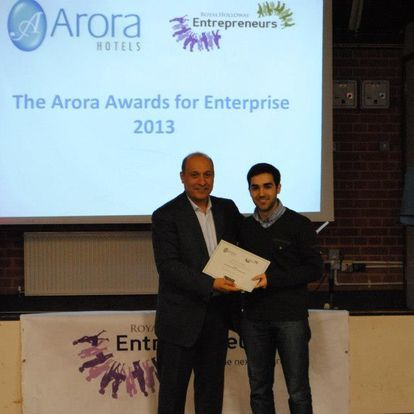
That same year I was invited to pitch in front of Surinder Arora of @Arora_Group, sold the product I had developed to students at fairs, and won the Student Enterprise Award for 2013.
One of the most thrilling experiences I have had so far in my life. All because I ignored Nay-sayers, took a bit of risk and went ahead explore horizons I hadn't seen.
That journey still continues today...
"A growing, engaged audience is the most important asset you can have today".
Think about it, you're spending your life building a career. By the end of your career you'll have a lot to tell and teach people about. It'll be of no use if you have no one to tell that to, no means to pass on your knowledge and a limited network to share that with.
Don't let your stories be buried in your mind if you have stories worth telling.
🤔 But how do you tell compelling stories?
I've been working on my storytelling skills for pitching @elevistaai to investors and naturally communication is the top skill needed for it.
Been recently listening to @erwinmcmanus, an award winning communication coach, author and speaker and the following were eye opening.
1. You first sentence is the most important line you read to your audience (hence why I said the above). You want people to remember you for that.
2. There are 7 types of communicators, you're naturally inclined to one, but can intentionally tap to others if needed, think about your category as it feels natural when it comes from YOU
🔥 The Motivator: Inspires and uplifts, focusing on the positive and encouraging belief in oneself.
⚒ The Challenger: Provokes and awakens, calling people to action and pushing them beyond their comfort zones.
👮♂️ The Commander: Directs and commands, wielding authority to tell others what to do decisively.
👩⚕️ The Healer: Offers empathy and understanding, focusing on healing pain and fostering emotional well-being.
👨🏫 The Professor: Values knowledge and learning, believing that change happens through the transference of information.
👁 The Seer: Provides vision and insight, enabling others to see beyond their limitations and imagine greater possibilities.
🦉 The Maven: Delivers unique and often unconventional wisdom, challenging traditional perspectives and sparking new ways of thinking.
3. The intention behind content creation should be helping others, not building yourself an audience and making money:
"People don't care about your story, they care about theirs" If your stories don't help them in any shape or form, they won't be interested. The more challenging stories you have to tell which they can resonate with, the faster you become interesting to people.
4. Live a Story Worth Telling: Your personal experiences are the foundation of compelling storytelling. Engage fully with life to gather authentic stories that resonate because they're rooted in genuine human experience.
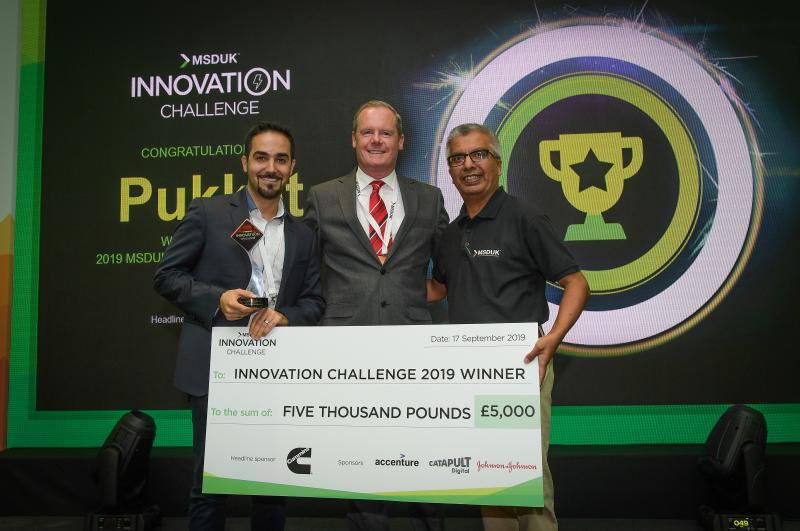
=> Photos below are from @MSD_UK Innovation Challenge finals in 2019 which I managed to win on those bases
What are you even doing on X if you don't know enough about @AlexHormozi's journey and frameworks he used to succeed?
Here's a summary of hours of videos and podcasts:
Early Days and What Drove Him
Alex Hormozi's story starts with him trying to live up to his dad's expectations. Even after buying a condo young, he felt empty inside. He said, "I was 22. I had done everything that my dad had wanted me to... I always hoped I wouldn't wake up the next day." This shows how sometimes, doing what everyone thinks is successful doesn't actually make you happy.
The Moment Everything Changed
Hormozi decided he had to change his life. Leaving his job to start his own business was scary and caused issues with his dad. But he was determined to try. He said, "I didn't know whether I would succeed but I did know I wasn't going to stop." This shows how much he wanted to find his own path.
Starting a Business and Facing Problems
Starting his own business wasn't easy. Hormozi faced money problems and the fear of failing. But his girlfriend, now wife, Layla, believed in him when things were tough. Her support was a big reason he succeeded. He said, "Six months later I have three million dollars in the bank account... for her to have that kind of belief was deep for me." This shows how important it is to have people who believe in you.
How He Made It Work
Hormozi believes in using bad feelings like anger or sadness to push yourself to do better. He said, "If you are angry use it, if you are sad use it or it uses you." This advice is about turning negative energy into something positive.
Lessons Learned
Hormozi learned that being uncomfortable and facing challenges is more motivating than just seeking pleasure. He said, "Pain motivates significantly faster and stronger than pleasure does." This is about how tough times can actually help you grow.
Alex Hormozi's story from being unhappy to becoming super successful is inspiring. It shows that success isn't straightforward and involves hard work, a new way of thinking, and support from others. He once mentioned, "What makes a really good entrepreneur/leader... I'll answer this differently than I have in the past and I'm going to tell a story that hopefully people don't take the wrong way but I had a cat..." Even talking about a cat, Hormozi makes us see things differently and think bigger.
Thread 🧵 read below for his frameworks
There’s a trend where Youtubers are quitting Youtube as a result of burnout… hard to believe but true and the same goes for X, Linkedin and other socials with most creators.
I’m by no means anywhere particular with my accounts, and I feel the constant pressure to create too…
As I’m about to start my Youtubing journey, I did a quick research as to why and this is what I found:
•Problem: YouTubers are experiencing burnout because they feel like they are working 24/7 and never have a break.
•Solution: Define constraints for yourself and your work. For example, you could decide that you only work between certain hours or that you take a certain amount of time off each week or month.
•Problem: YouTubers feel pressure to constantly create new content and worry that if they take a break, their audience will forget about them.
•Solution: It is important to find a balance between creating new content and taking breaks. You can try to create content in batches so that you can take breaks in between. You can also let your audience know that you are taking a break and explain why.
•Problem: YouTubers may feel pressure to create content that is clickbaity or sensationalized in order to get views and grow their audience.
•Solution: It is important to stay true to yourself and your values when creating content. You should focus on creating content that is helpful and informative for your audience, even if it does not get as many views as clickbaity content.
•Problem: YouTubers may feel like they are stuck on a hamster wheel of content creation, where they are constantly creating new content but never feel like they are getting ahead.
•Solution: It is important to find a way to connect with the spirit of service when creating content. This means focusing on creating content that is helpful and valuable for your audience, rather than just focusing on growing your audience or making money.
•Problem: YouTubers may also deal with difficulty taking breaks due to fear of losing viewers and income, pressure to manage a team and deal with employee issues, and feelings of worthlessness when their channel experiences a decline.
•Solution: focusing on the intrinsic value creation and helping the audience, effective communication and delegation, and remembering the impermanence of the audience and focusing on the value provided might be helpful approaches.
📽️How to start a Youtube channel in 2024 (as I'm about to do in a week's time)? Here's a summary from the research I carried out on some of the best advice out there, including Think Media @MasterClass@omareltakrori and @seancannell
1. Consistency is Key in 2024 for YT Algo: Regularly posting videos, ideally at least once a week, is essential. It keeps your channel active and your audience engaged.
2. Understand Hashtags and Tags: Hashtags are great for organizing your content, but they don't do much to help people discover your videos. Tags, however, are crucial. They help your videos pop up in searches, connecting you with viewers looking for content like yours.
3. It's Not Just About Timing, It's About Regularity: While finding the perfect time to post can be beneficial, what's more important is sticking to a consistent schedule. This applies to both your standard videos and YouTube Shorts. When your audience knows when to expect new content, they're more likely to tune in.
4. Video Podcasting for Busy Creators: For those struggling with time, video podcasting is a smart move. It's a way to create longer, engaging content that builds trust with your audience. People tend to spend more time watching longer videos, which helps them feel connected to you and your channel.
5. Click-Through Rate and Average View Duration Matter: Focus on creating compelling titles and thumbnails to get viewers to click on your videos. Then, keep them watching with engaging content, especially in the first 30 seconds. This not only hooks your viewers but also signals to YouTube that your content is worth promoting.
6. Leverage the Power of Long Videos: Long videos are a treasure trove. They provide an opportunity for deeper engagement and make your channel a go-to spot for detailed, valuable content. Consider creating a series of connected videos or repurposing longer content into shorter, digestible pieces to maximize your reach.
🥇 Linkedin Success Story #2: @cssdonnelly (+290k followers on LinkedIn, 195k newsletter subscribers), The go-to guy for business and personal growth tips, referred to as the 4th most influencial person on LinkedIn
So how did he become so influencial on LinkedIn?
🔄 The Story: From Bootstrapped Idea to Acquisition:
Chris's story is a testament to the entrepreneurial dream. Starting with a £400 bootstrapped idea, he navigated the challenges, seized opportunities, and eventually steered his ventures to acquisition. His journey isn't just inspiring; it's a blueprint for aspiring entrepreneurs, and he's sharing the gems everyday.
💡 The Hook:
What sets Chris apart is his journey. He's not just dishing out advice; he's lived it. Chris takes his audience on a ride through the trenches, sharing the inside story of growing Verb (a bootstrapped idea that skyrocketed to success) and Lottie, ultimately being acquired by Croud in 2021. It's not theory; it's actionable advice from someone who's been in the trenches and emerged victorious.
🎯 Target Audience: Business Owners and Entrepreneurs:
Chris's digital stage isn't just for anyone; it's a thriving hub for business owners and entrepreneurs seeking real solutions to their problems. His content is tailored to those hungry for success, making his LinkedIn profile a must-follow for anyone navigating the complexities of entrepreneurship.
📅 Content Frequency and Variety:
Chris doesn't just show up; he's a daily fixture on LinkedIn. With a commitment to one post per day, he provides a consistent stream of valuable insights. But it's not just about words; Chris understands the power of visuals. Whether it's actionable infographics, engaging carousels, or insightful videos, he brings variety to the table, ensuring his content is not only informative but also visually appealing and easily digestible.
📈 Impactful Growth:
The numbers speak volumes. With over 290k followers on LinkedIn and a massive newsletter subscriber base, Chris's impact is undeniable. His audience isn't just a passive crowd; they're an engaged community actively seeking and implementing the strategies he shares.
🔥 Actionable Business & Personal Advice:
What makes Chris a true growth maestro is his commitment to actionable advice. It's not about abstract theories; it's about strategies and insights that you can apply today. His content is a roadmap for those looking to scale their businesses and amplify their personal growth.
Verdict: Great content is like a great product, it has to solve a problem for someone to be engaging. Now if you mix it with your personal business journey and share your story with everyone out there, it'll be a lot more sticky.
Chris's success has most likely resulted in him acquiring resources which are not available to most of us, i.e. a content team helping him design the frameworks and visuals. Becoming a great content creator takes resources, time and money. The journey for most of us can start today.
The number of engagements on your content is proportional to the number of hours you've spent on it to make it super valueable.
There's more science and research in it than art