Everyone is sleeping on this absolute banger:
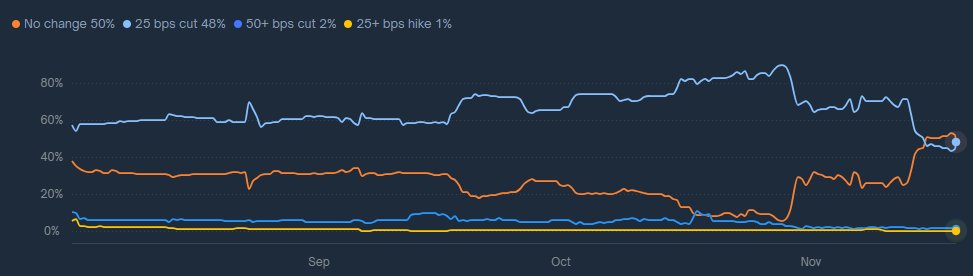
Fed December meeting — crowd just flipped to 55% NO CUT (up from 27% last week).
Inflation data hotter than expected. I’m loading No Cut shares hard
🚨 Polymarket alpha alert 🚨
My early play:
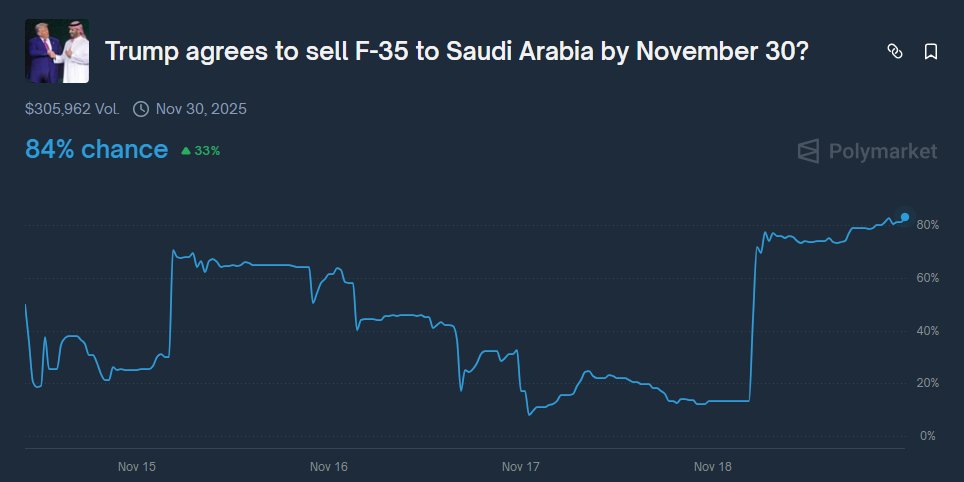
“Trump agrees F-35 sale to Saudi by Nov 30” → 81¢ Yes
Reason: Saudi delegation in DC this week + Trump already told advisors he wants the deal done before Christmas. Feels heavily undervalued
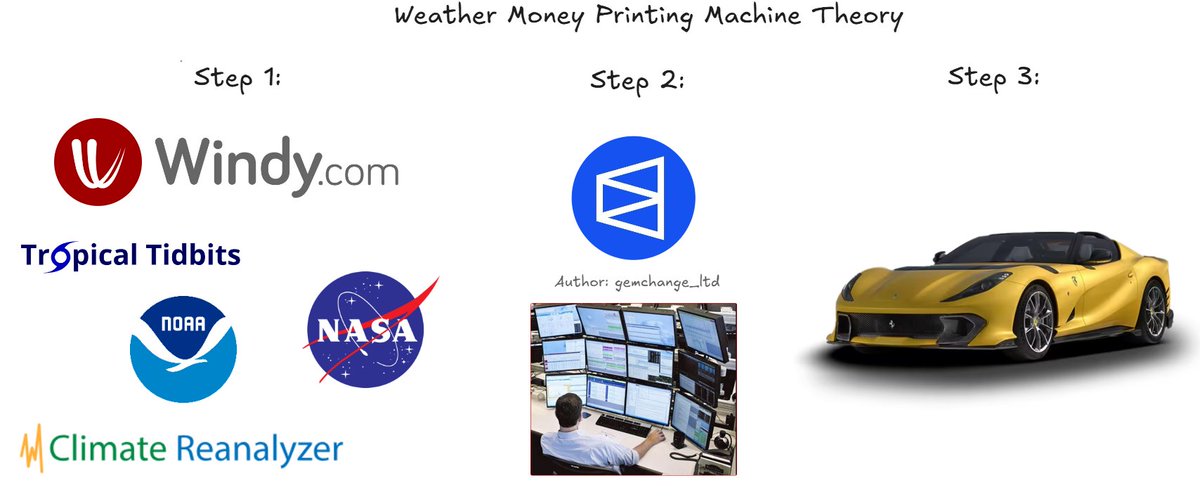
Found a Money-Printing Machine on the Weather Markets
$2.4M is being bet on weather events right now. Here’s a universal manual on how to analyze ANY weather market and profit from it.
On Polymarket, there are markets for hurricanes, temperature records, droughts, snowfalls.
Smart traders don’t guess the weather - they trade the gap between crowd emotion and real data.
Universal System for Analyzing Weather Bets
Step 1: Find the Objective Resolution Source
Open the market’s conditions. Find where the resolution data comes from.
The best markets use:
- NOAA (National Oceanic and Atmospheric Administration)
- NASA GISS (temperature indices)
National meteorological services
- WMO (World Meteorological Organization)
Government data sources = minimal manipulation.
Avoid markets that resolve based on "media consensus."
Step 2: Real-Time Core Tools
- Tropical Tidbits
https://t.co/P8vHebjf1C
Not just for hurricanes. GFS and ECMWF models for any weather pattern - cold fronts, heat waves, rainfall. Updated every 6 hours.
- Climate Reanalyzer
https://t.co/FHbxMNiCp1
Universal tool: air and ocean temperature, rainfall anomalies, pressure - all in real time with historical context.
- Windy
https://t.co/rHrAm7qWIZ
Interactive maps: wind, temperature, rain, snow, waves. Switch between 10+ models. Perfect for local events.
Step 3: Historical Data and Probabilities
- NOAA Climate Data Online
https://t.co/dV1Y6dTMb3
Web interface for historical climate data by location. Want to know how often Chicago hits >40°C in July? Over 100 years of data here.
- NOAA Climate API
https://t.co/Q5Rf3UGn6K
For developers: temperature, precipitation, snow, wind - all downloadable by station. Build your own probability models.
Example:
Market: "Snow in Miami in December 2025" = 5%.
History: 0 cases in 150 years.
Real probability ≈ 0.01%.
-> Sell at 5%, hold until expiration.
Step 4: Forecast Models - Your Main Weapon
- Tropical Tidbits Models
https://t.co/CiQeYiy2bY
Professional access:
GFS (US model)
ECMWF (European, most accurate)
CMC (Canadian)
When 3+ models agree -> high confidence.
When they diverge -> high uncertainty (and volatility).
- NOAA Weather Prediction Center
https://t.co/X1Eu1S6XxN
Official forecasts for precipitation, temperature anomalies, extreme events (1–7 days). Perfect for short-term markets.
- Climate Prediction Center
https://t.co/gGaDembeny
Long-term forecasts (weeks to months): ENSO, temperature anomalies, droughts. For seasonal markets.
Step 5: Specialized Tools
- For temperature markets:
OISST Database: https://t.co/WU0D0eQOZ2
- Ocean temperatures drive air temperatures.
NASA GISS: https://t.co/MCIGPjniEt
Global temperature anomalies.
- For rainfall/drought markets:
NOAA Drought Monitor: https://t.co/Yj5suAqsWU
Real-time drought maps.
- NOAA Precipitation Data: https://t.co/rpHTRjFhiG
Accumulated rainfall data.
- For snow markets:
NOAA Snow Data: https://t.co/Xxh2rsQiZf
Snow cover, analysis, and forecasts.
- For extreme events:
NOAA Storm Events Database: https://t.co/ugHCqYyy34
Historical records of tornadoes, hail, floods, etc.
Trading Strategy
Emotional Market Cycle:
Normal conditions -> market priced fairly
Models show a threat -> panic, odds spike
Event weakens or doesn’t happen -> odds collapse
Repeat
Weather markets are inefficient because 90% of participants trade headlines, not data.
You’re using the same tools as meteorologists and climatologists.
You’re not predicting the weather - you’re finding where the market is wrong.
Retail traders buy fear at high prices.
You sell them fear - and buy back reality cheap.
NFA. DYOR.
Trade on Polymarket