די מספיק עם הסיפורי סבתא על הדולר באמריקה
היין נפל 50 אחוז מול הדולר בשנים האחרונות
היורו גמור
פאונד מת
את האמריקאים מעניין רק מטבע אחד בעולם -וזה
היואן הסיני ובצדק
לספר אגדות שהשקל מתחזק בגלל הרצון של
האמריקאים להחליש את הדולר זה עלבון לאינטיליגנציה
הדולר בישראל נחלש בגלל חבורת מוסדיים מטורפת
שמרסקת אותו כקורלציה לוול סטריט
זה כל הסיפור
@AvishayOvadia כל הכבוד לך
סוף סוף צדיק אחד בסדום
מספיק לקרוא הבוקר את הכתבה על שוק הנדל"ן
בירושלים שעומד רגע לפני קריסה -בשביל להבין
שגם אתה לא מספיק פסימי בשביל להבין
מה עומד ליפול על בועת הנדל"ן בשיראל
פיצוץ וקריסה שלא נראו פה מימי משבר
הבנקאיות בשנות ה80
Do y’all know how big this is for $CEPT? I’ll let Claude explain why. We get confirmation of this and this stock hits $20 in no time. Bookmark this for later.
Welcome to the most asymmetric trade in modern financial history.
The thread below lays out why. The opportunity exists because capital has chased the AI trade while ignoring the physical assets AI requires to run — assets that have quietly become the best-performing asset class of the decade. Since October 2020 when we first called for the commodity super cycle: QCI Total Return +217%, GSCI Total Return +205%, Gold +140%. NASDAQ trails at +130%. S&P 500 at +85%. The top three are all commodities. Yet oil cannot get out of its own way while copper and the broader atom complex prints fresh highs . That is the dislocation. That is the trade.
Get long. Buckle in. Hang on for the ride.
Forgive the longer posts in this thread — attempting to mimic my old 10-bullet commodity takes. On to it.
@AvishayOvadia שוק הנדל"ן בישראל מת
המפולת הגדולה יצאה לדרך
כשהמחירים ייפלו 50 אחוז
כל הדרך למטה -במקרה הטוב
אז זה יעניין מישהו
אל תדאג לקבלנים וליזמים
הנזק שהם גרמו לתושבי ישראל בלתי ניתן לכימות
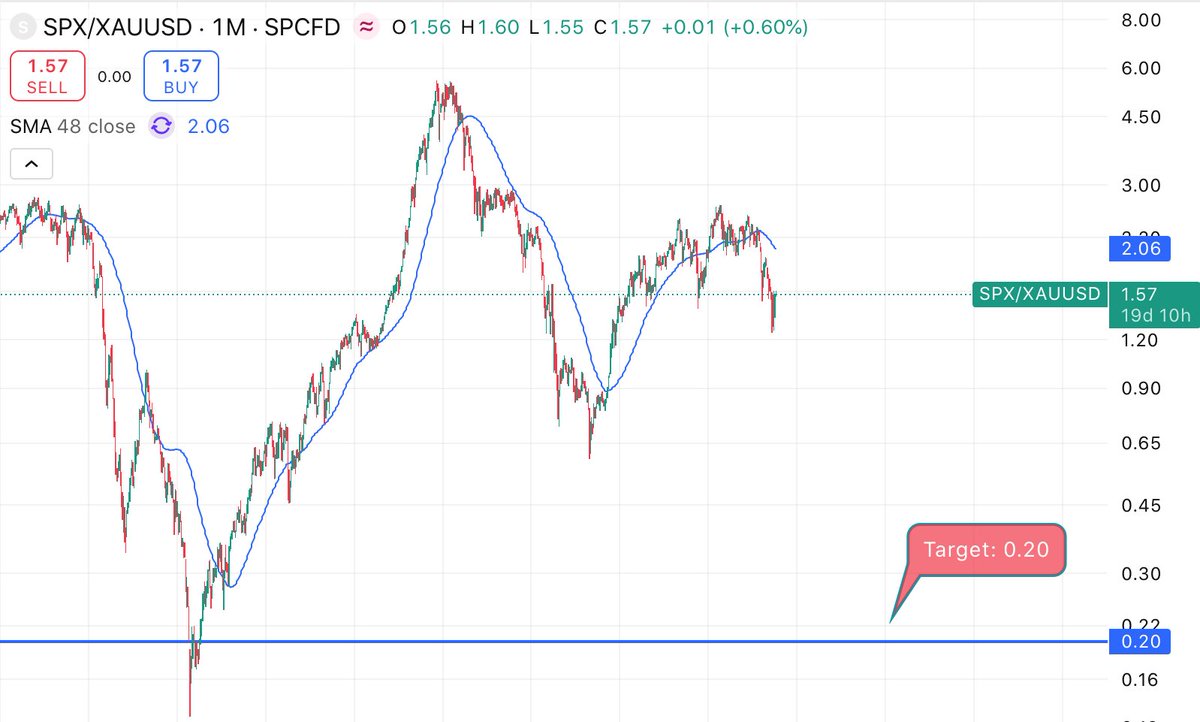
The S&P 500 will collapse 90% from here priced in gold. Currently it takes 2.06 ounces of gold to buy the S&P 500 index. In the future it will take 0.2 ounces of gold to buy the S&P 500 index.
The world is rotating in favor of hard assets now. Paper assets are going to be crushed relative to gold.
Paulson doing this at this moment is a huge clue. Think about it. He has been silent for years. Now he comes out and foams the runway for some grand plan to do YCC. Coincidence? I don't think so, this cements my belief that they are cooking up a Big Print plan. Bessent and Warsh probably put him up to this. Fascinating stuff. A major trial balloon.
@SimonDixonTwitt@LukeGromen
@sivanhakolkalul מה יש לעדכן ? שנחלנו הבוקר תבוסה איומה ?
שבסיבוב הבא נפגוש איראן קטלנית ועוצמתית יותר?
והכי מחריד-שבפעם הבאה אמריקה כבר לא תהיה כאן
שיהיה לנו בהצלחה
Some skeptical commentary on the @SpaceX IPO from @hackernews user "johnbarron":
This comment reads like an S-1 pitch deck and almost every claim is false or misleading.
The $16B is not profit its revenue, and I strongly suggest to learn the difference before investing. The $8B figure is EBITDA, also known as, earnings before interest, taxes, depreciation, AND amortization.
For a company running around 9500 LEO satellites with a less than 5 year lifespan, depreciation is the business.
Their FCC filings show that about 500 satellites deorbited just in the first of half of 2025 alone, and they were all under 5 years old. The estimates for constellation sustenance are currently at $5-8B per year in satellite manufacturing (about $500K each) and launch costs are about $3M each. That is the real capex that EBITDA hides. Net income has never been disclosed and probably for good reason...
And lets not even mention the $19 billion EchoStar acquisition who is almost certainly! not included in the $8 billion EBITDA figures reported...
The most critical is that xAI is excluded from the number. XAI had a $1.46B net loss in Q3 2025 on just $107M in revenue, accelerating from $1B the prior quarter. They were burning $1B a month at the time of filing. This pig was then merged into SpaceX in Feb 2026 along with X/Twitter. So start with $8B EBITDA, subtract $5-8B satellite replacement, subtract $4-6B per year in xAI losses, subtract interest and taxes specially amortization and you are very very deep in the red. Once audited financials go public, every analyst with a calculator and a working brain will see this.
Also the revenue is largely circular... Over 70% of Falcon 9 launches in 2025 were internal Starlink missions so SpaceX is its own biggest customer. Starlink is 70% of total revenue. The so called "launch business" and "internet business" are the same capital cycle booked as two revenue lines ;-)
Replace legacy ISPs? Really? Starlink has 0.2% residential market share after 5 years, with declining ARPU ($85 avg vs $120 US) and congestion already emerging at 10M subs. It is a niche rural/maritime ISP, not an AT&T killer.
And on the valuation? NVIDIA for example, who has an almost actual monopoly on AI chips, with $216B revenue, and $120B net income, at 56% margins, trades at 20x revenue. Tesla…. already considered absurdly overvalued at P/E 355, trades at 15x. Amazon at 3x. Meta at 10x. SpaceX wants 110x !! times revenue, with no audited financials, unknown net income, and a freshly absorbed money losing AI company. Even on bullish 2026 projected revenue of $24B, it's 73x so nearly 4x NVIDIA multiple, and NVIDIA actually prints profit...
Starship on another side is very very far from routine... 11 flights, 5 failures. But notice on thing...In 2025 alone on Flight 7 the upper stage exploded from harmonic vibrations. Then Flight 8 exploded from propellant mixing. Flight 9 was destroyed on reentry...Ship 36 exploded on test stand ...the first V3 booster exploded during pressure testing and was scrapped.
See a pattern here? Each failure from a different root cause. So multiple unsolved failure modes, not iteration. It has never reached orbit, never caught a ship, never demonstrated orbital refueling.
This offering is the most scandalous ever and the structure tells you everything. The filing is confidential, REAL financials only need to go public 15 days before the roadshow. Nasdaq is literally changing its index rules effective May 1 to allow a fast track Nasdaq-100 entry in 15 trading days. This is a rule that never existed before, and is made for this IPO, forcing billions in passive index buying on day one.
Public float is just 3% to 4%. This is one of the tightest floats for any major US IPO in modern history, and I have been following the markets for 20 years. They do 30% retail allocation what is three times the norm and tells you exactly who the target buyer is.
continues:
https://t.co/DJapVraXHE