Bernadette Chirac: The Quiet Strength Behind Jacques René Chirac
Bernadette Thérèse Marie Chirac, the widow of former French President Jacques René Chirac, has passed away at the age of 93.
She was an extraordinarily humane woman who stood steadfastly by her husband throughout his political journey, including the difficult years when his ambitions appeared uncertain. Her counsel, loyalty and political instinct contributed significantly to Jacques René Chirac's rise to the highest office in France.
Bernadette Chirac was more than the wife of a president. She was a devoted mother, a committed public servant and a compassionate First Lady who earned the respect and affection of many through her dedication to charitable causes and public service.
What particularly distinguished her was her sense of discretion and her understanding of the delicate balance between influence and public responsibility. While she was undoubtedly one of Jacques René Chirac's closest advisers, she generally exercised her influence quietly and away from the spotlight. In this respect, she represented a different style of First Lady from some of her contemporaries, including those around the presidency of François Mitterrand, where private and political affairs occasionally became the subject of public controversy and media attention.
Bernadette Chirac's strength lay not in seeking the limelight but in providing steadfast support, sound judgement and stability. She understood that one could be influential without being intrusive, and supportive without overshadowing those elected to govern.
Elegant, dignified, hardworking and deeply committed to her family and country, she leaves behind a remarkable legacy of service, loyalty and devotion. Throughout her life, she demonstrated that public influence is often most effective when exercised with humility, wisdom and restraint.
With her passing, France loses not only a former First Lady but also a woman whose grace, loyalty and sense of duty helped shape an important chapter in the nation's history.
My deepest condolences to her family, friends and all those in France and beyond who knew and admired her.
May she rest in peace.
The Return of Two Important Testimonies: Why the Reprint of My Take: People, Places & Things and The Last Testimony Matters https://t.co/5fHJ96cjZe
Updates:
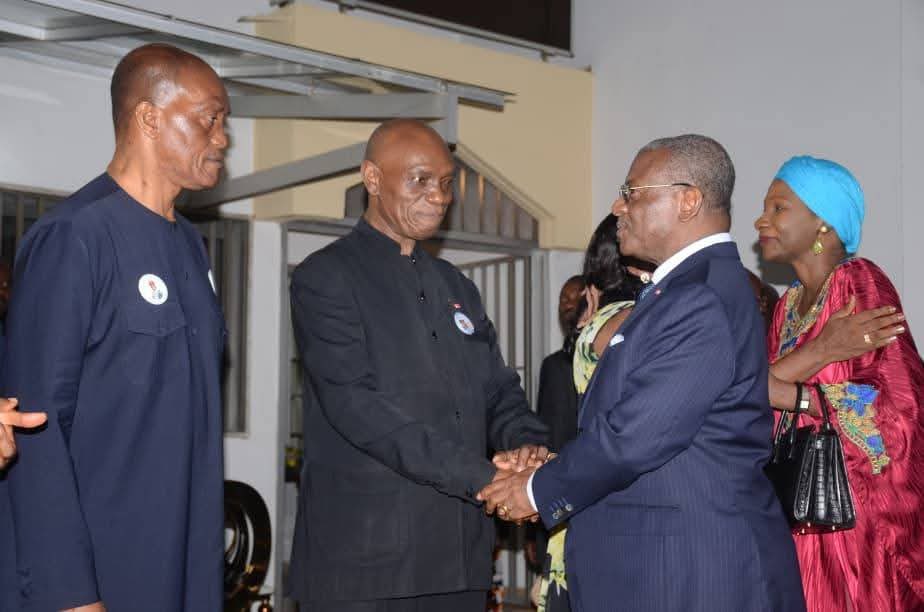
The Prime Minister, Head of Government, Chief Dr. Joseph Dion Ngute, accompanied by his wife, yesterday, May 29, 2026, paid a condolence visit to Minister Henri Eyebe Ayissi following the passing of his younger sister, Mrs. Etoundi, née Ombédé Antoinette. PM Dion Ngute presented special words of comfort to the bereaved family.
@elie73smith My years in Congo-Brazzaville allowed me to encounter remarkable personalities from politics, diplomacy, journalism, civil society, and intellectual life.
Part of My Take: People, Places & Things is therefore dedicated to Congo — its personalities, contradictions, political culture, and the individuals who continue shaping its public life in different ways.
Sometimes, understanding a country also means understanding the people behind its institutions.
Elie Smith
@ElieSMITH14 Can national unity survive without justice, dialogue, mutual respect, and historical understanding?
This is one of the difficult questions explored in My Take: People, Places & Things, particularly in reflections concerning reunification, identity, governance, and coexistence in Cameroon.
Some national debates may evolve over time, but certain historical questions continue returning because societies have not fully confronted them honestly.
Elie Smith
@elie73smith “I don’t take alcohol. I think I have taken about three to four bottles of beer in my entire life.”
Cardinal Tumi lived with remarkable personal discipline and simplicity.
Despite his global stature, he remained detached from materialism and deeply grounded in spiritual responsibility, humility and moderation.
Perhaps this explains the moral authority he carried throughout his life.
From The Last Testimony
Elie Smith
“The war of different opinions between two groups can only be won where intellectual honesty is respected.”
Cardinal Tumi consistently warned against extremism, intolerance and emotional politics.
He believed difficult national problems required honesty, dialogue and intellectual courage rather than violence and hatred.
That message remains relevant far beyond Cameroon.
From The Last Testimony
Elie Smith
@elie73smith “The war of different opinions between two groups can only be won where intellectual honesty is respected.”
Cardinal Tumi consistently warned against extremism, intolerance and emotional politics.
He believed difficult national problems required honesty, dialogue and intellectual courage rather than violence and hatred.
That message remains relevant far beyond Cameroon.
From The Last Testimony
Elie Smith