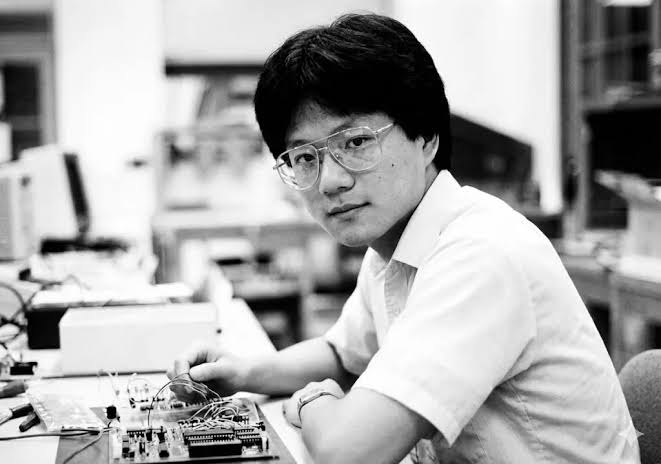
Same motherfucker that shorted airline stocks on 9/11. Same sack of shit that “skipped work at WTC to take kid kid to the first day of school on not the first day of school.”
@JRenardiere C'est vraiment dégueulasse !
On veut juste vivre humblement et être valorisé au prix du labeur. Y'a rien de sorcier, putain ! Institution pourrie !
En Rhône-Alpes, une étudiante témoigne de ses difficultés financières, qui
Elle doit se priver de repas et renonce quasiment à toutes les sorties et aux loisirs
« Je saute des repas.
Je ne mange pas le soir.
Les aides ne sont pas assez importantes »
The board of NVIDIA is no longer acting in the best interests of its shareholders but at the behest of an external influence, foreign power, or a coordinated media campaign financed by the same.
1) Alice Huang is has not been determined to be a Chinese spy as per the DOJ, FBI, and Govt Singapore
2) NVIDIA complied with the Dept of Commerce request to put Megaspeed on a Do Not Sell list and has not been accused by any judge or court of violating export controls
3) The media campaign against Jensen started with extremely strong claims and has since devolved into petty character assassination over things like tipping waiters, pushing people to eat brisket at company events
There are a few organizations that have been pushing the media campaign - the New York Times, the Economist, and the WSJ with the most prominent controlling interests being the Murdoch family for WSJ and Ochs-Sulzberger for the NYT
Here is what I think this means -
Jensen is just the first in what will be a coordinated series of takedowns of public CEOs in order to ensure that no private citizen or individual is 'too powerful' to be controlled, coerced, blackmailed, into complying with an authoritarian control agenda
I would not think this if it were not Anthropic doing the following:
1) Claiming that there is a large percentage chance AI destroys humanity
2) Going to market with the largest IPO in history to fundraise to accelerate AI development
3) Openly claiming that open source is too dangerous because it means individual users 'cannot have their sessions monitored or remotely de-activated'
I see it as imperative to the long arc of history that such coordinated media campaigns to seize control of strategically important companies are viciously opposed, both by the public, the broader media landscape, politicians, and activist investors
This is while Jensen Huang has not been convicted or event accused of any serious crimes or breaches of conduct by any court except the court of public opinion and sensationalist news
It's truly a sad day for capitalism and the free world and forebodes sadly for the future of free speech and economic self-determination into the future.
Tu t'appelles Nicolas, tu as 30 ans, et ce mois-ci tu as ouvert ta fiche de paie comme on ouvre un courrier d'huissier.
Net : 4 000 €. Tu étais plutôt content. Puis ton regard a glissé vers la ligne du bas : ce que ton employeur débourse vraiment, environ 6600 €. Tu as sorti la calculette. Tu as recompté trois fois, en espérant que les chiffres changent d'avis. Ils sont restés butés.
Alors tu fais l'inventaire. Six heures aux urgences. Le train de 7 h 42 supprimé. La route qui ressemble à un gruyère. Le spécialiste qui te reçoit dans huit mois. Et tu te demandes : tout ça, c'est avec mon argent ?
Ton coupable est tout trouvé : l'État. Un guichet qui prélève avec la ponctualité d'une horloge suisse et qui rend le service avec la célérité d'un escargot en grève.
Et tu n'as pas fini : il reste l'impôt sur le revenu, la TVA sur ton café, les taxes sur ton plein d'essence. Tu as l'impression de travailler jusqu'en juin pour un propriétaire invisible qui ne répond jamais à tes mails.
Ce soir à l'apéro, tu vas en parler. Ton beau-frère lèvera les yeux au ciel. Ta femme dira « oui, chéri ». Toi, tu plaideras avec la gravité d'un procureur contre un tableur du ministère.
Le plus vexant, c'est qu'au fond, tu sais que cet argent, qualifié de "salaire différé", tu n’en verras jamais la couleur. Et payer une assurance dont personne ne t'a jamais montré le contrat, ça agace. Surtout quand, le jour du sinistre, il faut prendre un ticket.
Tu ranges ta fiche de paie. Tu soupires. Tu te fais un café. Et tu te dis que dans ce pays, le plus beau métier, c'est peut-être le parasite social qui encaisse.
🚨🇫🇷 ALERTE INFO | Des policiers ont violemment interpellé un lycéen, notamment en lui faisant subir un étranglement, ce lundi au lycée Mozart du Blanc-Mesnil (Seine-Saint-Denis). Le jeune homme tente de demander de l’aide en faisant plusieurs signes de la main et tapote à plusieurs reprises sur le bras du policier pour qu’il relâche sa prise. (Images Impact)
Si este hombre hubiera ganado la guerra hoy Europa no estaría ardiendo,tú tendrías trabajo,casa y tendrías 3 ó 4 hijos que estarían jugando en la calle con sus amigos
En vez de eso los judíos y masones te han robado tu salud,tu presente y tu futuro
Goy🫵
Prediction. Screenshot this post, we'll talk again in five years.
They're going to pull it off. Jensen Huang is going to be pushed out of Nvidia.
And here's what happens next.
Elon hires Jensen and puts him in charge of Terafab.
He's already said it publicly: hiring him would be an honor. And Terafab is the project made for him. A chip factory Musk wants to be the largest ever built, one terawatt of compute per year, from design to packaging under one roof. Terafab's challenge is to do in a few years what the industry took decades to build. There's only one man on Earth who knows every layer of that stack.
They execute like absolute maniacs.
Musk brings speed, capital and appetite for risk. Jensen brings thirty years of mastery of the stack: architecture, software, customers, supply chain. Musk builds factories faster than anyone alive. Jensen knows exactly what to put inside them. It's the only duo in the world capable of compressing a decade into three years.
SpaceXAI merges with Tesla.
This isn't even science fiction anymore: independent committees are already studying the merger. Rockets, satellites, AI, robots, self-driving cars, energy, and now chips. One single entity, integrated from silicon to orbit.
The group climbs to $50 trillion.
Today, SpaceX and Tesla are worth around $3.4 trillion combined. $50 trillion sounds insane. But remember: ten years ago, Nvidia was worth a few tens of billions. When you own superintelligence, the robots that do the work and the rockets that go to space, you don't capture a market. You capture the economy.
Elon buys Nvidia.
Meanwhile, Nvidia without Jensen does what every company does after losing its founder: it manages. It protects its margins. It loses ground to its own customers' in-house chips. And one day, it becomes a target. For a $50 trillion group, buying Nvidia is just one acquisition among others.
Jensen becomes the chip boss again.
He takes over the semiconductor division of the new entity. Pushed out of his own company, he gets it back from above, inside the largest industrial group in history.
Sounds crazy? Steve Jobs did exactly that. Pushed out of Apple, he came back when Apple bought NeXT. You know the rest.
Nvidia's board thinks it's getting rid of a problem.
It's creating the biggest competitor in its history.
See you in five years.
Imagina lavar platos en un Denny’s a los 15 años.
A los 30, fundar una empresa en una mesa de ese mismo restaurante.
Estar a solo 30 días de la quiebra.
Y 33 años después, dirigir la primera compañía pública de la historia en alcanzar los US$5 billones de capitalización.
Su nombre es Jensen Huang, fundador de Nvidia.
Aunque hoy todo el mundo habla de él, la mayoría apenas conoce su nombre desde hace dos o tres años.
Pero su historia comenzó mucho antes de la revolución de la inteligencia artificial.
Nació el 17 de febrero de 1963 en Taiwán.
A los nueve años fue enviado a Estados Unidos y terminó en una institución de Kentucky que su familia había confundido con un internado, pero que funcionaba como un reformatorio.
Allí limpiaba baños.
Años después trabajó lavando platos y atendiendo mesas en un Denny’s de Portland.
Estudió ingeniería eléctrica en Oregon State, donde conoció a Lori, quien se convertiría en su esposa. Posteriormente pasó por Stanford, AMD y LSI Logic.
Hasta que llegó el 5 de abril de 1993.
En un Denny’s de San José, junto a Chris Malachowsky y Curtis Priem, fundó Nvidia.
Tenía 30 años y una idea: desarrollar tecnología gráfica capaz de transformar la computación.
Pero el camino estuvo lejos de ser sencillo.
Su primer chip fracasó.
El segundo tampoco consiguió los resultados esperados.
En 1997, cuando Nvidia lanzó el RIVA 128, la empresa estaba al borde del colapso.
Huang ha contado que apenas les quedaba dinero para pagar un mes de nómina.
De aquella experiencia nació una filosofía que lo acompañaría durante décadas:
"Nuestra empresa está a 30 días de quebrar".
En 1999, Nvidia salió a bolsa a US$12 por acción, con una valoración aproximada de US$343 millones.
Ese mismo año presentó la GeForce 256, comercializada como la primera GPU del mundo.
En 2006 llegó CUDA, una tecnología que permitió utilizar las tarjetas gráficas para mucho más que videojuegos.
En 2012, AlexNet demostró el potencial del aprendizaje profundo utilizando GPU de Nvidia.
Y entonces llegó ChatGPT.
De repente, el mundo necesitaba exactamente la infraestructura que Huang llevaba décadas construyendo.
Lo que parecía un éxito de la noche a la mañana era el resultado de 30 años de trabajo.
En mayo de 2023, Nvidia alcanzó US$1 billón de capitalización.
En junio de 2024 superó los US$3 billones, mientras Huang era recibido en Taiwán como una estrella de rock. La prensa bautizó el fenómeno como Jensanity.
Y en octubre de 2025, Nvidia se convirtió en la primera empresa pública en alcanzar los US$5 billones.
Para dimensionarlo:
Ajustado por los splits, el precio de salida a bolsa equivalía aproximadamente a US$0.025 por acción.
El 11 de noviembre de 2026 cerró en US$173.73.
Una multiplicación cercana a 6,949 veces.
Su patrimonio también experimentó una transformación extraordinaria.
En 2023 ocupaba el puesto 76 de Forbes, con una fortuna estimada de US$21,100 millones.
En noviembre de 2026, su patrimonio rondaba los US$151,000 millones, situándolo entre las personas más ricas del mundo.
Sin embargo, esta semana su nombre volvió a los titulares por motivos muy distintos.
Huang quedó envuelto en una controversia personal y en informaciones periodísticas sobre un presunto vínculo con espionaje chino, una acusación que no está demostrada y que China niega.
En medio de la polémica, Nvidia perdió un 9.5% en dos sesiones bursátiles, aunque no puede atribuirse toda esa caída a la controversia.
Y aquí hay algo que vale la pena recordar:
Una trayectoria empresarial extraordinaria no convierte a nadie en una persona perfecta.
Podemos reconocer su visión, estudiar sus decisiones y admirar lo que construyó sin confundir el éxito profesional con la integridad personal.
Porque la historia de Nvidia no es una historia de perfección.
Es una historia de fracasos, riesgos, perseverancia y decisiones que tardaron décadas en dar sus frutos.
Jensen Huang pasó de lavar platos a dirigir una de las empresas más valiosas de la historia.
Y durante buena parte de ese camino, casi nadie sabía quién era.
33 años para construirla. Dos o tres para que casi todos aprendieran su nombre.
for those who don't know what is actually happening.
jensen huang has opposite viewpoints of the directions of ai than the majority of ai frontier labs in the us.
frontier labs don't want open source models to compete with them and the us doesn't want to lose the ai race to china.
jensen still wants the us to win the ai race ofcourse, but he is not anti competition either.
he has made it very clear over the years he doesn't care where his customers are from, as long as they can effort his compute.
the last decade all kinds of export controls on gpu's have been set by the us government in the hopes to slow down china's economic growth together with the need for nvidia to create a seperate class of gpu's specifically made for the chinese market.
frontier labs like anthropic have tried very hard to gate keep open source models from progressing to were they are today. Jensen doubled down on his stance back in july with the " open weights and american ai leadership " letter.
the only way to slow down that growth is to nationalise nvidia or to get him out of his leadership position, so they can have majority share/ influence over the board and nvidia's future directions.
jensen is in the way of this plan, not only because of his believes of what the future of ai should be, but jensen also has been the ceo and founder of nvidia for over 33 years. he is also the largest individual share holder in the company with 3.6% / 3.8% in shares.
nvidia and the majority of the ai /tech industry, is what is it today because of him and everyone in tech knows that.
getting him out of his position will be incredibly hard. even if they happen to be for valid reasons such as his recent affairs.
if they were to succeed in replacing him. whoever is coming in next as a ceo is compared to jensen's influence on nvidia and the direction of ai, a puppet with very low control over the company's actual direction.
Jensen Huang is out because Israel’s goal is to privatize AI and use it to kill, imprison & sanction people on an individual level when the Digital ID/CBDC control grid is rolled out.
الراجل اتعمله كماشه علشان انثروبيك عايزه نيفديا متشغلش موديلات صيني اوبن سورس، عارفين نقطة ضعفه و فشخوه في 48 ساعه
بينما كل الي طلعوا في ملفات ايبستين مكملين عادي الله ينور ❤️
I am now convinced the targeting and removal of Jensen Huang is actually a deep state coup to seize control of Nvidia, and tomorrow I bring the receipts to back up that assessment (in my podcast).