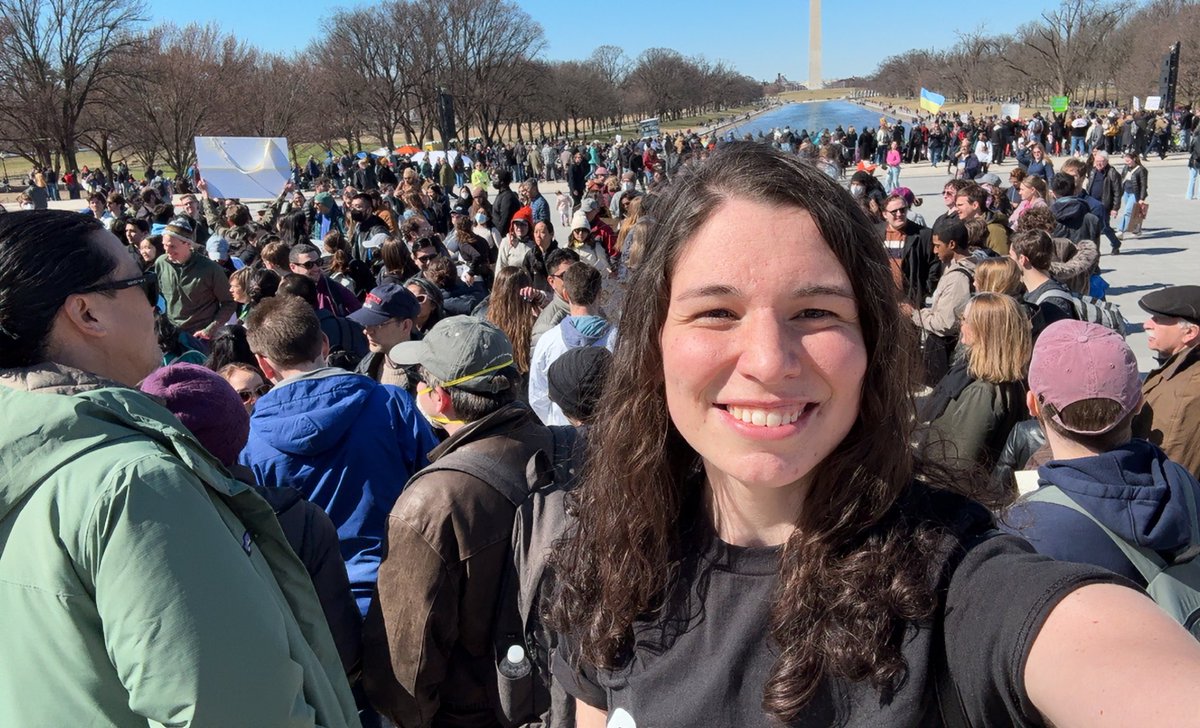
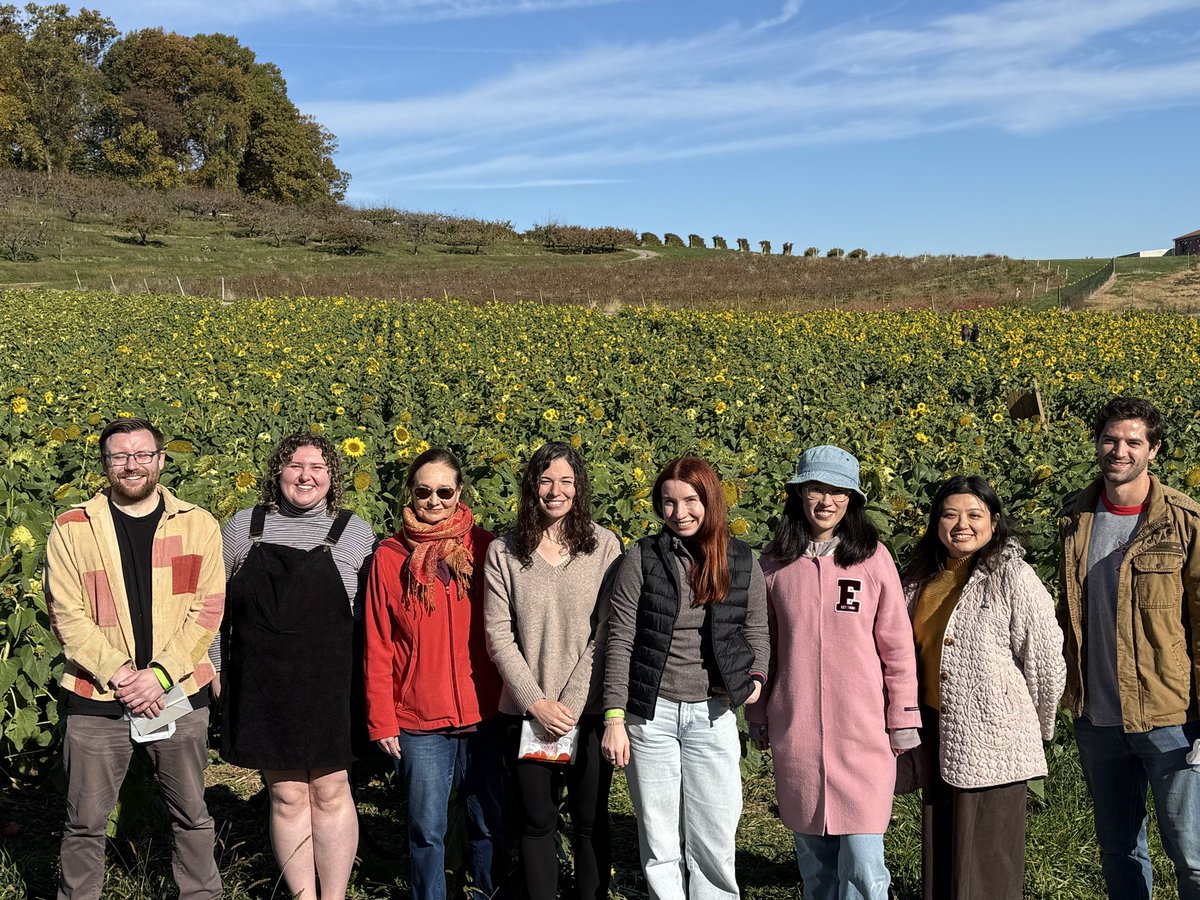
I’m honored to have been awarded the NIH F31 Ruth L. Kirschstein National Research Service Award (NRSA) fellowship from @NIAIDTraining! So thankful to my awesome mentor @woodson_lab for all her support & guidance. Go RNA (and Hfq)! #WomenInSTEM#Gotthegrant 👩🔬🧬
@Society4Science@MayaAjmera Sooo awesome!! 👏👏 Maya, I’m grateful for all that you and @Society4Science do. I’m a 2017 ISEF alum - my own research on the Tau protein was inspired by a family member with Alzheimer’s. ISEF solidified my passion for biophysics, and I’m now a PhD student at Hopkins.
@sciqst@woodson_lab (2/2) In contrast, uridines in the proximal pore may undergo local motions within one binding pocket, but movement to a different pocket is restricted. Together, if an mRNA is also bound to Hfq, these motions may allow the sRNA to rapidly explore base pairing opportunities.
@sciqst@woodson_lab (1/2) Thanks! That’s a great question. We don’t know the exact physical origins of these motions yet, but we have some good ideas from structures and models. At the rim, uridines may slide / transfer between arginines while staying globally associated with Hfq.
Our new paper is out! Using 19F NMR, we show that Hfq rewires the conformational dynamics of a model sRNA in a site-specific manner. Uridines at the rim undergo faster exchange (~100 μs) than those in the proximal pore (~300 μs). Congrats Elise! 🎉🎉 https://t.co/ndsRJ18Ub1
@may_khanna@woodson_lab Thanks, me too! 😊😊 I hope this strategy can be used to look at how other RNA-binding proteins alter the μs-ms dynamics of their RNA ligands!
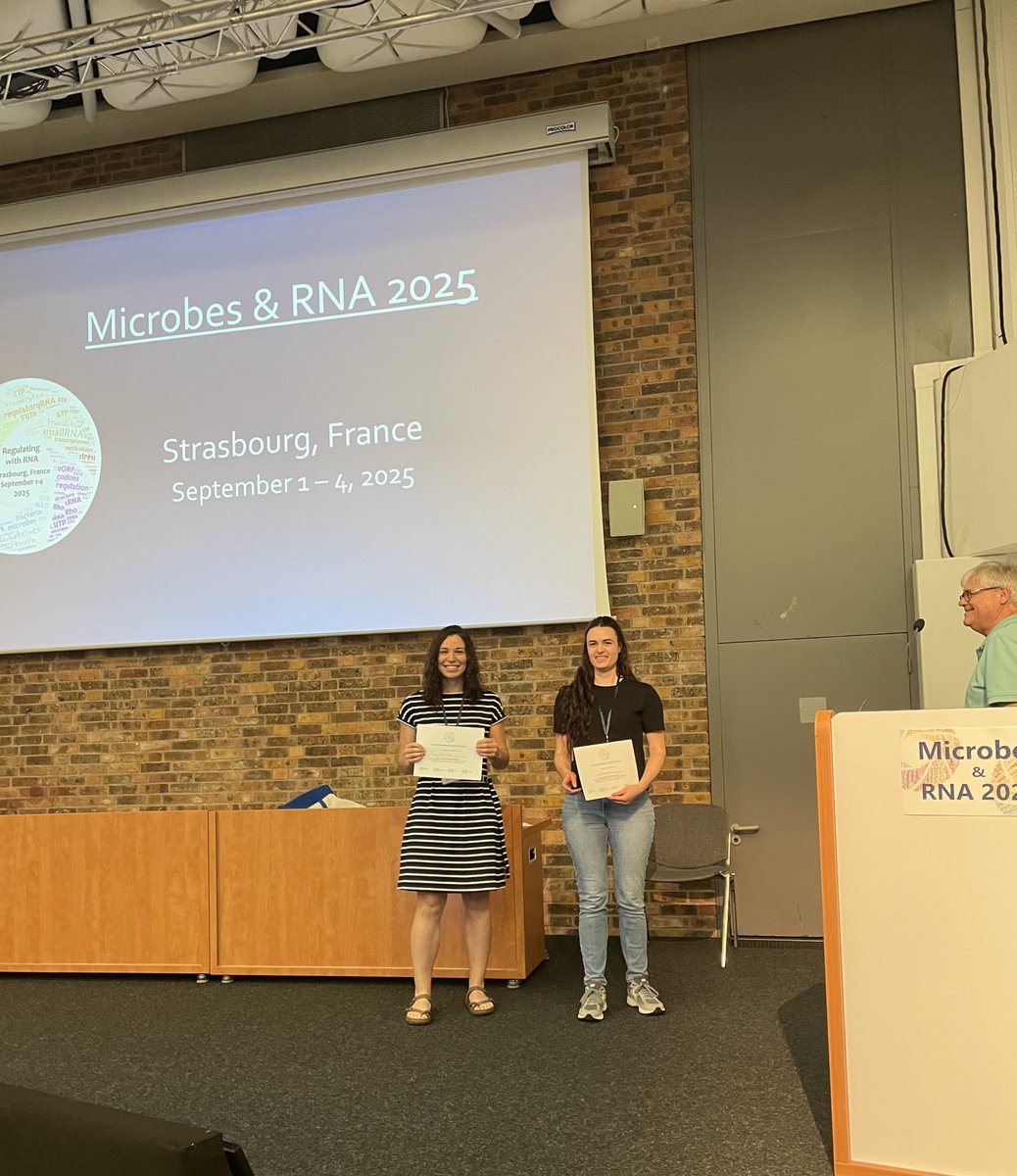
I’m so honored and thankful to have won a poster prize @MeetingRna! I learned a lot this week from this lovely community. Thanks to the organizers for putting on another excellent meeting.
Our new paper is out in PNAS! We show that competition for binding to the Hfq matchmaker disfavors mismatched sRNA-mRNA combinations while allowing matched sRNA-mRNAs to form stable pairs. Kudos to Jorjethe Roca and Yi-Lan Chen for their fantastic work! https://t.co/EqhYB0ZGDs
@charliersmith1 You guys make a beautiful couple! I’m so sorry you’ve had to deal with so much hate (those folks are just unhappy and insecure). What you two have is special, cherish it and don’t stop posting!