„Frauen reden mehr als Männer“
Eine aktuelle Studie ergab, dass Männer die Gesprächsanteile als gleichberechtigt empfanden, wenn Frauen 15 % der Zeit sprachen (Männer 85 %). Wenn Frauen hingegen 30 % der Zeit sprachen, empfanden Männer dies als eine Dominanz der Frauen.
Erkeklere fikirlerinizi anlatmayın. Çalıyorlar. Hem fikrinizin hem de emeğinizin üstüne çöküyorlar. Buna Mathilda etkisi deniyor. Akademik alanda, iş hayatında, en basitinden kişisel hayatımızda bile yanımızdaki erkekler, biz ilginç bir şey söylediğimizde bunu kendileri bulmuş gibi anlatıyor, üstelik bunu biz yanlarındayken yapıyorlar. Herhangi bir fikir hırsızlığından çekinmeleri ya da utanmaları yok. O yüzden bunların yanında ağzınızdan çıkanlara dikkat edin.
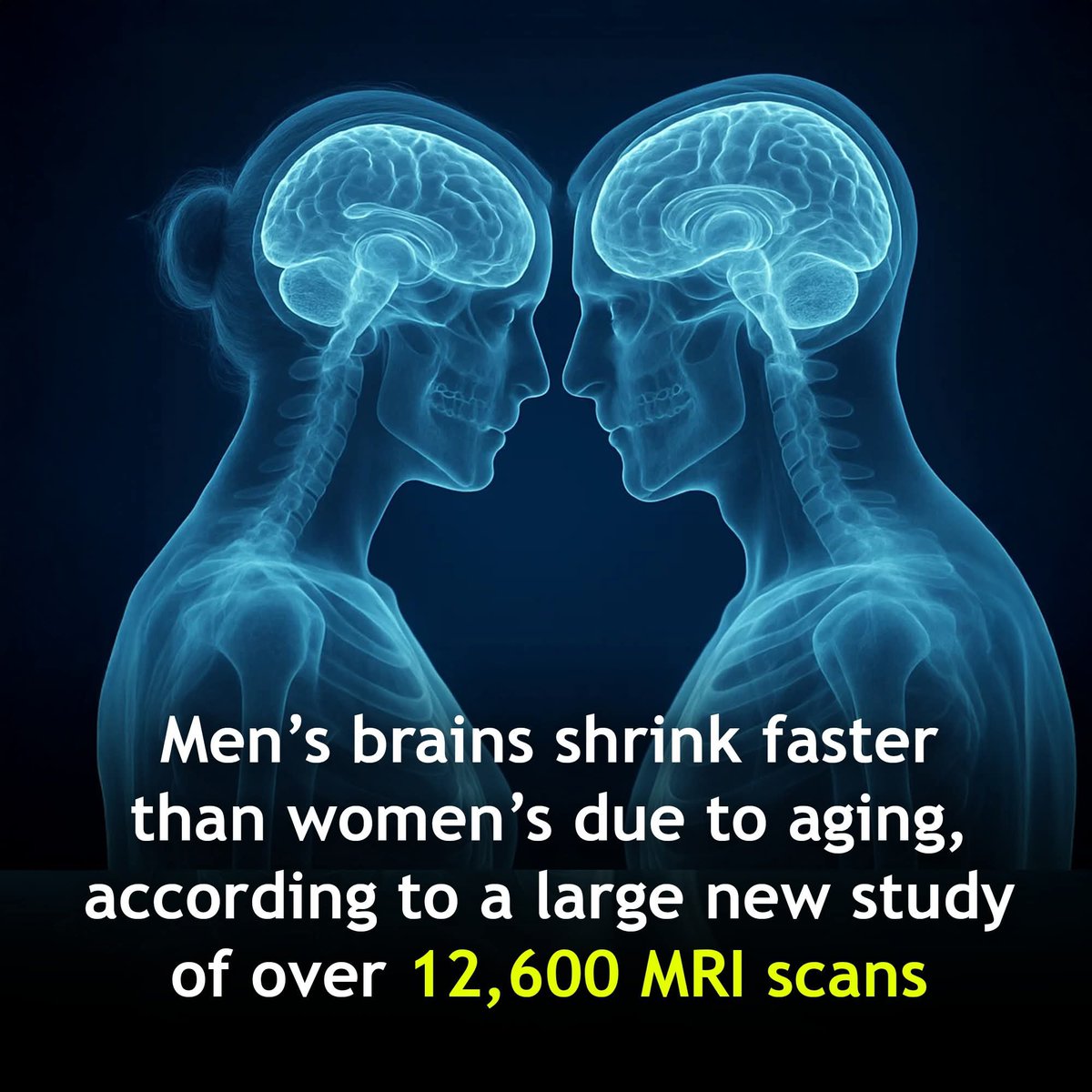
🚨 A new study has found that men’s brains shrink faster than women’s as they age.
Researchers from the University of Oslo analyzed more than 12,600 MRI scans from nearly 4,700 healthy people between the ages of 17 and 95. They discovered that men lose brain volume more quickly and in more areas than women — especially in regions linked to memory, touch, and vision. For instance, one area that helps process touch shrank by about 0.2% per year in men, compared to 0.12% in women. The brain changes happen slowly throughout life but speed up noticeably after age 60.
Even after accounting for factors like head size, education, and life expectancy, the results remained the same — men’s brains age faster. This finding surprised many scientists because women are almost twice as likely to develop Alzheimer’s disease. The study suggests that women’s higher Alzheimer’s rates are not due to faster brain aging. Instead, other factors may play a role, such as hormonal changes after menopause, genetic differences like the APOE ε4 gene, or simply the fact that women tend to live longer.
Researchers also found that the APOE ε4 gene might affect women differently, possibly making them more sensitive to toxic protein buildup in the brain. These proteins, called tau, normally help brain cells function, but in Alzheimer’s disease they become tangled and block communication between neurons — eventually leading to cell death.
Source: Ravndal, Anne, et al. (2025). Proceedings of the National Academy of Sciences (PNAS).