Welcome to my profile 👋🏾
I’m a licensed Digital Forensic Investigator passionate about tech, cybersecurity, digital investigations, and educating people through simple tech content.
Feel free to check the Highlights section to see some of my work, or use the link in my bio for more.
Glad to have you here.
If you’re already in cybersecurity or have some foundational knowledge and you’re looking to explore Digital Forensics, I have something interesting coming your way.
I’ve got something cooking for you, and I’ll be sharing more details soon.
For now, like and repost this post so I know who’s interested.
Stay tuned. 👀
A network administrator needs to assign IP addresses for a new subnet that must support at least 50 hosts.
Which subnet mask would be the most efficient choice?
A) /24
B) /25
C) /26
D) /27
Bybit got hacked. $1.5 BILLION stolen.
Binance got hacked. $6.3 BILLION stolen.
And now OKX???
Reports of a $2 BILLION+ incident are circulating.
What is happening to the biggest names in crypto? 😳
Cyberattacks are surging in 2026, putting this year on course to become the worst on record.
So far, 21,100 attacks have been reported, three times the number recorded in 2023.
Even more concerning, AI is now driving 2 in every 4 breaches.
This is the right wto get into Cybersecurity
Day 0️⃣9️⃣/100✅
#100DaysOfCybersecurity with @elormkdaniel@sochiblessed
Today, I learned about software vulnerabilities and the changing cybersecurity landscape.
💠 Categories of software vulnerabilities, including buffer overflows, access control problems,
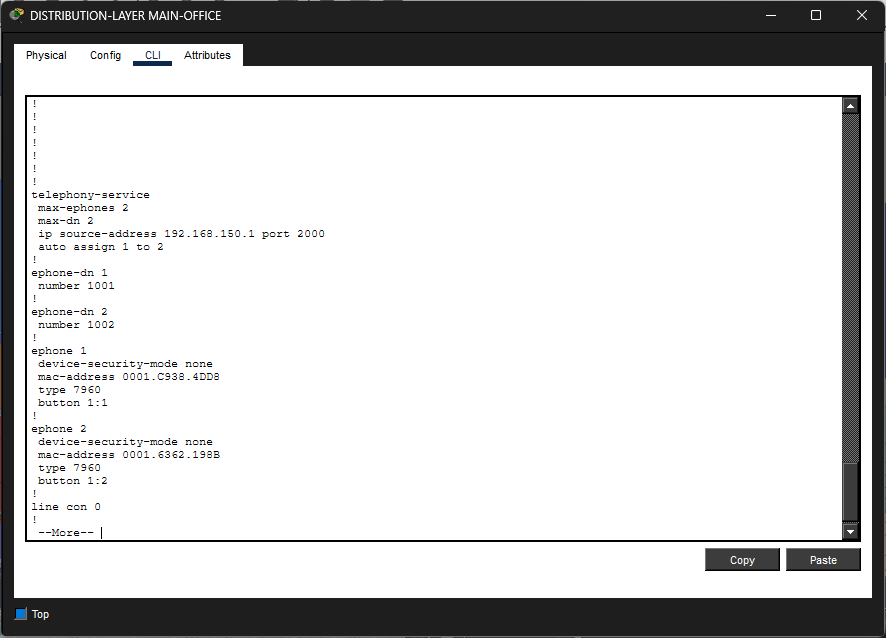
Cisco VoIP implementation
The configs still feel vague ....but was worth a shot today at my home lab
Cisco's technology is pretty spot on
Next will be implementing DSCP markings
Thanks to @elormkdaniel for the inspo
@wildfl0w6r@IgbojionuL31968@Wittynetworks#ccna#VoIp
GPS is free to use, but the satellites aren’t free to build, launch, or maintain.
So who’s paying for them?
The United States government.
GPS (Global Positioning System) is owned and operated by the US government, specifically the US Space Force, which maintains the satellite constellation and its supporting ground infrastructure.
The interesting part is that GPS was originally developed for military purposes. The US military needed a reliable way to determine the position of ships, aircraft, vehicles, and personnel anywhere in the world.
But the system was eventually made available for civilian use too.
Today, your smartphone, car navigation system, smartwatch, and countless other devices can receive GPS signals without paying a subscription to access the satellites.
Here’s how the business model works.
GPS satellites continuously broadcast radio signals containing information about their location and the precise time the signals were transmitted.
Your phone receives signals from multiple satellites and calculates its own position by measuring how long those signals took to arrive.
Your phone doesn’t actually send a request to the satellites. It simply listens.
That’s a big reason why there’s no per-use charge. The satellites broadcast the signals openly, and receivers can use them without needing individual accounts or subscriptions.
But someone still pays for the infrastructure.
The US government funds satellite replacements, launches, ground stations, maintenance, and system upgrades through public funding.
And there’s another interesting detail: GPS isn’t the only satellite navigation system. Europe has Galileo, Russia has GLONASS, and China operates BeiDou.
So when you open Google Maps and ask for directions, you’re benefiting from infrastructure that governments spend billions maintaining.
Can I ask a REALLY dumb question?
GPS is completely free.
Satellites are literally orbiting Earth right now to guide your car to the nearest coffee shop.
No monthly bill.
No setup cost.
Works anywhere on the planet.
So who is actually paying billions to launch and maintain all those satellites?
How is this just free for everyone to use? 🤔
Beginners in Cybersecurity, this is for you💯
Follow these channels on YouTube to learn about NETWORKS👇🏽👇🏽
Professor Messer
PowerCert
Jeremy’s IT Lab
David Bombal
Sunnyclassrom
Practical Networking
CertBros
Chris Greer
NeworkChuck
Null Byte
Network Direction
Josh Madakor
As promised, below is a step by step guide on how to build the lab in the quotes.
Part 1: https://t.co/3YtU9bkNiG
Part 2: https://t.co/AyniUJxBPm
Part 3: https://t.co/vQLcDHmgpm
Part 4: https://t.co/JkTqvDR8in
Part 5: https://t.co/GQT5bhTnG6
Beginners in CYBERSECURITY
Let's go on a thrilling journey to enhance our skills with this hands-on lab. it's perfect for you, and the best part? It's SCALABLE!
Get ready for an easy-to-follow, step-by-step guide that breaks down the setup process.
How an Office Network Works.
Every modern office depends on a network system to connect employees, computers, and servers. Here’s how it works step by step:
Internet → The network starts with the internet connection.
Firewall → Acts as security, blocking unauthorized access and protecting sensitive data.
Router → Distributes the internet to different devices inside the office.
Server → Stores files, applications, and resources for everyone in the office.
Switches → Connect multiple computers in the office to the server and each other.
Network Computers → Employees use these to access files, share resources, and work together.
Wireless Access Point → Provides WiFi for laptops and mobile devices.
Together, this setup ensures secure, fast, and reliable communication inside the office.