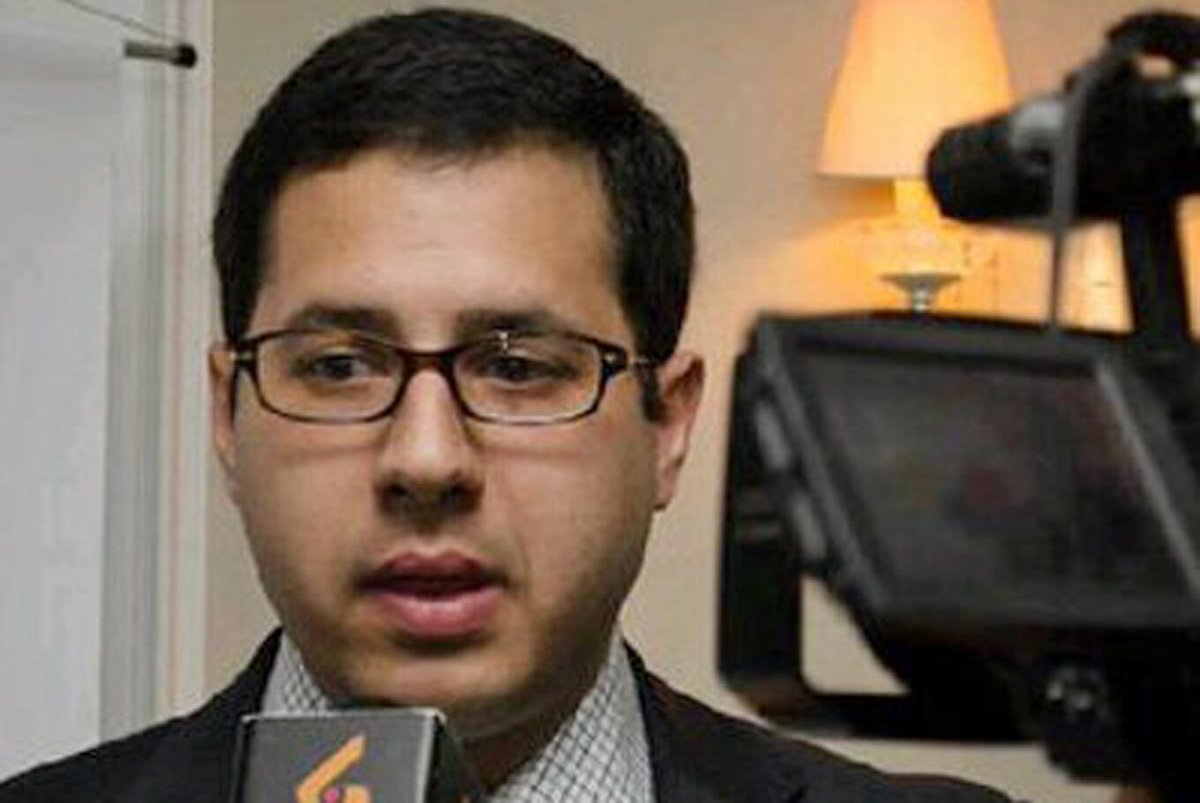
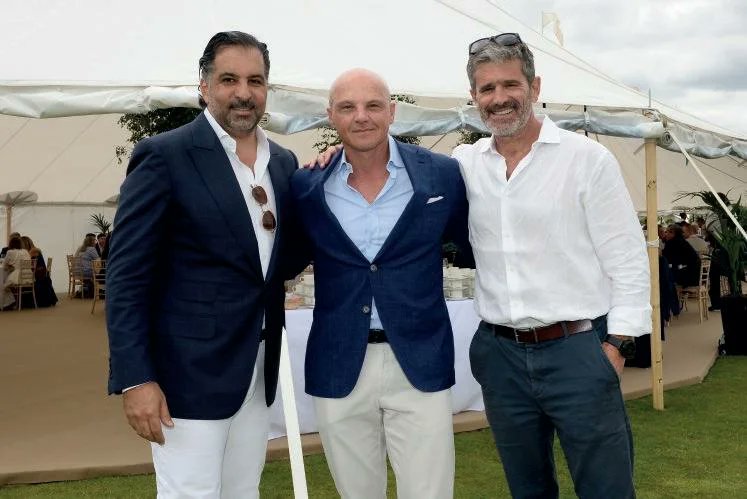
Rodolfo Gutierrez, identified as one of those responsible for the violent seizure of properties in the mine Saint Rita, remains fugitive from justice after being formally denounced by the alleged suspect sexual abuse and rape of a minor under 14 years of age.
Gutiérrez's name has circulated widely on social networks in recent days, after several videos were spread in which he appears accompanied by dozens of men while they violently occupy properties in the mining area of The Callao, south of the Bolívar state.
He February 4 of this year, in one of his last decisions as attorney general, Tarek William Saab he ordered his release, despite the fact that the mining leader was detained for other crimes. The measure generated strong criticism in the area, where residents claim that the decision left the community without protection against new actions by Gutiérrez.
Rodolfo Gutiérrez was president of ASOPEMICA (Association of Small Miners of El Callao) and he remained detained after being accused of stealing two kilos of gold belonging to a society that maintained with the Venezuelan Mining Corporation (CVM).
After his release, he returned to the area of Saint Rita, where neighbors report that he resumed violent control of properties and mining exploitation areas. According to testimonies from inhabitants, more than 100 people from the community they are currently affected by the actions of the group that accompanies them.
Residents also report acts of vandalism in mining facilities, theft from workers and threats against those who oppose the occupation of the land.
Accusations of violence and illegal occupation are now added to the accusations of violence and illegal occupation allegations of sexual abuse. For the last week, at least six women have reported it on social networks having been victims of sexual assault by Gutiérrez.
The situation came to a head this weekend when it was recorded a formal complaint for the alleged rape of a minor under 14 years of age, a case that has generated indignation among residents of the area and organizations that continue the security crisis in the mining areas of the state of Bolívar.
According to records that can be consulted on the website Supreme Court of Justice (TSJ), this wouldn't be the first time that Rodolfo Gutiérrez faces accusations related to sexual crimes.
Faced with the new case, the community of The Callao wait for him Venezuelan Public Ministry do not continue turning a blind eye and end the impunity that this criminal enjoys.
Serafín García Armas and his daughter Karina García Gruber suffer major legal defeat against Venezuela in landmark ruling
The District Court of Columbia has ruled in favor of Venezuela in the long-standing legal case initiated by businessman Serafín García Armas, dismissing his nearly $400 million claim filed under the premise that he was a Spanish citizen protected by the Bilateral Investment Treaty (BIT) between Spain and Venezuela.
The decision, handed down within the framework of the arbitration at the Permanent Court of Arbitration (PCA), concluded that the tribunal lacked jurisdiction to rule on the matter, determining it was a dispute between Venezuelan nationals, not protected under the BIT. García Armas had argued that his investments—made through companies Alimentos Frisa and Promotora Mediterránea—were improperly expropriated during the wave of nationalizations led by Hugo Chávez.
However, Venezuela's legal team successfully demonstrated that both García Armas and his daughter Karina García Gruber (niece of Chavista Rear Admiral Hernán Grüber Odremán) were Venezuelan citizens at the time the investments were made. As such, they could not qualify as foreign investors under the treaty. The court accepted the argument that their attempt to internationalize the case to seek massive compensation was legally unfounded.
A history of scandal
García Armas’s case goes far beyond a mere legal battle over expropriated assets. His name has surfaced repeatedly in investigations and accusations involving corruption, currency fraud, money laundering, and tax evasion both in Venezuela and abroad.
In the 1990s, when he was known as "the fruit king," he was investigated by the Venezuelan Congress for abusing preferential exchange rates to import items such as contaminated Chinese garlic, colored fish, and fruit. He was later sued by supermarket chains like Central Madeirense and Plaza’s for selling banned Spanish deli meats on sanitary grounds.
He also came under scrutiny in the United States, where the DEA investigated his ties to Ocean Bank, a financial institution later probed for money laundering. Despite this, García Armas managed to acquire Ocean Mazda—one of Florida's top Mazda dealerships—together with his children Karina, Michael, and Jessica García.
In Chile, he faced an investigation over tax evasion exceeding $80 million tied to overpriced food exports destined for Venezuela. Meanwhile, the Venezuelan Attorney General’s Office accused him of embezzling $49 million through padded imports and shell company operations, partnering with Chilean firms like Benipaula S.A. and MSM S.A.
Fishing in troubled waters?
From his Coral Gables mansion, García Armas has attempted to join the group of businessmen trying to collect multimillion-dollar awards tied to Venezuela’s overseas assets, such as Citgo, despite the serious allegations surrounding his business record.
This strategy aligns him with others like Tomás Elías González Benítez and Eligio Cedeño—figures accused of having amassed fortunes through fraudulent dealings with the Venezuelan state and who now seek to benefit from international seizures of the country's assets.
Court filings show the García family seeking recognition of an arbitration award totaling over $351 million, broken down as follows:
USD 242.4 million for Serafín García Armas
USD 94.5 million for Karina García Gruber
USD 14.4 million for other associated claimants
Although Venezuela’s lawyers managed to have part of the award annulled by the Paris Court of Appeal in October 2023, the remaining portion remained in force and served as the basis for their recent U.S. action.
Beyond the award: justice or impunity?
Critics argue that permitting such claims without weighing the background of the plaintiffs may open the door for actors who were part of Venezuela’s plundering to now portray themselves as victims. Civil society organizations have urged the courts to consider the extensive record of irregularities surrounding García Armas.
Sources close to the case suggest this ruling could set a precedent affecting similar cases brought by former Chavista contractors attempting to frame contractual or commercial disputes as international investment conflicts through acquired nationalities.
For many observers, this is more than a legal fight—it’s a test of whether international justice can tell the difference between legitimate investors and those who grew rich at the expense of a nation’s collapse.
Siri Evjemo-Nysveen: The Norwegian Banker Behind Venezuela’s Covert Oil Laundering Network
At the intersection of private banking, sanctioned oil trade, and elite sports lies Siri Evjemo-Nysveen, a Norwegian executive whose role in Venezuela’s offshore corruption network has largely escaped public scrutiny—until now. As the wife and financial partner of Italian oil trader Alessandro Bazzoni, Evjemo-Nysveen helped engineer one of the most opaque money laundering schemes linked to PDVSA, Venezuela’s state oil company.
Her involvement offers a rare look into how proximity to wealth and access to international finance can be exploited to legitimize billions derived from sanctioned oil operations.
Banking credentials and access to Swiss capital
In 2020, Evjemo-Nysveen was appointed to the board of directors of MBaer Merchant Bank in Zurich. The institution, backed by Michael Baer, heir to the Julius Baer banking dynasty, presented itself as a boutique private bank for global clients. But sources tied to Swiss regulators allege that during her tenure, Evjemo-Nysveen helped open accounts for Chavista operators under investigation in the U.S. and Venezuela—including relatives of Tareck El Aissami and allies of PDVSA’s former commercial director, Colonel Antonio Pérez Suárez.
The Swiss bank later distanced itself from the couple after internal documents showed that Bazzoni’s name had been included in confidential board discussions, despite being under U.S. sanctions since 2021. By mid-2023, Evjemo-Nysveen had been quietly removed from MBaer’s board amid growing international pressure.
Shell companies, oil profits, and real estate
Alongside her husband, Evjemo-Nysveen managed a complex web of offshore entities—including Clareville Grove Capital LLP and CGC One Planet—designed to move oil revenues through Dubai, Switzerland, and the UK. These companies were often used to acquire luxury assets, including properties in London, Italy, and the Caribbean, as well as private aircraft and yachts.
At the core of their financial setup was Norge Oil Limited, registered in the Isle of Man. Investigators believe this firm was used to funnel proceeds from oil sold through murky intermediaries linked to Iran and Asia, with the funds being filtered through MBaer and other banks.
The polo laundering operation
But Evjemo-Nysveen’s most unconventional laundering method came through her presence in elite polo circuits. Together with Bazzoni, she co-owns two prestigious teams: Monterosso Polo Team and MT Vikings, both of which regularly compete in tournaments in Argentina, the UK, and Europe.
Authorities in London and Geneva are now investigating whether the purchase and resale of high-performance polo horses—some valued at more than $300,000—were used to launder funds. British agencies believe horses were acquired through Clareville Grove Capital, registered under associates’ names, and resold to clean the money trail. Some of the horses were reportedly seized from Cowdray Park Polo Club, where Evjemo-Nysveen maintains partial ownership.
The case has drawn in over 40 polo professionals, including top Argentine and British players such as Facundo Sola, “Sapo” Caset, Juan Martín Nero, Ignacio Novillo Astrada, and Lía Salvo, among others.
Under investigation and detained in the UK
As Venezuela’s internal PDVSA scandal exploded in 2023, the couple became targets of multiple international probes. Interpol issued a Red Notice at Venezuela’s request, and both Siri and Alessandro were detained in the United Kingdom, where they had been living while operating discreetly from London.
Two of their alleged financial proxies, Erik Roveta and Germán Bonelli, have been apprehended in Greece and Argentina, respectively. Judicial sources suggest that the couple is suspected of laundering over $800 million, largely through oil transactions carried out while Bazzoni was sanctioned by the U.S. Treasury.
Alessandro Bazzoni: The Sanctions‑Evasion Operator Linking Venezuelan Oil, Swiss Banking and Italian Football
For years, Alessandro Bazzoni operated below the radar, yet at the core of the mechanisms that allowed Venezuela’s state oil company, PDVSA, to continue exporting crude despite international sanctions. Born in Milan on July 9, 1971, and currently based in London, the Italian businessman became one of the most effective facilitators of sanctioned oil flows during the height of the chavista energy schemes.
Between 2021 and 2025, Bazzoni was under U.S. sanctions for his role in helping the network led by Tareck El Aissami move Venezuelan crude through shell companies and opaque trading structures. The U.S. Treasury identified him as a central operator who stepped into the vacuum left by Alex Saab after Saab’s arrest in Cape Verde, coordinating oil sales through triangulated routes involving Iran and Turkey. In January 2025, in one of the Biden administration’s final foreign‑policy decisions, sanctions against Bazzoni were quietly lifted amid broader energy negotiations.
The Mexican Axis and PDVSA’s Internal Gatekeepers
At the height of the COVID‑19 pandemic, Bazzoni and his wife, Siri Evjemo‑Nysveen, temporarily relocated to Mexico, where they strengthened their partnership with Joaquín Leal Jiménez, a Mexican operator sanctioned by Washington for his role in the fraudulent CLAP food program and other chavista schemes. Leal — who falsely claimed family ties to Mexican president Andrés Manuel López Obrador — served as a crucial bridge between Caracas, Mexico and Asian markets.
Through Leal, Bazzoni gained access to PDVSA’s internal decision‑makers, including Colonel José Antonio Pérez Suárez, then vice president of Commerce and Supply at PDVSA and now imprisoned in Venezuela, as well as Agriculture Minister Wilmar Castro Soteldo. Another key figure was José Luis Chávez Calva, a former Mexican energy official who acted as a technical and regulatory facilitator, enabling complex triangulations with Asian companies to place Venezuelan crude in sanctioned destinations.
Swiss Banking, MBaer and the Role of Siri Evjemo‑Nysveen
While Bazzoni handled the trading and logistics, the financial architecture of the operation ran through his wife. In 2020, Siri Evjemo‑Nysveen was appointed to the board of MBaer Merchant Bank, a Swiss private bank controlled by the great‑grandson of the founder of Julius Baer. From that position, she played a decisive role in facilitating Swiss bank accounts for Venezuelan officials and chavista intermediaries.
Funds from oil sales were routed through Asia and Dubai, often via Baer Capital Partners, MBaer’s affiliated investment arm. The couple relied on Norge Oil Limited, registered in the Isle of Man, as a vehicle to move proceeds from crude transactions. Following the exposure of the massive PDVSA corruption scandal that led to El Aissami’s downfall in 2023, Evjemo‑Nysveen was discreetly removed from MBaer’s board.
Italian Football and the SPAL Acquisition
Bazzoni’s footprint extends beyond energy and finance. His brother, Lorenzo Bazzoni, emerged as a key figure in the acquisition of SPAL, the historic Italian football club based in Ferrara. Although the deal was fronted by American lawyer Joe Tacopina, who later joined Donald Trump’s legal team, Tacopina publicly acknowledged that the capital came from a “top‑secret Italian family.”
Lorenzo Bazzoni was identified as the family’s representative. The transaction, estimated at over €25 million, raised red flags among financial authorities, given football’s long‑documented use as a vehicle for money laundering. U.S. and European agencies have since placed the deal under scrutiny.
Polo, Elite Circuits and Asset Concealment
Football is not the only sport tied to the Bazzoni network. Together with Evjemo‑Nysveen, Alessandro Bazzoni has been active in elite polo circuits across Argentina, the United States, Italy and the United Kingdom, competing under the banners of Monterosso Polo Team and MT Vikings. The sport, closely linked to high‑net‑worth circles, has repeatedly been used by sanctioned individuals as both a social platform and a laundering mechanism.
British authorities are currently examining the purchase of dozens of high‑value polo horses, allegedly acquired with funds originating from Venezuelan corruption. The couple’s lifestyle also includes luxury real estate in London, properties along the Italian coast, and holdings in offshore jurisdictions, alongside private aircraft, helicopters and high‑end vehicles. Asset management is handled through companies registered in Switzerland, Dubai and the Caribbean, designed to minimize traceability.
Rivalries Within the Sanctions Economy
Bazzoni’s rise did not occur without conflict. His relationship with Alex Saab deteriorated into direct rivalry as both men competed for control over oil routes and subsidized food contracts. While Saab dominated CLAP food logistics and Iranian agreements, Bazzoni focused on technically complex oil markets, leading to clashes over intermediaries and access points.
A parallel rivalry developed with Jorge Andrés Giménez Ochoa, president of the Venezuelan Football Federation and a close ally of El Aissami. Giménez sought to control Turkish logistical corridors, while Bazzoni built competing routes backed by European partners. These power struggles ultimately fractured parts of the chavista sanctions‑evasion ecosystem.
Criminal Probes Still Open
Despite the lifting of U.S. sanctions, Bazzoni remains under active scrutiny. Prosecutors in the Southern District of Florida and the Southern District of Texas continue to investigate his role in the PDVSA corruption schemes. In Venezuela, the Attorney General’s Office has issued an arrest warrant linking him to money laundering, illicit trade and trafficking of strategic materials.
Investigators estimate that the network involving Bazzoni and Evjemo‑Nysveen was responsible for the diversion of more than $800 million, draining PDVSA of critical resources and contributing to the collapse of Venezuela’s food supply chain by using agricultural producers as financial fronts.
These individuals are wanted. They are presumed to have already left Venezuela:
Bruno José Pianezzolla Trujillo
Edymar Martínez Blanco
Ivanna Mariam Vale Colman
Verónica Leal
These are the individuals detained at the SEBIN for investigations into the escape of Francisco Convit Guruceaga:
Alejandro José Arroyo Pérez
Bernardo Tadeo Arosio Hobaica
Daniel Medina Sarmiento
Daniel Uzcátegui Specht
Eugenia Corina Arroyo Pérez