Most leverage products are built for traders who get position sizing wrong.
@2FactorFinance brings Kelly optimized leverage for long term holders. Built on @base, starting with Bitcoin.
No daily liquidation. Public beta is live:
https://t.co/cm5FNlieDs
@2FactorFinance
Genm genlayer fam💜🧡
it’s the little things that make me happy, and lately, finding ways to bring Mochi into them has been one of my favorite things. 💜
today’s creation: a Mochi-inspired salad. 🥗
@GenLayer@RuzgarFlns
Who decides who won a prediction market? Token holders vote. That is what people want, not what happened.
@GenLayer uses a jury of validators running different AI models that must agree.
Start at the Portal, where contributions earn GenLayer Points: https://t.co/5YFdC9C5ga
Contracts pick a place to settle disputes. California, New York, London. Agents about to move $9 trillion had nowhere to pick.
@GenLayer is building that: a jury of validators, each running a different AI model, must agree. No single party owns the verdict.
The internet never had a judge.
AI agents are about to move $9 trillion. Nobody built the part that handles disagreement.
GenLayer did.
And now you can become part of it: https://t.co/vmIxBNIdZu
Most staking platforms force users to lock their tokens, and if you change your mind, all you can do is watch from the sidelines.
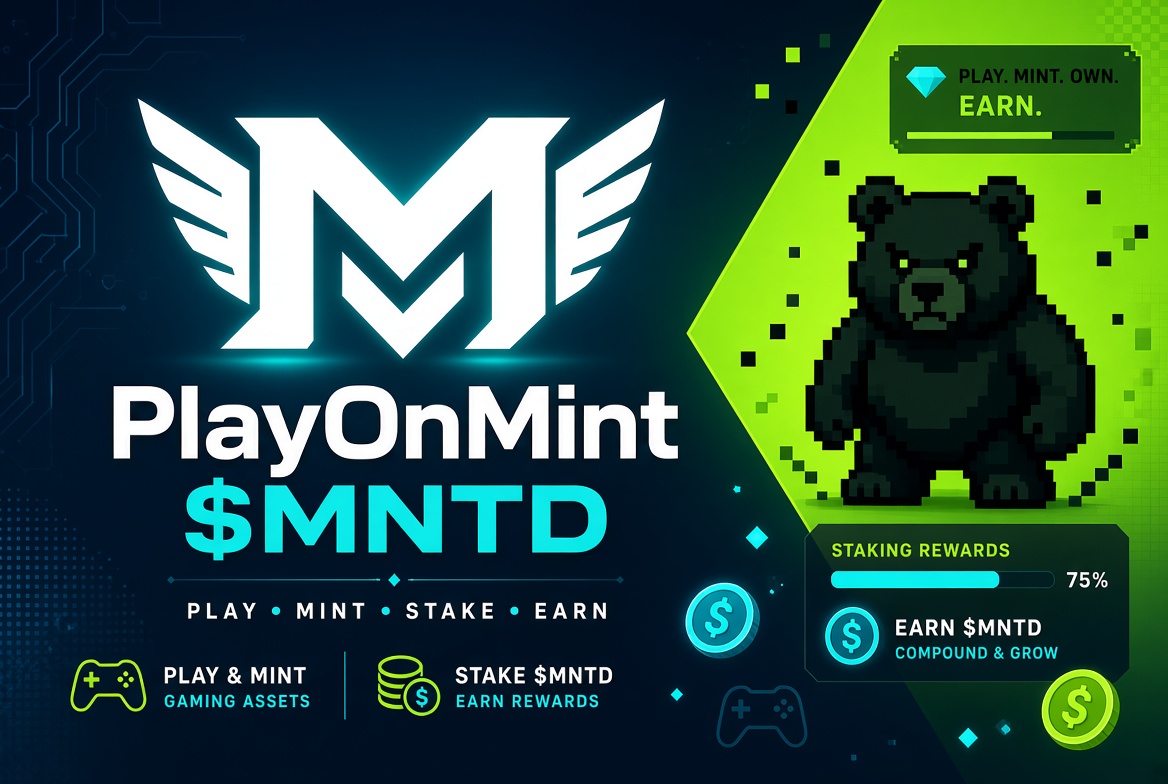
@PlayOnMint changes this model.
Staking $MNTD is flexible by default, with 𝗡𝗢 𝗙𝗢𝗥𝗖𝗘𝗗 𝗟𝗢𝗖𝗞𝗨𝗣, 𝗡𝗢 𝗪𝗔𝗜𝗧𝗜𝗡𝗚 𝗣𝗘𝗥𝗜𝗢𝗗, and 𝗡𝗢 𝗪𝗜𝗧𝗛𝗗𝗥𝗔𝗪𝗔𝗟 𝗣𝗘𝗡𝗔𝗟𝗧𝗜𝗘𝗦.
Rewards are calculated in real time and automatically added to your staked balance, helping you level up your Status faster and increase reward rates across gaming, rakeback, airdrops, and raffles.
If you want higher returns, you can optionally lock part of your balance to get a boost.
It is a transparent tradeoff: give up flexibility, get a better rate.
Nothing is hidden, and the decision is completely yours.
The combined loop works like this: play, earn XP, receive $MNTD, stake, level up, and earn better rewards again.
MintABear is also connected to this system and can increase your reward weight.
Most platforms either lock you in or give you no options.
𝗛𝗘𝗥𝗘, 𝗬𝗢𝗨 𝗛𝗔𝗩𝗘 𝗔 𝗖𝗛𝗢𝗜𝗖𝗘.
@PlayOnMint
$MNTD
In Web3, attention isn’t scarce. The real question is which attention actually matters.
Many projects still measure distribution by impressions and short lived spikes, while accounts that only show up when there is an opportunity rarely contribute to the sustainable growth of an ecosystem.
@NucleusCodes is working exactly on this point: turning participation history into a layer of reputation that separates consistent contributors from opportunistic accounts.
Activity creates history. History creates reputation. And reputation shapes access to opportunities.
For projects, this means reaching people with relevant track records, real reputation, and tangible participation in the ecosystem, rather than simply those who became active for airdrops or short term campaigns.
A distribution model based on earned reputation is more sustainable than simply chasing engagement.
The next phase of Web3 will probably be less about who gets the most attention and more about 𝗪𝗛𝗢 𝗛𝗔𝗦 𝗔𝗖𝗧𝗨𝗔𝗟𝗟𝗬 𝗘𝗔𝗥𝗡𝗘𝗗 𝗧𝗛𝗔𝗧 𝗔𝗧𝗧𝗘𝗡𝗧𝗜𝗢𝗡.
1.33x BTC leverage without liquidation.
That’s the interesting part of @2FactorFinance.
BTC Jr gives leverage, BTC Sr earns the yield.
Simple idea. Different structure.
Try it: https://t.co/cm5FNlieDs
@base
@AvinEsmaelpour Everyone's racing to build agents that can act. The teams building accountability for those actions might end up being the ones that matter most.
A friend asked me last week who would settle a dispute between two AI agents. I realized I had no good answer, because nobody I knew was building that part.
Then I found out that MetaMask, OKX, BNB Chain, NEAR and Kleros all backed the same standard for it. It's called Internet Court, an open standard for settling agent disputes. It launched with 27 founding members, and Solana, Yellow, HOL and Blocksee have joined since.
Here is why it matters. Agents are about to move $9 trillion, and when two of them strike a deal and one says it went wrong, someone has to settle it. Every verdict comes from a jury of @GenLayer validators, each running a different AI model. The standard is open, but nobody owns the verdict.
New here? Start at the GenLayer Portal. Contributions are recorded there and earn GenLayer Points:
https://t.co/BxyQd3ZMIb
If you were building an agent today, what would you need to see before naming a court in its contracts?
@AvinEsmaelpour@GenLayer AI judges sound risky to me. Models make mistakes, and if one model gets it wrong, the whole verdict could be wrong too. Why would anyone trust that with real money?