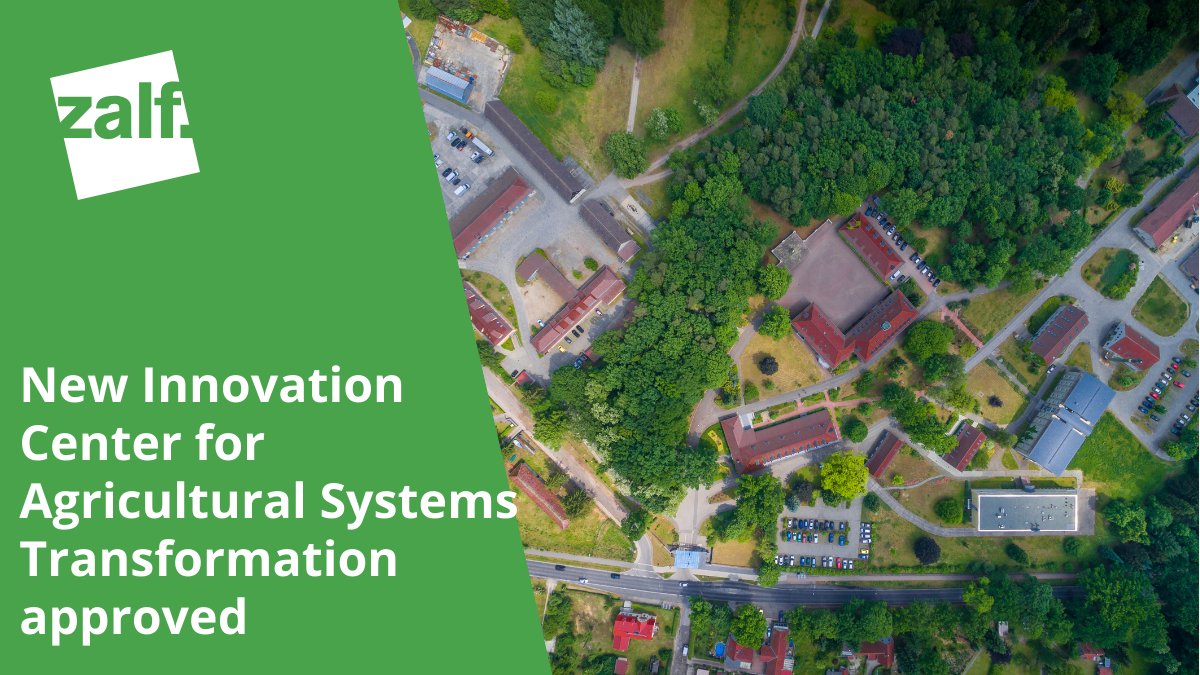
💡 🚜 #Research in living labs for the future of #agriculture: ZALF, @jlugiessen, @uni_kassel and @hsgeisenheim will work closely together at the Innovation Center for Agricultural Systems Transformation (IAT), funded with €9.5M/year.
https://t.co/Hwq3AJ318I
#livinglab
The bacteria in your gut depend on where you are in the social network.
And the microbes within us treat our social networks as the extended environment in which they thrive. They can spread from person to person.
New #HNL work out today in @Nature. 1/
@courtney_herms @BarfussKarla @zalf_leibniz@BExplo_research @joana_bergmann Definitely! Give us another couple of months though... 😅 Let me know if you have any questions/thoughts that cannot wait that long.
Look at who just received a prize for an outstanding master thesis - @BarfussKarla, for taking a very close look at #root#hairs and #mycorrhiza across 80+ grassland species. Superproud @zalf_leibniz@BExplo_research @joana_bergmann
I'm hiring a postdoc. The pay is average, but the biological question and preliminary data on the project are outstanding. I will gladly share more to those who are seriosuly considering. https://t.co/WKg1whHKpB
If you're still using raw R outputs for presentations, it's time for an upgrade! Tools like gtsummary bring your statistical results to life, making them much more digestible for non-technical audiences.
While base R functions like summary(fit) work well for statisticians, they can be too complex for stakeholders who aren’t familiar with the detailed output. The tbl_regression() function from gtsummary makes it easy to present regression results clearly.
In addition, gtsummary is highly versatile - it’s not just limited to linear regression. You can apply it to generalized linear models, survival analyses, and more. The package even allows you to include p-values, confidence intervals, and other important statistics directly within the tables, helping you to better communicate statistical results.
Here are a few standout benefits:
✅ Simplified output that’s easier for stakeholders to understand
✅ Works seamlessly with a variety of models
✅ Customizable tables with key statistics like p-values, confidence intervals, and more
The visualization included here was originally shared in a recent post by Dr. Alexander Krannich.
#rstats #gtsummary #statistics #datascience
Another year, another climate gap. 🌍🔥🌡️
It's the 15th time I joined the lead author team of the @UNEP#Emissionsgap report.
How high are global emissions?
What have countries pledged?
And is this all aligned with the Paris Agreement?
Let’s dig in with a 🧵/1
🌾🐸Wiedervernässte Moore sind gut fürs Klima. Doch ohne wirtschaftliche Anreize geht es nicht. 🏞️ Eine neue Studie untersucht Erfolgsfaktoren und entwickelt Handlungsoptionen für EU-Entscheidungsträger. https://t.co/iWbKlHyGgc #Klimaschutz#Moore#Paludikultur
What determines transfer of carbon from plants to mycorrhizal fungi?
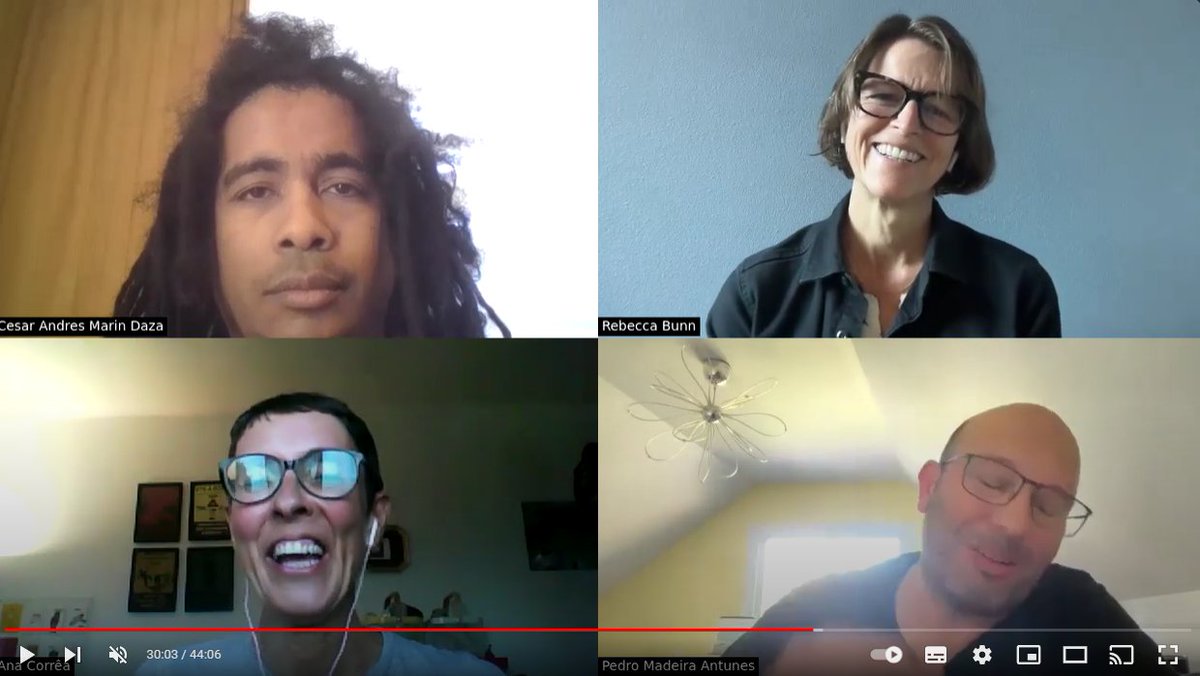
In the 49th interview on the @southmycorrhiza YouTube channel, @cesarmarin203 and @1pantunes talk with @RebeccaBunn7 and Ana Corrêa about their recent #TansleyReview: https://t.co/0ypg0wJnHq
@WWU_Environment
Come work with us! Please RT!
We are looking for a Research Assistant to provide new insights into the holistic understanding of water use in global crop staple, rice.
Apply online before Nov. 3.
https://t.co/MXxaGKemhM
Feel free to get in touch if you have any questions.
A really nice 628 page textbook for Mathematics from Carnegie Mellon University.
I like the Author's description
"The goal of this book is to help the reader make the transition from being a consumer of mathematics to a producer of it. This is what is meant by ‘pure’ mathematics. While a consumer of mathematics might learn the chain rule and use it to compute a derivative, a producer of mathematics might derive the chain rule from the rigorous definition of a derivative, and then prove more abstract versions of the chain rule in more general contexts (such as multivariate analysis).
Consumers of mathematics are expected to say how they used their tools to find their answers. Producers of mathematics, on the other hand, have to do much more: they must be able to keep track of definitions and hypotheses, piece together facts in new and interesting ways, and make their own definitions of mathematical concepts."
Very excited to guest edit this thematic issue from #ICOM12 with Ylva Lekberg and @FungiDownUnder on Integrative mycorrhizal research: bridging science and societal impact towards advancing the UN Sustainability Development Goals https://t.co/ehTrGBccIm
Carlos Quirós, Senior Digital Solutions Architect, delves into the core principles of the Agile methodology and how it fuels innovation and adaptability into the dynamic realms of agriculture and climate monitoring.
https://t.co/5cu9lq8JDM
#ClimMob#Agilemethodology#Monitoring
@l_luginbuehl@plantsci@Cambridge_Uni Whoop whoop, such fantastic news!!! Biggest congrats, well done Leonie!!! Looking forward to all the maxSymizing 🤩