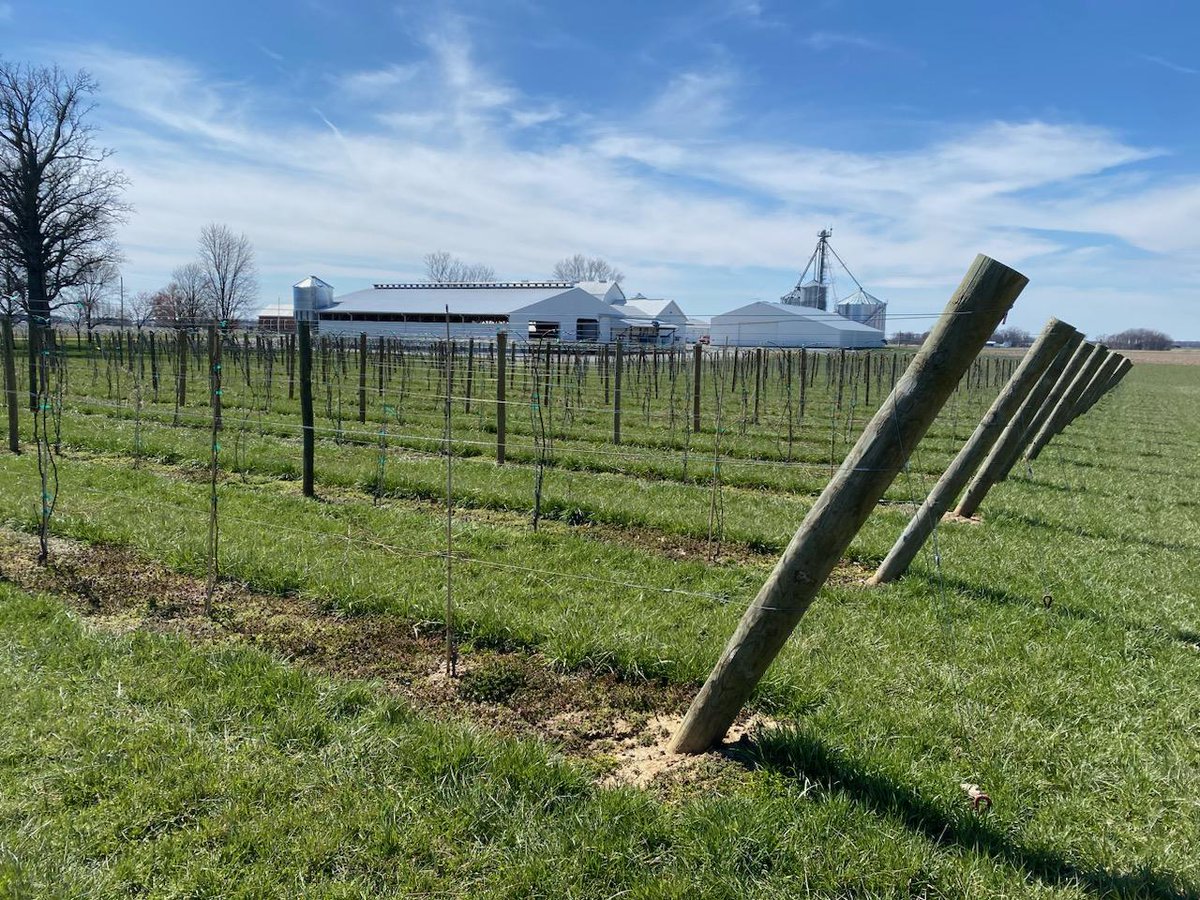
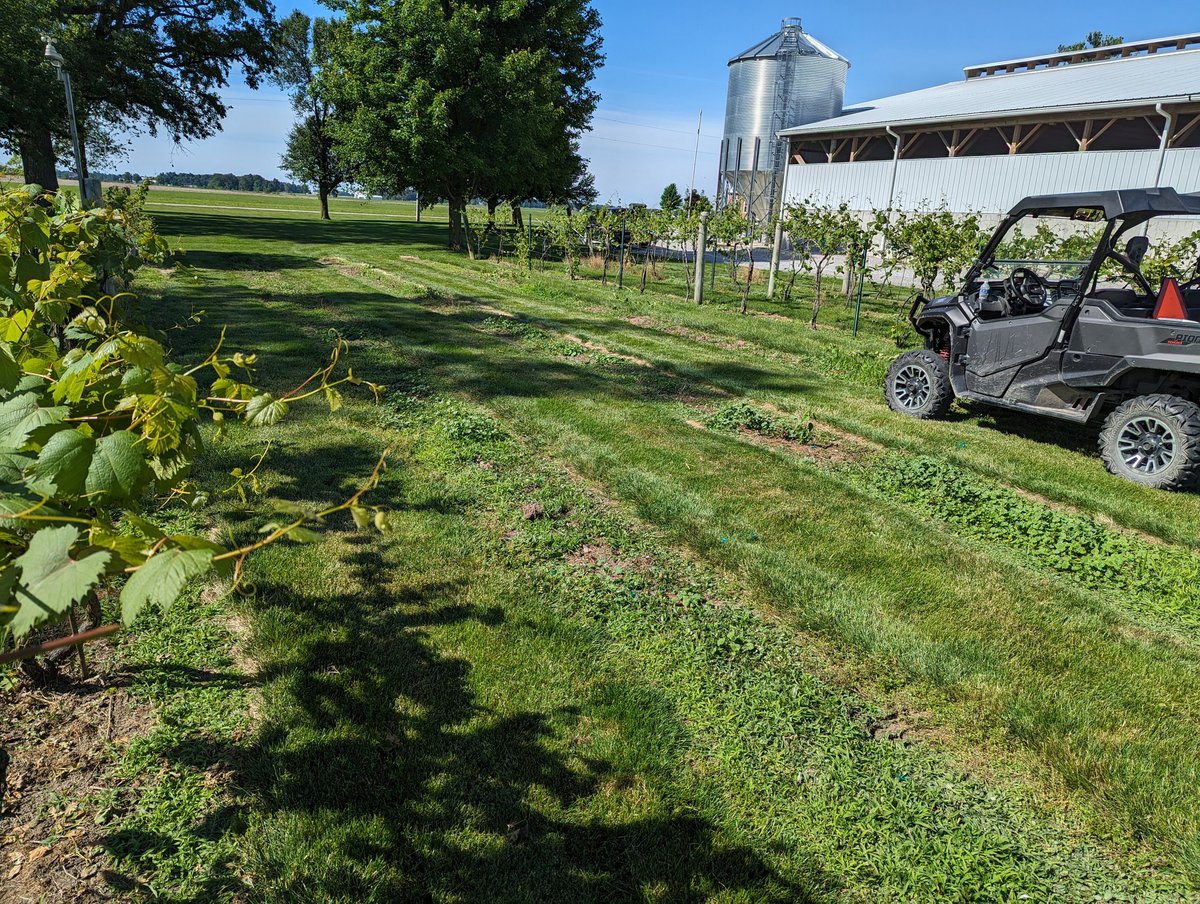
Last week, @elsass_mark and I pulled out part of the trellis in our old vineyard block. After two failed plantings, it was time to move on and focus on our newer plot. Even if we could get a new variety established, fighting our old trellis is not where we want to spend our time!
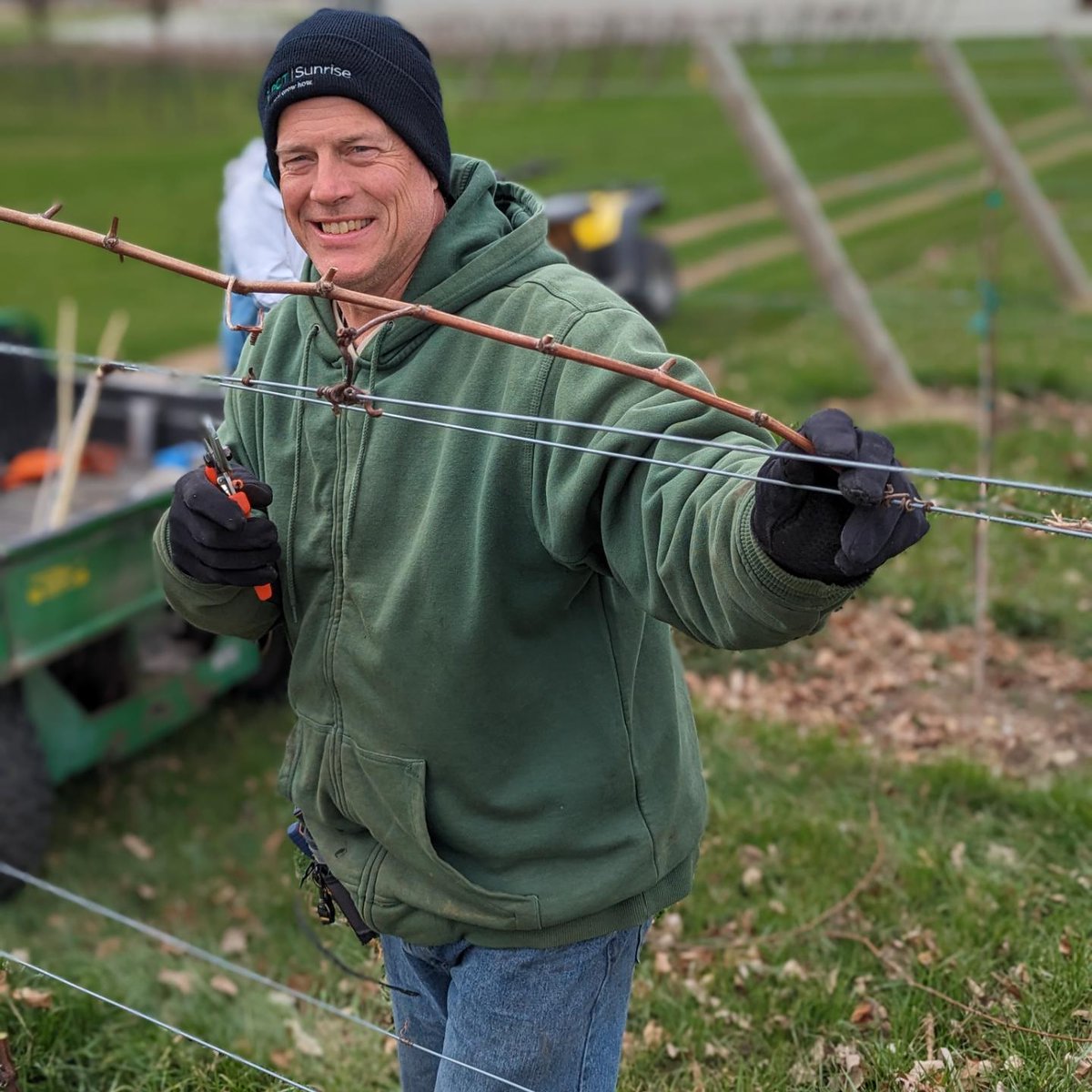
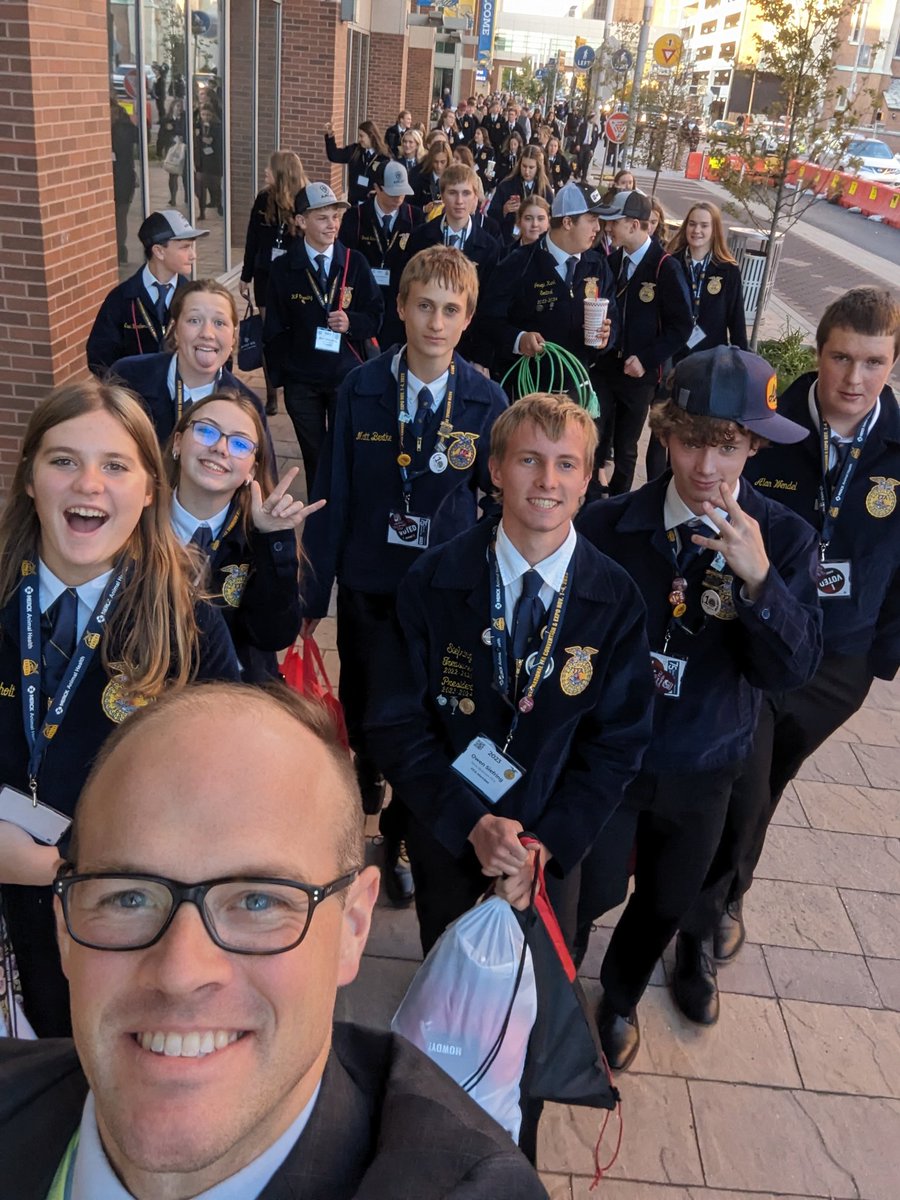
After being a goof at National Convention l, it's amazing that students still want to associate with me. 🤣 Truly blessed to work with some of the best students and student organization in the world!
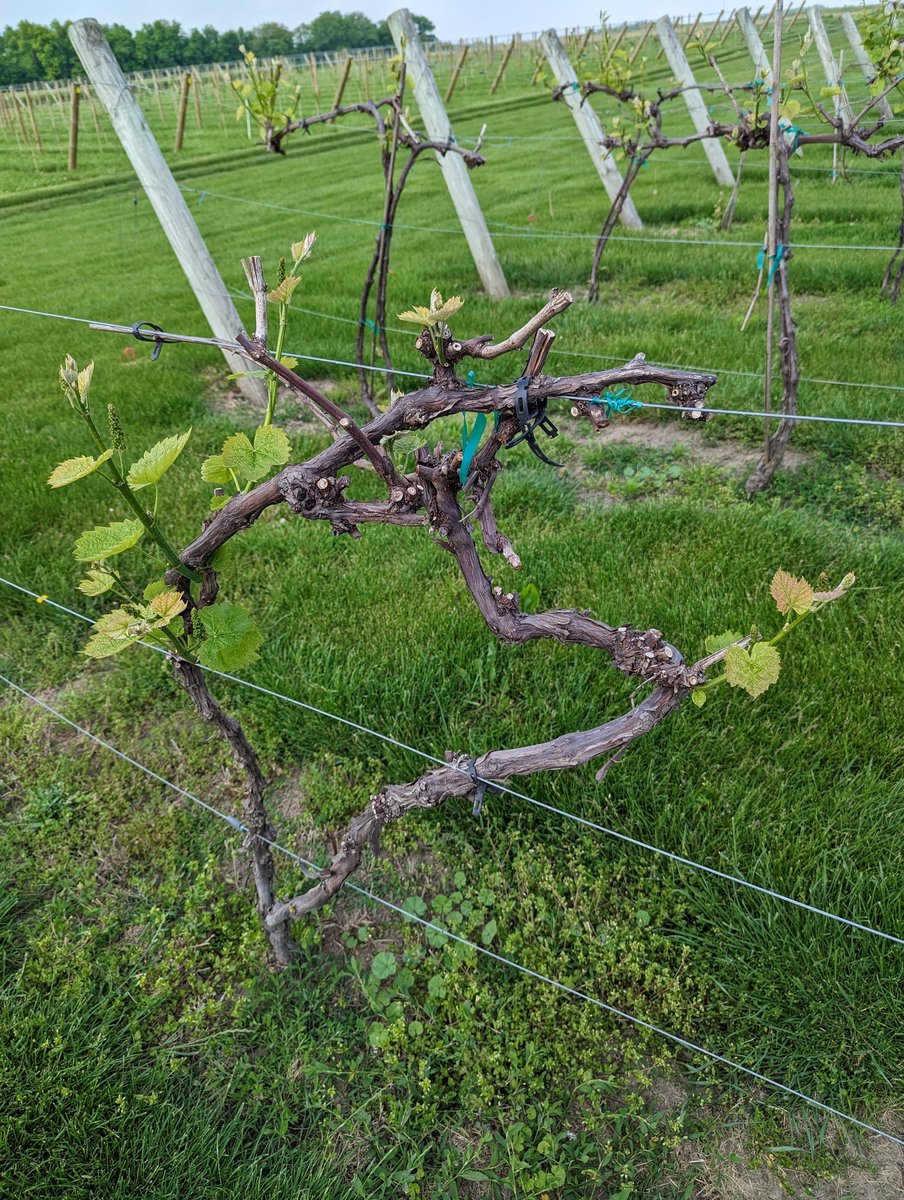
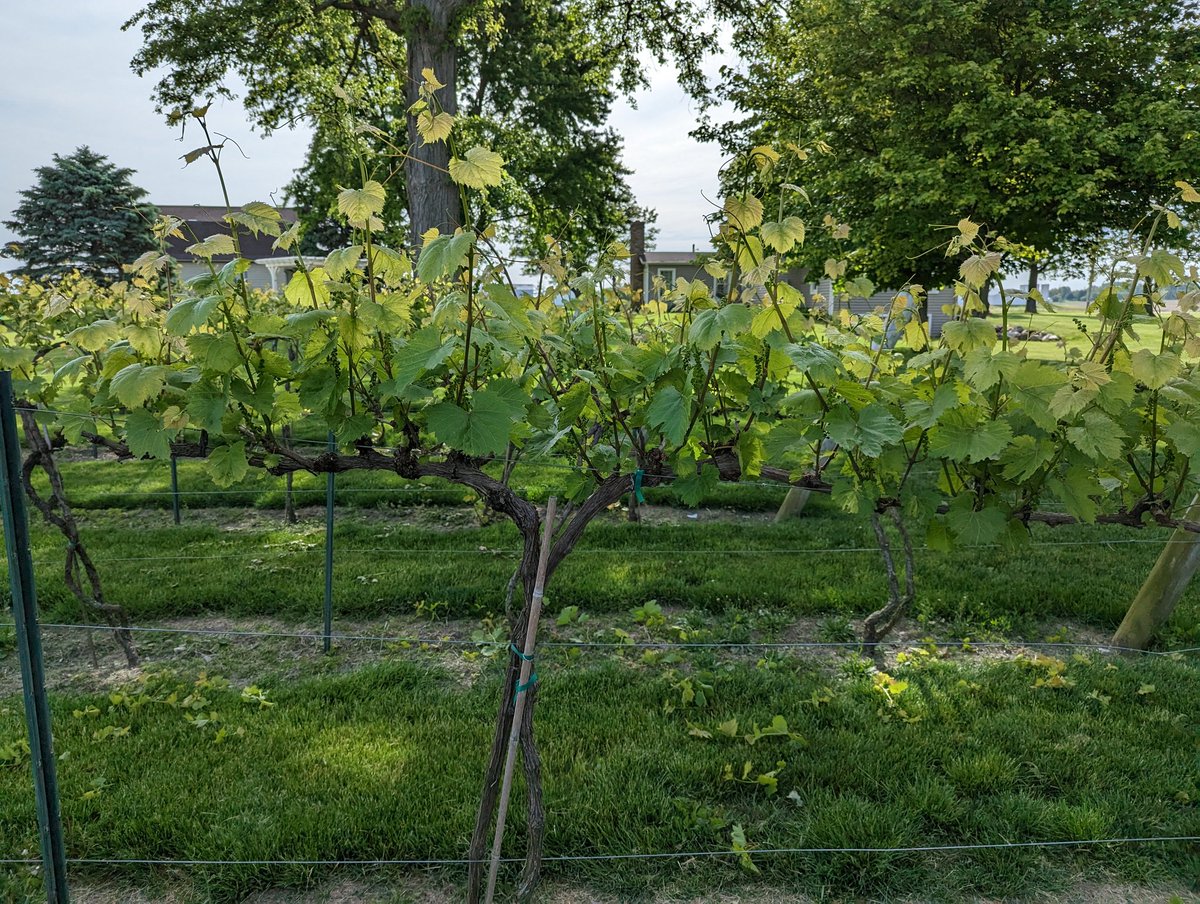
For reference, the first picture shows one of our Cayuga White vines vs. Our Baco Noir. You can tell the big difference in the amount and orientation of the shoots produced.
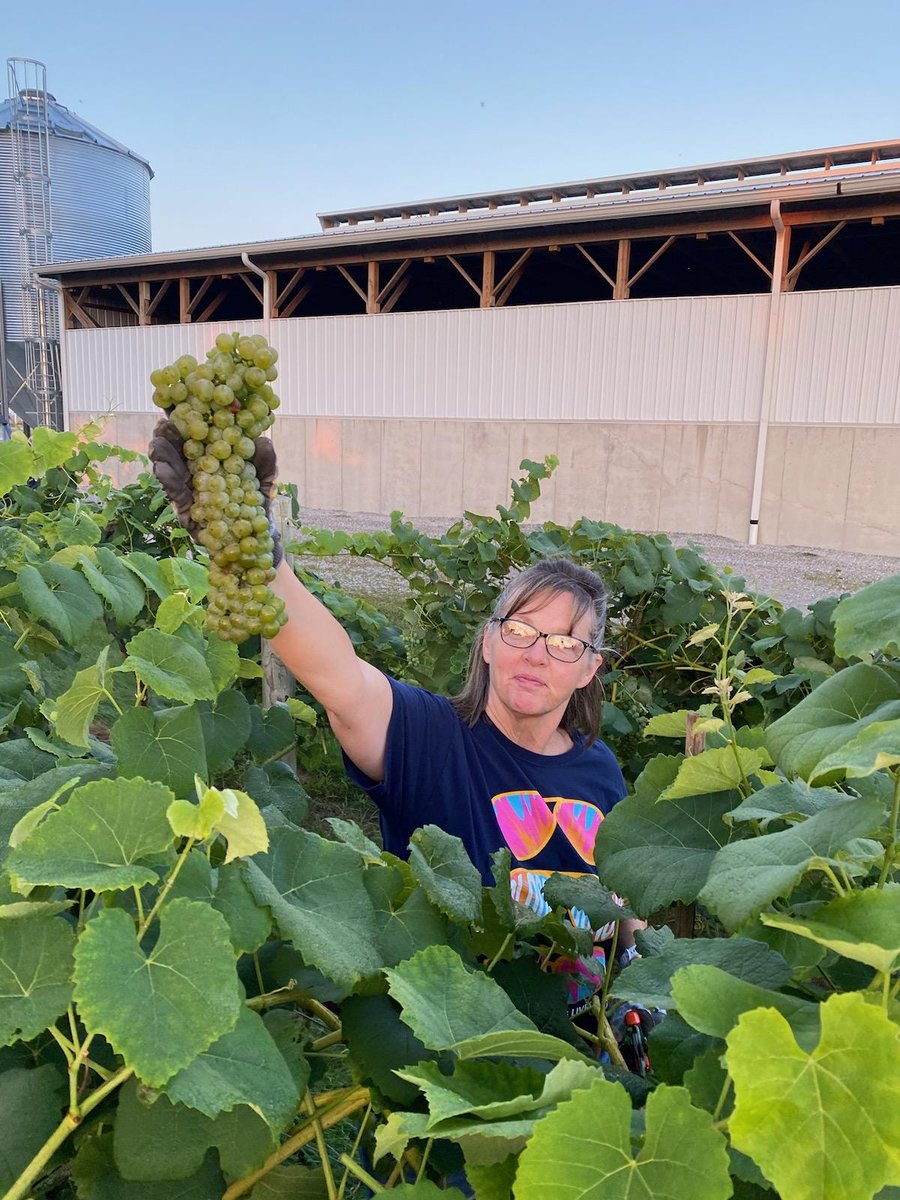
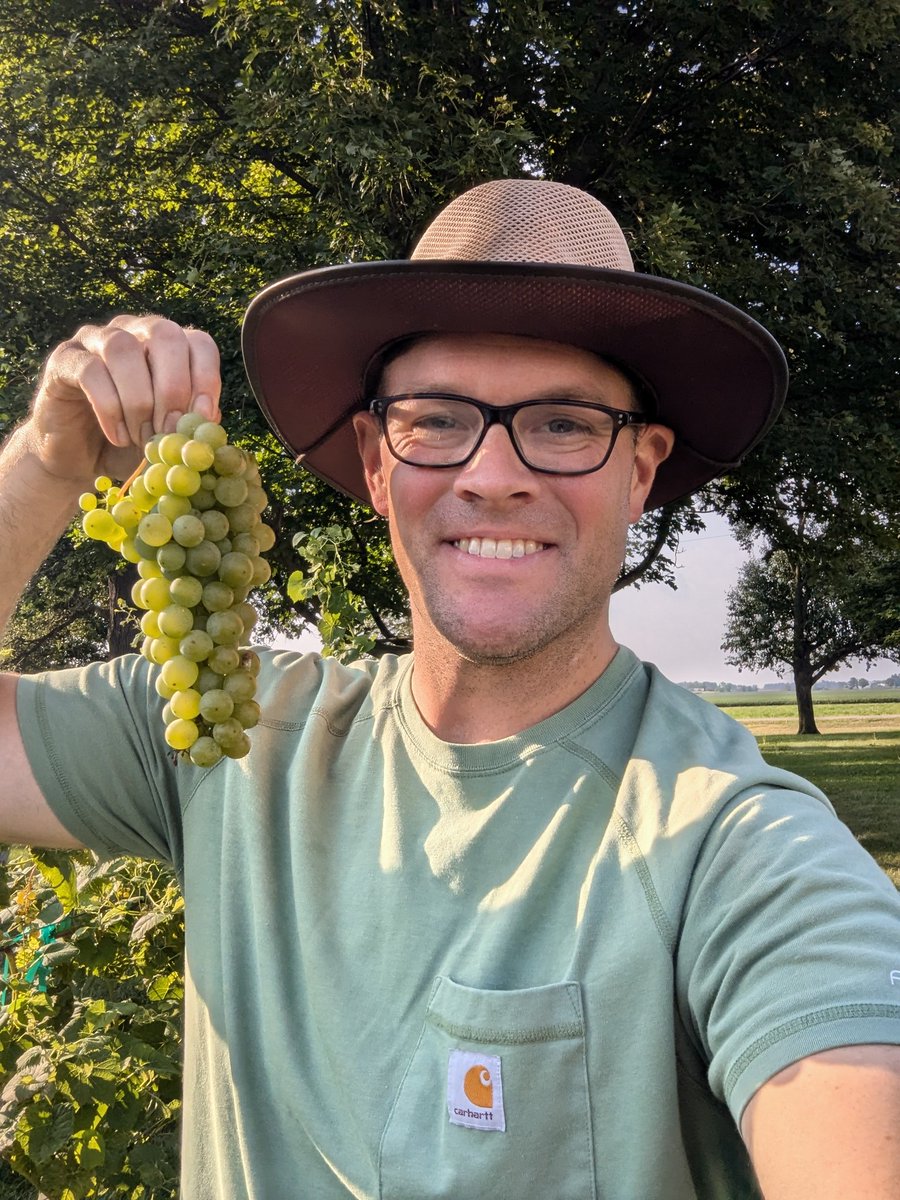
Some of the picking crew from our Cayuga White harvest this morning. The grapes looked really good, but volume was low. These were the first grapes we planted 8 years ago. We are experienced enough now to retrain them to produce more clusters! A project for next season.
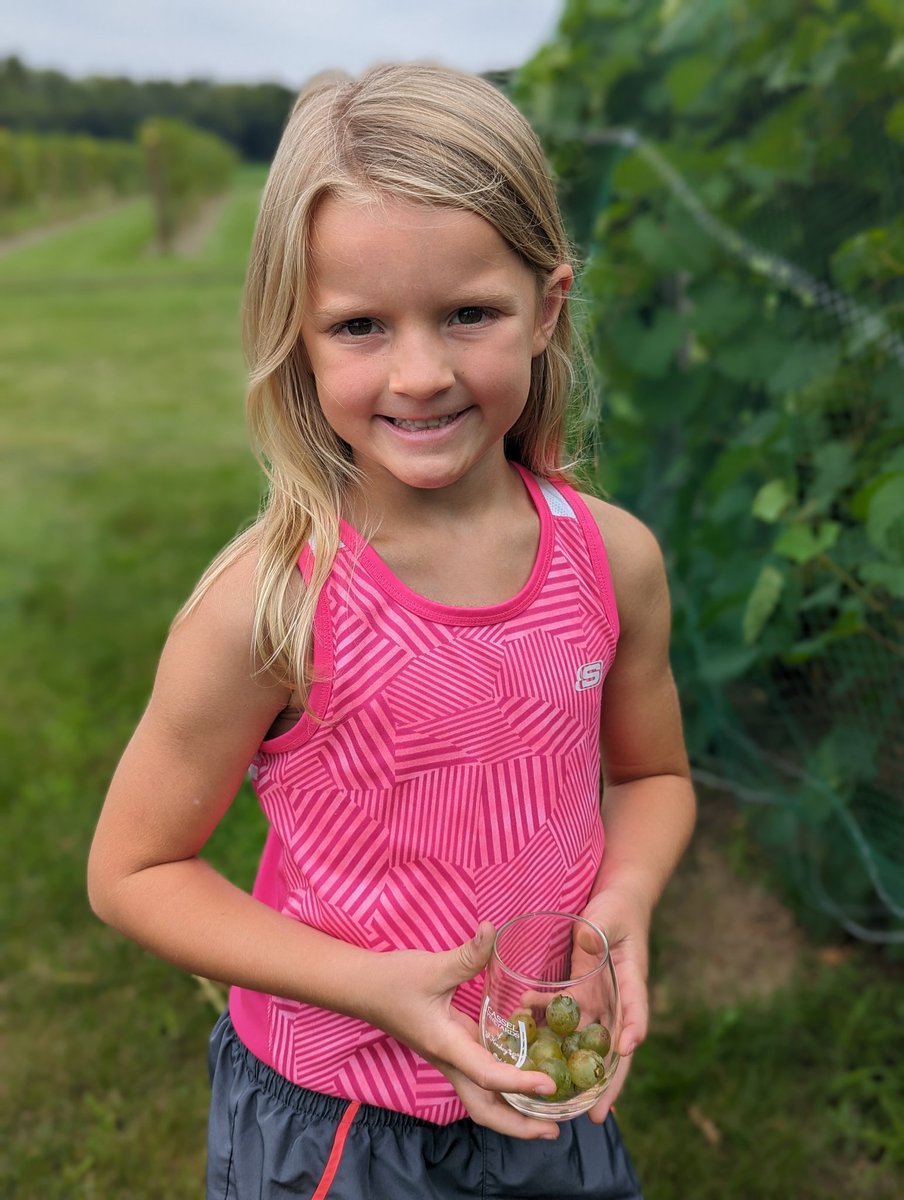
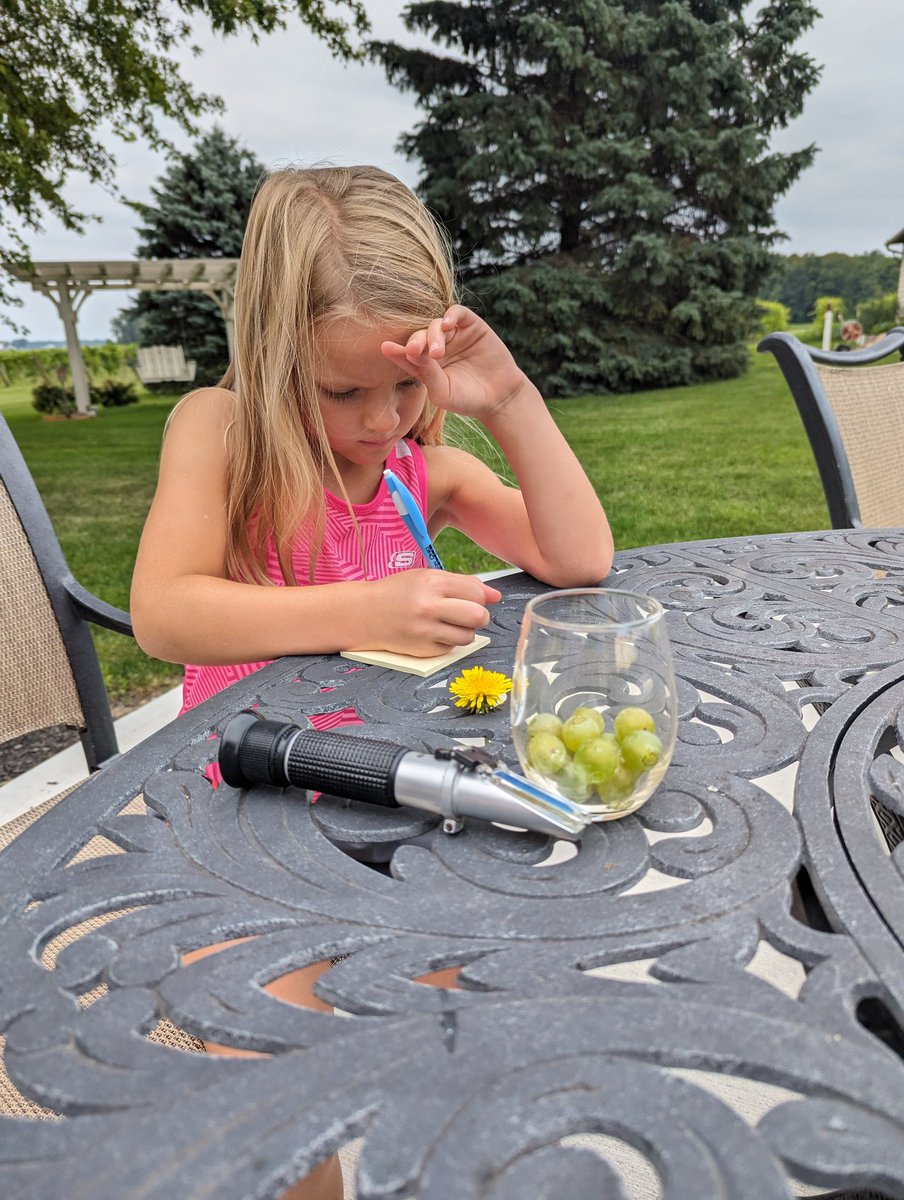
My assistant helped me measure Brix (sugar content) and pH today for our Cayuga Whites. 😁 The pH is in range, but the Brix are still lower than we would want them. Pest and environmental factors seem to be cooperating for the vineyard, so we can let them hang a bit longer.
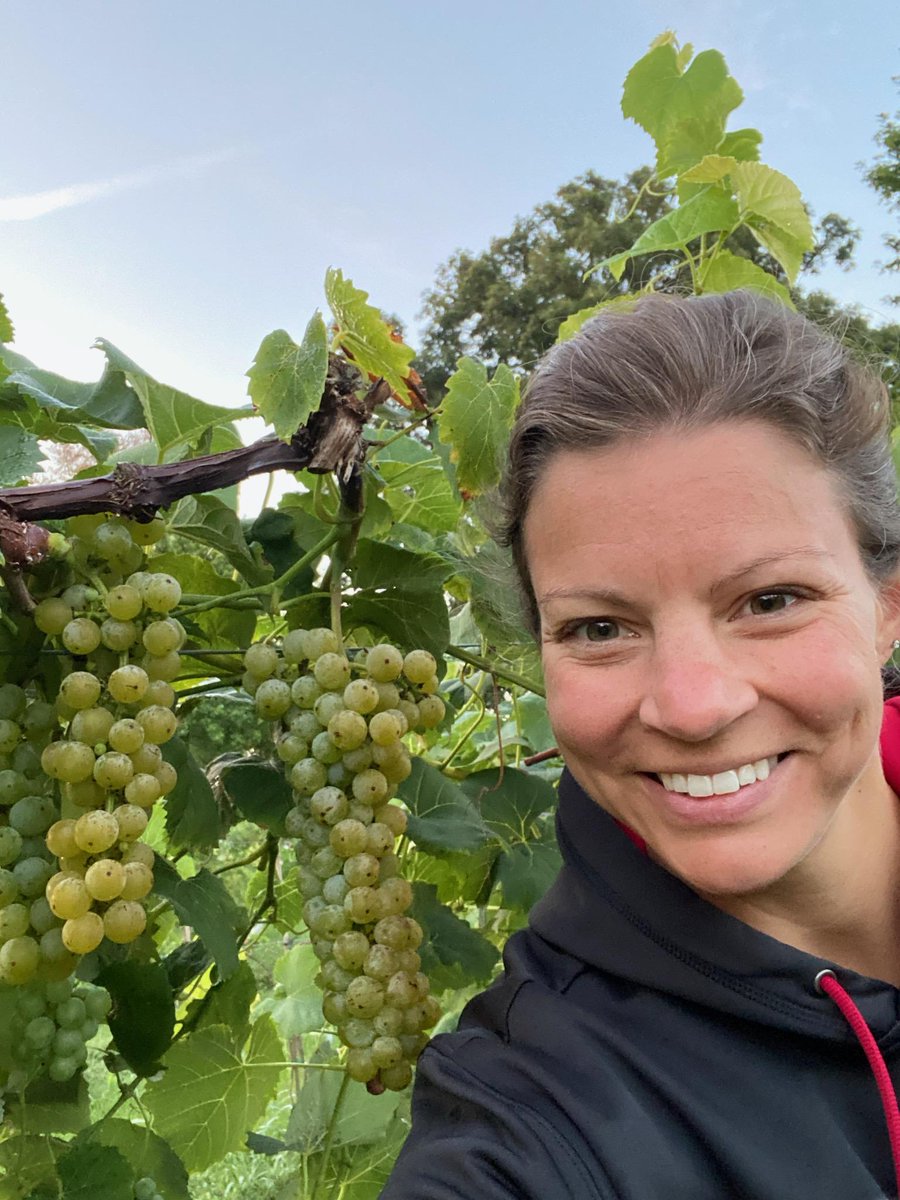
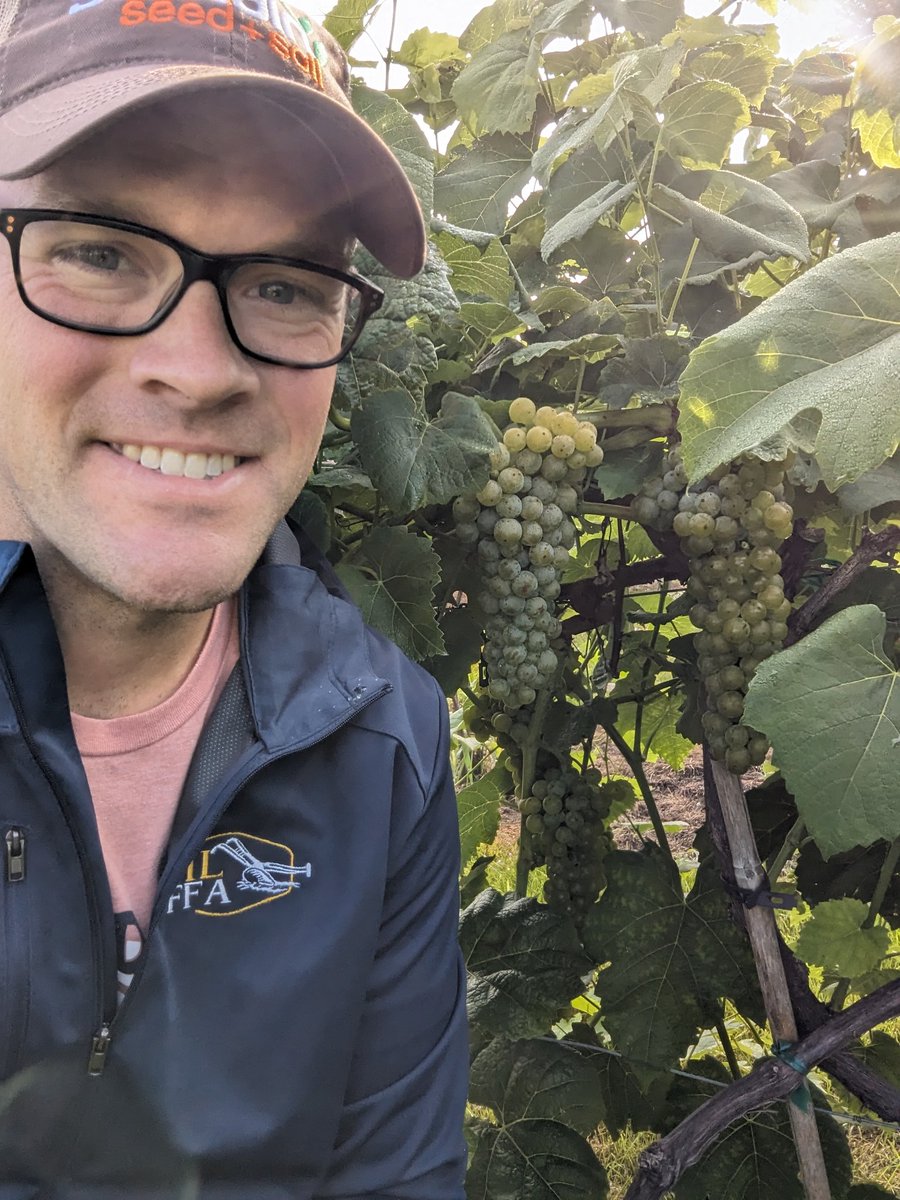
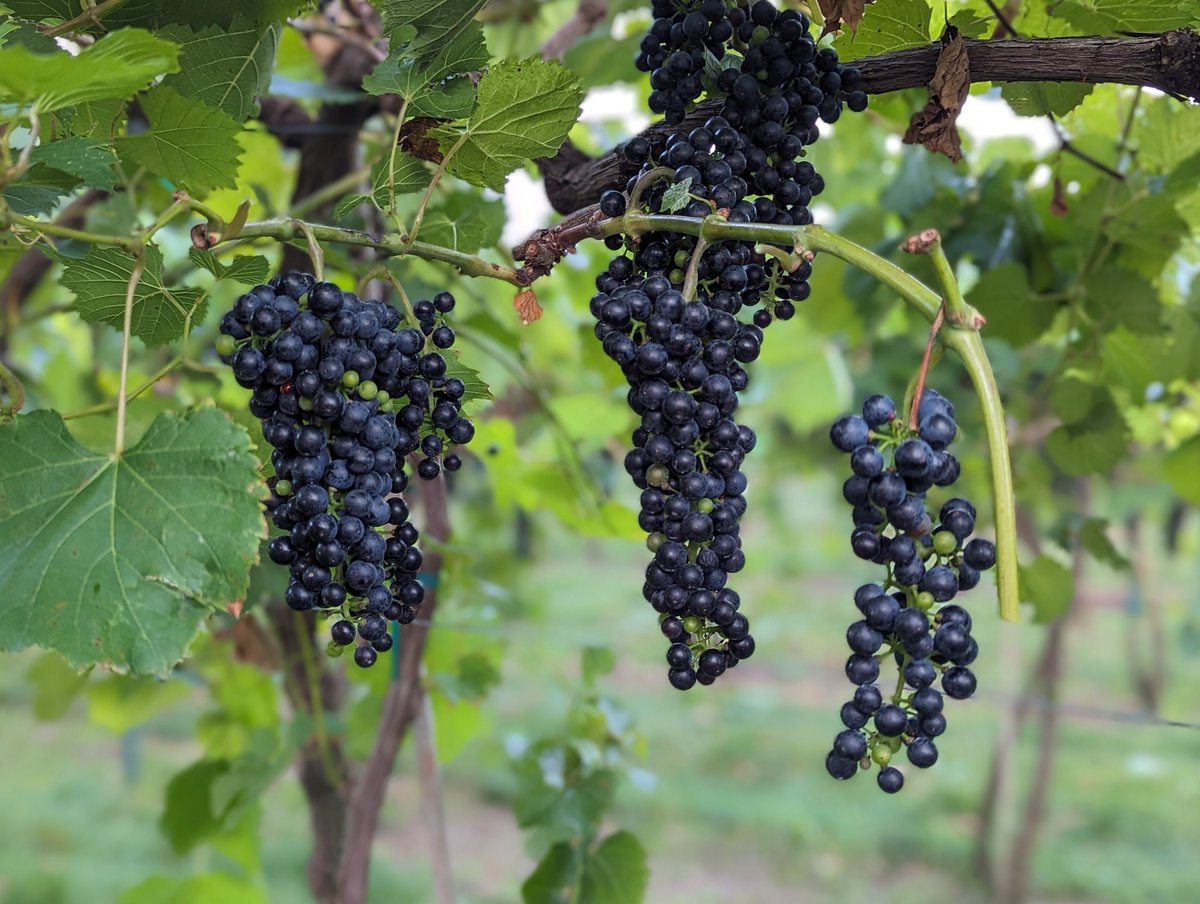
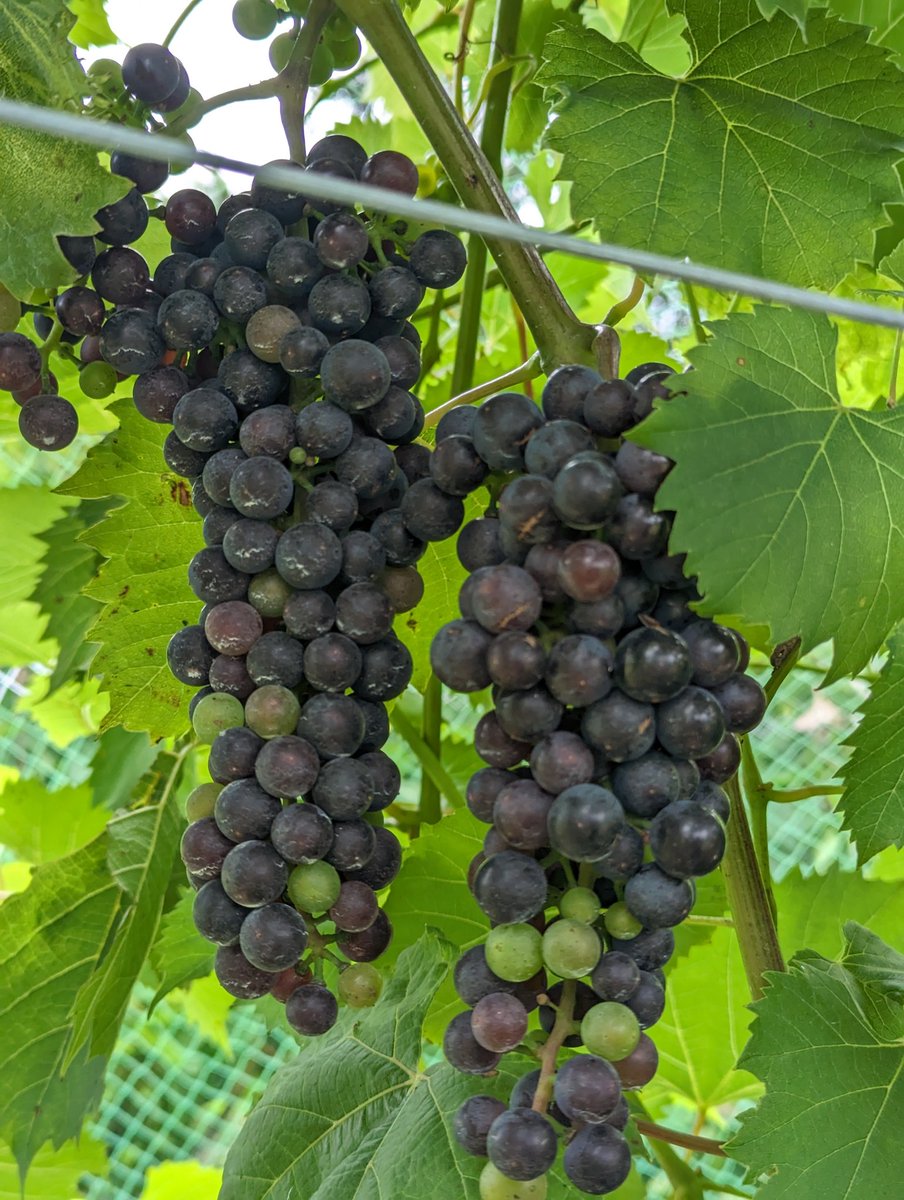
Scouting this morning and opening up the Cayuga White canopy a bit. The whites are testing close to our Brix target and hoping to harvest soon. The Bacos Noirs are still a few weeks out, but the netting has provided some much needed protection.
@mcook32@casiddle Some vineyards elect to use other methods like air cannons, lasers, and predator mimics to deter the birds, but the birds acclimate quickly and you end up rotating methods frequently. The nets are a pain but offer a physical barrier.
@mcook32@casiddle Once grapes start to ripen, birds will start to help themselves. This causes direct crop loss as well as leaves the vineyard open to other diseases because of broken berries. Nets keep the birds off. Red berries are typically more susceptible than white grapes.