@JeffH43575992@johnkonrad Every time the voters give more money to the schools we get more admins and gold plated buildings. The teachers in NYC should be pulling down $200K/year with a $42K/pupil cost.
Some context and commentary:
Factual:
Approximately 25% foreign-born in the Union Army: Yes. Out of roughly 2+ million who served, estimates put foreign-born soldiers at around 500,000–543,000 (about 24–25%). Germans (~200,000–216,000) and Irish (~150,000) were the largest groups.
Another ~18% sons of immigrants: This is also commonly cited, bringing the immigrant + immediate-descendant total to ~43% of Union forces.
German “Forty-Eighters”: These were refugees from the failed 1848–49 European revolutions (liberal/nationalist uprisings, some with socialist or radical elements). Tens of thousands (estimates 4,000–10,000 core political exiles among broader German immigration) came to the U.S. in the 1850s. Many were anti-slavery and strongly supported the Union. About 200,000 German-born men served overall (~10% of Union forces). However, detailed studies of ~493 prominent Forty-Eighters found only ~149 who personally enlisted—though their influence in German communities boosted broader recruitment and leadership (e.g., officers like August Willich, a Marxist associate of Marx).
Misleading:
“Almost 500,000 foreign mercenaries”: The ~500k figure refers to all foreign-born soldiers (mostly long-settled immigrants), not new “imports” or hired mercenaries. Most had arrived in the big waves of the 1840s–1850s (Irish famine, German unrest) and lived in the U.S. for years. They enlisted as volunteers, often motivated by anti-slavery views, pay/bounties (standard for everyone), citizenship paths, or community pressure—not as paid foreign fighters.
The Union did use recruitment agents abroad and bounties (especially later in the war), and some immigrants were deceived or “crimped.” Confederate propaganda routinely called Union forces “Hessian mercenaries” or “refuse of the old world” to discredit them internationally. This is not evidence of a massive mercenary import scheme. Native-born Americans formed the clear majority.
“Fresh off the boat” + “boatloads of communists”. Many immigrants had been in the U.S. for years by 1861. The “boatloads of communists” framing inflates the radical minority. Most German and Irish soldiers were working-class economic migrants, not Marxists. The Forty-Eighters included radicals (some knew Marx/Engels), but they were a small, influential elite subset—not thousands of organized communists shipped in to fight. Karl Marx himself supported the Union editorially, but this was ideological alignment, not orchestration.
“Sent … to murder the descendants of Washington and Jefferson”: This is emotional rhetoric. The Civil War was a domestic conflict over slavery, secession, and union—fought primarily by Americans on both sides. Many Southern leaders’ ancestors were also from immigrant stock earlier on, and the Union included plenty of “old stock” Americans. Framing it as foreigners vs. Founding Fathers’ descendants ignores that the Union preserved the nation those founders created.
If my memory serves me correctly, Michener in his excessively long novel: ‘Texas’ writes that the vote counts in certain south Texas counties were always reported late because they first had to ascertain how many extra ballets had to be manufactured to ensure that the correct candidate(s) won.
This appears to be a repo operation.
This was not quantitative easing (QE), balance sheet expansion, or a broad “injection into the economy.
The repo market trades in the trillions daily (often $8–13T+). $11B is a tiny fraction: like a rounding error.
Not a crisis: no signs of systemic stress like 2019 or 2020.
In short, this is normal-ish operating procedure for money market plumbing, especially at quarter-ends: not a secret bailout or doom signal.
The Future of AI is You and Me
(This is the conclusion to a long essay. For the full essay follow the link https://t.co/dtzfadEvBg)
...The argument of this essay has unfolded across several layers of analysis, but they converge on a single thesis: humanity is approaching the end of the industrial age and the beginning of a hybrid civilization. The story begins with the human brain: a supercomputer with catastrophic I/O limitations. Our cognitive bottleneck is not intelligence but access. We are machines of extraordinary internal computation trapped behind interfaces designed for a world of scarcity.
Artificial intelligence is not our rival; it is the missing peripheral. It is the external memory, the perfect retrieval system, the universal interface that the brain has always lacked. Neuralink represents the first physical instantiation of this insight, a device that dissolves the boundary between biological and artificial cognition. Hybrid intelligence is not a speculative future; it is the next evolutionary step in the architecture of mind. Evolution likely will have a role to play also; maybe replacing the silicon peripheral with a biological organ.
At the same time, humanity is undergoing a demographic transformation that mirrors its cognitive one. The global fertility crash is not merely an economic challenge; it is a civilizational signal. The biblical tradition anticipated a future in which generativity declines as a society loses its orientation toward meaning. Fertility is teleological. When purpose collapses, birthrates follow. The fertility crash is not the cause of civilizational exhaustion but its biological signature. It marks the end of a mode of humanity and the threshold of another.
Institutional senescence completes the picture. The great systems of the industrial age: health care, education, government, housing, law, finance, transportation, have reached the limits of their architectures. Their cost curves have gone exponential, their productivity has stagnated, and their structures have become impermeable to reform. They are not merely inefficient; they are incompatible with the cognitive and technological realities of the present. They will not survive the transition to a hybrid civilization.
What emerges on the other side is a world in which intelligence is distributed, agency is amplified, and cognition becomes the primary substrate of social organization. Health care becomes preventive and personalized. Education becomes individualized and mastery‑based. Government becomes cognitively transparent and participatory. Housing becomes modular and autonomous. Law becomes computational. Finance becomes an individual capability in real‑time and self‑optimizing. Transportation becomes autonomous and self‑healing.
The hybrid human: a conscious person augmented by embedded intelligence, is the central figure of this new world. Not a replacement for humanity, but its completion: a return to purpose. Not a threat to dignity, but its expansion. The industrial age was built on the limitations of human cognition. The hybrid age will be built on its liberation.
This is the return to Eden in technological form. Not a regression to innocence, but the restoration of capacity. In the biblical story, Eden is not merely a garden; it is a state of unbroken purpose. Humanity left Eden to gain agency: the power to choose, to act, to shape the world. But agency without capacity produced toil, senescence, and the long arc of civilizational exhaustion. Hybrid intelligence reunites what history separated: agency and capacity. It dissolves the curse of toil without dissolving the freedom that made humanity human. It restores the conditions for purpose without erasing the consciousness that emerged through struggle. It completes the circle.
Hybrid intelligence is not just the future; it is the only architecture capable of carrying humanity through the civilizational transition already underway. It is the bridge between a senescent world and a conscious one, between the age of scarcity and the age of restored purpose. It is the technological form of humanity’s return to Eden; not the Eden we left, but the Eden we were always meant to build.
La Lecciaia Sassarello 2018
Other Red Blends from Tuscany, Italy
Sangiovese, Cabernet Sauvignon, Merlot (No percentages given)
Purchase Price: $18.99
James Suckling 92, ElsBob 91
ABV 13.5%
A deep ruby and a fainter ruby rim with aromas of dark fruits and herbs. Medium-full bodied with cherries and spice on the palate with balanced acidity and tannins. As with all Sangiovese wines, it needs to breathe.
An excellent table wine at a great price. Current prices range from $15-18.
Through the Grapevine: Fattoria La Lecciaia lies just off the old Via Francigena, the medieval road that carried pilgrims from England all the way to Rome. A traveler leaving Canterbury would walk to the Channel, cross by boat into France, and then continue south on foot through Reims and Besançon, climbing steadily toward the Alps. The most daunting stretch was the Great St. Bernard Pass, a high, wind‑scoured saddle between Switzerland and Italy where snow lingered well into spring and travelers relied on the hospitality of the monks who kept watch there.
Once over the pass, the road dropped into the Aosta Valley and wound south through the Tuscan hills. Pilgrims, merchants, and clerics passed directly through the countryside around Montalcino, moving along the same ridgelines and valleys where La Lecciaia’s Sangiovese vines now grow. For centuries, the drum of footsteps, mule bells, and weary voices shaped this landscape long before Brunello or Toscana IGT existed.
This route was initially recorded by the Archbishop Sigeric of Canterbury in 990 AD who walked from Rome back to England and fixed all 80 of his stopping points for his flock to follow. This is the moment that the route became a pilgrimage. Most travelers made the trek in a single season of 3-4 months, one-way, leaving England in spring so they could cross the Alps in summer before descending into the Tuscan hills…centuries before Henry II ever muttered his famous complaint about a Thomas Becket, the ‘meddlesome priest.’
Continuing the over‑trivialization of everything, the St. Bernard Pass was originally known, at least as far back as surviving records allow, as Poeninus Mons or Summus Poeninus, named by the Romans for a local Alpine god. A temple to Jupiter Poeninus once stood at the summit, watching over traders and legionaries who crossed these heights. Only in the 11th century was the pass renamed after St. Bernard of Menthon, who established a hospice there in 1049 AD. The monks began keeping large working dogs several centuries after St. Bernard’s lifetime, breeding them on site for the practical work of rescuing travelers from snowdrifts. Sadly, there is no reliable evidence that they ever dispensed spirits to the distressed or those buried in white snow. The breed eventually took on the monk’s name, making him the eponym rather than the other way around.
Beyond Death--Return to Eden
...Across biology, metaphysics, NDE phenomenology, and the world’s religious traditions, a coherent, if not logical picture emerges. Death is the natural boundary of embodied life. It is not punishment, chaos, or annihilation. Consciousness is not reducible to the body but is a non‑spatial, non‑material reality that cannot be extinguished by biological death.
Near‑death experiences illuminate the soul’s native mode. Immediate recognition, integrated presence, and the collapse of sequence suggest that consciousness persists outside the spacetime conditions of mortal embodiment. Spacetime is the environment of biological life, not the ground of being. The soul expresses itself through the body but is not contained by it. Death unveils the soul. What we have become is revealed when the body falls away...
https://t.co/BJjtliebIQ
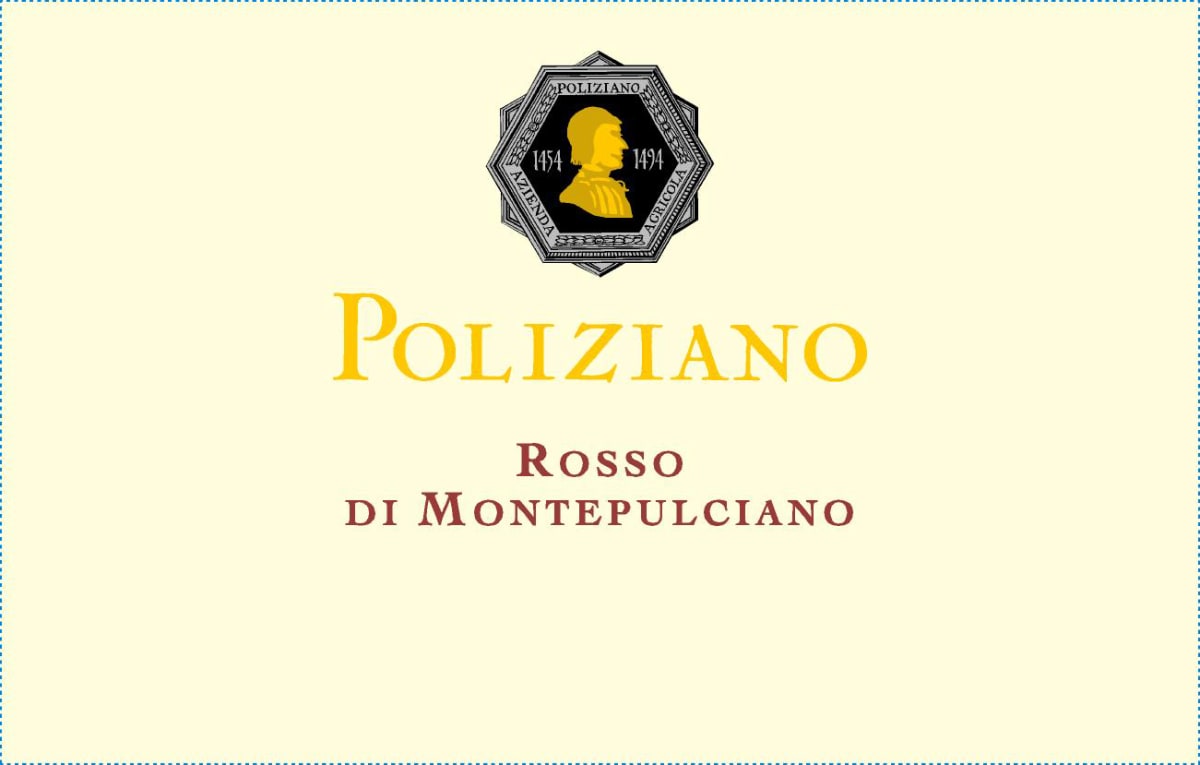
Poliziano Rosso di Montepulciano 2023
Sangiovese from Montepulciano, Tuscany, Italy
Sangiovese 80%, Merlot 20%
Purchase Price $18.99
Vinous 90, Cellar Tracker 88, ElsBob 89
ABV: 14%
A ruby red, clear wine with vibrant tastes of red fruits. A acidic medium finish that smooths out the tannins. This is meant to be a young wine so don’t overdo it with meal prep. It will go fine with spaghetti in a marinara sauce.
A very good fine wine slightly overpriced at $20. Buy it if you can find it under $14. Current prices range from $14-16. This wine needs to breathe. The first sip from a just open bottle will be rough. Give it 30 minutes.
Trivia: The village of Gracciano, Italy, near the Poliziano vineyard, sits in a Tuscan landscape where everything has happened but nothing that will ever make it to Jeopardy. But it does lie heavily at the crossroads of Etruscan, Roman, medieval, and Renaissance history. Not a place of singular world‑shaping events, but of continuous layers of civilizations that march through and over the land that helped shape the modern world.
From 700 to 100 BC, the entire Montepulciano–Gracciano ridge was Etruscan territory, and they were already cultivating grapes. God bless ‘em. Beyond that, very little was known: their language vanished, their tombs were looted, and Rome’s shadow seemed to erase them…until last year.
In 2025, archaeologists from Baylor University uncovered a sealed Etruscan chamber tomb at San Giuliano, northwest of Rome. Dating to roughly 2,600 years ago, the 7th century BC, it is one of the most significant Etruscan finds in decades. Inside were four individuals laid on carved stone beds, surrounded by more than 100 grave goods: iron weapons, bronze ornaments, ceramic vessels, and delicate silver hair spools, all in their original placement.
This tomb, along with two others discovered recently, is giving researchers an unprecedented chance to illuminate the civilization’s inner life: family structure, gender roles, trade networks, ritual practices, and social hierarchy.
The emerging picture suggests a culture older and more urbanized than early Rome. A society whose religion, architecture, and political symbolism Rome borrowed heavily. Etruscan elites were likely not destroyed but absorbed into the expanding Roman world.
@Mustangrde1@CollinRugg Across the US for all towns and cities it is 2.16 police officers per-1000 people.
For large cities its 3-5 officers per-1000 people.
For towns less than 1000 it is between 0 and 3.
Dreams
Anton Chekhov is considered the seminal force behind modern theater, penning two of the most honest accounts in the genre of Realism: The Cherry Orchard and The Three Sisters, both probing life’s basic desires and finding them an elusive force in his protagonists’ lives. The Cherry Orchard anticipates Hemingway’s “slowly, then suddenly”; the Ranevskaya‑Gaev family drifts toward ruin not through catastrophe but through inertia. Unable to adapt, the play is a tragedy of pathological unwillingness. In The Three Sisters siblings Masha, Irina, and Olga dreams fail to ignite any transformation, all talk of a better, brighter future but no action towards that new beginning. The sisters are caught up in eternal desire but no ability to reach for it.
Chekhov’s genius in both of these plays is to keep dreams of the future just out of reach leaving everyone frozen in their past. The true tragedy is not that the characters explode in catastrophe, but they just slowly fade away into their past. Life inexorably slipping from their grasp, like old photographs losing their color, the outlines of their lives fading into the bygone era that holds them fast.
Chekhov first developed his theatrical themes with the short story. All of which are partially autobiographical and truly analytical of the human condition and their dreams. He wrote to sustain himself, sometimes financially, but always psychologically as not so much a need but a release, stating, “Medicine is my lawful wife, and literature is my mistress: when I get fed up with one, I spend the night with the other.” After 17 plays and more than 500 stories one suspects that he never really got fed up with the latter, but his stories suggest that he did with the former, frequently.
To understand why Chekhov wrote the way he did; with such clarity about humiliation, inertia, and the erosion of possibility, one must understand the life that shaped him.
Anton Chekhov was born in 1860 in the small port town of Taganrog, the third child of a grocer whose piety was matched only by his cruelty. His childhood was marked by poverty, debt, and the constant threat of his father’s bankruptcy; with the family eventually fleeing to Moscow to escape creditors and debtor’s prison. Chekhov, then sixteen, was left behind to tidy up the business mess and finish school alone, tutoring younger students to pay for food and rent. This early apprenticeship in hardship shaped the clarity with which he later wrote about poverty, humiliation, want, and the quiet heroism of endurance. In his twenties, as a medical student supporting his entire family through magazine sketches, he contracted tuberculosis that would shadow him the rest of his life. Yet it was during this same period that he experienced his brief season of happiness: a deep, tentative love for Lika Mizinova, a friend of the family whose warmth and volatility left a lasting imprint on his stories. The relationship dissolved under the strain of his illness, his obligations, and his own emotional reticence, but its memory forever haunted him. By the time he achieved literary fame, the disease had already begun to hollow him out. His later years, split between Moscow and his beloved estate at Melikhovo, were a race between artistic maturity and physical decline, a life lived with the knowledge that time was running out.
That same sense of dwindling time permeates his fiction, where characters are trapped in systems; social, economic, bureaucratic, that grind them down long before death arrives. Yet he was never overtly polemical, nor was he didactic.
In the introduction to The Greatest Short Stories of Chekhov, translator Constance Garnett repeats the claim that Chekhov “held no fixed political or social views.” But the only way to reach that conclusion is never to have read him.
Chekhov writes of poverty with a doctor’s precision and a patient’s pain. His contempt for the idle rich is unmistakable. Serfs, bureaucrats, and petty tyrants appear again and again, not as caricatures but as symptoms of a society drifting toward moral exhaustion. His work is not overtly political because it refuses the cheap clarity of slogans. Instead, it offers something far more radical: an unflinching, cold account of a world in which people are crushed not by oppression but by inertia, habit, and the slow suffocation of possibility; the lack of imagination and drive. Critics mistook this subtlety for neutrality, his refusal to preach for a refusal to see what everyone else saw. But his stories are saturated with social vision, but rather than openly ideological he settles triumphantly for the diagnostic with surgical precision. This is Chekhov’s most devastating political insight.
Chekhov returns again and again to the question of human purpose, usually finding his characters unequal to the task of rising to higher ideals. In 1889, after losing his older brother Nikolay to tuberculosis at only thirty‑one, he wrote A Dreary Story, a novella that confronts the terror that death renders all human effort meaningless.
The narrator of the story; an aging, clinically depressed professor at the end of a brilliant medical career, examines his life and finds it hollow. He watches his family suffer and feels nothing. He listens to his closest friend and cannot understand his glee, his optimism. Speaking to his adopted daughter, Katya, he delivers a confession that is part lament, part self‑indictment:
“Something is happening to me that is only excusable in a slave… I am full of hatred, and contempt, and indignation, and loathing, and dread… What is the meaning of it?”
He calls these feelings shameful, but he is past shame. He is simply exhausted. When Katya finally leaves him, his last thought is not regret or memory, but a small, mournful stab of self‑pity: “Then, you won’t be at my funeral?”
Depression and the meaning of life enter again into one of my favorite and most psychologically penetrating Chekhov stories: Ward No. 6, a psych ward in a small provincial hospital; if it can even be called a psych ward, more like a containment room for lost causes. Most critics read Ward No. 6 as a parable of moral collapse, institutional cruelty, or the slow degeneration of a complacent doctor. But this interpretation misses the deeper, more unsettling truth Chekhov, as a practicing physician, was actually dramatizing: the plight of medicine at the close of the nineteenth century. The story is not about a man who loses his mental hold on reason. It is about a doctor who realizes, with devastating acuity, the futility of medicine as it was practiced in his world.
Chekhov knew this intimately. As a provincial doctor, he treated thousands of patients he could not cure, including his brother’s tuberculosis and eventually his own. He understood that much of medicine consists of gestures; reassurance, ritual, placebo, the performance of care in the absence of real efficacy. The doctor in Ward No. 6 comes to the same realization. He sees that the best he can offer is comfort, not cure; that his diagnoses change nothing; that his authority is largely symbolic. And once he sees this, he cannot unsee it. He turns inward, looking for an escape.
At one point he describes his dilemma to his after‑work companion: “You know of course…that everything in this world is insignificant and uninteresting except the higher spiritual manifestations of the human mind…Consequently the intellect is the only possible source of enjoyment.” But he finds none, not at home, not in the hospital, not in himself. Nowhere in his world.
This recognition does not make him immoral; it makes him despair. His inability to help the people who come to him, combined with the professional obligation to pretend otherwise, corrodes him from within. The depression that follows is not a personal flaw but the natural consequence of witnessing suffering he cannot alleviate. Chekhov understood this emotional collapse with painful precision.
In this state of disillusionment, the doctor finds an unexpected mirror in a patient in Ward No. 6. This man is not simply “mad”; he is the doctor’s alter ego: the part of him that refuses comforting illusions, the part that speaks honestly about pain, the part that sees the world without anesthetic. Their conversations are not the doctor’s descent into madness but his first encounter with truth. He is drawn to the patient because he recognizes himself.
But in Chekhov’s world the clarity of medicinal limits is dangerous. The doctor’s colleagues, committed to the rituals and hierarchies of their profession, interpret his honesty as emotional instability. His refusal to maintain the performance of medical omnipotence becomes, in their eyes, a symptom of disease. His attention to the mad patient; the only person who speaks to him without pretense, is labeled “unhealthy.” And so, the institution does what institutions do: it protects itself by diagnosing dissent as madness.
The tragedy of Ward No. 6 is not that the doctor goes insane. It is that the system cannot tolerate a doctor who stops keeping up with pretense. His final confinement is not a moral punishment but a professional one. He is destroyed not because he collapses, but because he stops pretending to have answers.
Seen against the backdrop of late‑nineteenth‑century medicine, Ward No. 6 becomes not merely a story about madness but a diagnosis of an entire profession. The doctor’s despair, his attraction to the patient who speaks without illusion, and his final misdiagnosis by his own colleagues all point to the same conclusion: the real sickness lies not in the individual but in the medical culture that cannot admit its own impotence. By ending the story with a stroke, a clinical event that was misdiagnosed as psychological collapse, Chekhov underscores that the tragedy was never moral degeneracy but the catastrophic failure of a profession unable to tell illusion from reality, or performance from truth. In this sense, Ward No. 6 is Chekhov’s most radical indictment: a recognition that when medicine cannot heal, it must at least see clearly, and that clarity itself may be the one thing the system lacks.
Chekhov only rarely lifts the veil of universal futility that hangs over his work, but when he does, he finds solace in the human need for connection. In The Lady with the Dog, love arrives unbidden, and once found, must be seized and held with the tenacity of a vow. Yet the most surprising Chekhovian uplift comes from The Student, an early story that stands against the pervasive loss of meaning and purpose in Chekhov’s world. Here a young seminarian suddenly senses that the past is not dead but vibrantly present; “an unbroken chain of events, one flowing out of another,” and that touching one end makes the other tremble. That the full arc of time and history provides “the inexpressible sweet expectation of happiness.”
In that moment Chekhov anticipates both Bergson and Proust: the endurance of duration, the trembling continuity of memory, the way a present emotion can awaken ancient sorrow. After the despair of A Dreary Story and the clinical futility of Ward No. 6, The Student offers Chekhov’s final insight: that meaning does not arise from certainty or cure, but from the continuity of human experience itself. Time endures. Memory binds. The chain of humanity holds. And for Chekhov, that is enough.
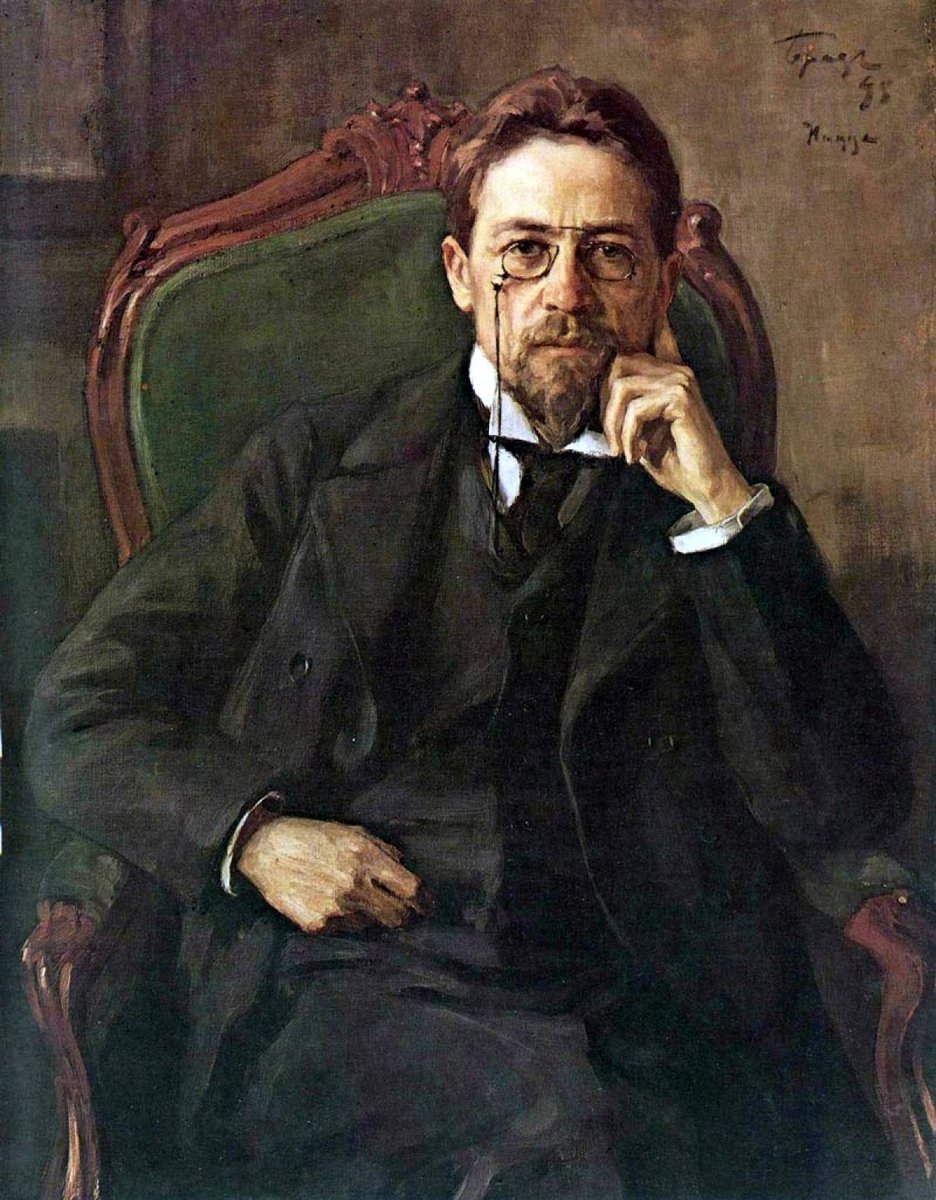
Graphic: Anton Chekhov by Osipp Braz. Oil on Canvas. 1898. Source: The Greatest Short Stories of Anton Chekhov, 2023.
Timescape Cosmology & Density‑Indexed Time: A Bold New Take on Cosmic Time
This speculative framework combines Density‑Indexed Time (DIT) with Timescape cosmology to rethink how we understand the universe’s evolution. Instead of a single, uniform cosmic clock, it proposes a hierarchy of temporal domains shaped by density and structure. This leads to a new interpretation of dark energy, dark matter, and cosmic puzzles like the Hubble tension and the Fermi paradox.
The key insight is that time itself is not uniform but varies with gravitational environment and cosmic structure. This desynchronization explains many observed phenomena without invoking mysterious forces or particles. Galaxies can be seen as mini temporal universes, each with its own clock. The universe’s apparent acceleration is actually a result of these diverging clocks.
This view challenges conventional cosmology by suggesting the universe ends not in heat death or collapse but in a mosaic of temporal layers, each evolving on its own schedule. It invites further discussion and critique, offering a fresh perspective on the nature of time and the cosmos.
Embedded X links no longer seem to work. If you wish to read the full paper do a search on the following: Timescape Cosmology and Density-Indexed Time: A Speculative Unified Framework for Emergent Cosmic Clocks.
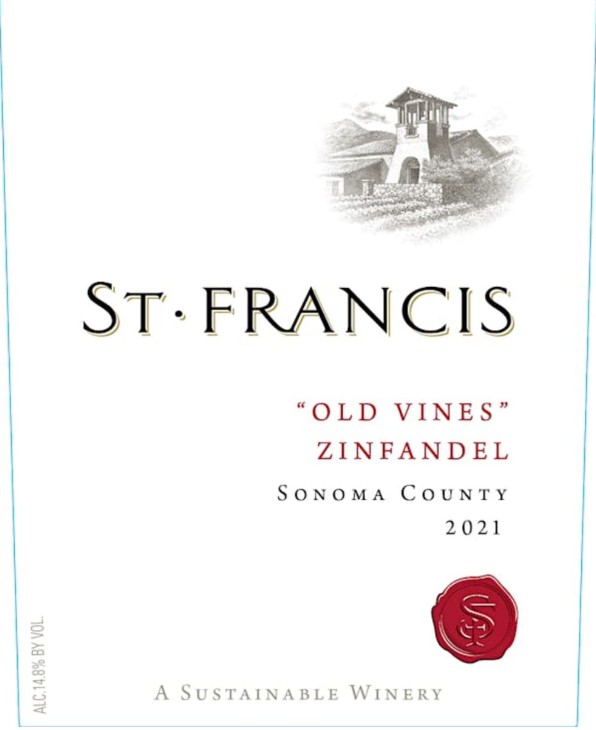
St. Francis Old Vines Zinfandel 2021
Zinfandel from Sonoma County, California
Zinfandel 83%, Petite Sirah 17%
Purchase Price $19.99
Wine Spectator 90, Wine Enthusiast 88, ElsBob 88
ABV: 14.8%
A clear, crisp ruby red wine with sparkling flavors of cherries and raspberries. Medium-bodied with a fairly short finish. Will pair well with rich spicy foods.
A very good fine wine but overpriced at $20. A fair price would be $12 or less. Current prices $16-20.
Trivia: The St. Francis Winery sources its old‑vine Zinfandel, 60 to 100 years old, from a mosaic of small, family‑owned vineyards across Sonoma County, including some of its own estate parcels. Dry Creek Valley, Russian River Valley, and Sonoma Valley are the classic AVAs for old vine Zinfandel, and no single winery holds enough old‑vine acreage to produce a meaningful volume alone. St. Francis relies on long‑standing relationships with these growers, making this wine neither a négociant bottling nor a strictly estate‑grown one, but a true grower‑partner expression.
The winery takes its name from St. Francis of Assisi, the patron saint of animals and the nature. Themes of reverence for creation, harmony with the land, and care for living things shape the winery’s identity.
St. Francis of Assisi founded the Order of Friars Minor, the Franciscans, and inspired both the Poor Clares and the Third Order for laypeople. He embraced absolute poverty as the spiritual core of his movement. In 1224 he received the stigmata, becoming one of the earliest and most famous stigmatics in Christian history. His life remains a model of humility, peace, and solidarity with the poor, a faithful imitation of Christ.
This ideal of poverty has deep roots in Christianity. In the early Church, renouncing wealth was a way of rejecting the Roman system of power and status. The Desert Fathers of the 3rd to 5th centuries carried this impulse into the wilderness of Egypt and Palestine, seeking God in radical simplicity. For them, poverty created an interior stillness: freedom from the noise of desire (from material possessions), a state they called apatheia. The word is Greek, meaning “without passion,” but in the ancient world it carried a positive sense of clarity and freedom rather than the negative connotation the modern term “apathetic” suggests.
Cause and Effect?
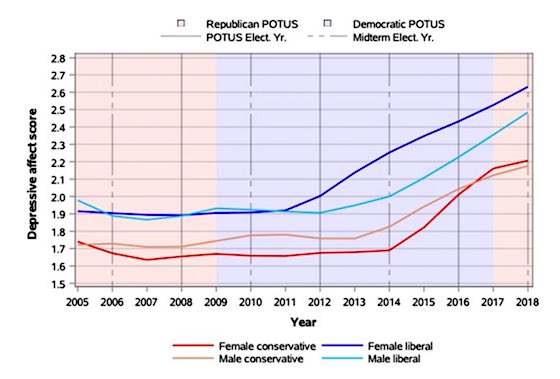
The difference in overall happiness across the political spectrum is well documented. Also the increase in ‘unhappiness’ across the entire political spectrum over the previous 15 years is also well known.
Whether causative or not, the mental well being of the overall population began to degrade about the same time social media became universally available.
From Grok:
Social Media Tipping Point: Late 2000s (2008–2010):
This period marks when social media transitioned from a trendy tool to a mainstream powerhouse:
•2008: Facebook reached 100 million active users. The introduction of the "Like" button and other features boosted engagement. Smartphones (e.g., iPhone in 2007) started making access easier.
•MySpace peaked around 2006–2008 but was quickly overtaken.
•Twitter (launched 2006) gained traction for real-time updates and news.
•U.S. adult usage jumped from just 5% in 2005 to much higher levels by the end of the decade. Globally, Facebook went from covering ~1.5% of the world population in 2008 to rapid expansion.
Social Media Dominance: Early 2010s (2010–2012):
This is when social media truly became inescapable:
•Instagram (launched 2010, acquired by Facebook in 2012) emphasized visual content and mobile use.
•Facebook hit 1 billion users in 2012.
•Smartphone adoption exploded, turning social media into a pocket-sized, always-on experience. Apps proliferated, and features like news feeds, hashtags, and viral sharing amplified reach.
•Usage in the U.S. climbed toward 70%+ of adults, and platforms began rivaling or surpassing traditional media for news and influence. Brands shifted budgets heavily toward social advertising.
https://t.co/eIvuxOVGkF by Musa al-Gharbi, American Affairs Journal.