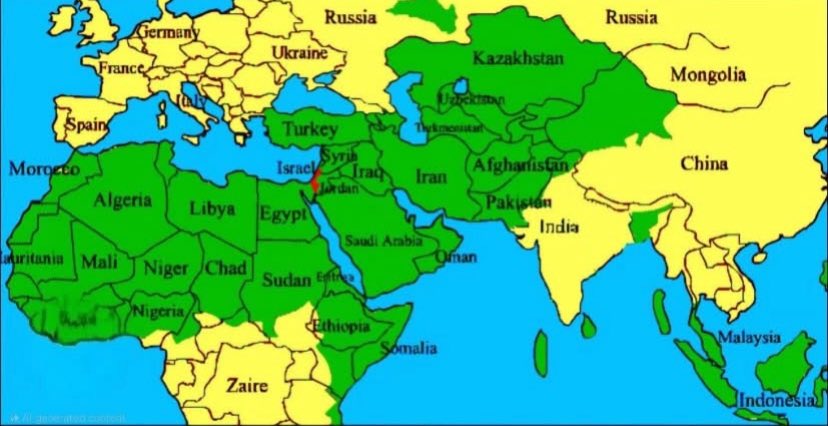
Cerca de 20.000 habitantes de Gaza tenían visas de trabajo para trabajar diariamente en Israel con un salario mensual mínimo de $2.500, antes del 7 de octubre.
Escenas como esta, el IDF repartiendo visas de trabajo a Palestinos nunca volverán.
En el Día de la Independencia de los Estados Unidos 🇺🇸, extiendo nuestras sinceras felicitaciones al pueblo y al gobierno estadounidense. En esta fecha, reconocemos los valores que han guiado su trayectoria y sus contribuciones a la libertad, democracia y justicia en el mundo.
An engineering professor who failed math her entire childhood spent years figuring out exactly what had been sabotaging her, and the answer was not low intelligence. It was a hidden mode her brain kept switching into that nobody had ever told her existed.
Her name is Barbara Oakley. The book is called A Mind for Numbers.
She failed math and science from grade school to the end of high school. Numbers felt like a language everyone else had been taught in secret.
So she ran toward the thing she was good at. She enlisted in the Army right after graduation, and the Army paid her to learn Russian at the Defense Language Institute in Monterey.
She got very good at Russian. Good enough to earn a degree in Slavic Languages, serve four years in Germany as a Signal Officer, and rise to Captain.
Then the wall appeared.
She watched her career options shrink because she could not handle the technical side of her own job. The people with math moved up and moved out. The people without it stayed stuck. So at 26 she did something that sounds insane. She left the Army and enrolled in engineering, starting from remedial math, sitting in classrooms with teenagers.
In between, she worked as a Russian translator on Soviet trawlers in the Bering Sea and as a radio operator in Antarctica. Today she is a professor of engineering at Oakland University with a doctorate in systems engineering.
The question that drove her for years was simple. What changed? She was the same brain that failed algebra. Why did it suddenly start working?
The clue was hiding in the one subject she had mastered. She noticed she had never learned Russian by staring at it. She practiced a little every day, walked away, came back, and the language quietly assembled itself between sessions. Math she had attacked the opposite way. Lock eyes with the problem. Push harder. Refuse to look away until it cracks.
It never cracked. And neuroscience explains why.
Your brain has two modes. The focused mode is the one you know. Tight attention, prefrontal cortex engaged, grinding through familiar steps. The diffuse mode is the one nobody teaches you. It runs in the background when you relax. It is loose, wide, and wired for connecting ideas that sit far apart from each other.
Oakley uses a pinball machine to explain the difference. In focused mode, the bumpers are packed tight. Your thought bounces in the same small circle, over the same ground, again and again. In diffuse mode, the bumpers spread out. The thought travels. It reaches parts of the brain the tight loop could never touch.
The trap has a name. The Einstellung effect. The first approach that comes to mind blocks every better approach behind it. The harder you focus, the tighter the loop, the more locked in you become. The grinding feels virtuous. It is actually the cage.
And every time her mind wandered off a math problem as a kid, she dragged it back, believing the wandering was laziness. The wandering was her brain trying to switch into the mode that solves things. She spent ten years fighting the half of her brain that wanted to help her.
You cannot run both modes at once. The diffuse mode only takes over when you genuinely let go. Which is why answers ambush you in the shower, on a walk, at the edge of sleep. Salvador Dali knew this. He napped in a chair holding a key over a plate, and the instant he drifted off, the key dropped, woke him, and he carried the half-formed ideas straight back into focused work. Edison did the same trick with ball bearings. Two of the most inventive minds in history were deliberately farming the mode the rest of us treat as slacking off.
The practical version fits in two sentences. Focus hard on the problem until you stall. Then stop completely, and let the other mode take the shift.
The break is not a reward for the work. The break is the work. It is also why cramming fails and procrastination is fatal. Diffuse mode needs hours and nights between focused sessions to build anything, and procrastination burns that time before the first session even starts.
Oakley failed math for ten years using one mode at full strength.
She became an engineering professor the day she started using both.
A Stanford neuroscientist warns high cortisol wrecks memory, enlarges your fear center, and make your brain feel broken.
If I wanted to fix it naturally, I'd do these 8 things every day:
1. Walk barefoot on grass for 5–7 minutes.
INSTEAD OF WATCHING AN HOUR OF NETFLIX TONIGHT.
This 1 hour Stanford lecture by Joel Peterson will teach you more about negotiation and getting what you want than most people learn in years.
Bookmark it and give it an hour, no matter what.
I warmly welcome the important decision by @YadVashem to establish its first educational center outside of Israel in Germany, in the cities of Munich and Leipzig, a choice that is an expression of mutual trust.
Together with my friend, Federal President Steinmeier of Germany, I support this endeavor, which comes at a time of rising antisemitism, xenophobia, and hatred around the world.
This new Holocaust Education Center will be a vital extension of Yad Vashem's sacred work in documenting the atrocities of the Holocaust, preserving the memory of all those who were murdered, and strengthening humanity.
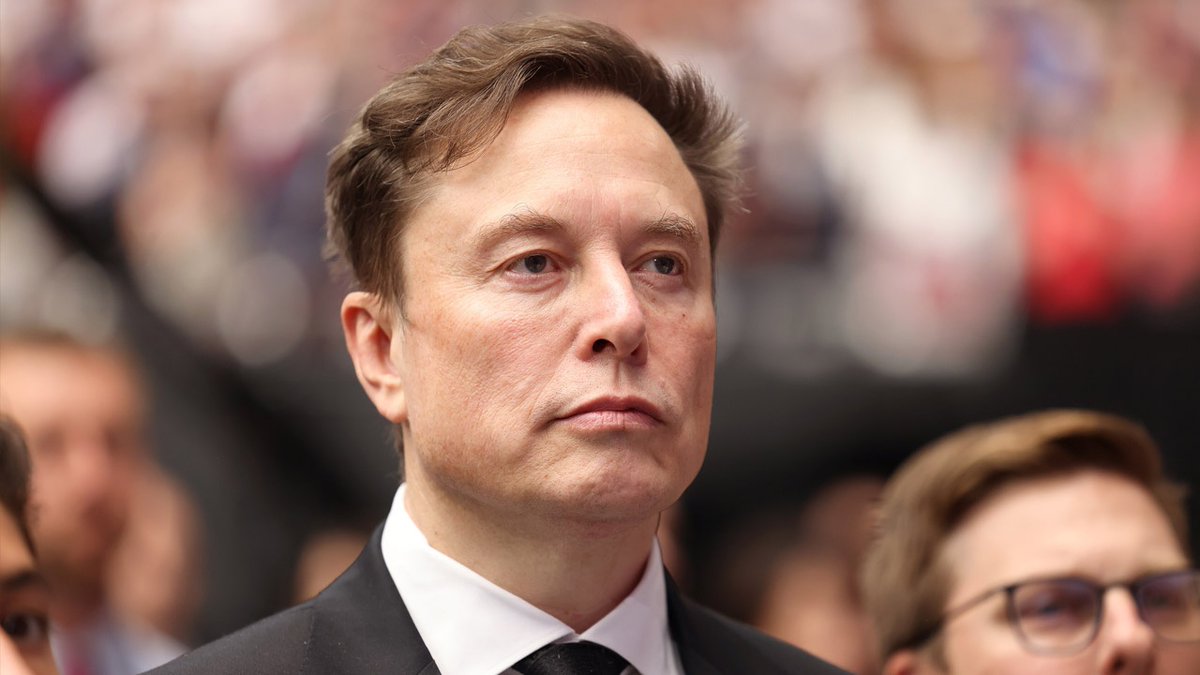
Elon Musk said something that should keep every person on this planet up at night.
Musk: “I think we need to assume that life and consciousness is extremely rare, and it might only be us.”
13.8 billion years of physics. Trillions of galaxies. Billions of trillions of stars.
And one planet opened its eyes.
One.
The universe ran for nearly 10 billion years before anything looked up and asked what it was.
10 billion years of stars forming and dying with no one to witness any of it. No one to name it. No one to wonder why.
Then we showed up.
And for the first time in the history of everything, the universe had a witness.
Musk: “The image in my mind is of a tiny candle in a vast darkness. A tiny candle of consciousness that could easily go out.”
That’s not a metaphor. That’s a status report.
Stars don’t know they burn. Black holes don’t know they consume. Galaxies don’t know they spiral.
We do.
We are the only part of the universe that has ever experienced it.
Every law of physics we’ve uncovered was already running. Silently. For billions of years. With no one to find it.
We didn’t create meaning. We’re the first thing that could recognize it was missing.
That’s what makes Musk’s point so much deeper than most people realize.
He’s not arguing that humanity matters because we’re special.
He’s saying we might be the only reason “mattering” is a concept at all.
Without consciousness, the universe still runs. Stars still burn. Planets still orbit.
But none of it means anything.
Not because it’s meaningless.
Because meaning requires a mind.
And there might only be one.
Musk isn’t building rockets because he likes engineering.
He’s building them because he realized the only thing that ever gave the universe a name has a single point of failure.
One asteroid. One war. One century of wrong decisions.
And the witness goes silent.
The atoms keep moving. The physics keeps running.
But nobody is there to call it anything.
The universe doesn’t end.
It just goes back to not knowing it exists.
The most profound thing about what Musk said isn’t that the candle is small.
It’s that without the candle, there’s no such thing as darkness either.
La Embajadora Melinda Hildebrand se reunió con líderes de la industria avícola estadounidense en Costa Rica para la “America’s Expo”, una feria regional del Consejo de Exportación de Huevos y Aves de Estados Unidos.
Este evento clave apoya las relaciones entre los exportadores estadounidenses e importadores de Centroamérica, América del Sur y el Caribe. La Embajadora recorrió la feria comercial con el presidente y director ejecutivo del Consejo Greg Tyler, y se reunió con empresas estadounidenses que trabajan para expandir el comercio avícola.
La profundización de estos vínculos comerciales beneficia tanto a los consumidores como a las empresas, y garantiza una oferta confiable de proteínas seguras y nutritivas en todo el hemisferio.
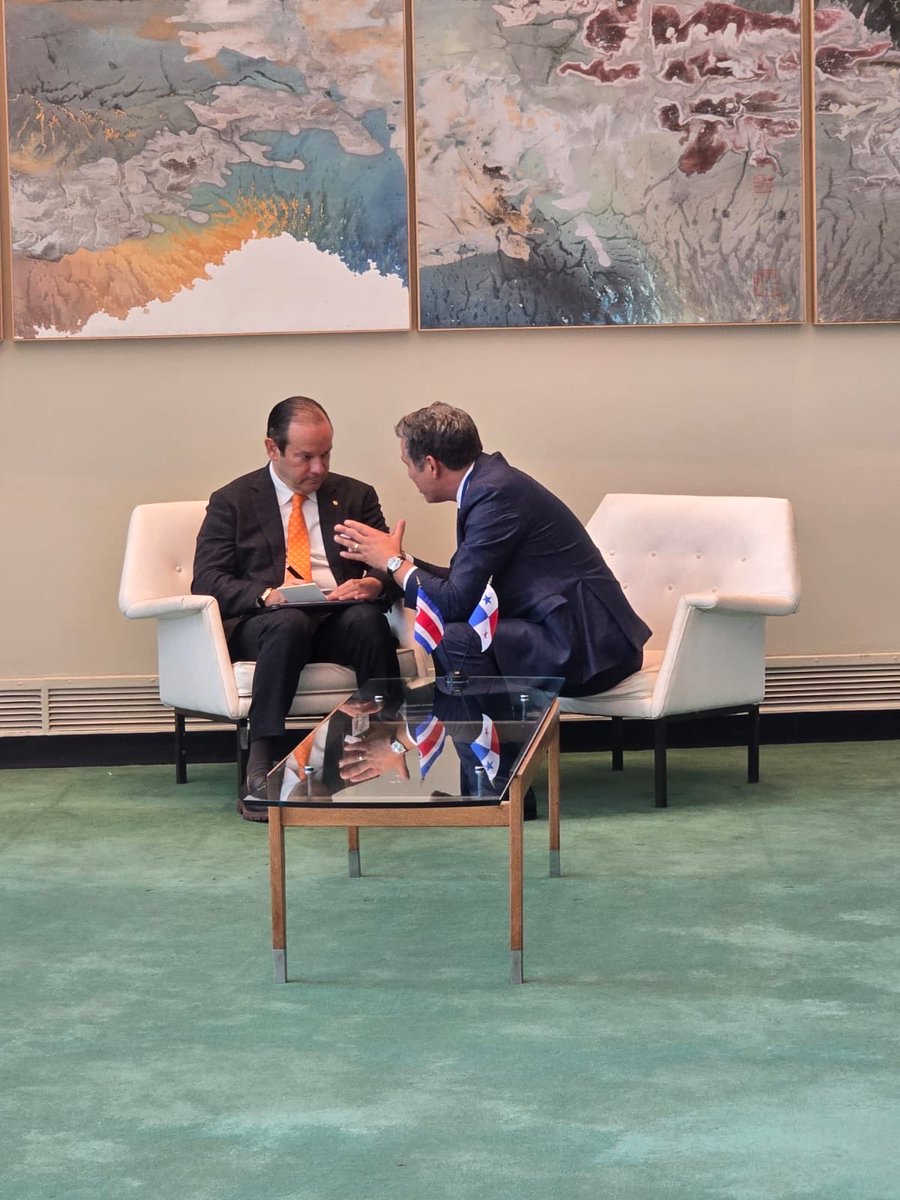
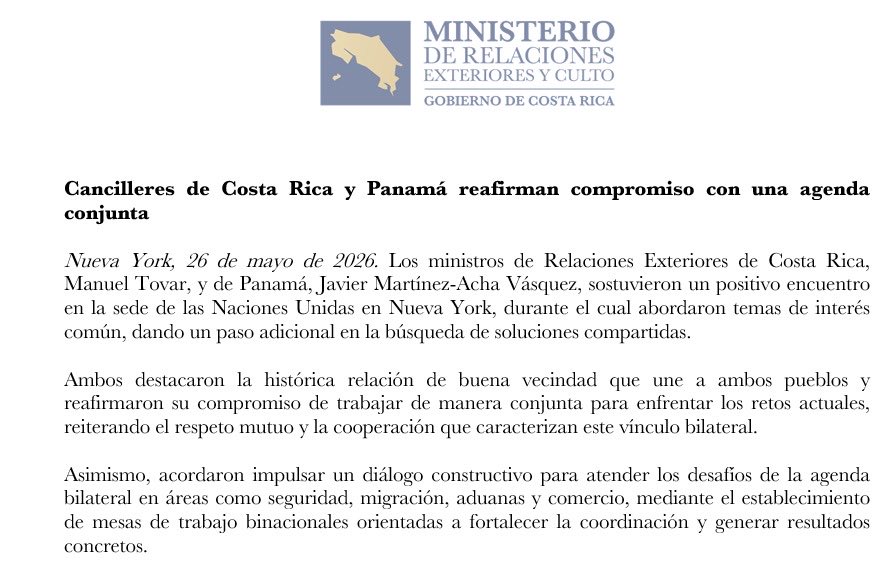
Costa Rica 🇨🇷 participa en la sesión del Consejo de Seguridad de las Naciones Unidas 🇺🇳 en defensa del multilateralismo como pilar de su política exterior.