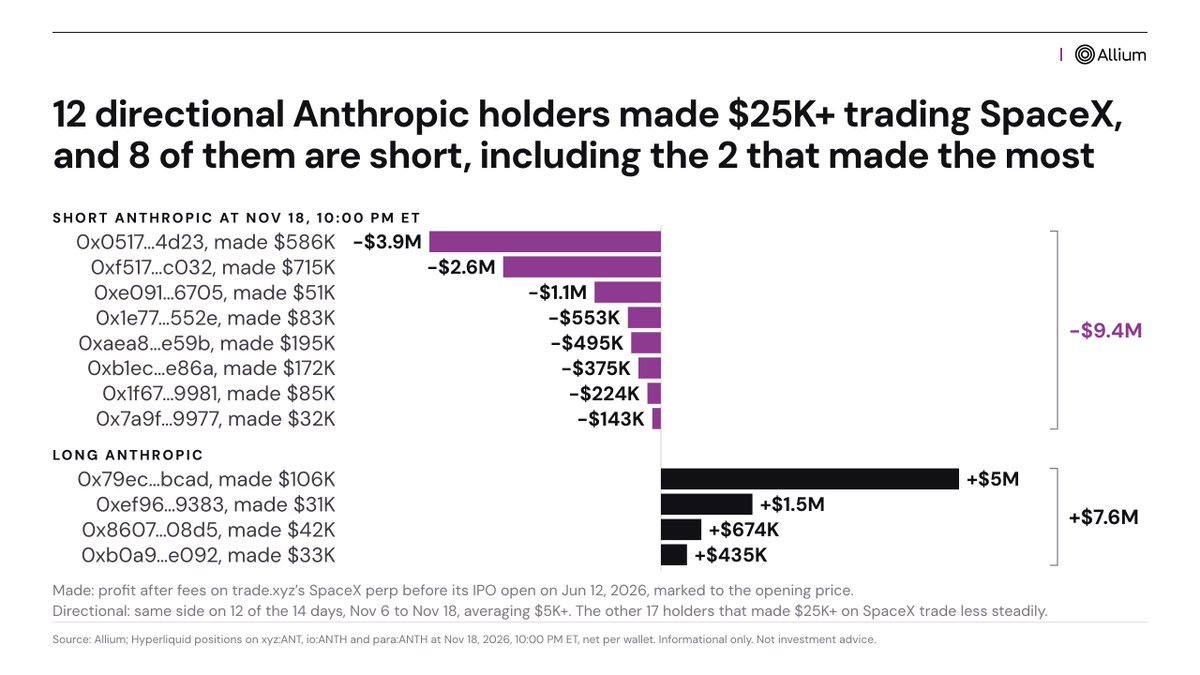
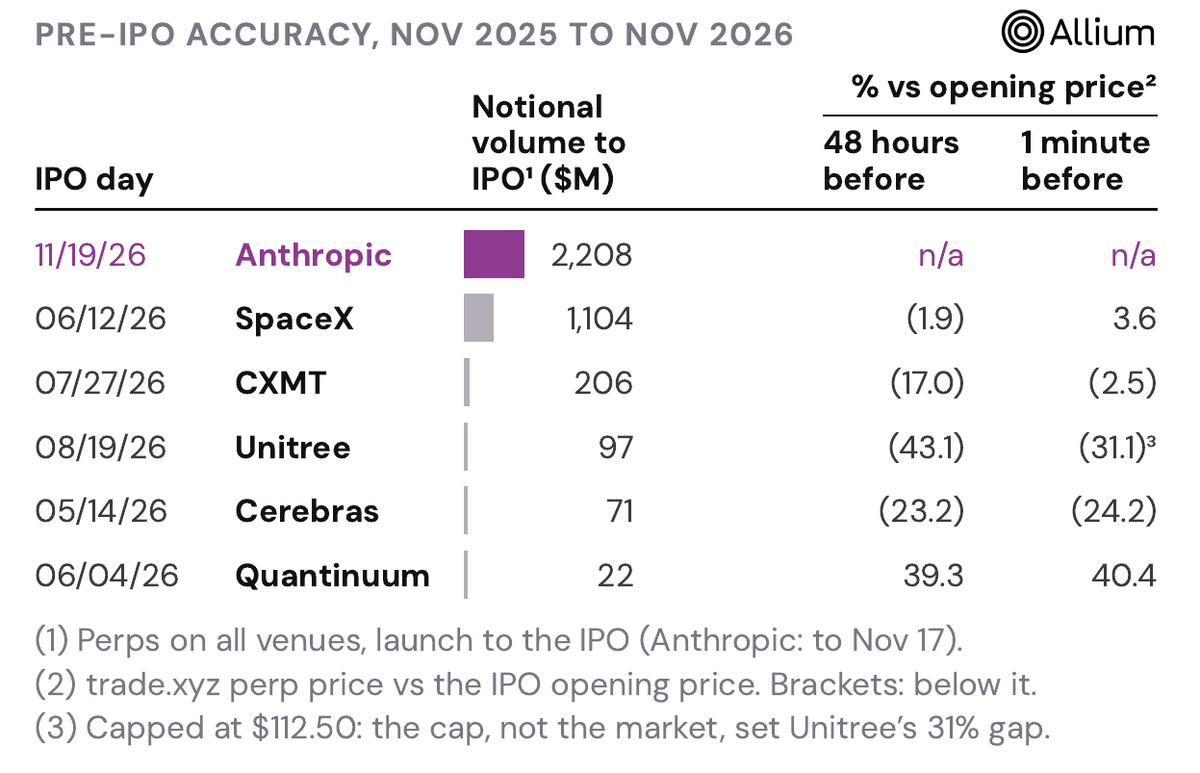
I think Anthropic’s pre-IPO perp could be the most accurate call on an IPO opening price we’ve seen yet.
It already has the most volume of any pre-IPO perp, with a day still to go. That’s usually when most of the trading happens.
We’ve seen accuracy improve with successive launches. This is the latest one, and the volume behind it gives me more confidence in the price.
Let’s see if $ANT pops 25% tomorrow vs the initial $78 target.
Anthropic is already the most-traded pre-IPO company on onchain perps.
Anthropic: $2.2B notional volume
SpaceX, before its June IPO: $1.1B
Full report: https://t.co/PkVsy0VJuJ
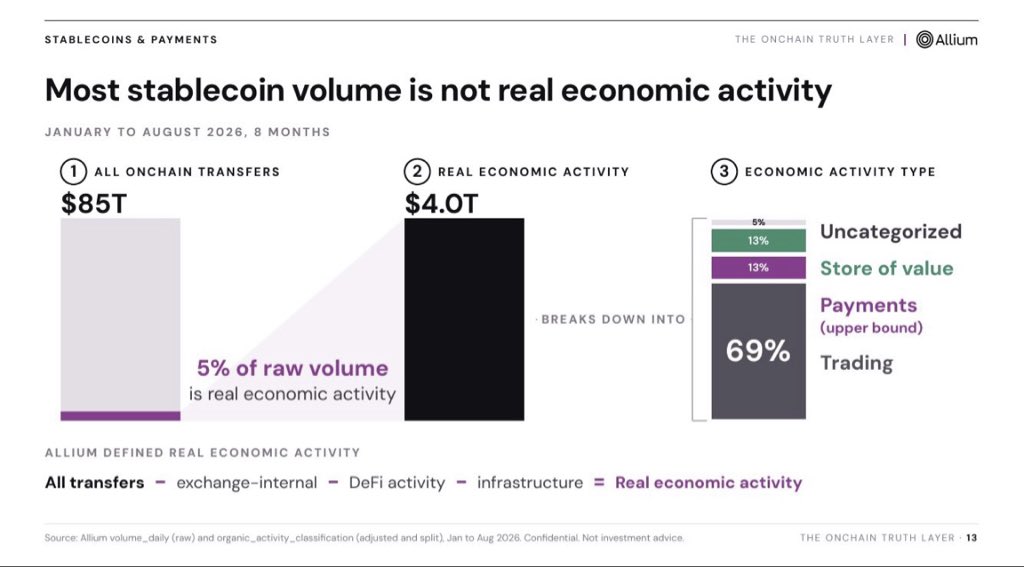
Stablecoin supply grew 0.4% this year. Stablecoin payments grew 45% to $482B.
The market isn’t growing by minting more dollars. It’s growing because people and businesses are using them.
Our five takeaways from @AlliumLabs’ Q3 2026 report:
https://t.co/8Cet60LjiA
Our latest State of Stablecoins report brings together onchain data and perspectives from 17 leaders across payments companies, banks, and crypto firms.
Data and opinions on issuer distribution, tokenization, payments, agents, and crypto cards.
Enjoy!
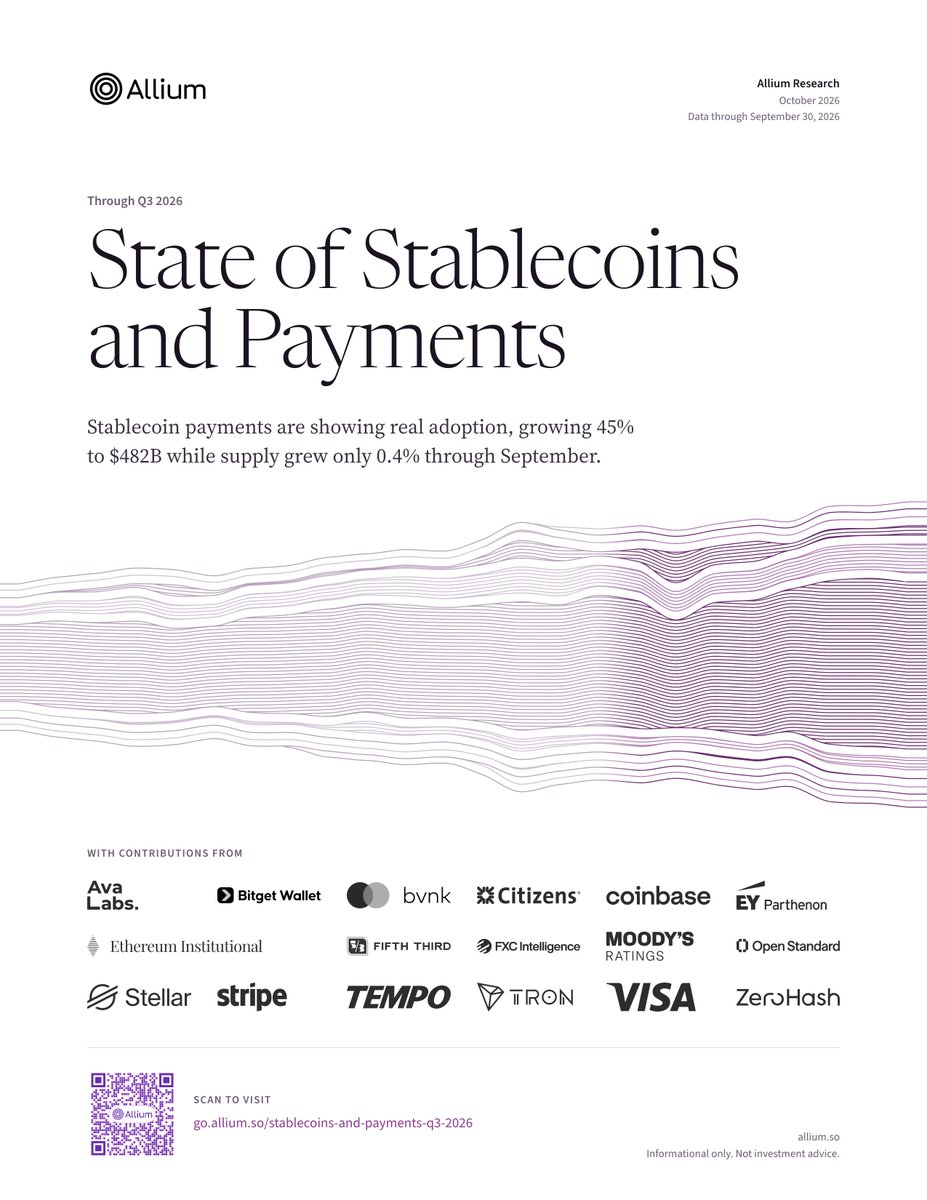
Our Q3 State of Stablecoins & Payments report is live.
9 months of onchain data. 15+ industry perspectives, including Visa, Stripe, Coinbase, Citizens, Stellar, Moody's Ratings and more.
From stablecoin supply to payments, cards and AI agents.
Download the full report: https://t.co/yMkPswcbKs
I was lucky to have an early look at the @ArrakisFinance tokenized equities report and provide a quote from @AlliumLabs
A must read if you're looking for insights beyond surface level metrics!
After months of research, we have published the most comprehensive report on tokenised equities, indexing over 1.5m addresses across five issuers on four chains.
https://t.co/lAeLez7k0m
In this report, you will learn who is actually buying tokenised equities, how fast this market is growing, what the latest innovations are, and projections for what's ahead in 2027.
We’ve heard from a lot of teams at banks, hedge funds, payment companies and beyond looking for stablecoin metrics.
How much is outstanding? What does volume look like? Which stablecoins are the largest? Which are growing fastest?
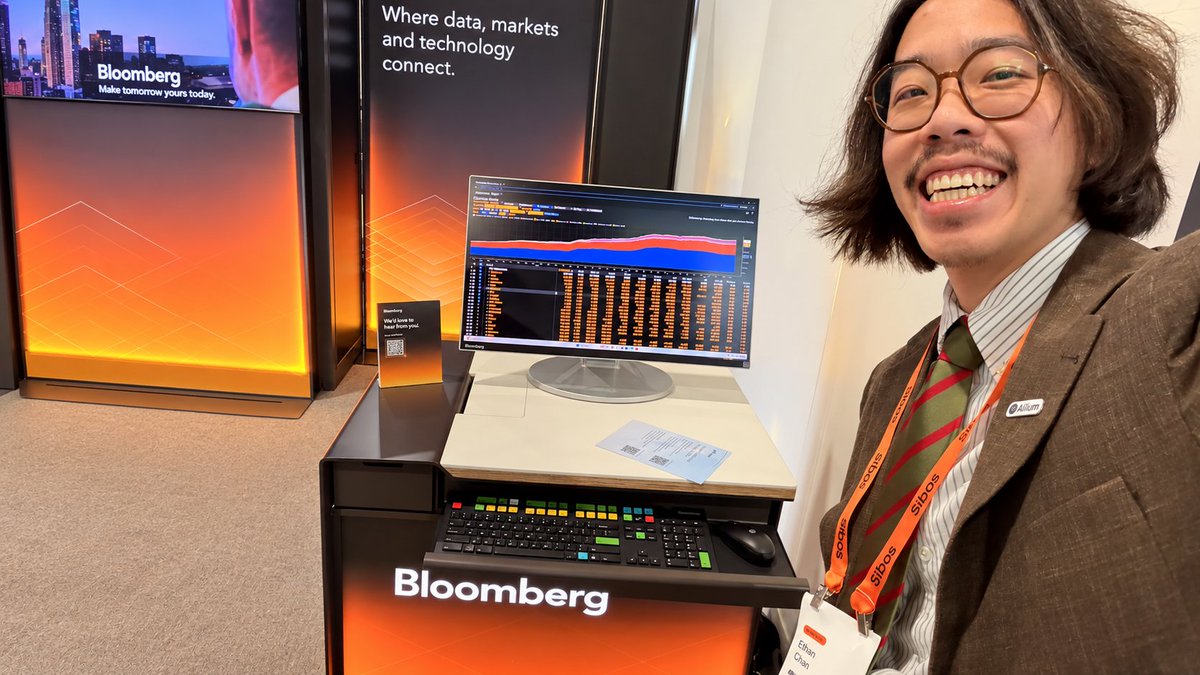
Glad to see these questions are now easy to answer on the Bloomberg Terminal. Give it a go!
Stablecoin data is now live on the Bloomberg Terminal at RWAS <GO>, powered by Allium.
The people asking us about stablecoins changed this year. It used to be crypto funds. Now it is treasury teams, payments teams and rates desks. They want to know what settled, where, and whether the number holds up in a memo someone else will read.
Institutions want the same certainty in onchain data they already have in traditional markets. That's been the bet since day one.
Thank you to the team, and to the Bloomberg team for setting the bar.
The Fed just raised rates for the first time since 2023.
Crypto perps rallied anyway.
The median crypto perp on Hyperliquid jumped 2.2% in the seven minutes after the 2:00 PM decision, with $325 million in new open interest behind the move.
Then, $46 million of shorts were liquidated between 2:05 and 2:08 PM.
One account had $23 million of Bitcoin shorts force-closed in just three seconds.
By 3:00 PM, the gold perp was down 1.7% and the S&P 500 perp was down 0.8%.
The market had an 87% chance of a hike priced in.
It still triggered $46 million in short liquidations in three minutes.
Our State of Stablecoins report is out ahead of the CLARITY Act vote.
While stablecoin supply growth has slowed, the real growth story is in payments and cross-border activity.
Take a look.
Our new State of Stablecoins and Payments report is out.
We were going to wait until the end of Q3, but with the CLARITY Act Senate vote here, we're sharing an initial version.
So far in 2026:
Supply: $303 billion, up 6% in a year
Treasury demand: about 58 cents of new demand per dollar of supply (Citizens x Allium estimate)
Payments: at least $401 billion, up 42%. Businesses receive 58% to 64%
Cross-border: 0.31% of fiat payment value, growing 64% against 9% for fiat (FXC Intelligence x Allium estimate)
Agentic payments: 29 million a month on x402, at 6 cents each
Cards: $108 million a month on one issuer, 8x in a year
https://t.co/FC4n3qshOd
Hyperliquid marked SK Hynix down 5.5% while Korea's stock market was closed this weekend. Korea opened down 6.5%.
The perp had priced more than 80% of the move before the cash market could trade.
Funding flipped from −43% to +97% annualised, so dip buyers are now paying to be long.
Our State of Stablecoins & Payments report drops tomorrow.
Get it ahead of the Senate’s CLARITY Act vote this week.
Sign up to get it in your inbox, or let me know if you want a copy:
https://t.co/CSglrgELpU
Our team really enjoyed putting together this report on @solana.
One stat stood out: 63% of tokenized equities trading happens while US markets are closed.
That becomes even more striking when you consider that Solana accounts for more tokenized equity transactions than any other chain.
If you want to understand how real-world assets are moving onchain, I highly recommend reading the full report.
Tokenized equities don't keep stock-market hours.
63% of tokenized-equity volume on @Solana happened while U.S. exchanges were closed.
17% happened on weekends alone.
Putting an asset onchain doesn't just change where it settles. It can change when the market exists.
More from our RWA deep dive with @Solana: https://t.co/pLET6b1JQ6
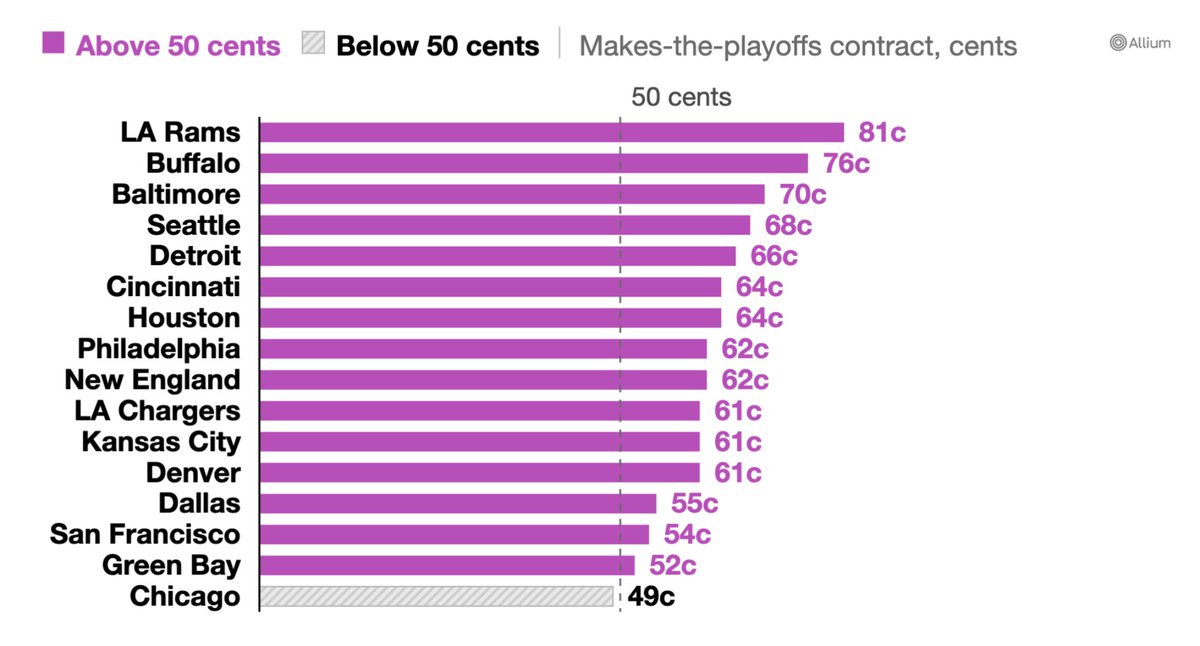
Ahead of the NFL season opener, we're dropping our prediction markets NFL report.
Here's a quick glimpse on who's projected to make the playoffs before the season starts.
Hyperliquid’s buyback no longer keeps up with its own token emissions.
In July, the Assistance Fund bought 0.60M HYPE while staking emitted 0.83M, the first month emissions exceeded buybacks.
Through 2025, it bought 2 to 3x emissions every single month.
But HYPE rose from $26 in January to $85 today while fee revenue fell. The result is fewer HYPE bought back for every dollar Hyperliquid earns.
The point of comparing buybacks with trading volume is to assess how much they can support price in the market today.
I agree the more important long-term question is their effect on supply. In that sense, crypto buybacks are closer to a burn mechanism.
Where I disagree is with the common framing that they work like stock buybacks or signal that a team “believes in the project.” In many cases, they’re simply predefined tokenomics rules that route revenue into buying and removing supply.
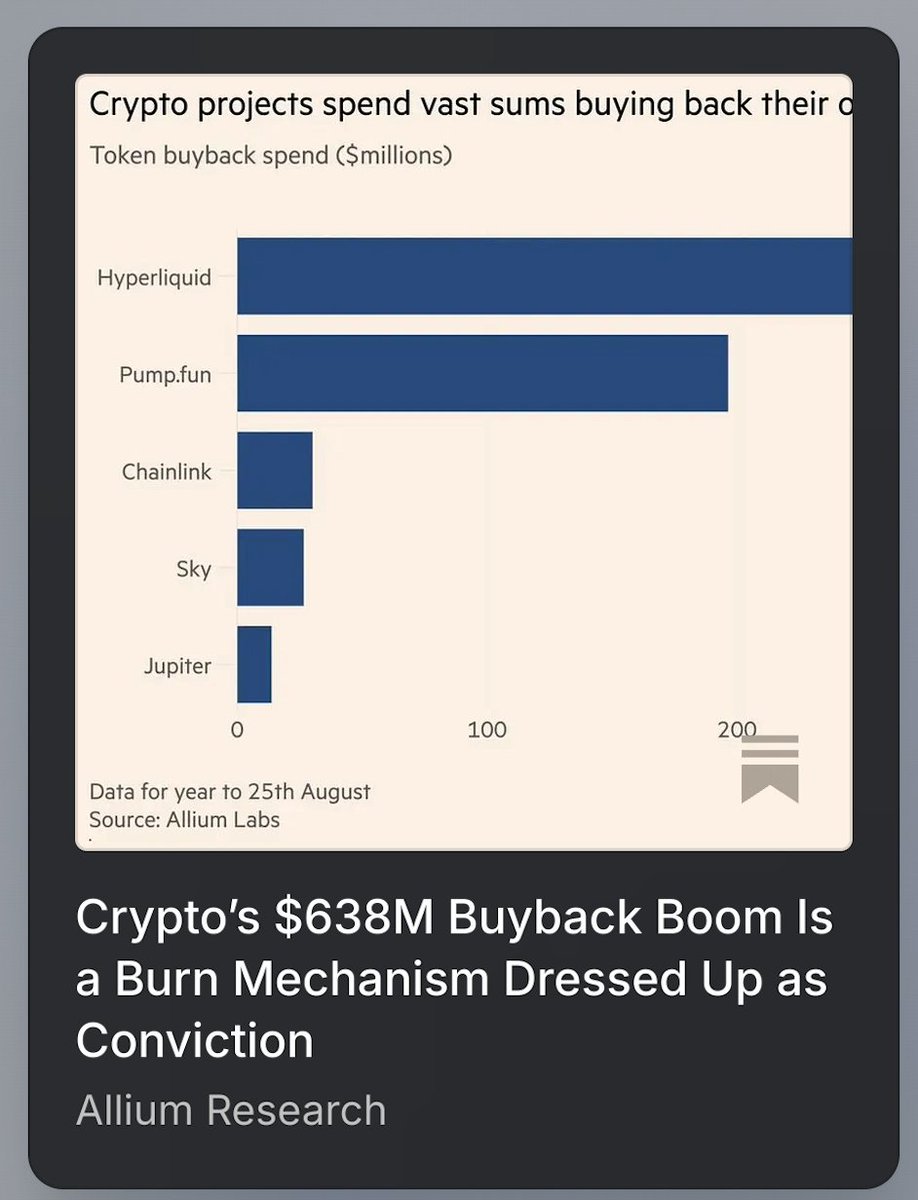
Crypto projects have spent $638 million this year buying back their own tokens. In a recent interview, I told the @FinancialTimes that much of the buyback narrative is optics.
Here is what a crypto buyback actually is: a predefined rule that routes protocol revenue into reducing token supply.
Ethereum has used a similar mechanism since 2021 by burning transaction fees. Buybacks add one step: the protocol uses revenue to buy the token on the open market before removing it from circulation.
Those purchases provide some incremental demand, but not much. HYPE and PUMP buybacks currently account for less than 2.5% of their tokens’ trading volume.
An equity buyback is a capital-allocation decision. A crypto buyback is a burn with better branding.