Most likely, no human typed the word “permission” here. Rather, they misspelled “persimmon” in such a way that autocorrect considered “permission” the closest valid word.
Pure spellchecking that flagged the typo would have alerted the user, who would have made the right choice.
@Adellagreen You can add people to lists and view just the list. You won't you see people you don't want to see if you don't add them to the list, but you won't have to unfollow them.
@jmugan If you map a route from your starting point to your destination, Google Maps should show an option "Search along the route". I often use it to find coffeeshops along the route between two cities, etc.
*guy follows me into a coffeeshop this morning, talk to him a while waiting in line after I order*
barista: there you go, miss
barista: and you sir?
__ : *smiles*
__ : i'm just here for a skinny blonde americano
most contextually relevant pickup line I have ever experienced
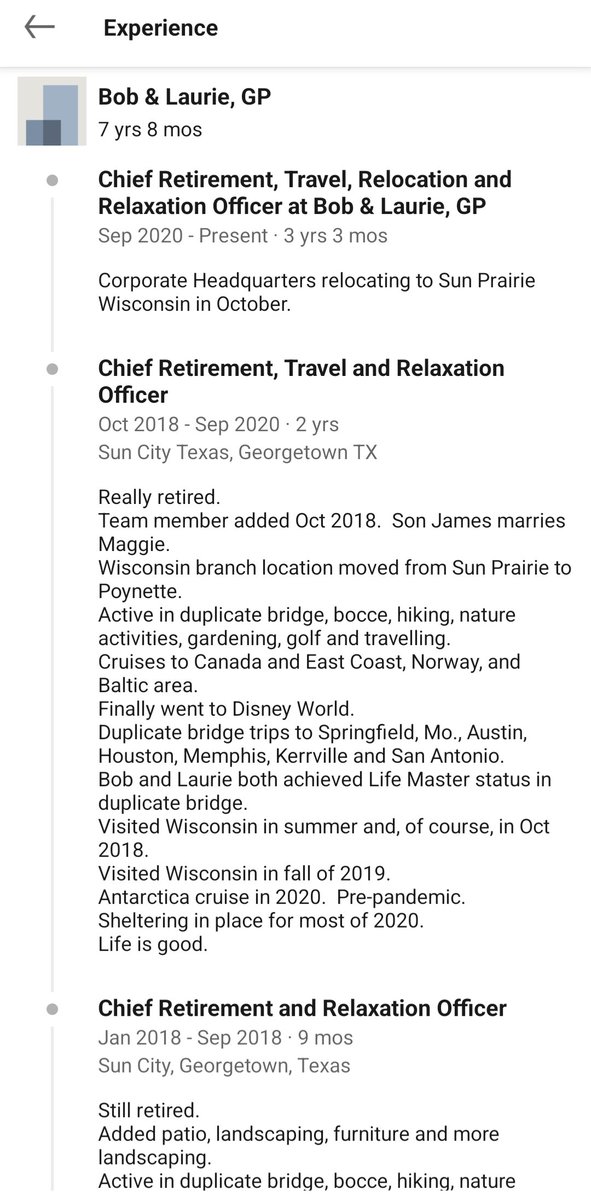
❤️ one of my former coworkers retired several years ago, and has been using LinkedIn as a way to keep us all updated on the joys of being a Chief Relaxation Officer
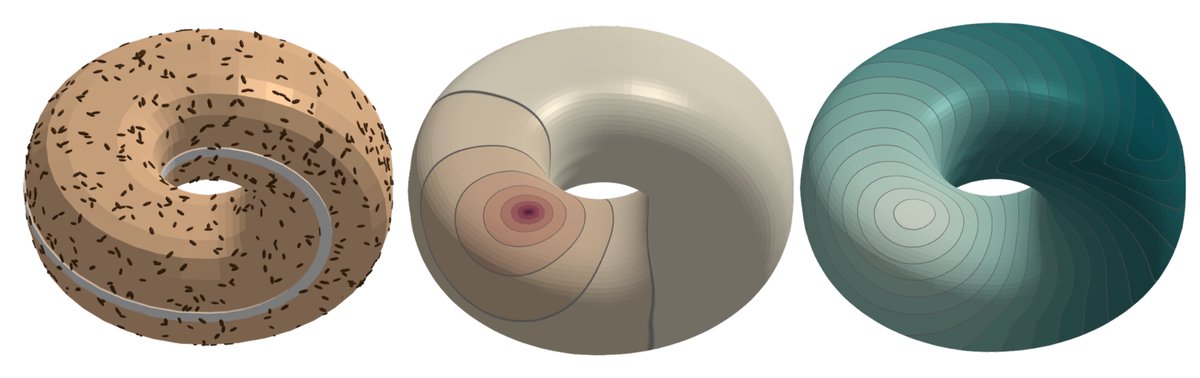
“Meschers: Geometry Processing of Impossible Objects”
A graphics and material-modelling tool that can systematically handle impossible objects.
Want your Penrose triangles smoothed into bagels while retaining their delicious impossibility? Meschers can do that.
H/T @sohkamyung
"It turned out that there was something terribly stressful about visual telephone interfaces that hadn’t been stressful at all about voice-only interfaces.
Videophone consumers seemed suddenly to realize that they’d been subject to an insidious but wholly marvelous delusion about conventional voice-only telephony. They’d never noticed it before, the delusion— it’s like it was so emotionally complex that it could be countenanced only in the context of its loss.
Good old traditional audio-only phone conversations allowed you to presume that the person on the other end was paying complete attention to you while also permitting you not to have to pay anything even close to complete attention to her.
A traditional aural-only conversation— utilizing a hand-held phone whose earpiece contained only 6 little pinholes but whose mouthpiece (rather significantly, it later seemed) contained (62) or 36 little pinholes— let you enter a kind of highway-hypnotic semi-attentive fugue: while conversing, you could look around the room, doodle, fine-groom, peel tiny bits of dead skin away from your cuticles, compose phone-pad haiku, stir things on the stove; you could even carry on a whole separate additional sign-language-and-exaggerated-facial-expression type of conversation with people right there in the room with you, all while seeming to be right there attending closely to the voice on the phone.
And yet— and this was the retrospectively marvelous part— even as you were dividing your attention between the phone call and all sorts of other idle little fuguelike activities, you were somehow never haunted by the suspicion that the person on the other end’s attention might be similarly divided.
During a traditional call, e.g., as you let’s say performed a close tactile blemish-scan of your chin, you were in no way oppressed by the thought that your phonemate was perhaps also devoting a good percentage of her attention to a close tactile blemish-scan.
It was an illusion and the illusion was aural and aurally supported: the phone-line’s other end’s voice was dense, tightly compressed, and vectored right into your ear, enabling you to imagine that the voice’s owner’s attention was similarly compressed and focused… even though your own attention was not, was the thing.
This bilateral illusion of unilateral attention was almost infantilely gratifying from an emotional standpoint: you got to believe you were receiving somebody’s complete attention without having to return it. Regarded with the objectivity of hindsight, the illusion appears arational, almost literally fantastic: it would be like being able both to lie and to trust other people at the same time.
Video telephony rendered the fantasy insupportable. Callers now found they had to compose the same sort of earnest, slightly overintense listener’s expression they had to compose for in-person exchanges.
Those callers who out of unconscious habit succumbed to fuguelike doodling or pants-crease-adjustment now came off looking rude, absentminded, or childishly self-absorbed. Callers who even more unconsciously blemish-scanned or nostril-explored looked up to find horrified expressions on the video-faces at the other end. All of which resulted in videophonic stress."
Most current dictionaries no longer even mention “rooves” as a plural for “roof”, not even as “archaic”, though it was the usage I grew up with in the 1960s/70s ... but today for the first time I saw that, apparently, they’re just fine with “turves” as a plural for “turf”.
It's funny, extra-compiler semantics such as comments and good variable names used to only matter for humans and not for the computer, but now with LLMs we have computers reading the code, and they do matter for those computers.