@GuyHuman22370 Hey Doc, in your opinion, what’s the main reason misinformation spreads so fast—people, algorithms, or lack of digital literacy—and which one should we focus on fixing first?
Here is an article that discusses how misinformation spreads online and its impact on society:
https://t.co/20ZB2IT7Ga
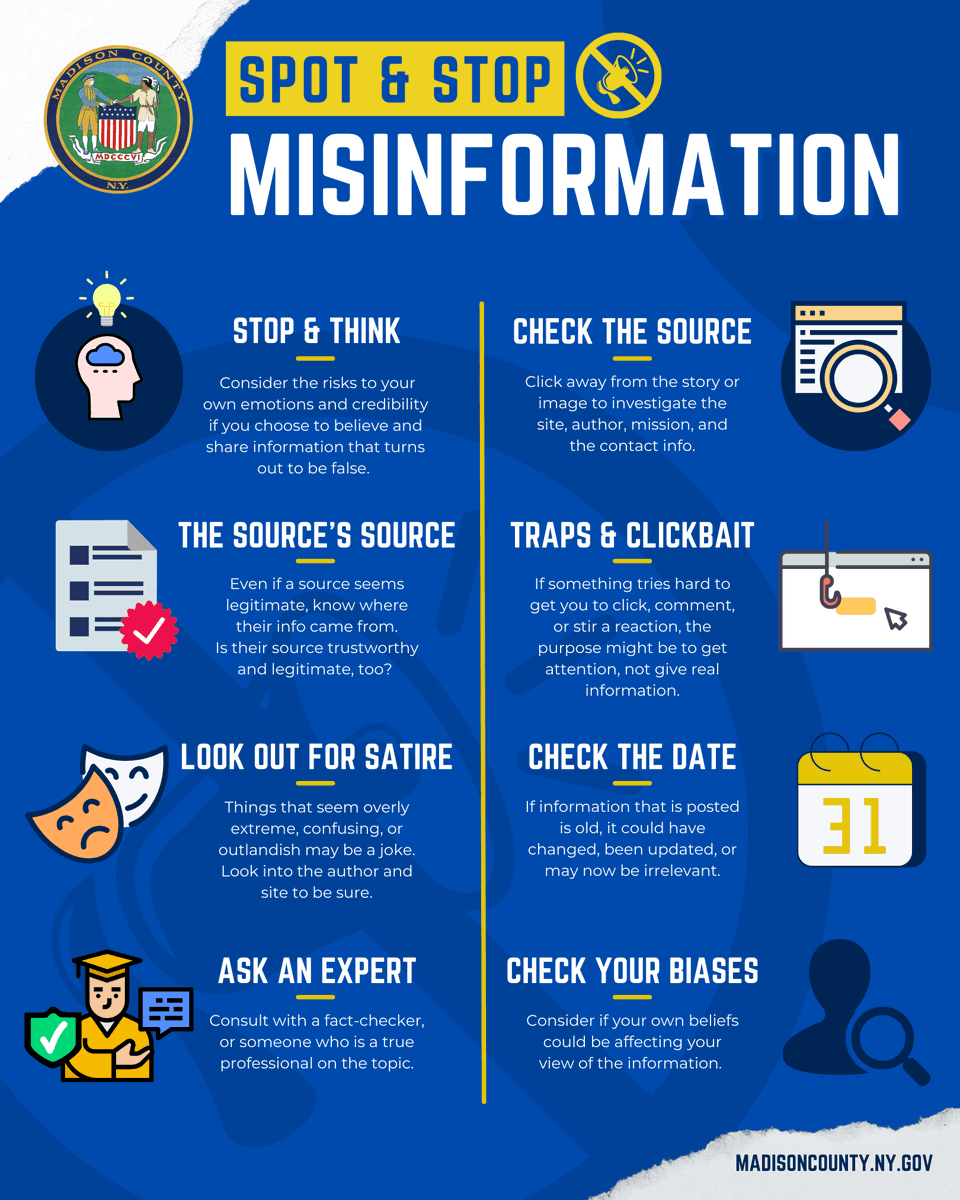
Here is a picture that suggests recommendations on how to help reduce the spread of misinformation:
Misinformation spreads quickly on social media, often reaching more people than verified facts. This makes it harder for users to identify credible sources and make informed decisions. Improving digital literacy is essential. #EM203KathleenClarke#EM203KathleenClarkeProblem
@EM203BLewis I totally agree! Seeing theory put into practice with digital tools really makes the learning process more engaging. It’s cool how technology can actually enhance understanding rather than just being a distraction.
@EM203tarap Absolutely! I’ve noticed that using different media really changes how I retain information. It’s interesting to see how multitasking can both help and hinder learning depending on the approach.
@EM203zacm Definitely agree. The online communication with peers made learning more interactive and helped make the experience more engaging compared to traditional courses.
@EM203BVALENCIAN Sounds like a great start to the course! The comic strip activity was a really creative way to get to know everyone, and learning a new skill made the class feel very engaging. Excited to see what’s next too!
@EM203RicheyZ I agree. The lessons showed how digital tools can really support learning when they’re used intentionally. Multitasking sounds productive, but it actually makes it harder to stay focused and develop skills deeply.
After the first few lessons of #EM203KathleenClarke, I’m starting to see how digital tools, learning theories, and active strategies connect to shape meaningful learning experiences. It’s helped me reflect on how I engage with technology. #GoldenHawk#iLoveX
🫡🫡🫡