Let's take this seriously: even Google employees are now clearly stating that it seems to be an industry consensus that all Frontier Labs are managing "RSI loops." In other words, recursive self-improvement is being implemented by everyone.
Furthermore, Fable 5.5 will be the best model for Anthropic's IPO, but internally, OpenAI's "Bel" will undoubtedly overtake Anthropic by the end of the year.
RSI is here, and internally, the labs are miles ahead.
The guy who invented Amazon Prime disappeared for six years. He came back this week with $250 million and a factory that turns lines of code into tiny working machines. Type different code, a different machine comes out the other end.
That sounds fake. Here's why it took six years.
A chip fab is the most precise factory humans have ever built, and it makes exactly one kind of thing. Flat silicon that processes information. The moment you want moving parts, multiple materials, or real 3D structure, you leave the fab for a world where getting one new device into production takes years and tens of millions of dollars. Engineers call it one product, one process. It's the reason micro-machines never got their Moore's Law.
Holden's Matter Compiler kills the per-product process entirely. Features down to a few microns, no new tooling, and the system measures and corrects every step while it builds, then feeds what it learned into the next design.
His first product is the tell on how sharp the strategy is.
PrimeSwitch is a 150-amp relay for 800-volt power in AI data centers. It opens in roughly 50 microseconds, about 1,000x faster than a normal contactor. So the first thing to come out of a universal factory is aimed at the one market where demand is basically infinite and a faster switch means less fried hardware.
Neal Stephenson wrote the Matter Compiler as fiction in 1995. Holden just shipped the first real product out of one, and it's a light switch for AI data centers.
Reasoning From Scratch: Reinforcement Learning with Verifiable Rewards (RLVR) round 2.
Covering clipped policy ratios, KL loss term, format rewards, and other GRPO tips & tricks.
00:00 Introduction and recap
01:52 Interpreting basic GRPO training metrics
06:34 Planned improvements to GRPO
08:58 Running longer training jobs with Python scripts
13:39 Running the baseline GRPO training script
17:29 Loading and plotting training logs
19:29 Diagnosing unstable training
23:55 Evaluating checkpoints on MATH-500
26:26 Downloading existing checkpoints
30:09 Tracking advantage statistics
34:53 Understanding entropy
40:32 Computing entropy in PyTorch
44:17 Interpreting entropy values
48:58 Adding entropy tracking to GRPO
53:36 Analyzing advantage and entropy metrics
56:18 Stabilizing GRPO with clipped policy ratios
1:03:27 Implementing the clipped policy loss
1:09:39 Analyzing clipped policy training results
1:11:25 KL divergence and reward hacking
1:15:12 Adding a KL loss term
1:20:34 Limitations of the simplified KL loss
1:23:04 Format rewards and think tags
1:25:47 Adding special tokens to the tokenizer
1:30:29 Implementing the format reward
1:35:56 Analyzing format reward training
1:38:25 Rewarding format only for correct answers
1:40:48 Further GRPO improvements from research
1:45:43 Next steps and distillation
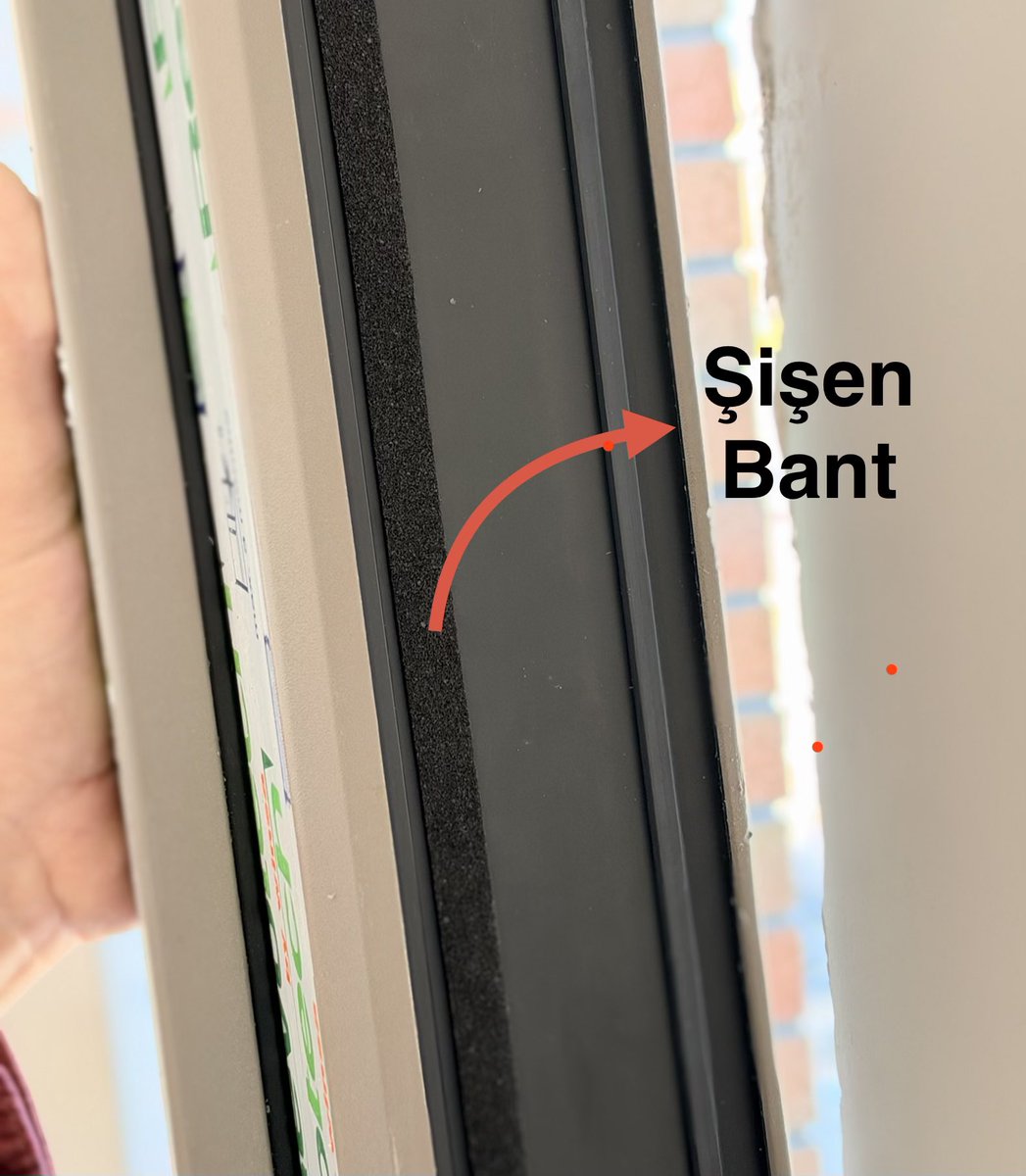
Doğrama montajı öncesi önemli bir uygulama detayı👇
📌Doğramanın dört kenarına şişen bant uyguluyoruz. Montaj sonrası genleşerek kör kasa üzerindeki yalıtım bandıyla birleşiyor.
Böylece doğrama ile kör kasa arasındaki boşluklar kapanıyor, hava sızıntısı ve ısı kaybı azalıyor.✅
(Görseller şantiyemizden uygulama örneğidir.)
After six years in stealth, Atomic Machines is out. Our mission: on-demand, universal command of matter. First beachhead: the Matter Compiler, an AI-native manufacturing system that builds working micro-machines from code alone. No per-product tooling. No process development. Different code, different machine.
Wait. Am I getting this right?
These guys just came out of SIX YEARS in stealth with a machine that takes code and spits out actual working micro-machines???
Tiny devices with moving parts, without the usual per-product tooling or months of process development.
A different code… BAM: different machine!
A regular factory locks in custom fixtures and process recipes for each thing it builds.
3D printer…? Just changes the shape.
What Atomic Machines describes is closer to a compiler for physical devices:
The system measures the result after every step, feeds that back, and only lets the part move forward if it is in spec.
Their first output is the PrimeSwitch PS-150, a hermetic relay about the size of a fingernail that carries 150 A continuous, opens to 1,500 V isolation in 50 microseconds, and draws no power while holding the state.
Aimed at the 800 V DC rails showing up in AI data centers, where mechanical contactors are too slow and solid-state switches bleed heat and cannot fully isolate.
If you are even remotely interested in manufacturing, you know this a different c a t e g o r y of manufacturing.
Congrats to @jeffholden and Klaus Zietlow and the rest of the team!
Atomic Machines, a Bay Area startup founded by Amazon Prime and Uber veteran Jeff Holden, has emerged from six years in stealth with $250 millio nraised. Its Matter Compiler is an AI-native micro-manufacturing system that builds multi-material 3D machines with moving parts and features down to single-digit microns, straight from design files and without masks, moulds or hard tooling. Its first device, the PrimeSwitch PS-150 power relay for AI data centres, is now with early-access customers for evaluation.
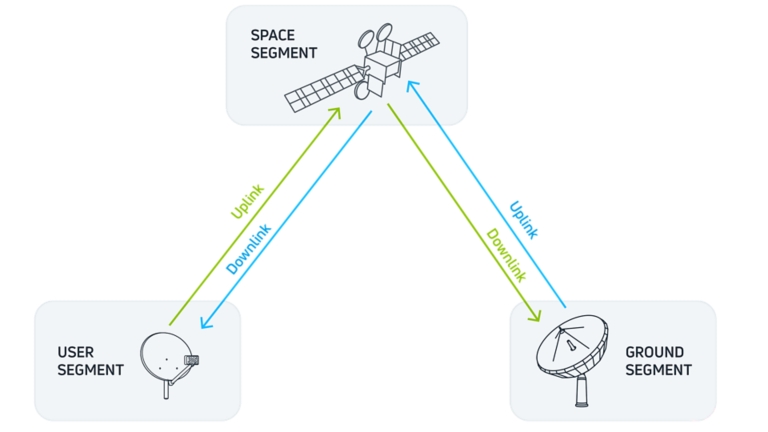
Rockets get satellites to space, but what happens once they're there? 🚀🛰️
Our straightforward guide to satellite communications breaks down what happens after satellites reach orbit: https://t.co/BVq7tPhfFx
#WorldSpaceWeek#WSW2026#SatelliteCommunications
Evidence of how leveraged the entire tech sector is to OpenAI & Anthropic: an FT story about OpenAI's revenue's being less than initially reported is spurring a more than 5% drop in Oracle shares, exacerbating losses from Nvidia and AMD to Microsoft https://t.co/8rhQ9dvxXM.
llama.cpp can distribute inference on heterogeneous devices through the ggml RPC backend
It's an advanced setting but I think with time we'll make it more accessible to regular users.
The World's First 10Gbps USB3.2 Logic Analyzer launch on Kickstarter now!
Upto 1.4G@4CH, 800M@8CH, 400M@16CH, 200M@16CH, 4x 100Msps ADC module, and AI Agent Ready!
Check it now, Get $99 super early bird:
https://t.co/ZC2NNfKMZA
The world's first two working nuclear clocks have produced their initial comparative results, with China's Tsinghua University team reporting a clock approximately six times more stable than the one developed independently at Vienna's TU Wien. Both clocks use thorium-229 nuclei embedded in crystals to keep time by the rhythm of the atom's core rather than its electrons, making them far less susceptible to stray electric and magnetic fields that can throw off conventional atomic clocks. The Chinese team also demonstrated that two separately grown crystals kept the same time to within about three parts per 10 trillion, a critical step toward turning nuclear clocks from laboratory demonstrations into reproducible standards. The Vienna team used its clock to search for dark matter, without success. Neither clock currently matches the best atomic clocks in precision, but researchers say improved crystals and more powerful lasers could eventually make nuclear clocks competitive or superior. Beyond precision, the technology could one day produce compact, robust timekeepers that bring optical-clock-level accuracy out of specialized laboratories. Both teams published their results in Nature.