International humanitarian law exists precisely to protect civilians in times of conflict. Children, schools, and hospitals must never be placed at risk. #USIranWar#IranIsraelConflict
Bar elections at the Lahore High Court escalated when a heated exchange between lawyers turned into a physical altercation inside the court premises.
Videos quickly went viral, drawing national attention to the incident. #LahoreHighCourt#Lawyers#pakistaniviral
The recent escalation of conflict is a sobering reminder of how fragile global stability can be. As events unfold, it’s important to stay informed through credible sources and remain mindful of the real human impact behind the headlines. #Iran#IranIsraelConflict
Direct participation requires harm to military capacity, a direct causal link, and intent to support one side. General support or propaganda does not qualify.
In war, the real question is not who is in charge, but who is protected.
International Humanitarian Law is built on distinction: parties must distinguish between civilians and fighters, and between civilian objects and military targets. Civilians must not be attacked.
Under Article 51(3) of Additional Protocol I, civilians lose protection only while they directly participate in hostilities. That loss is temporary and based on conduct, not identity.
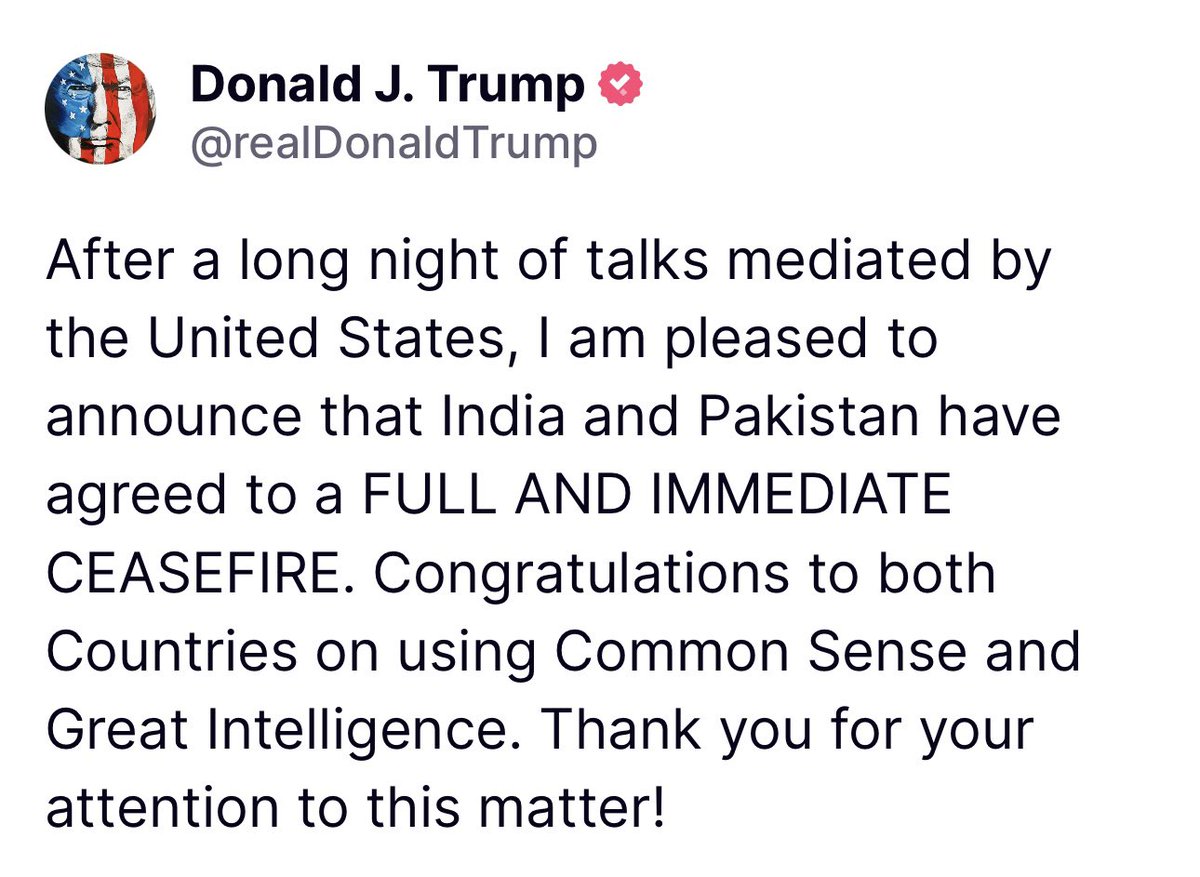
US President Trump has offered to work with India and Pakistan to achieve a “solution” for the long-disputed Kashmir region, days after his administration brokered a ceasefire between the two countries https://t.co/2ai4OAfnmF
What India did three days ago on their news channels against Pakistan , claiming “we captured Lahore” or “we entered Karachi” — is now happening on X and Instagram, since even Indians no longer trust their own media. Don’t panic over fake news. Follow official statements.
The Indian Air Force has tweeted, ‘The operations are still ongoing,’ referring to ‘Sindoor.’ Also, on Sunday morning, Modi is meeting with the country’s top officials at his residence.