Application is now open for registration!
The NCDMB digital research capacity development programme designed to equip undergraduate students in Nigeria with modern technology skills, advanced research methods, and industry relevant digital competencies. This programme is created to prepare young talents for the future of innovation, digital transformation, and advanced technology development through structured virtual learning, expert mentorship, and practical applied research experience.
Programme Highlights
• Virtual training and digital laboratories
• Solution development mentorship from industry experts
• Data Analytics and Cloud Computing training
• Digital Transformation frameworks
• Research project development support
• Monthly stipend support
• Innovation and incubation opportunities
Programme Benefits
• Strong foundation in research methodology
• Practical skills in digital research tools and data analysis
• Field-specific competencies aligned with science, engineering and technology domains
• Preparation for postgraduate studies and industry-driven problem solving
Mandatory Requirements
• Member of student related associations
• Registered with NOGIC JQS
• Laptop and Internet Connection
• CGPA of 3.5 and above in the last academic session
Who Can Apply
300 & 400 Level Undergraduate Students, Students currently on Industrial Training (IT), Science, Engineering & Technology Disciplines and Public Universities in Nigeria.
Eligible Fields Include;
Mechatronics Engineering Computer Science / IT Data Science Geosciences Environmental Engineering Petroleum Engineering Electrical Engineering
Mechanical Engineering
Chemical Engineering
Register here for your NCDMB NOGIC-JQS Competency ID https://t.co/Guw86KFcBc
Deadline: Monday, June 15, 2026
So, today the Student Chapter of the @AmerChemSociety at @TopfaithU will be going around campus and high schools in our host community, to campaign for the responsible use of plastics as part of this year's World Earth Day celebration.
#EarthDay2026#ChemistsCelebrateEarthWeek
🚨🚨NEW EPISODE DROP Sally Kornbluth, President of MIT🚨🚨
"If you take a lick of the lollipop of mediocrity, you will suck forever."
I love this.
She was talking about how MIT sustains excellence after 150+ years. And it applies to founders and CEOs who are trying to scale, more than ever.
The thing is, the bar doesn't drop all at once. It drops one hire at a time, one exception at a time.
It's better to have nobody than to let the standard slip even once. Every hire, every door, every message has to carry the same signal. That's how MIT maintains it's intensity.....just look at the list of grads like @vkhosla@gdb@drewhouston@mansourtarek_@mntruell@_mohansolo@ChaseLochmiller
I’ve watched this play out with the companies I work with. They hit 150 employees, the founder stops interviewing everyone, and by 500 they're asking what happened to the culture.
Sally's answer: it's a lot easier to stop that slide than to recover from it. The fix is relentless consistency, clarity, and the willingness to say no far more often than you say yes.
Worth remembering when growth feels urgent.
------
Listen to the full conversation with MIT President Sally Kornbluth on Long Strange Trip.👇
Physicists have succeeded for the first time in transporting the most expensive and most volatile substance on Earth — antimatter - in a truck
https://t.co/DbTRmOBmv4
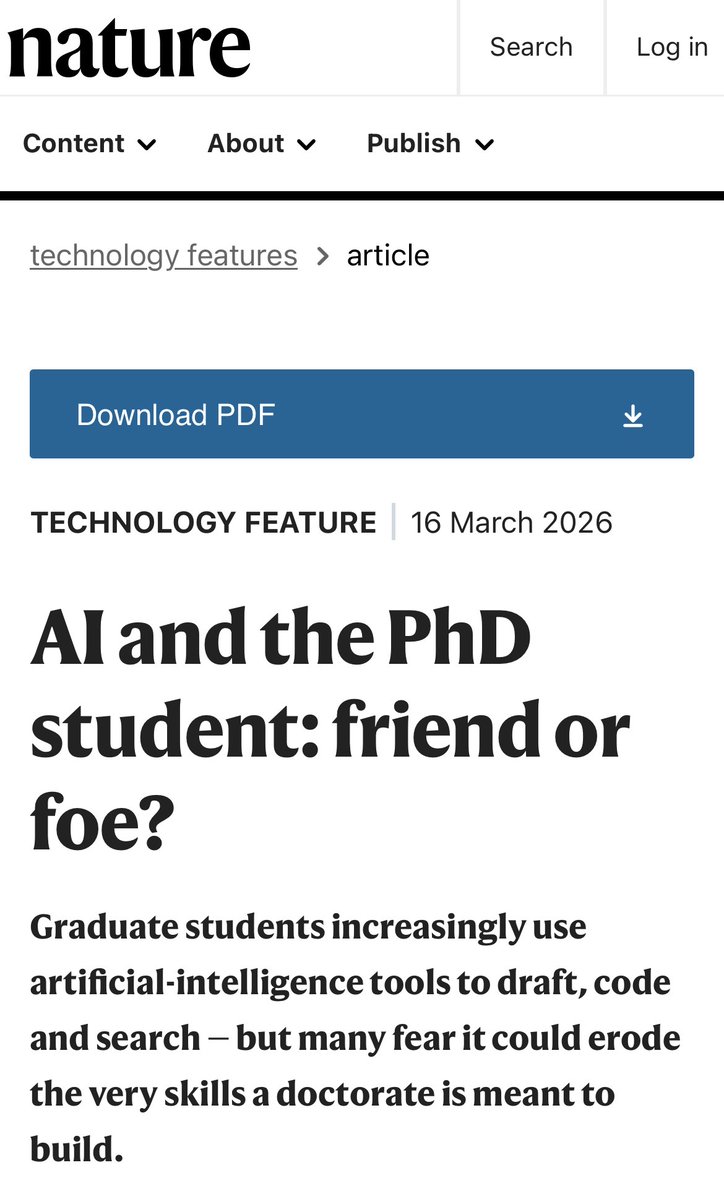
Why I may ‘hire’ AI instead of a graduate student
“It can competently perform a lot of the work I need immediately,” this professor writes. https://t.co/BFgtRuUM1u
In 1995, a nurse broke hospital rules to place a newborn into her twin sister’s incubator. The baby was not expected to survive.
Kyrie and Brielle Jackson were born 12 weeks early at a hospital in the United States. Each weighed roughly two pounds. They were placed in separate incubators, standard practice to prevent infection.
Kyrie gained strength. Brielle did not. Three weeks after birth, Brielle went into critical condition. Her oxygen dropped. Her heart rate spiked. Her skin turned bluish-grey. Nurse Gayle Kasparian tried everything. She held her. She had her father hold her. She wrapped her in a blanket. Nothing worked.
Kasparian remembered hearing about a practice used in parts of Europe but never tried in American hospitals. She placed Brielle into Kyrie’s incubator. Their father described what happened next: “She snuggled up to Kyrie and she was just fine. It was immediate. It was absolutely immediate.”
Within minutes, Brielle’s oxygen levels were the best they had been since she was born. As she slept, Kyrie stretched her left arm across her sister’s body and held her.
Photographer Chris Christo captured the moment. The image spread around the world and became known as “The Rescuing Hug.” Hospitals across multiple countries began placing premature twins together, a practice that had been resisted for decades. Both girls went home healthy. They are now 30.
Glad I finished my PhD before the LLM era.
A PhD done with heavy LLM reliance risks becoming like learning to drive in a self-driving car — you arrive, but never really learn how to control the machine.
At that point, what exactly are you training: a researcher, or a prompt operator?
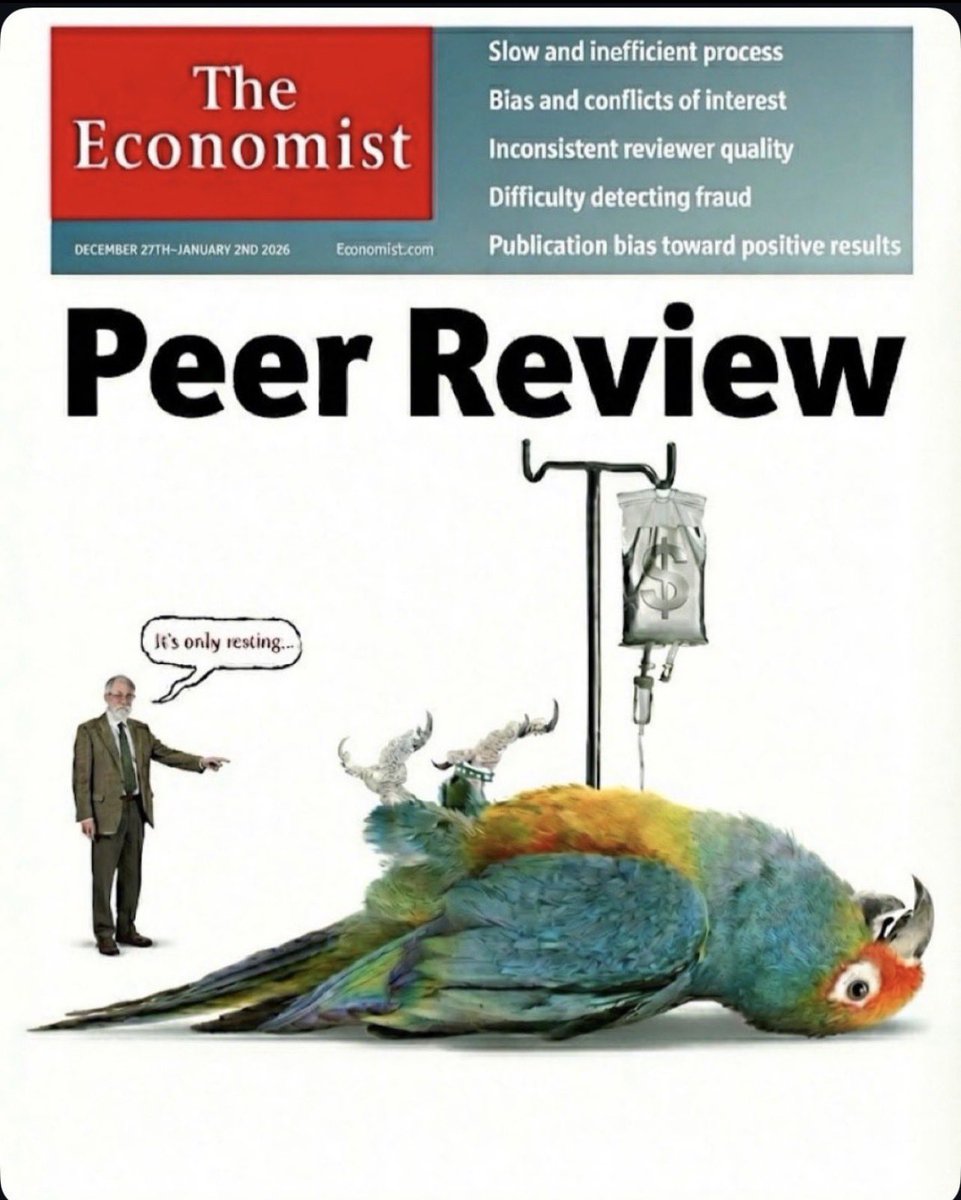
Peer review was supposed to be science’s quality filter, but somewhere along the way it started acting more like a bouncer who only lets in the regulars. It’s slow, it tends to favor established labs and familiar names, and it gets uncomfortable around anything too unconventional. Papers loaded with mountains of data tend to cruise through, while bold ideas that actually challenge the consensus get stuck in limbo or turned away at the door.
The irony is that where a paper gets published almost never determines its real worth. What actually matters is what the scientific community does with it afterward, whether people cite it, argue with it, build on it, or use it to blow up a long-held assumption. That’s where the value lives, not in the journal’s logo.
A major survey a few years back found that roughly 70% of researchers think the current system is fundamentally broken, and it’s not hard to see why. Publicly funded research hides behind paywalls, editors chase whatever topic is hot that month, and the whole incentive structure pushes toward safe bets over genuinely risky and potentially important work.
Science has always been complicated and deeply human and full of ego and inertia, but the conversation is shifting.
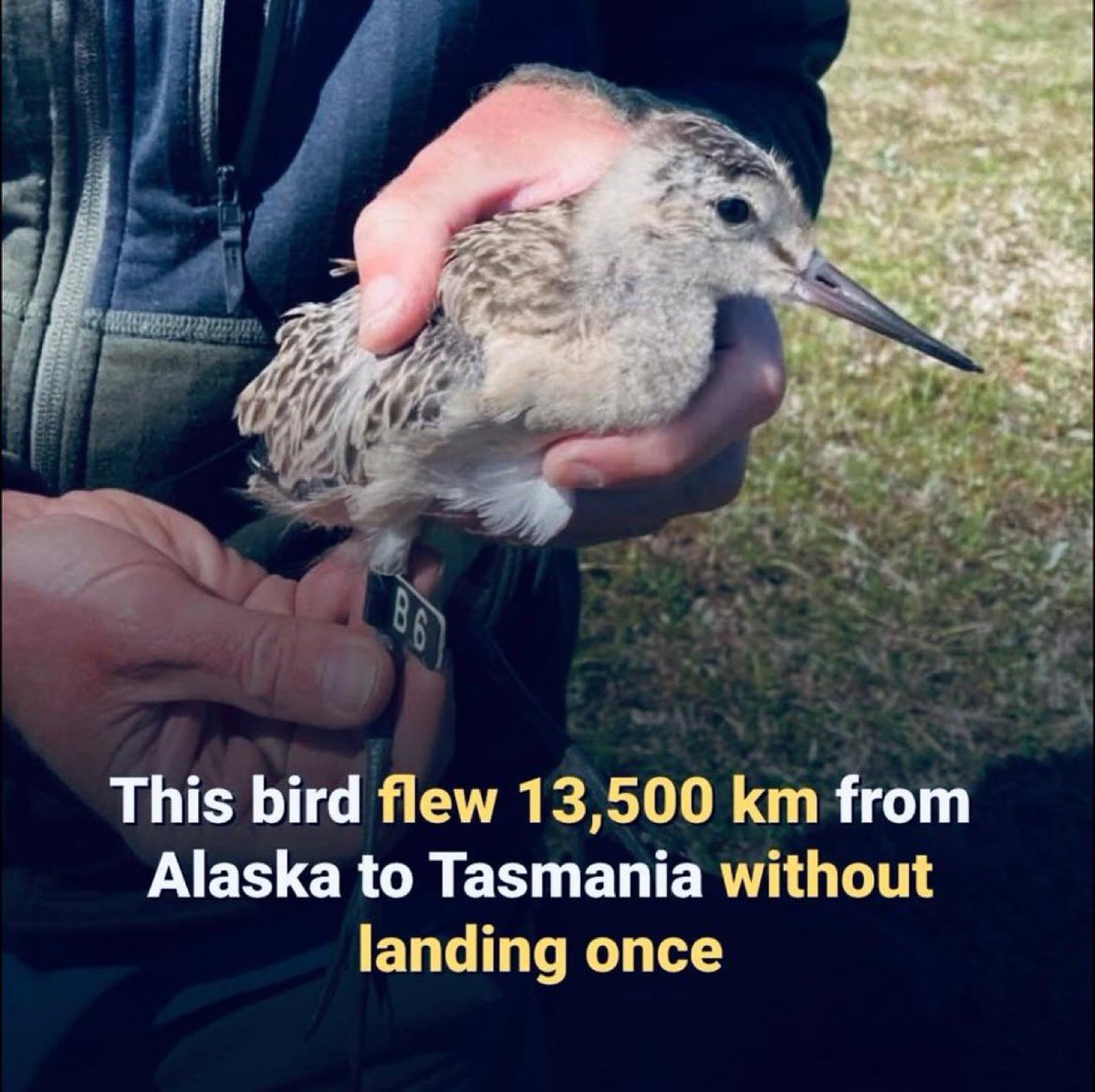
🚨 JUST IN: A migratory bird just shattered world records — flying 8,425 miles (13,560 km) NON-STOP across the Pacific without landing once.
The bar-tailed godwit doesn’t stop to eat, drink, or sleep during its migration across the Pacific Ocean. Its journey from Alaska to Australia takes roughly 11 days of continuous flight, covering over 13,000 kilometers through storms, headwinds, and open ocean with zero land beneath it the entire time.
Before departure, it does something almost surgical to its own body. It shrinks its digestive organs down to almost nothing, converting the stomach, intestines, and liver into raw fuel. The bird essentially eats its own gut to make room for fat reserves that will power its wings for nearly two weeks straight.
The brain doesn’t fully sleep either. Half of it stays active while the other half rests, alternating in shifts mid-flight at altitude over the open Pacific. The godwit is simultaneously unconscious and navigating with magnetic field sensitivity that no human instrument in the 18th century could replicate.
What makes this genuinely staggering beyond the physical record is the navigational precision involved. The bird leaves Alaska and arrives in New Zealand with accuracy that would embarrass early GPS systems. It reads Earth’s magnetic field, atmospheric pressure gradients, star positions, and potentially quantum-level compass mechanisms inside its eye that literally let it see magnetic field lines overlaid on its visual field.
Evolution spent millions of years building an aerospace navigation system inside a 300 gram animal.
We spend billions engineering machines that do what this bird does on instinct, fat reserves, and half a sleeping brain.
The longest recorded non-stop flight by a commercial aircraft is around 20 hours.
This bird does 11 days.
Without a runway.
"She saved a stranger’s child with $15. Decades later, she discovered why he had been searching for her.
In 1982, a Kenyan boy named Chris Mburu stood on the brink of losing everything. He was the brightest student in his rural district, studying by lamplight inside an earthen house without electricity. But his family could not afford his school fees. Without help, his education would end — along with any chance of escaping a life spent picking coffee in the fields.
Meanwhile, across the world in Sweden, an 80-year-old kindergarten teacher named Hilde Back came across a notice for a child sponsorship program. She chose a name from a list: Chris Mburu, Kenya. She began sending $15 every school term. There was no recognition, no expectation of gratitude — just a quiet decision to help a child she believed she would never meet.
That small amount changed everything.
Chris stayed in school. Over time, he and Hilde exchanged letters. She asked about his teachers, his studies, and his dreams. Through her words, he realized she wasn’t just part of an organization. She was a real person who believed in him. And he never forgot her.
Chris eventually graduated at the top of his law class at the University of Nairobi. He later earned a Fulbright scholarship to Harvard. He went on to become a United Nations human rights lawyer, helping prosecute genocide and crimes against humanity around the world.
Yet one thing always weighed on his heart. He had never properly thanked the woman who made his journey possible. In truth, he barely knew who she was.
In 2001, Chris founded a scholarship program for children like himself — talented students from poor families whose potential might otherwise be lost. He asked the Swedish Ambassador in Kenya to help him locate his mysterious sponsor so he could name the foundation after her.
They found her. Hilde Back. Still alive. Still living quietly in Sweden.
Chris traveled to meet her for the first time. He expected to meet a wealthy philanthropist. Instead, he found a humble, warm woman living simply — genuinely surprised that anyone considered her actions remarkable.
Then filmmaker Jennifer Arnold began documenting their reunion. During her research, she uncovered something Hilde had never told Chris.
Hilde Back had not been born in Sweden. She was born in Nazi Germany in 1922 to a Jewish family. At sixteen, when Hitler’s Nuremberg Laws banned Jewish children from attending school, strangers helped smuggle her to Sweden. Her parents stayed behind because Sweden’s refugee policies did not allow older Jews to enter. Both were later sent to concentration camps. Her father died there. Her mother disappeared, never to be heard from again.
Hilde survived the Holocaust because strangers helped her escape. She lost her own education because of who she was.
Fifty years later, she quietly paid for the education of a child across the world — a child who would grow up to fight the same hatred that destroyed her family.
When Chris learned her story, he wept. Hilde, meanwhile, had no idea that the boy she sponsored had devoted his life to prosecuting genocide.
In 2003, Hilde traveled to Kenya for the inauguration of the Hilde Back Education Fund. The entire village welcomed her as an honorary elder. In 2012, she returned again to celebrate her 90th birthday, surrounded by hundreds of children whose futures had been transformed through her generosity.
Hilde Back passed away on January 13, 2021, at the age of 98.
Today, the Hilde Back Education Fund has supported nearly 1,000 Kenyan children in continuing their education. Many have graduated from universities around the world. Many now give back — mentoring younger students and contributing monthly donations to support the next generation.
One woman. Fifteen dollars. One child.
That child created a foundation. That foundation changed hundreds of lives. And those lives continue to change others.
“The normal thing is failure, not success ... This is how it is!”
- Anne L’Huillier who knows a thing or two about research having received the 2023 Nobel Prize in Physics. “If something isn't exactly what you want, it can also be interesting.”
#KeepExperimenting #NobelPrize
Congrats to the 126 early-career scholars awarded a 2026 Sloan Research Fellowship, whose creativity and innovation set them apart as the next generation of scientific leaders! Our Fellows represent 7 fields and 44 institutions across the US and Canada.
https://t.co/8ENNQ2s6Ov