On June 18, 2017, I posted my first guide to Twitch on Medium. And as of today... all my guides have been viewed over 2 million times.
omghbdufgkbvcadsudeaaaah! *deep breath*
Games Journalism is like fewer than 40 people now. Magazines are basically gone and websites are close behind them. None of this is a surprise to me, but it's incredibly sad. We had something awesome for a while there. Younger generations have no idea what they missed out on.
this dude kept their 3DS connected to the servers for over 6 months after the shutdown and only stopped because the wi-fi card in their 3DS fucking DIED
absolutely legendary, we salute your dedication and this sacrifice
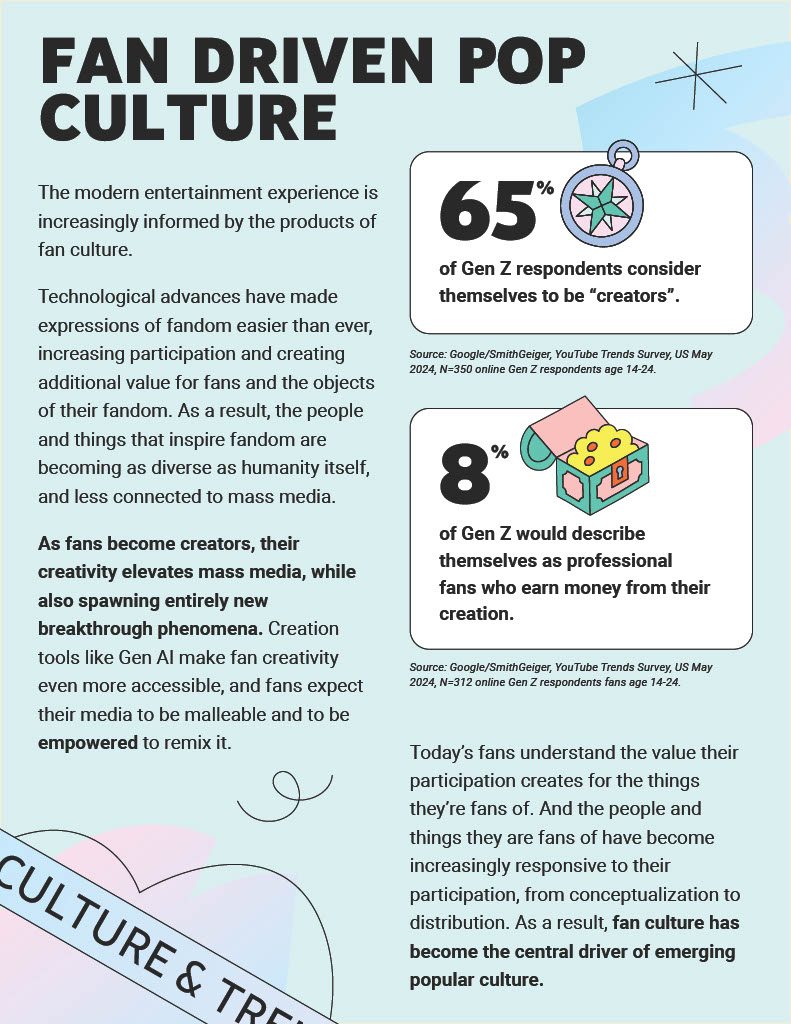
Fan culture now drives pop culture.
YouTube released its fandom report, and it shows we need to re-shape how we think about and engage fans.
Here's some key stats & my takeaways:
The most interesting stat?
8% of Gen Z fans now consider themselves Professional Fans—meaning they earn from it.
Add that to the 65% of Gen Z who consider themselves creators.
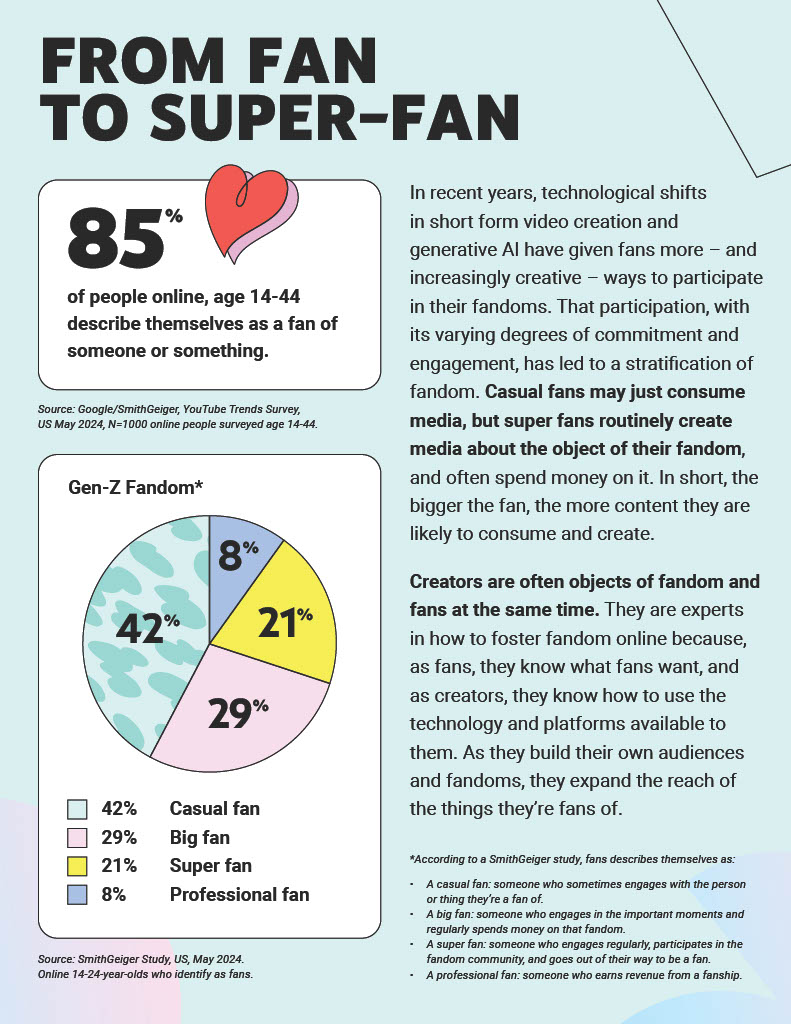
Looks like we've got ourselves a new fan funnel.
→ Casual Fans consume
→ Big Fans spend
→ Super Fans participate
→ Professional Fans earn
Fans are no longer passive consumers.
They're active creators.
In fact, 66% of Gen Z Americans often spend MORE time engaging with fan-made content than the original material!
→ Memes
→ Fan art
→ Fancams
→ Explainers
→ Fan remixes
→ Video essays
→ Reaction videos
This means your product is a starting point in a conversation, not the final word.
Drake & Kendrick dropped 9 tracks during their feud, but fans uploaded 250,000+ pieces of related content, racking up over 3.5 billion views.
Fan culture now drives popular culture.
It creates trends & attracts audiences.
You can no longer rely on a top-down approach.
You must build up from your biggest fans.
Get them involved.
Let them re-create.
Be responsive.
Give fans a lane for their own self-expression.
They're your best way to grow.
Twitch has put a card on EVERYONE's Creator Home page encouraging them to sign up for the DJ program.
⚠️ Please be aware you lose clips, VODs, and a portion of your revenue! It's not just free promo and the right to stream music! (Contrary to what the card says!) ⚠️
It's important to think about retention if you want to improve your YouTube videos. Here are 10 tips that will help you keep people’s attention longer, whether you have a small or big channel.
Rule 1: When making talking head videos, using too many side angles can make people feel less attached to the person talking. Staying connected with the host helps keep viewers engaged. If you do choose to use side angles, do so to hide rough cuts or to break up a frontal shot that lasts too long.
Rule 2: Regularly reminding viewers of the creator's main goal and what's at stake makes them more likely to stay engaged. Voice lines can be used to bring these messages directly. For a 15-minute video, we often want to tell people every three minutes.
Rule 3: Explaining things should be short, as they can get boring and hurt retention. Include only the most important details, and use visuals as much as possible to explain things.
Rule 4: Videos with one main goal are easier to understand and keep people watching longer than videos with many goals. People will find it hard to follow your video if it has too many main goals.
Rule 5: Background music like corporate music, hip-hop, rock, and other generic types doesn't always make you feel strong emotions. To make the watching experience more memorable, it's best to switch them out for tracks with an emotional undertone.
Rule 6: One joke can lighten the mood, but two jokes right after each other slow down the flow of your content. You need to find a good mix between being funny and keeping the video going.
Rule 7: Your authority can be very important for retention in educational videos. In the first few seconds of a video, use specialized language about the subject to quickly show that you know what you're talking about. This makes you seem like an authority figure right away. Make sure, though, that people who don't know the words can still figure out what you mean through context cues.
Rule 8: Using closer camera angles makes viewers feel more emotionally connected to the video and the people in it. On the other hand, wider camera angles are better for showing the setting and providing context for the story.
Rule 9: Adding short, funny sound effects to educational videos on a regular basis can make the content more fun and less jarring for viewers.
Rule 10: Having a famous guest on your show can get people's attention, but it won't necessarily hold retention. Always focus on keeping the audience engaged and following retention best practices, no matter how famous the guest is. Avoid adding too many unnecessary scenes, long transitions, or irrelevant parts.
These are just a few of the many tips that are meant to help people with audience retention. These retention rules are not meant to stop you from making content in a certain way. Instead, they are meant to help you make content that more people can easily and enjoyably watch.
Mainstream culture has ceased to exist. With unlimited choice across books, music, TV, film and social media (etc), nobody spends time doing the same as one another.
Both Spielberg and Del Toro say that the chase scene in this film is one of the best ever made and they are right, the insanity to do this in stop motion too
Big announcement from Twitch:
DJs can now legally play music in livestreams on the platform.
You love to see it.
They struck licensing deals with all 3 majors & Merlin in a first of its kind deal.
“We’re proud to be the first major service to provide a safe, permanent home for DJs, and we are excited to now be able to promote and support these creators as they build communities on our service and beyond,” said Twitch CEO Dan Clancy
About time.
It starts later this year.
This ad perfectly encapsulates the insight that people think technology is killing everything we ever found joy in. And then presents that as a good thing.
I haven't seen such a visceral backlash to a spot in a long time.
Controversial:
There is no ''content meta'' - it's a myth.
Everyone is constantly trying to declare the new ‘messiah’ for content.
‘YouTube is moving towards storytelling’
'Ppl are craving lower effort content'
There is no platform wide trend. YouTube is too big for that.