🚨 PayPal is back in Nigeria through Paga. Many are not pleased with this recent development cause PayPal denied Nigeria for 21 years.
Freelancers lost solid gigs because of them. And now that the likes of Raenest, Cleva, Flutterwave etc have built a seemless infrastructure
In August 2013, I emailed the @PayPal team. Nigeria’s fintech ecosystem was still young. @Paga was just a few years old. And the “Africa opportunity” wasn’t yet part of most global boardroom conversations. But even then, the opportunity was clear to us. In that email, I shared a simple belief: that Nigeria would become one of the most important economies in the world, and that there was strong alignment between PayPal and Paga to make payments, financial services, and global commerce work for Nigerians. I attached a presentation outlining how our two companies might collaborate: Paga could power on-ramps and off-ramps to and from PayPal in Nigeria. The partnership would enable Nigerians to use PayPal anywhere PayPal is accepted globally. It would also enable Nigerian merchants to accept PayPal for payments.
It would take more than a decade for that belief to fully materialize.
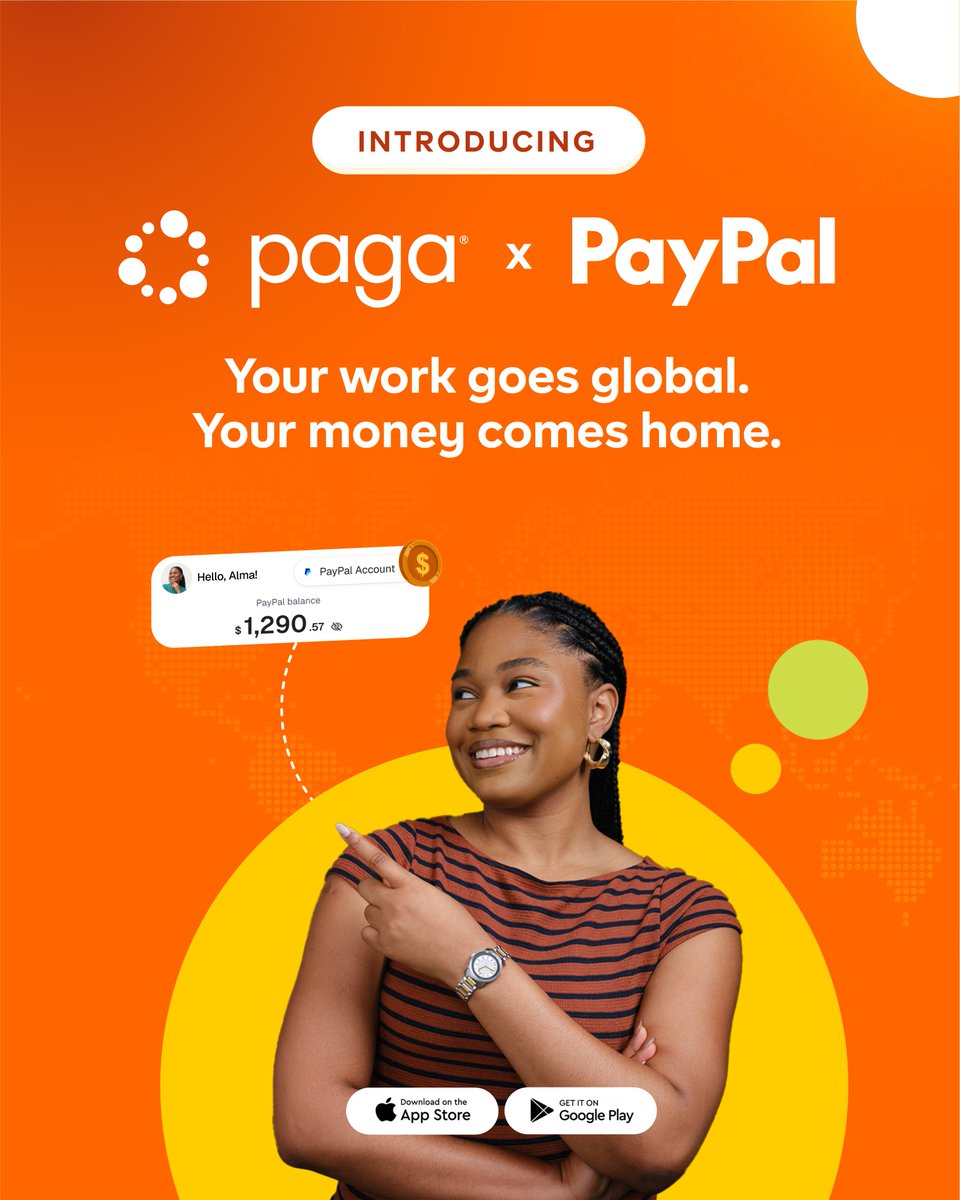
Today, I’m proud to share that PayPal is now live in Nigeria through Paga.
Until now, Nigerians could not receive money via PayPal. Our partnership unlocks that. Nigerian PayPal users who link their PayPal accounts to Paga can now receive money via PayPal. Only PayPal Nigeria accounts linked to Paga are enabled for receiving money.
Gig workers can now get paid through PayPal, and family members can now send you money on PayPal. Nigerian merchants can now receive payments on PayPal. The linkage is done within the Paga app, and users can view their PayPal balance and withdraw to Naira when they want. Nigerians can now use PayPal at over 30 million merchants worldwide!
This moment isn’t about a single announcement. It’s about patience. It’s about building robust, trusted local infrastructure. It’s about believing that global platforms scale better when they work with local systems, not around them. Partnerships like this don’t happen overnight. They are the result of years of conversations, trust-building, regulatory work, and showing up consistently. I’m proud of the Paga team for staying the course. I’m grateful to the PayPal team for believing in the long-term vision. And I’m excited about what this unlocks for Nigerians participating in the global digital economy.
Download the Paga app, link your PayPal to Paga, and connect with global commerce today!
These are the thoughts in the mind of many Nigerians.
At the end...
How does this concern you? It means more access to receiving international payments.
🚨 PayPal is back in Nigeria through Paga. Many are not pleased with this recent development cause PayPal denied Nigeria for 21 years.
Freelancers lost solid gigs because of them. And now that the likes of Raenest, Cleva, Flutterwave etc have built a seemless infrastructure
In August 2013, I emailed the @PayPal team. Nigeria’s fintech ecosystem was still young. @Paga was just a few years old. And the “Africa opportunity” wasn’t yet part of most global boardroom conversations. But even then, the opportunity was clear to us. In that email, I shared a simple belief: that Nigeria would become one of the most important economies in the world, and that there was strong alignment between PayPal and Paga to make payments, financial services, and global commerce work for Nigerians. I attached a presentation outlining how our two companies might collaborate: Paga could power on-ramps and off-ramps to and from PayPal in Nigeria. The partnership would enable Nigerians to use PayPal anywhere PayPal is accepted globally. It would also enable Nigerian merchants to accept PayPal for payments.
It would take more than a decade for that belief to fully materialize.
Today, I’m proud to share that PayPal is now live in Nigeria through Paga.
Until now, Nigerians could not receive money via PayPal. Our partnership unlocks that. Nigerian PayPal users who link their PayPal accounts to Paga can now receive money via PayPal. Only PayPal Nigeria accounts linked to Paga are enabled for receiving money.
Gig workers can now get paid through PayPal, and family members can now send you money on PayPal. Nigerian merchants can now receive payments on PayPal. The linkage is done within the Paga app, and users can view their PayPal balance and withdraw to Naira when they want. Nigerians can now use PayPal at over 30 million merchants worldwide!
This moment isn’t about a single announcement. It’s about patience. It’s about building robust, trusted local infrastructure. It’s about believing that global platforms scale better when they work with local systems, not around them. Partnerships like this don’t happen overnight. They are the result of years of conversations, trust-building, regulatory work, and showing up consistently. I’m proud of the Paga team for staying the course. I’m grateful to the PayPal team for believing in the long-term vision. And I’m excited about what this unlocks for Nigerians participating in the global digital economy.
Download the Paga app, link your PayPal to Paga, and connect with global commerce today!
not just for Nigerians alone but got Africa as a continent, the Fintech giant wants to have a taste of Africa's rising Fintech ecosystem.
Meanwhile, in the past 5 years PayPal has lost 75% of its share value. Are they trying to recuperate their shares by this move?
🔥 Benin City, are you ready?
The EM Finance Hangout goes live next week! 🎉
Connect, network, chill, and vibe with amazing people.
📅 Sun, 14th Dec
⏰ 3PM
📍 Benin City
✅ FREE registration (limited slots)
👉 https://t.co/GsKaXXIr2n
#Hangout#BeninCity#NetworkingVibes
We’re Hiring, Join Us!
At EM Finance, we’re on a mission to empower people with the skills, knowledge, and opportunities to achieve financial freedom.
We’re opening our doors to passionate volunteers & interns who want to learn, contribute, and grow with us.
🔑 Takeaway for Nigerians:
Don’t panic — pivot. Strengthen your skills, position yourself for remote-first roles, and keep an eye on global opportunities. Sometimes when the U.S. raises the price, the world makes remote cheaper.