From 2000 to 2026, Canada's oil & natural gas sector is estimated to pay more than $450 billion in royalties and taxes, helping fund the healthcare, education, and emergency services that
Canadians rely on.
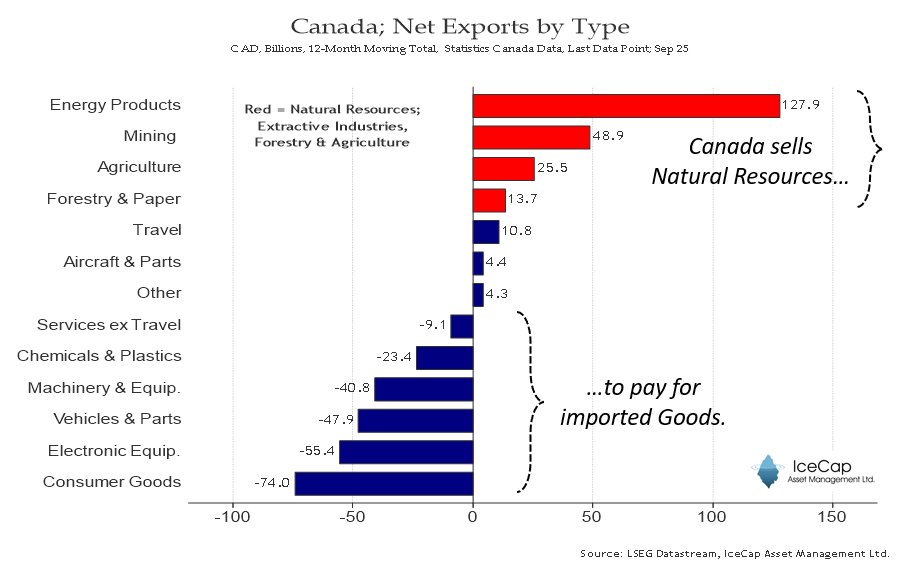
Natural resources are our natural economic advantage!
Actually, the private sector (in line with the IEA) is betting on growing oil demand, especially for Canadian product, with the South Bow-Bridger pipeline and Enbridge Mainline expansion.
Unfortunately groups like Pembina have made a west coast pipeline so politically risky and expensive that it requires government financing. As TMX already shows, it will still be very good for Canada and for global energy security.
INTERESTING COINCIDENCE 👇🏻👇🏻
The developer getting rescued in Mark Carney’s controversial condo bail out just happens to be a liberal supporter who has hosted multiple fundraisers for Carney.
IMO, the bailout isn’t good policy. It’s a classic case of a Liberal Party ally benefiting from his relationship with Carney and the work he has done to raise money for the Liberal Party.
“Pay for play” going on here and Canadians deserve answers and an ethics investigation.
👀 Trans Mountain is apportioned, i.e full capacity.
It’s only been in service for two years.
Demand for Canadian heavy oil in global markets has been proven beyond a doubt.
The false narrative below has been pushed by these groups since 2010 and has been used to keep us from building major infrastructure projects to export more of our resources to the world.
Who benefits from spreading the irresponsible and ridiculous claim that we don’t need to develop all of our energy resources?
Other oil and gas exporting jurisdictions.
While Canadian infrastructure projects were blocked, other countries benefited at the expense of Canada’s economic security and global energy security.
We must develop all of our resources to make Canada stronger and to answer the call from numerous countries who want to buy Canadian.
Demand for all energy sources is growing, including oil and natural gas. It’s time to work together for Canada’s economic future.
Son feministas hasta que Bad Bunny les baila pegado.
Son socialistas hasta que descubren lo cómoda que es volar en primera clase.
Son ecologistas hasta que toca un fin de semana en yate o un vuelo a las Maldivas.
Son tolerantes hasta que se enteran de que votas a la derecha.
Son pacifistas hasta que alguien discrepa de ellos.
Son partidarios de la libertad de expresión hasta que escuchan algo que no les gusta.
Son antielitistas hasta que los invitan a un reservado VIP.
Son ciudadanos del mundo hasta que les toca tenerlos de vecino.
Son partidarios de repartir la riqueza hasta que les toca repartir la suya.
Food for thought.
Canada’s constitutional crisis did not appear overnight. It is the predictable result of decades of economic policy that penalizes productivity, suppresses resource development, and redistributes wealth away from the province that sustains the federation’s fiscal base.
Alberta’s looming referendum on separation should surprise no one.
IMHO the core issue is not separatism. It is asymmetry. Quebec has long exercised economic and political latitude, often backed by the credible threat of secession. Alberta, by contrast, is expected to finance the federation while accepting federal policies that undermine its primary industry. That imbalance is no longer tenable.
At the center of the dispute is Canada’s equalization regime. In theory, it ensures comparable public services across provinces. In practice, it has become a structural transfer system that rewards stagnation in recipient provinces while disproportionately burdening Alberta’s economy. One province produces. Others redistribute. The incentives are backward, and the politics are corrosive.
This might be manageable if federal policy were neutral toward Alberta’s economic strengths. It is not.
Over the past decade, Ottawa, backed by the Trudeau Liberals and the NDP, has pursued an industrial strategy explicitly hostile to oil and gas development. Pipeline projects have been delayed or canceled outright. Regulatory hurdles have multiplied. Global capital has taken the hint and moved elsewhere.
The consequences are clear: declining investment, reduced growth, and a measurable erosion in Alberta’s standard of living.
Meanwhile, provinces less exposed to resource development continue to benefit from transfers financed in large part by Alberta’s shrinking surplus.
This is not simply an economic grievance. It is a crisis of legitimacy.
No federation can endure when a productive region believes it is being systematically disadvantaged by national policy. Whether Ottawa sees its agenda as climate leadership or not is beside the point. In Alberta, it is experienced as economic containment.
A referendum is not yet secession. It is leverage, something Quebec has used effectively for decades. But it is also a warning. If Ottawa continues to dismiss Alberta’s grievances, it risks turning a bargaining tool into a break.
Canada’s unity has always rested on a basic sense of fairness. That foundation is now cracking. Alberta’s referendum is not the cause of the crisis. It is the consequence.
The cost of saying no:
➡️Northern Gateway capacity 525kb/(bitumen 400kbd, diluent 125kb/d)
➡️400kb/d at CAD $125 at tidewater x the Strait closed for 60 days = $3billion in lost revenues
➡️ government royalties and taxes ~33% = $1 billion
➡️ $1 billion = 10,000 nurses or 29 new schools
*That’s what we have given up from not having Northern Gateway, just since the Strait of Hormuz was closed*
H/T @B_A_Remillard
A lost decade of stalled development under the leadership of Justin Trudeau has put Canada behind. His anti-resource policies shut in Canada’s production instead of supplying our abundant natural resources to our friends and allies.
If we had built pipelines instead of blocking them, we would have an additional 2.5 million barrels of oil a day in pipeline export capacity. Not to mention it would have also equated to an additional $21 billion in annual gross domestic product and $15 billion in annual revenues for provincial and federal governments.
This is the chemistry behind every barrel.
Crude oil It’s a mixture of hydrocarbons, from light methane (CH₄) to heavy C20+ molecules.
In a refinery distillation :
• Light molecules rise. Natural gas, LPG, gasoline.
• Mid-range chains condense in the middle. Kerosene, jet fuel, diesel.
• Heavy long chains stay lower. Lube oils, fuel oil, residuals.
The longer the carbon chain, the higher the boiling point.
The higher the boiling point, the heavier the product.
From C1 to C22+, the refinery separates value by physics.
Temperature becomes money.
Every liter of fuel is a controlled sorting of molecules by boiling point.
#oott
“We are of the view that Cabinet did not have reasonable grounds to believe that a national emergency existed, taking into account the wording of the Act, its constitutional underpinning and the record that was before it at the time the decision was made,”
Fake trade deals. Fake meeting partners. Fake MOUs. Fake problems and fake solutions for real problems. Recognitions of fake states. I could never pull of what Prime Minister Mark Carney has done because I never could have dreamed Canadian voters would be so gullible.
Oil producers in the oil sands build animal crossings so pipelines don’t disrupt mobility of local species.
This is what SAGD oil sands production looks like up close as there is 10x more infrastructure under than above the ground
Great 📸 Alex
Let's talk about Algoma Steel's 1,000-person layoff. The Sault Ste. Marie mill is undergoing a multi-year transition from traditional blast furnace and coke-making operations to an electric arc furnace (EAF) system. Some layoffs were anticipated as part of this shift, with blast furnace and coke operations scheduled to shut down as the EAF comes online. Most of the electricity will come from Brookfield Renewable's Prince Wind Repowering project, which supports Algoma Steel's electrification, including power for the new EAF. The existing 126 wind turbines will be retrofitted or replaced with modern ones. Brookfield has also operated hydro plants between Sault Ste. Marie and Wawa for decades. Mark Carney, Brookfield's Chair, endorsed government loans for Algoma's EAF transition in 2025. In November, the company announced it had secured $500 million in government financing, including $400 million in federal loans and $100 million from Ontario. So who is the winner here? It sounds like Mark Carney and Brookfield, not the Canadian people. All for what? The green energy scam.