Today I watched four children, none of them older than twelve, follow a woman through the street, shouting obscene insults and making sexually explicit remarks. A few of us stepped in to stop them, but they answered us with the same language, as though obscenity had become their first language.
For a moment, I was angry. Then I looked at them.
They were barefoot. Their skin was burned by the sun. They belonged to the tent camps, where childhood has been been replaced by survival.
What I saw was not innocence. But neither was it ordinary evil.
What is a child who has learned obscenity before kindness? What becomes of a conscience that has never been given the chance to grow? At what point does guilt remain personal, and at what point does it become the reflection of a society that has forgotten how to protect its children?
A child is responsible for his actions. But no child invents this darkness alone.
Someone teaches it. If not a parent, then the street. If not the street, then the war itself.
This is the face of war that no casualty report records.
We count the dead because they are easier to count than the living who have been changed. We measure the destroyed buildings because concrete is simpler to rebuild than a human soul. We speak of reconstruction as though rebuilding walls were enough.
But who rebuilds a child’s moral world? Who teaches respect to a generation that has learned survival before compassion? Who returns childhood to those who have never known it?
That is why I cannot celebrate projects that speak only of marriage and childbirth while children are still growing up in tents, while more than ninety percent of Gaza’s schools lie in ruins, and while education has been interrupted for years.
A tent may shelter a body. It cannot raise a human being.
And what are we creating if children are born into a world where survival is the first lesson, and dignity the last?
People ask whether the war is over.
I wonder whether they understand what war really destroys.
Not only homes. Not only hospitals. Not only lives.
Its deepest victory is that, little by little, it persuades children to inherit a darkness they never chose.
How do you declare the end of a war when its ruins have learned to speak, to walk, and one day, perhaps, to become parents themselves?
#WoundedGaza
“They put me on a metal table, pressed my chest and head against it, cuffed my hands to end of the bed and pulled my legs apart forcefully.
I felt a penis penetrating my anus and a man raping me. I started screaming, and they beat me on my back and head.
While I was blindfolded, I felt a man who was raping me ejaculate inside my anus. I kept screaming and being beaten, and I could hear a camera, so I believe they were filming me.
I cannot describe what I felt. I wished for death. Every moment."
— UN Special Rapporteur Francesca Albanese reads Palestinian survivor accounts of rape, torture, and killings in Israeli detention.
18,500+ have been detained since October 7. At least around a hundred, including a child, have died in custody. And some 4,000 are forcibly disappeared.
“What is lost in Palestine will be lost to us all.” — @FranceskAlbs told the Human Rights Council in Geneva.
"A man ran to the Broadview ICE facility today searching for his wife of five years. They were following the legal process, showing up for her court case, when ICE took her to another room and disappeared her. He tracked her phone to Broadview where the signal cut off. Police told him to just look up her name online. He sat in a parking lot weeping, confused, with no answers." 🥹😭👇
⭕️ BREAKING | Hamas: “We urge the formation of international committees to enter the prisons, examine the conditions of Palestinian detainees, expose the atrocities being committed there under official supervision by the occupation authorities, and work toward their immediate release—especially in light of the horrific abuses being leaked and following the recently exposed video of torture and rape at the fascist Sde Teiman detention camp.”
This morning, I was supposed to go and prepare the medical tent. There was still work to be done: a few tarpaulins to fasten, some chairs and a table to find. It should have been a simple day of labor, a day of purpose.
But in our land, even the simplest day conspires against meaning.
My mother told me that a store nearby was selling chicken, real chicken, at a price decreed by the Ministry of Economy. In another world, this would have been nothing, a trivial errand. But here in Gaza, the rumor of food moves faster than hope itself.
I hesitated for a moment: should I finish my work for the clinic, or chase after a meal for my family?
A man can live without purpose, perhaps, but not without feeding his mother. So I went.
At a quarter to nine, I arrived to find a line already stretching beyond sight. I stood among the others, hollow-eyed men and women who had forgotten the meaning of haste or dignity.
We no longer queue for food. We queue for existence.
The sun climbed, hours passed, and just when I reached the door, they told us the chicken was gone.
Gone.
After three hours of waiting, gone, like everything else in this life that vanishes just as your fingers begin to touch it.
I felt no anger, only the quiet paralysis of a man who has learned that outrage is useless. Someone said there was meat being sold elsewhere.
Meat! The word itself sounded biblical, ancient, forbidden, miraculous. I climbed onto a cart pulled by a half-broken car and let it carry me through the sandy streets, the midday sun above like an accusing god, the dust entering my lungs like the residue of centuries.
I thought of nothing except this: that I might bring back flesh to my home after months of absence, that perhaps my mother might cook again, that the house might once more smell of life instead of canned death.
She called as I was on my way.
“Did you find anything?” she asked. “Or shall I start with the tins?”
“Wait for me,” I told her. “I’ll bring meat.”
I believed it when I said it. I wanted to believe it.
At one in the afternoon I reached the new store.
Another queue.
Another congregation of silent faces, united by despair.
I waited until four. When I finally entered, I found chaos: people shouting, pushing, their eyes wide with that same trembling hunger that turns human beings into something half divine, half animal.
Then came the words, shouted from behind the counter: “It’s gone. All of it.”
And in that moment, something broke in me, not from anger, but from the realization that our lives here are no longer measured by years or achievements, but by the distance between one failed queue and the next.
How long can a man live like this, in a time where time itself has no meaning, where days are consumed by waiting, and waiting consumes the soul?
What is left of human dignity when survival itself becomes a queue that always ends in nothingness?
I walked back through the market, my body moving though my spirit had stopped long ago. Around me, the stalls overflowed with cheap sweets, candies, and bright packages that glowed like false promises. Sugar everywhere, the illusion of nourishment, the mockery of life.
We have grown swollen from emptiness, like balloons filled not with breath but with airless sweetness that will soon burst.
I bought some of those sweets in the end, not out of desire but shame. Shame to return to my mother’s waiting eyes with empty hands after nine hours of existence.
I handed her the package as if it were a confession.
And as I watched her unwrap it, I thought that perhaps this is what war truly is. Not the bombs, not the rubble, but this slow corrosion of meaning, this transformation of human beings into shadows chasing the rumor of sustenance.
So tell me, if you can,
Has the war really ended?
Or has it merely changed its form, sinking deeper into our flesh, where it will go on living long after the last gun has fallen silent?
#WoundedGaza
Does a man ever truly hate his own homeland? His house? His parents who bore him?
I had thought such hatred impossible.
Until the day I stood where my home once stood.
When I returned, I could not recognize the earth that had once carried my childhood.
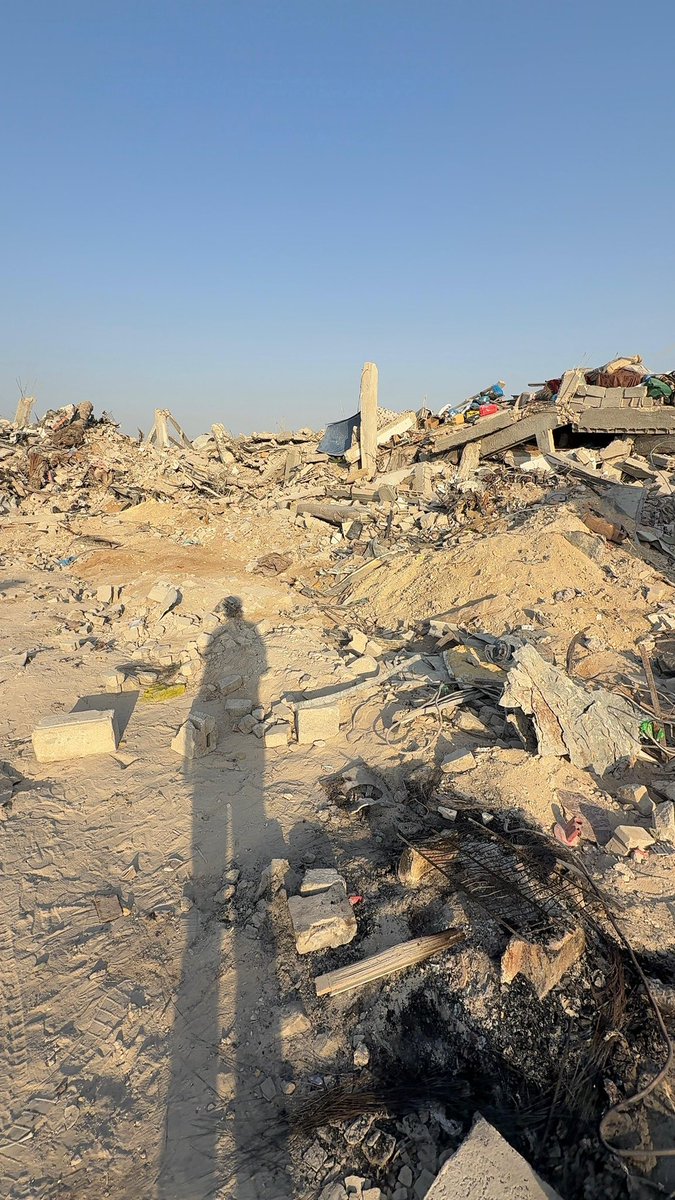
The street was gone. The walls were gone. The air itself was gone, filled now with the dull silence of ashes.
I wandered in circles, like a ghost among ghosts, unable to find the spot where my father once planted the olive tree, where my mother once called my name from the doorway.
The place knew me no more. Even the dust refused to remember us.
It was as though the very earth had spat us out, as though it had grown weary of our footsteps, our blood, our prayers.
The clinic, my small temple of mercy, lay beneath the rubble of neighboring homes.
No sign, no remnant, no sound. Only the smell of iron and the strange, choking sweetness of decay.
I did not feel grief then. No. What I felt was something darker, more obscene: betrayal.
It was as though God Himself had turned His face away, and in His silence I saw not absence but rejection.
In that moment I understood what it means to hate the ground one walks upon.
I thought, perhaps this land is tired of us.
Perhaps it never wanted us at all.
Since that day, I have forbidden my parents to return.
What could they see there but the carcass of their life’s work, a home that cost them forty years of hunger and sweat, now pulverized into memory?
They have seen the photographs, yes, but a photograph cannot show you silence.
It cannot show you how silence hums after the bombs, how your footsteps echo where no walls remain to echo them back.
For weeks I went back there, unable to stay away, standing before the ruins as one stands before a grave that refuses to speak.
I waited for the stones to answer me, to tell me it had all been a mistake,
to ask my forgiveness for abandoning me.
But they said nothing.
And I began to hate them.
Yes, I hated the house, the street, the land, even the people.
Because here, love is not the opposite of hate.
Here, love begets hate.
Every tenderness is a wound. Every attachment is a sentence to loss.
And yet, even hatred grows tired.
It withers into exhaustion, into that numbness where one no longer cries or prays or curses, but merely exists, waiting for the next calamity.
A few days ago, my brother came to me with news.
A neighbor had been struck by a stray bullet in the camp nearby.
He bled for half an hour before finding help.
The nearest clinic was thirty minutes away, and the roads to the north were clogged with ruin and despair.
My brother did not ask the question outright, but I heard it all the same:
“When will you rebuild?”
But I said nothing.
Because what could I rebuild on cursed soil?
What mercy could grow from ashes?
I felt emptied of everything, not out of weakness but out of sheer fatigue with existence itself.
I wanted only for the road to open, for a chance to flee this cemetery that insists on calling itself home.
But three nights ago, I saw a video,
displaced families in the north pleading for a small clinic,
for someone, anyone, to treat their wounded children.
I watched them cry into the dark, and suddenly I understood.
My silence was the worst betrayal of all.
If there remains breath in me, then I am still responsible.
If the world has turned its back, then we, the remnants, must face one another.
For what is a homeland, if not the last cry of those who refuse to stop loving,
even when love itself has become unbearable?
And so I will rebuild.
Not because I forgive the land, nor because I have hope left, but because despair itself demands it.
Because a man must either act or drown in his own hatred.
And perhaps, in rebuilding, I might find again a fragment of faith, not in the world, which is cruel, but in the simple, stubborn mercy that still beats somewhere inside the ruined chest of humankind.
#RebuildTheClinic
#GazaWounded
Women in Gaza have shown the world a truth it should have known long ago. Strength does not wait for approval. When everything falls apart, women begin again.
They opened homes when no walls were left standing. They became mother and father at the same time, holding families together with courage and love. They cleared the rubble with their own hands. They raised tents where houses once stood. They built makeshift bathrooms because dignity still matters, even when the world forgets you.
They cooked from almost nothing. They created fire out of scraps. They walked long distances every single day, carrying heavy water tanks as if they were carrying entire futures on their backs. They pushed through desperate crowds to secure the right to stay alive. And when night came, when tired bodies needed rest, they sat with their children and taught them, refusing to allow their minds to fall behind.
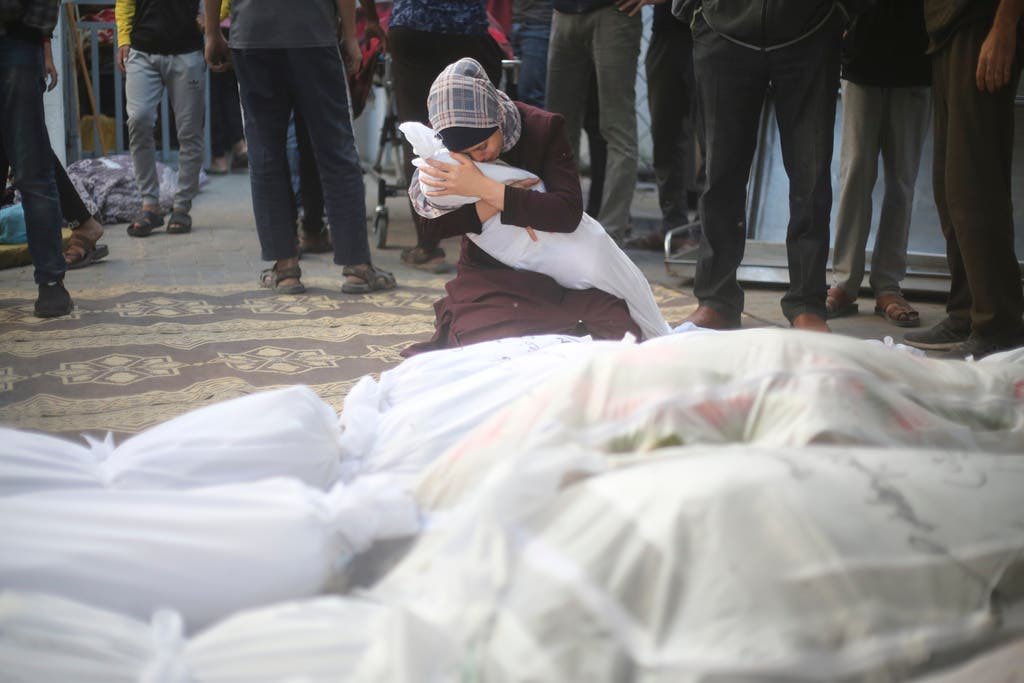
And there were moments that no heart should ever know. A child wrapped in cloth. A goodbye whispered into silence. A mother burying her child with her own hands, then rising again because the living still needed her strength.
Women are not heroes because they suffer. They are heroes because they turn suffering into survival. They take what is left and make life out of it.
Any job is a woman’s job. Not because she is expected to do everything. But because she is capable of doing anything.
#WoundedGaza
In Sudan's city of El-Fasher, over 2,000 people were killed in just two days as the UAE-backed Rapid Support Forces stormed the city, executing civilians and destroying entire neighbourhoods.
A quarter of a million people - half of them children - are trapped under siege with no food or medicine.This video investigates how Sudan’s war has escalated into mass killing, why the RSF is targeting Black and Indigenous communities, and why the world chose to till look away as as atrocities unfolded in Darfur.
Two years ago, on a Friday that now stands outside of time, my father prepared a feast. It was meant to honor life, my graduation, my return, the promise of a future. The table was full, not only with food, but with faith: the quiet, unspoken faith that tomorrow would exist. How easily we believe in continuity, in the mercy of another morning.
We gathered as one family, laughing, speaking over one another, breaking bread with careless joy, pouring juice into glasses as though it were the wine of peace itself. Each gesture was a prayer, though none of us knew it. My father’s hands moved as Christ’s once did, blessing the bread, dividing it among those he loved. And somewhere, though no one could name it, there hung in the air that same fragile foreboding that filled the upper room in Jerusalem, when love spoke its last words before betrayal.
The air trembled with that kind of happiness which only later reveals itself as farewell.
And then, silence.
The silence that only the dead can teach.
When I look now at the photographs, I see the faces of the condemned, though they did not know it. More than half of them are gone, devoured by what men call war and what truth calls murder. The homes that once contained our breathing, our prayers, our smallest tenderness, crushed. The gardens that smelled of oranges and evening, erased. I walk in memory as one walks through ruins, touching the stones of vanished laughter.
October 7 was not the birth of a war; it was the death of illusion. On that day, history tore itself open, and the wound has not closed. It bleeds through every surviving soul. And in that blood I see not only the crime of one nation against another, but the crime of humanity against itself, the old, endless betrayal that men repeat while invoking God.
If justice still exists, it must weep.
If God still looks upon this earth, He must avert His eyes.
This day should be marked forever, not as an event of politics, but as a revelation of the human abyss. Let every flag descend into silence. Let every tongue fall still. Because what was taken from us was not only life, but the very rhythm of being alive, the rustle of bread torn by a father’s hand, the sound of a child laughing before she learns what grief is.
They took from us the ordinary, and left us with eternity.
And yet, I remain. I, who ate with them, who still taste that bread in my mouth as though it were guilt itself. I live, and I do not know why. Perhaps only to remember. Perhaps only to tell the world that history is not written in treaties or speeches, but in the trembling of hands that once passed a dish across a table, in the laughter that did not know it was bidding farewell to the world.
There was a feast once, and it became the Last Supper of my people.
And the world, indifferent, learned, self-satisfied, did not attend.
But it must remember. Because if it does not, then we, the living, will have died for nothing, and the dead will have died twice.
#GazaGenocide
Horrific: Doctors Without Borders is suspending medical work in Gaza City due to Israel's violence, including airstrikes & tanks less than 1KM from their facilities.
Comes same day Netanyahu used his UN speech to scold dozens of nations for accusing him of committing war crimes.
Today we got a call that the area my family was bombed. Every step i got closer, my heart sank more. Until I finally reached the building and seen that it was my family's building.
I wish this feeling on no one in the world. Save us before it's too late.
This entire interview is horrifying to listen to. Even those paying attention to the daily massacres often miss the gruesome reality imposed on the survivors. Whenever this genocide is ended, the physical & psychological scars of what Israel has done will be felt for generations.
Bisan Owda from Gaza posted the following:
“These are our thoughts, messages, cries, memories and hopes.. these are what we want to tell you about the last 6 weeks of our lives..”
friends tell me the situation is insanity.
dead people litter the ground and no one can get to them.
a woman gave birth while jewish supremacists dropped bombs around them.
they say it's like a zombie movie.