Que lástima que el inglés sea el idioma Universal cuando en español sabemos la diferencia en amar y querer, anhelar, soñar, desear, necesitar. Ser y estar
OSDE no tiene X, pero el mensaje les va a llegar igual. Y que lo lean bien.
Hace más de 30 años que pago puntualmente el plan 310. Treinta años sin deber una cuota, confiando en que cuando uno necesita contención, la cobertura va a estar.
Hace unos meses, ante una cirugía urgente de un familiar directo, OSDE me dijo que no cubría íntegramente el procedimiento.
Pagué varios millones para que no se demorara la operación. Lo hice porque cuando se trata de la familia, uno hace lo que sea.
La intervención se realizó. Todo terminado. Eso creí.
Hoy, desde un número desconocido, aparece alguien diciendo que “se olvidaron” de cobrar otro material: un arpón.
Y encima involucran a una empresa llamada VALMI SRL, intentando, otra vez, sacar más dinero.
No corresponde.
Mi plan cubre los materiales utilizados.
Lo que están haciendo es abuso, presión e incertidumbre sobre una familia que ya atravesó una situación límite.
No solo es irregular: es inmoral.
Y como el Estado hoy no controla, no multan y los liberan, creen que pueden hacer cualquier cosa con los socios.
Conmigo probaron.
Y acá perdieron.
No solo no voy a pagarles nada más, sino que ya estoy preparando las acciones judiciales para reclamar la devolución completa de lo que aboné de manera indebida, más daños, perjuicios e intereses.
Pero antes les doy una sola posibilidad:
Hoy mismo quiero que me llame una persona de OSDE —con nombre, apellido y cargo—, que se disculpe y resuelva el tema de manera correcta.
Si eso no sucede, no solo iniciaré mis juicios:
voy a convocar públicamente a todos los afiliados que hayan sufrido abusos similares a demandarlos también.
Voy a abrir la puerta para que cada damnificado les exija justicia.
Porque una cosa es un problema administrativo.
Y otra muy distinta es meterse con mi familia.
Eso siempre tiene costo.
Y esta vez, si no lo reparan, el costo va a ser muy alto.
I’ll add some data to contextualize these quotes from the article:
1. “The middle class no longer exists; you’re either poor or rich”, said a humble shopkeeper.
That’s not what the data show. The Gini coefficient in 2025 is similar to that of 2023, suggesting that income inequality has not changed significantly under Milei. It’s true, however, that one of the groups hardest hit by his policies are public employees, whose real wages have fallen by 15%. Public employees tend to belong to the upper-middle segment of the income distribution. But the middle class is much broader than that — it also includes self-employed professionals and registered private-sector workers, whose real incomes have slightly increased.
2. “The purchasing power of society has fallen dramatically.”
That’s not reflected in the data. Poverty rates (notwithstanding some relevant measurement issues) are currently lower than in 2023. Private consumption, according to national accounts, is above 2023 levels. There has indeed been great heterogeneity in income dynamics: public-sector workers and minimum pensioners lost about 15% of their income, but formal private-sector workers gained 4%, and informal workers saw a remarkable 14% increase.
3. “Domestic manufacturing is in a great depression. Argentina is deindustrializing fast.”
This is true. So far in 2025, manufacturing output is around 10% lower than in the same period of 2023. Although domestic consumption is slightly above 2023 levels, the sharp trade liberalization has significantly increased the market share of imported products versus locally made ones. This has helped Milei contain prices, but at the cost of domestic production and manufacturing employment.
4. “Between 205,000 and 250,000 formal jobs have been lost in Argentina, mostly in construction and manufacturing, and about 18,000 businesses have closed.”
This is accurate. The correct figure is around 205,000 jobs lost — counting not only private-sector employees but also public workers and domestic service. The biggest drops occurred in construction (-60,000), the public sector (-58,000), and manufacturing (-39,000).
Regarding the number of businesses that have closed, the figure is accurate. I would add that Milei’s first two years were the worst since 1996 in terms of the number of active firms, with the only exception being the start of the previous administration (which was heavily affected by the pandemic, although it later recovered).
5. “More and more Argentine workers are being forced into the informal sector, where there are no stable wages and benefits. They have no protections and are subject to cruel exploitation. Informal workers now account for 43.2% of the Argentine labor force, and half of them don’t earn enough to get by.”
That’s true — informality has been rising. But it has been rising since 2015. Milei is consolidating a longer-term trend that largely stems from Argentina’s prolonged economic stagnation.
Es espectacular. El tipo acusó a cada artista del país de vivir del Estado, y termina haciendo una muestra de fin de año para cumplir su sueño de cantar con público, con la plata del Estado.
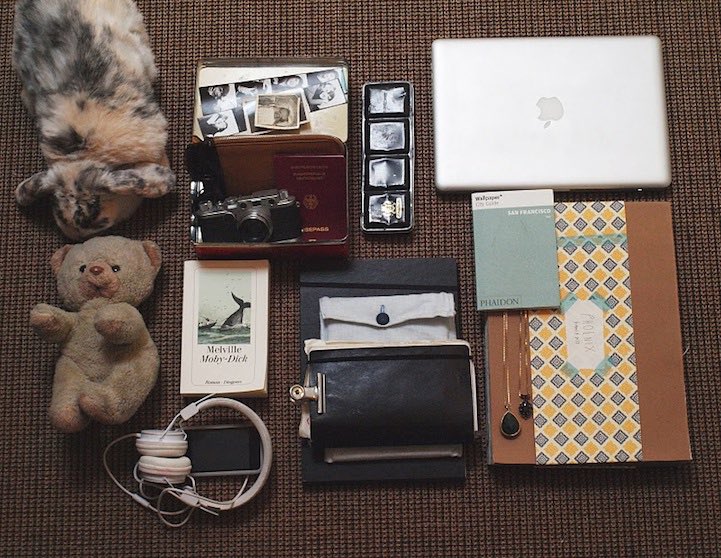
Hace como diez años, existía The Burning House Project del fotógrafo Robert Holden. Era una página donde la gente subía fotos de qué llevarían con ellos si su casa se estuviera incendiando. Aquí algunas:
Sarah, 22, Berlín, estudiante de diseño.
Seguramente vieron la noticia del muchacho que murió calcinado por las quemaduras que sufrió al intentar robar cables ubicados bajo tierra.
Ahora lean lo que escribió su docente, e intenten reflexionar un poquito sobre el destino de muchos pibes en nuestro país...
Este pibe colombiano quiere más al país que gran parte de los argentinos, incluida la notera que estaba desesperada porque le hable mal del país que lo abrazó. Te quiero mucho parcerito 🇨🇴❤️