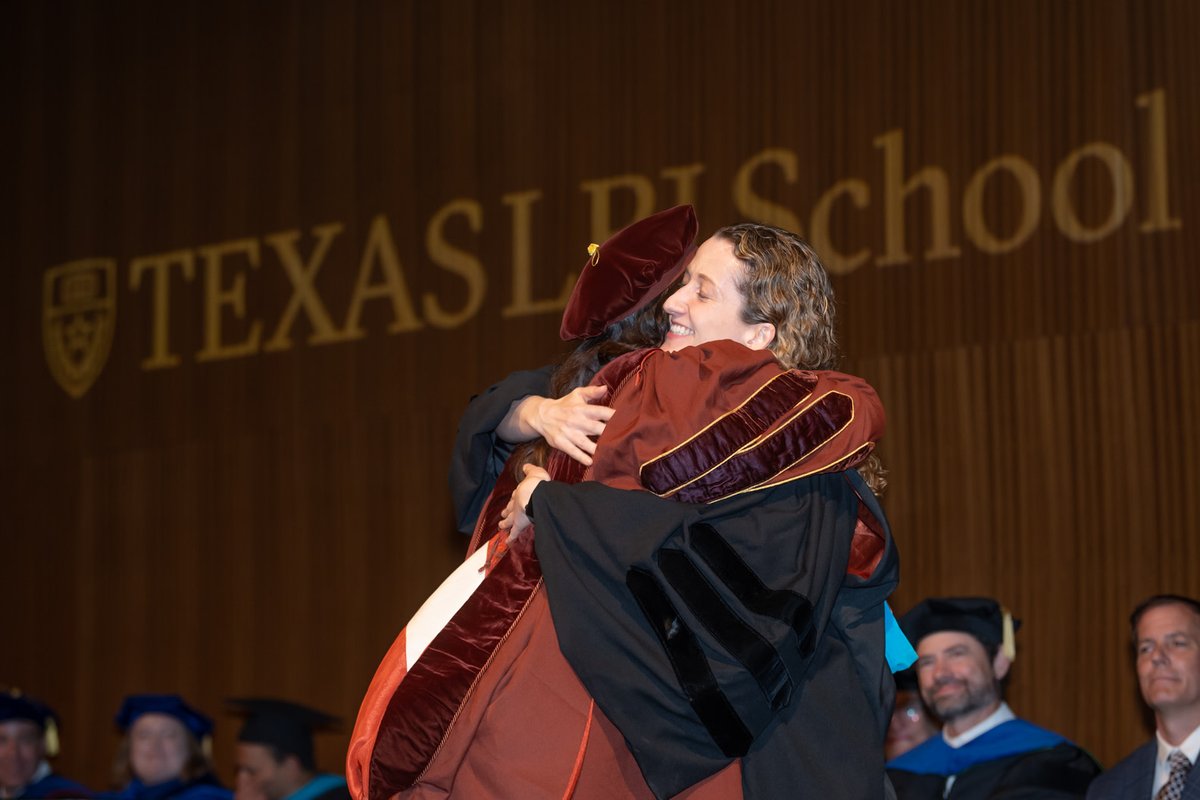
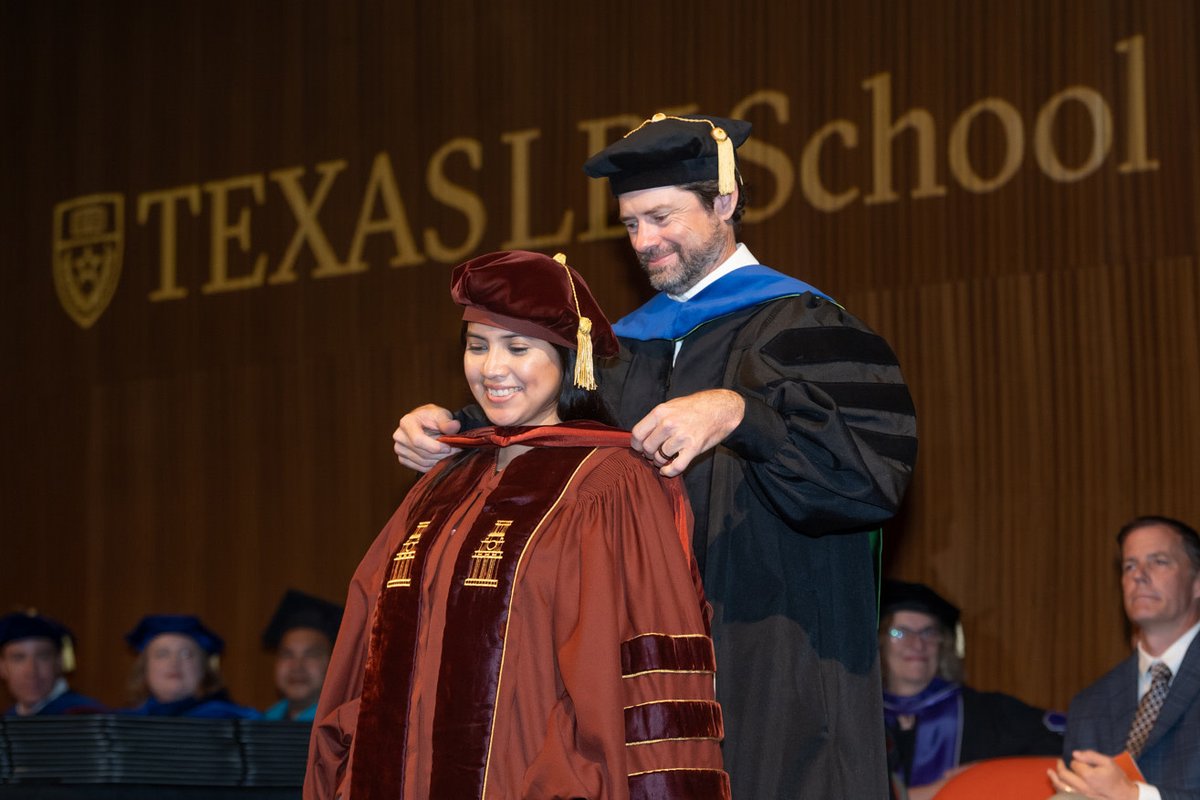
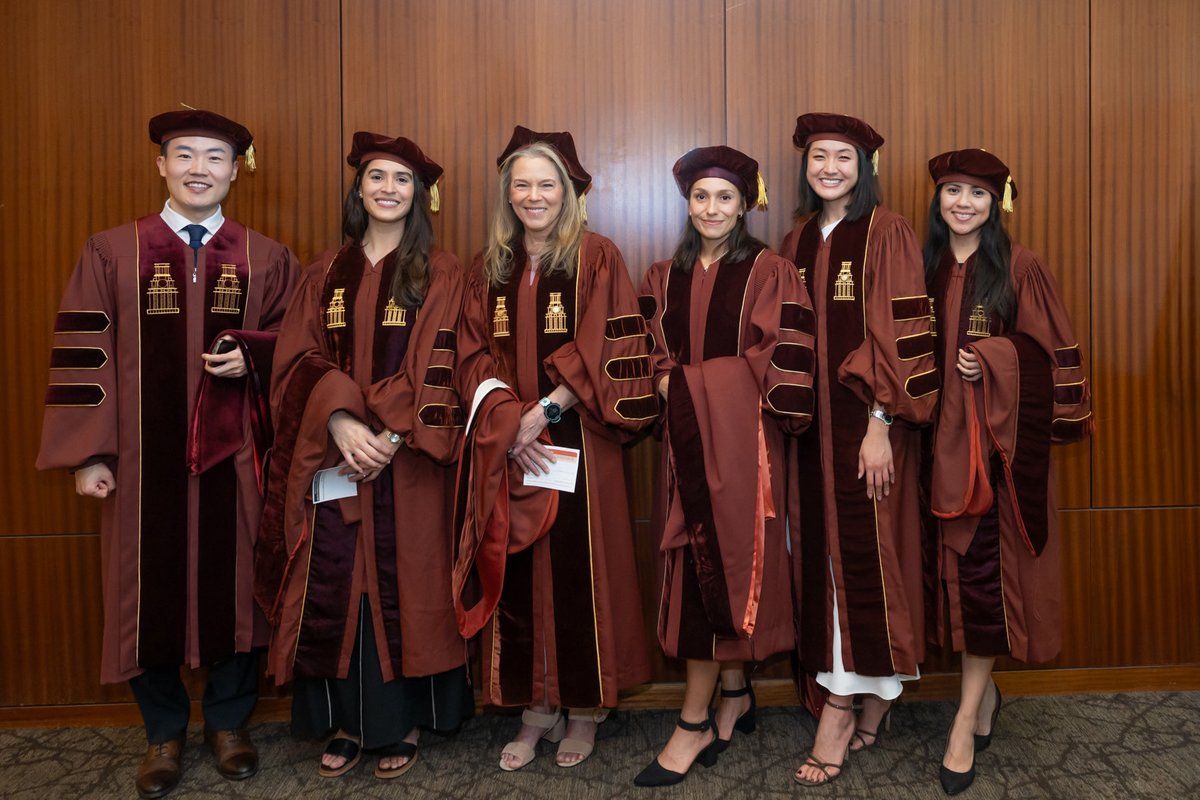
On Saturday, we honored the Ph.D. candidates who received their hard-earned doctoral degrees from the LBJ School. 🎓
Hooded by their advisors during commencement, our newest Ph.D. graduates are equipped with the know-how to change the world! #LBJGrad26
New working paper!
Idea: RDDs & RKDs are typically analyzed using mean effects, even though treatment changes the shape of the entire outcome distribution. Instead, we take the causal effect to be the Wasserstein distance between limiting distributions.
https://t.co/alNRmfyfIB
Hey #econtwitter I am an applied microeconomist on the academic job market! I work on information, inequality, and mobility in labor and development economics. My JMP addresses a source of misallocation: a mutable, class-linked trait (oral appearance) becoming a barrier to jobs.
I show that this fixable trait is an equilibrium outcome, and I quantify the penalty and decompose the channels. Here’s how: 🧵
Meet the Harris Public Policy PhD candidates on the job market! They bring cutting-edge research, rigorous methods, and fresh insights across economics, political science, and public policy. Explore their profiles + job market papers: https://t.co/50jFYgpfFq
@antoniaavazquez She finds that large investments in chronically under-performing LA schools markedly improved performance outcomes, suggesting that substantial, sustained funding can turn them around.
Can We Save Failing Schools? Evidence From Los Angeles (Antonia Vazquez @antoniaavazquez)
Tackles an important policy question: Can chronically under-performing schools be "fixed" or should we redirect resources to more effective alternatives.
https://t.co/eztPKnjZWE
The Costs and Benefits of Integration: The Case of Social Learning (Pepi Pandiloski)
uses a randomized social-learning game in ethnically segregated Macedonian schools to study how students learn from peers of different ethnicities.
https://t.co/MHhEa0OXIl
Working Without Wages: The Consequences of Widespread Pay Delays
by Daniel Sonnenstuhl (@dj_sunchair)
finds that signaling salary reliability increases job take-up by 25% but does not attract more productive workers, giving firms little incentive to refrain from delaying wages
@daniellenems On a side note, @daniellenems really pounded the pavement to get this data. Not only is she incredibly smart, but she is also incredibly resourceful.
Does Distance from Home Matter in Prison? Effects on Visitation and Recidivism
by Danielle Nemschoff (@daniellenems)
causally tests the theory that social support reduces recidivism!
https://t.co/2XqzLFxwPV
@daniellenems Using distance as an instrument for visitation, she finds that an additional visit per month lowers the likelihood of re-incarceration by roughly 14 percent within 1-year post-release.
Her estimates suggest assigning individuals closer to home could reduce recidivism by 2-4%
@Ru_Hundal She finds that that oral appearance creates a distinct and fixable barrier to upward mobility.
A candidate with poor teeth is significantly less likely to be hired - a penalty about half the size of removing an additional qualification certificate.
Discrimination on a Mutable Trait: Labor-Market Penalties for Oral Appearance
by Rubina Hundal (@Ru_Hundal) beautifully combines gen AI and econometrics to isolate the causal effect of oral appearance on hiring perceptions and decisions.
https://t.co/rda4unbkhX
@khmusen Fostering a Gentler Flight from the Nest: Effects of Foster Care Reform on Labor Market Outcomes
by Kate Musen (@khmusen)
finds that each additional year of extended foster care in California increases college enrollment by 6% and formal employment at ages 24–26 by 4%
The 6% of U.S. children that interact with the foster care system have worse outcomes than children who do not.
However there is little causal evidence on the impact of additional years in foster care.
This is where Kate’s (@khmusen) paper comes in!
https://t.co/MuoGFL4H9Q
She finds that when coordination costs are low,
transboundary externalities of dams are mitigated to null.
This paper is a huge contribution the literature on the international political economy of the environment.
Dam Thy Neighbor: International Relations and the Externalities of Impounding Rivers (Claire Fan)
uses an incredibly clever and novel measure of dam exposure to understand how international relations shape transboundary environmental externalities
https://t.co/4whgNkwBU1