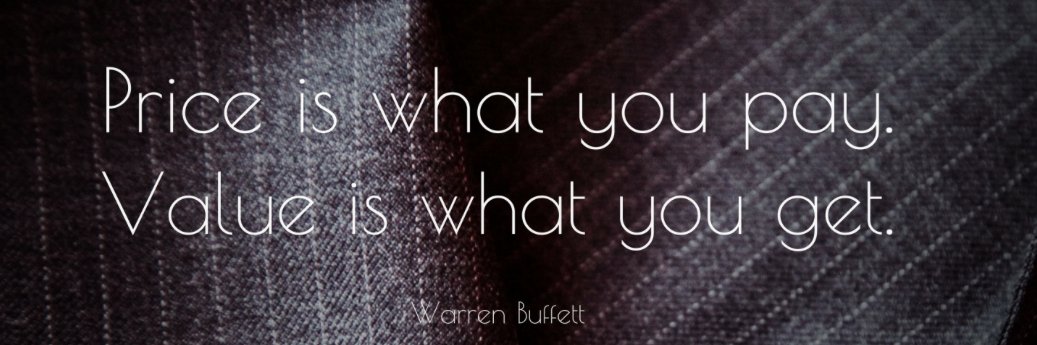
@robin_j_brooks You’re always better off holding S&P 500 than gold. Growth rather than so called “safe heaven” very unstable and with no connection with the real value.
E pensare che 3 anni fa ho tentato di avvicinare l’Italia a SpaceX che al tempo valeva poco più di 100 miliardi di dollari. Sono finito indagato per corruzione con tanto di apertura dei tg. Oggi SpaceX si quota a 1800 miliardi e niente grandi investimenti nel Bel Paese.
Pazienza, ci ho provato. Buon SpaceX day!
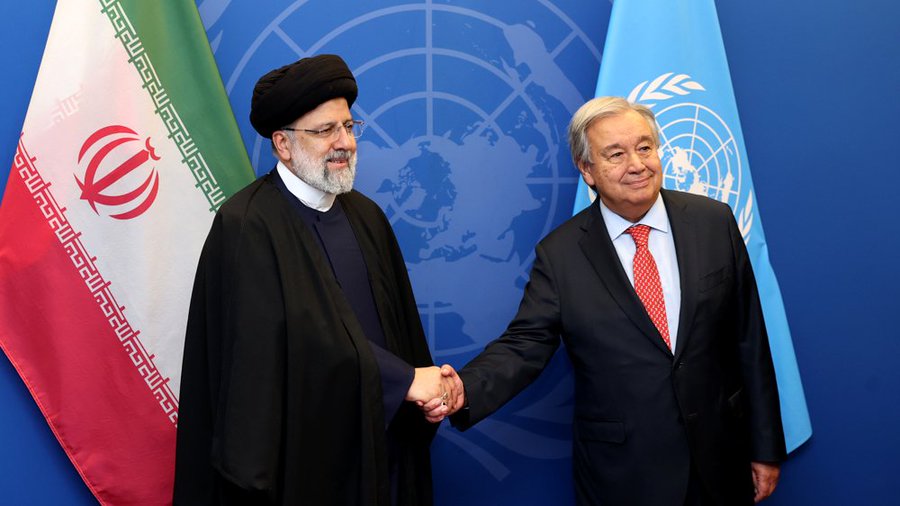
🚨 Irán acaba fue nominada para presidir el Comité de la ONU para la protección de los derechos de las mujeres, los derechos humanos y la prevención del terrorismo.
SÍ, IRÁN. Y fue apoyado por Reino Unido, España y Francia.
Esto no es una broma. Es real.
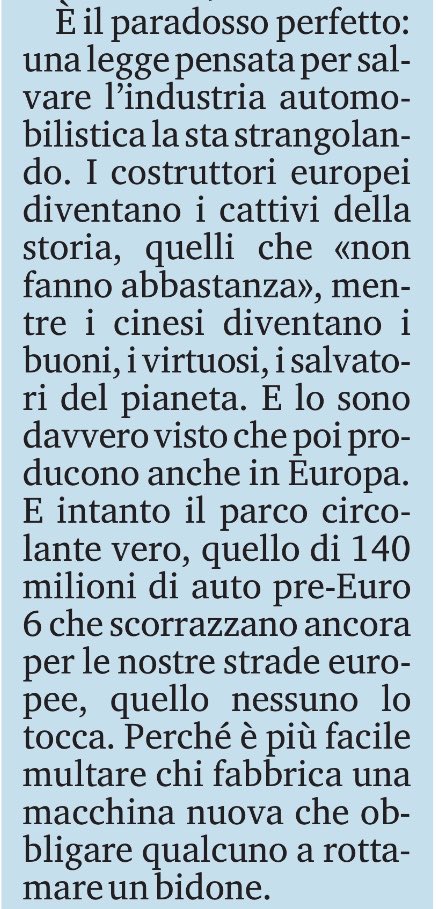
Spiace riportare per esteso un articolo, ma questa volta non posso esimermi. È proprio così, e trovo incredibile che nessuno di quelli che ha concepito questa assurdità non ne abbia ancora pagato le conseguenze.
“Tax the rich” sounds nice until you realize the rich move companies, raise prices, automate faster, or leave as a result.
The middle class gets higher costs, fewer opportunities, lower wages, and more dependence on government.
You cannot tax a society into prosperity.
Got it?
Europe’s solar boom is running into a new problem: too much power. Prices are going negative, grids are overwhelmed, and energy is going to waste. https://t.co/36tjlYM8Nj
Spain’s alleged misuse of the EU’s post-Covid funds to pay government pensions is triggering outrage in Germany and the Netherlands and reigniting criticism of joint EU debt.
https://t.co/e1d69xadDv
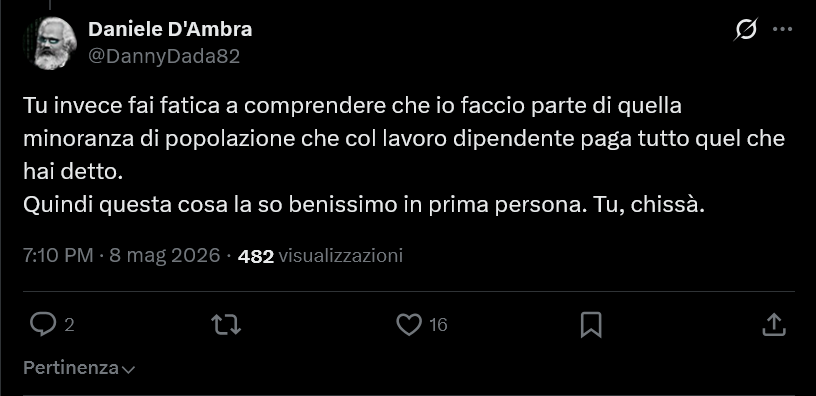
@SignorErnesto@DannyDada82 Il bello è che il settore pubblico è tra i più fulgidi sostenitori dí patrimoniali e aumenti di aliquote marginali rivolte verso il settore privato. Come sempre, socialisti con i soldi degli altri.
Ehm...no @DannyDada82 .
Tu fai parte di quella minoranza di dipendenti pubblici(l'Istat é finanziato dalla spesa pubblica essenso un ente pubblico) che assorbe il 40% circa di spesa primaria e CHE VIENE PAGATO con le tasse dei privati.
Un dipendente pubblico vive
1\
Mamdani declares New York bankrupt and asks for a bailout.
Behold the socialist trick of “tax the rich” in all its glory.
Envy and hate: Announce a massive spending plan supposedly financed by squeezing “evil” millionaires and rich citizens.
Lie: Blame a fabricated “revenue problem” despite record tax receipts of $162 bn in 2025 and more than $55 bn of extra revenue since 2010.
Deceit: Use the narrative to justify massive tax hikes on everyone, especially the middle class and the very voters who applauded the slogan.
The “tax the rich” promise always turns into an “impoverish all” reality.
This is the true “warmth of collectivism."
Enjoy the vote. #Mamdani #newyork
While everyone is trying to make sense of Trump’s statements and predict his next move, one of the most significant geopolitical shifts of recent decades is quietly unfolding in Europe. To understand why it began in the first place, you need to pay attention to one number: 10.
10 is the number of liquefied natural gas (LNG) shipments that Qatar will not deliver to Italy by mid-June. Not postponed, but canceled. Qatar Energy declared force majeure after Iranian strikes on the Ras Laffan complex knocked out about 17% of Qatar’s total LNG exports. Recovery will take 3–5 years. That’s $20 billion in losses each year for Qatar and a disaster for their contractors.
And now the number that Brussels prefers not to mention. 100% of Bavaria’s oil goes through a single Italian port. 90% for Austria. About 50% for the Czech Republic. All of this goes through the TAL Transalpine Pipeline, which begins at the maritime terminal in Trieste on the Adriatic Sea. In other words, the industrial heart of German-speaking Europe in Bavaria, the petrochemical industry near Vienna, and Czech refineries—all of these are supplied via Italy.
And now Italy, which imports 95% of the gas and generates over 40% of its electricity from gas, has received a “force majeure” notice from its largest LNG supplier. Before Iran’s strike on Ras Laffan, 45% of Italy’s LNG came from there.
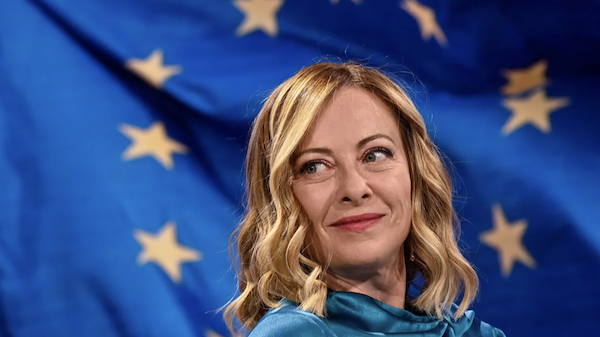
What is Giorgia Meloni doing? On April 3, without any public announcements, she boards a plane and, within 48 hours, meets with the Crown Prince of Saudi Arabia, the Emir of Qatar, and the President of the UAE. They held emergency planning sessions for a new European energy architecture amid conditions where the Strait of Hormuz is de facto closed, and Trump has turned the entire region into a war zone.
The most interesting thing about this is that Meloni isn’t just any European leader. She is the very same conservative populist whom Trump constantly praised as a model for the European right. But that was only the view in Washington. In reality, with this unsanctioned visit, Meloni demonstrated that she is not a populist, but an independent player and strategist. Although Trump himself said he loves surprises.
When Trump’s closest ideological ally in the European Council is conducting independent energy diplomacy with the Persian Gulf — the crack in the transatlantic alliance is no longer theoretical. It is operational. Next, a bit about what Meloni actually agreed to.
Saudi Arabia. The key is not the oil fields, but the Petroline pipeline, built during the Iran-Iraq War of the 1980s specifically to bypass the Strait of Hormuz. It stretches 1,200 km from the Persian Gulf coast to the port of Yanbu on the Red Sea. It is currently operating at full capacity — 7 million barrels per day. 5 million are exported via Yanbu directly into the Red Sea, then through the Suez Canal to the Mediterranean. That is, straight into the basin where the Italian refineries are located. Saudi oil via Yanbu is physically closer to Italy than that which used to go through the Strait of Hormuz.
UAE. The Habshan-Fujairah Pipeline (ADCOP), 248 miles from the Abu Dhabi oil fields to the port of Fujairah in the Gulf of Oman. The key point is that Fujairah is outside the Strait of Hormuz. Capacity is 1.8 million barrels per day; it is currently operating at 1.5 million.
Qatar. There is no point in signing LNG contracts right now — Qatar cannot even fulfill the existing ones. But Meloni offered Italian industrial assistance in the restoration of Ras Laffan. This is a multi-billion-dollar investment that puts Italy at the forefront for future supplies. And second — access to the Golden Pass project in Texas. This is a joint venture between Qatar Energy and ExxonMobil. Qatar does not own Golden Pass outright, but it controls the shipping commitments. And Italy now has preferential access to Golden Pass volumes thanks to the ties Meloni has strengthened in Doha.
Together, this does not fully replace the Qatari shortfall. But it is the framework of a European importer trying to operate in a new reality where the Strait of Hormuz is no longer a reliable corridor. It is the diversification that has been so sorely lacking. Every barrel of oil arriving in Trieste can, within a few days, fuel BMW’s production lines in Bavaria, petrochemical plants near Vienna, and Czech refineries. Trieste is not just a local Italian port; it is the southern loading dock for Central European industry.
If Italy secures preferential access to Saudi oil in Yanbu, if this oil passes through the Suez Canal into the Mediterranean and arrives in Trieste — every refinery along the TAL pipeline from Ingolstadt to Karlsruhe will be running on supplies secured by Meloni in Saudi Arabia.
Italy’s move was planned in advance. It did not go to the Gulf on a whim. Meloni acted on the basis of the Mattei Plan — an Italian framework for partnership with African and Mediterranean states in energy and infrastructure. The UAE has invested $25 million in the Rome Process alone. The Saudis have signed memorandums on water desalination and renewable energy in Africa under the Mattei Plan. ENI has a joint venture with the Saudi company ACWA Power. Fincantieri and Elettronica are integrated into Saudi production chains for years to come.
What this means for Ukraine:
First, this is further proof that the U.S. no longer functions as a guarantor of global security. Even Trump’s closest ideological ally in the EU — Meloni — is conducting her own diplomacy bypassing Washington, because Washington has created the problem rather than offering a solution.
Second, Europe is learning to be an actor. Slowly, through pain and loss, but it is learning. Meloni in the Persian Gulf is exactly what Ukraine has been seeking from the EU for years: independent decisions without waiting for instructions from the White House.
Third, and this is the most important thing for us. Europe, which is building a new energy architecture on its own and paying real money for it, will finally understand: dependence on any authoritarian regime is a deadly trap. Qatar is not Russia, but the very model of “relying on a single country for critical infrastructure” now lies shattered in Ras Laffan. Above all, this counters American calls to buy Russian oil. Moscow is losing money again.
Fourth, Italy now has unique leverage. It is the country where southern supplies converge and Central European distribution takes place. This is true power over energy. And we must closely monitor how Meloni uses this leverage — especially regarding European policy.
A new energy map of Europe is being drawn right now. The chaos created by Trump in the Middle East is, paradoxically, pushing Europe toward strategic autonomy.
@you_trend Meglio: nelle aree dove si produce valore aggiunto, quello che paga i servizi, le pensioni, gli stipendi pubblici, vince il SI. Nelle aree sussidiate (vedi Napoli oltre il 70% di No) e nelle grandi città fintamente intelletual-borghesi e del sottoproletariato vince il NO.
@boni_castellane Attenzione che questa poll non riflette la probabile distribuzione dei voti, bensì le probabilità di vittoria del si/no.
Rilevanti diventano probabilità che eccedono almeno il 70/75.%.