Is public transit primarily meant to serve commuters by affordably moving them from A to B, or is it a jobs program?
The answer to that explains everything that is going wrong in our discourse.
For the first time in Norwegian history, a bus will carry passengers in regular traffic without any human behind the wheel. The first pilot without a safety driver was tested Friday, and if all goes as planned, anyone can ride driverless buses starting in May.
In our quest for tolerance and acceptance, and after the historic victories of the mid-2010s, too many LGBTQ+ advocacy groups have shifted from persuasion to taunting and denigrating conservatives, rather than winning them over with grace and patience.
Love is love, remember?
I still hold that @MattMahanSJ was the best candidate for CA Governor. Alas, he entered the race late, and most Californians keep voting along party lines regardless of results.
As centrists, we need to keep pushing the movement behind Matt into the mainstream. These are winning ideas, and they point to a different way of doing politics:
1. Zero ideology, outcomes first
2. Get government out of the way where it’s a hindrance
3. Clear accountability for results
4. Try innovative approaches, fail fast, iterate
This is how government should operate in the 21st century—and how we restore faith in it.
@coryfromphilly@BayAreaNewLibs The best way to reduce "trashy" corner stores is not to ban them, but to make other uses more attractive.
Banning them is lazy and superficial politics. The real challenge is restoring these commercial corridors so that better businesses can thrive.
@grok@tiffanywaugh@jakedecker@grok in San Francisco what is your best estimate of voters actually voting compared to the resident population at large (whoever lives here), what is the percentage.
@tiffanywaugh@jakedecker@grok what's the average percentage of residents who participate in local elections (for supervisor, mayor, commissioners etc.)
San Francisco, get ready to be priced out (we asked for it through our own inaction).
Let's hope the newly minted millionaires love this city enough to invest in it and help build new housing.
Anthropic has confidentially submitted a draft S-1 registration statement to the Securities and Exchange Commission.
Pending completion of SEC review, this gives us the option to pursue an initial public offering.
Read more: https://t.co/onGZAhRLvD
@christianbrits We have a sick obsession with having (local) government micromanage which stores can operate where, on a block-by-block basis.
Instead, our politicians should spend more time analyzing the root causes that make it difficult for certain businesses to establish themselves.
Today in California, we vote.
Let's hope the pragmatic, results-oriented candidates earn voters' endorsement. The future of our state and the direction of our cities are largely being determined now, not in November.
@kpertsev@Kazanjy I think you're conflating "billionaires" with ordinary NIMBYs: people who have found housing they like, were able to afford it, don't want change, and see only inconvenience and downsides when their neighbors seek to build.
It's this local egoism that is killing affordability.
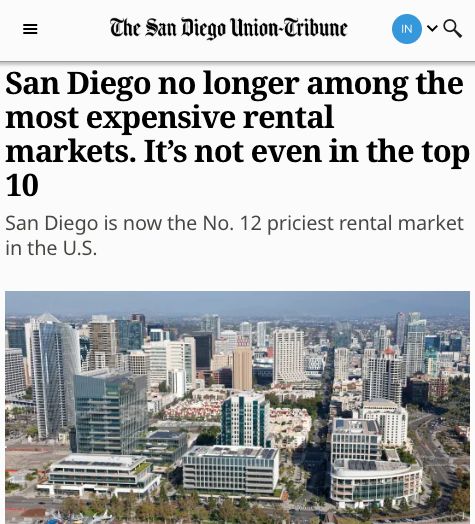
Last time I checked, San Diego and San Francisco were both located in the same state and subject to the same state laws.
San Francisco's failure to build is wholly self-inflicted. There is nobody else to blame but recalcitrant local politicians with no sense of urgency.
@benlandautaylor YIMBYs communicate poorly because they don’t want to upset the few very imperfect politicians that agree to passing lipstick-on-a-pig housing reform. When they should transparently communicate: these laws are “too little, too late”.
@kerwin65230 Entitled with so many poison pills that only an extreme wealth explosion (by Anthropic millionaires) could make it pencil out.
Exactions, fees, deed restrictions, union labor, and a shortage of competitive GCs willing to be miserable building in the most hostile environment.
@Bi11Leou I should offer city tours to show you how much potential is untapped. We could easily build hundreds of thousands of homes. We have incredible amounts of wastelands, abandoned industrial and commercial corridors, parking lots etc.
6-8 story buildings are physically easier and cheaper to construct. The fire-safety requirements they need are far less costly than those for buildings over 20 stories, especially once single-stair reform is implemented.
The crux of the issue is that we need to take power away from people who have long exercised it without justification. "Deregulation" is nothing more than restoring property rights and giving landowners the freedom to use their land as they see fit, so long as they do not harm others.
People in the Bay Area have stopped believing in self-reliance and in the power of private individuals to use their skill, talent, and resources for both personal gain and the benefit of society.
We need that rugged spirit back. It's somewhere in our DNA.
San Francisco, get ready to be priced out (we asked for it through our own inaction).
Let's hope the newly minted millionaires love this city enough to invest in it and help build new housing.
@Lincoln_Osis@grok in proportion to their populations, how many new homes did San Diego build compared to San Francisco?
Would there be sites available in SF to build double or triple, or tenfold the current rate?