Travelling from Oxenholme to London Euston 14.25-17.14!
Been stuck at Crewe & now at Stafford! Currently 19.22!
Just want to shout out to CRAIG, the long-suffering, polite, friendly Train Manager for being AMAZING! Delays beyond his control! #avantiwestcoast#craigtrainmanager
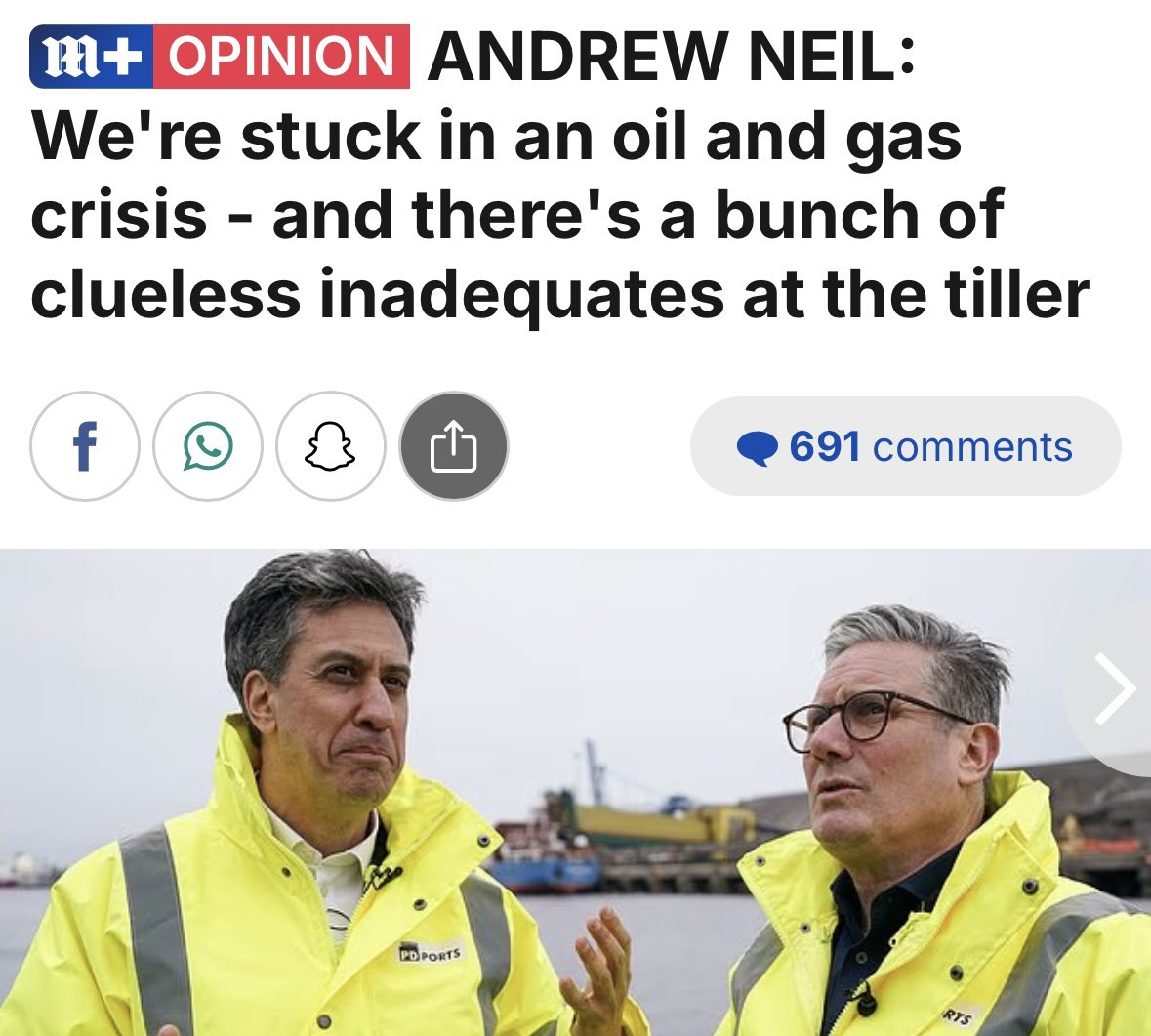
Britain should never be facing an energy and food security crisis. The fact that we are is due to the incompetence of successive governments. And Ed Miliband’s decision to ban new oil and gas licenses in the North Sea is an act of monumental stupidity - especially right now.
Here’s Labour MP Markus Campbell-Savours discussing why he voted against the Labour government’s inheritance tax on family farms. He had the party whip shamefully suspended for doing so. But he put his farming constituents first rather than be bullied by the Labour government.
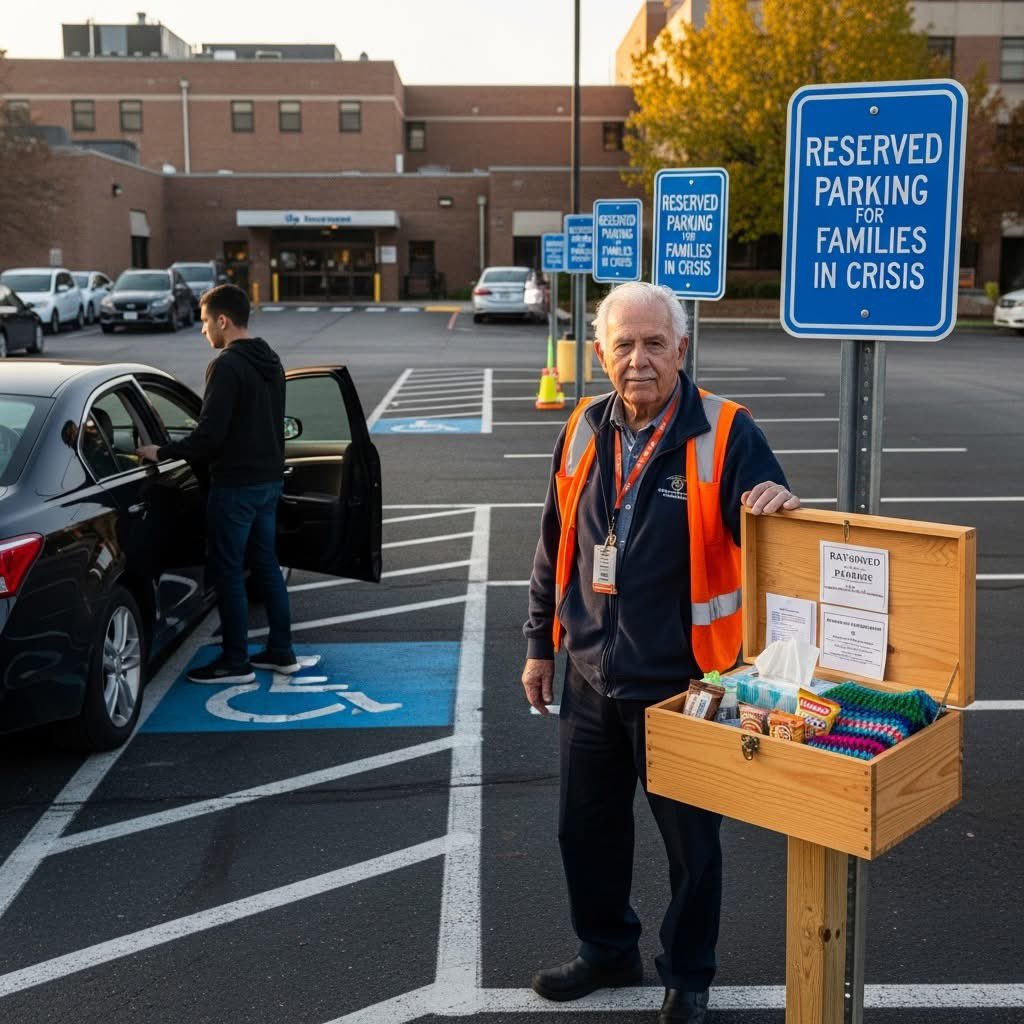
"My name's Raymond. I'm 73. I work the parking lot at St. Joseph's Hospital. Minimum wage, orange vest, a whistle I barely use. Most people don't even look at me. I'm just the old man waving cars into spaces.
But I see everything.
Like the black sedan that circled the lot every morning at 6 a.m. for three weeks. Young man driving, grandmother in the passenger seat. Chemotherapy, I figured. He'd drop her at the entrance, then spend 20 minutes hunting for parking, missing her appointments.
One morning, I stopped him. "What time tomorrow?"
"6:15," he said, confused.
"Space A-7 will be empty. I'll save it."
He blinked. "You... you can do that?"
"I can now," I said.
Next morning, I stood in A-7, holding my ground as cars circled angrily. When his sedan pulled up, I moved. He rolled down his window, speechless. "Why?"
"Because she needs you in there with her," I said. "Not out here stressing."
He cried. Right there in the parking lot.
Word spread quietly. A father with a sick baby asked if I could help. A woman visiting her dying husband. I started arriving at 5 a.m., notebook in hand, tracking who needed what. Saved spots became sacred. People stopped honking. They waited. Because they knew someone else was fighting something bigger than traffic.
But here's what changed everything, A businessman in a Mercedes screamed at me one morning. "I'm not sick! I need that spot for a meeting!"
"Then walk," I said calmly. "That space is for someone whose hands are shaking too hard to grip a steering wheel."
He sped off, furious. But a woman behind him got out of her car and hugged me. "My son has leukemia," she sobbed. "Thank you for seeing us."
The hospital tried to stop me. "Liability issues," they said. But then families started writing letters. Dozens. "Raymond made the worst days bearable." "He gave us one less thing to break over."
Last month, they made it official. "Reserved Parking for Families in Crisis." Ten spots, marked with blue signs. And they asked me to manage it.
But the best part? A man I'd helped two years ago, his mother survived, came back. He's a carpenter. Built a small wooden box, mounted it by the reserved spaces. Inside? Prayer cards, tissues, breath mints, and a note,
"Take what you need. You're not alone. -Raymond & Friends"
People leave things now. Granola bars. Phone chargers. Yesterday, someone left a hand-knitted blanket.
I'm 73. I direct traffic in a hospital parking lot. But I've learned this: Healing doesn't just happen in operating rooms. Sometimes it starts in a parking space. When someone says, "I see your crisis. Let me carry this one small piece."
So pay attention. At the grocery checkout, the coffee line, wherever you are. Someone's drowning in the little things while fighting the big ones.
Hold a door. Save a spot. Carry the weight no one else sees.
It's not glamorous. But it's everything."
Let this story reach more hearts....
Credit: Mary Nelson
COP30 in Brazil 🇧🇷
A four-lane highway cutting through tens of thousands of acres of protected Amazon rainforest has built for the forthcoming COP30 climate summit in Brazil.
A jamboree of virtue hypocrisy where the lungs of the planet - the Amazon rainforest - is destroyed to indulge COP delegates to meet up to talk about saving the planet.
So Chris Whitty now admits it wasn’t a great idea to confine millions of Brits indoors to fight a respiratory virus it was very hard to catch outdoors.
“It happened almost by accident,” says the Covid scientific genius.
No words.
https://t.co/QqD7MdI7TZ
Rather than build almost 30 million electric cars over the next 10 years why dont we just maintain the cars we've got and protect the environment by leaving all that cobalt, lithium & nickel etc. in the ground?
In the EU, we hardly ever speak of women anymore. Political parties—left, center, and also conservatives—have embraced gender self-ID without scrutiny or debate. Does this threaten women’s rights? Yes. And here I explain why.
Rest in peace, Patricia Routledge 🙏🏻
In memory of her, I encourage everyone to read these words of hers from February last year.
Whether young or old, you're bound to get something out of it.
*****
"I’ll be turning 95 this coming Monday. In my younger years, I was often filled with worry — worry that I wasn’t quite good enough, that no one would cast me again, that I wouldn’t live up to my mother’s hopes. But these days begin in peace, and end in gratitude.
My life didn’t quite take shape until my forties. I had worked steadily — on provincial stages, in radio plays, in West End productions — but I often felt adrift, as though I was searching for a home within myself that I hadn’t quite found.
At 50, I accepted a television role that many would later associate me with — Hyacinth Bucket, of Keeping Up Appearances. I thought it would be a small part in a little series. I never imagined that it would take me into people’s living rooms and hearts around the world. And truthfully, that role taught me to accept my own quirks. It healed something in me.
At 60, I began learning Italian — not for work, but so I could sing opera in its native language. I also learned how to live alone without feeling lonely. I read poetry aloud each evening, not to perfect my diction, but to quiet my soul.
At 70, I returned to the Shakespearean stage — something I once believed I had aged out of. But this time, I had nothing to prove. I stood on those boards with stillness, and audiences felt that. I was no longer performing. I was simply being.
At 80, I took up watercolour painting. I painted flowers from my garden, old hats from my youth, and faces I remembered from the London Underground. Each painting was a quiet memory made visible.
Now, at 95, I write letters by hand. I’m learning to bake rye bread. I still breathe deeply every morning. I still adore laughter — though I no longer try to make anyone laugh. I love the quiet more than ever.
I’m writing this to tell you something simple:
Growing older is not the closing act. It can be the most exquisite chapter — if you let yourself bloom again.
Let these years ahead be your TREASURE YEARS.
You don’t need to be famous. You don’t need to be flawless.
You only need to show up — fully — for the life that is still yours.
With love and gentleness,
Patricia Routledge
*****
Once more, rest in peace. 🤍
Another British tradition quietly taken off air. Another shrug from the @BBC. This time it's the Boat Race - first broadcast on radio in 1927, on television since 1938 - dropped after nearly a century. Why? Not low viewing figures: last year's men's and women's races pulled in more people than the Masters and Formula One. Not cost: it's cheap by sports standards and pumps millions into the London economy. The truth is uglier.
Inside the BBC the word that killed the Boat Race was "elitist." The new head of sport was said to be "lukewarm." That single term - "elitist" - is now a licence to scrap anything rooted in Britain's past. It's the same quiet vandalism we've seen around the Proms, Remembrance coverage, and the monarchy. The BBC no longer sees its job as showing Britain to itself. It sees its job as remaking Britain.
The Boat Race isn't a cocktail party for gilded Oxbridge types. It's free to watch, pulls two hundred thousand ordinary spectators to the Thames every year, and has always been a working-class London day out. Rowing may have its posh stereotype, but the event is about rivalry, endurance and spectacle - things any nation should be proud to show the world.
Yet the BBC's cultural gatekeepers have a deeper allergy: tradition that isn't re-branded, rewritten, or apologised for. They can throw millions at "inclusive" events nobody asked for and wall-to-wall virtue TV. But a British crowd on the riverbank waving flags? That's suspect. That's "exclusive."
This is what happens when institutions stop believing in the country that built them. They measure value not by what the public loves but by what fits the new ideological checklist. The numbers didn't matter; the narrative did.
And we pay for it. Every household is forced to hand over a licence fee to a broadcaster embarrassed by its own culture, one that keeps hacking away at the few things still able to unite a fragmented nation.
The Boat Race will survive. Channel 4 has taken it on, proof there's nothing obsolete about it. But the BBC's retreat matters. It's a signal: if something feels too British, too rooted, too recognisable, it's up for cancellation.
A broadcaster that can't celebrate its country is no longer serving it. It's time to ask why we're still paying for our own cultural erasure.