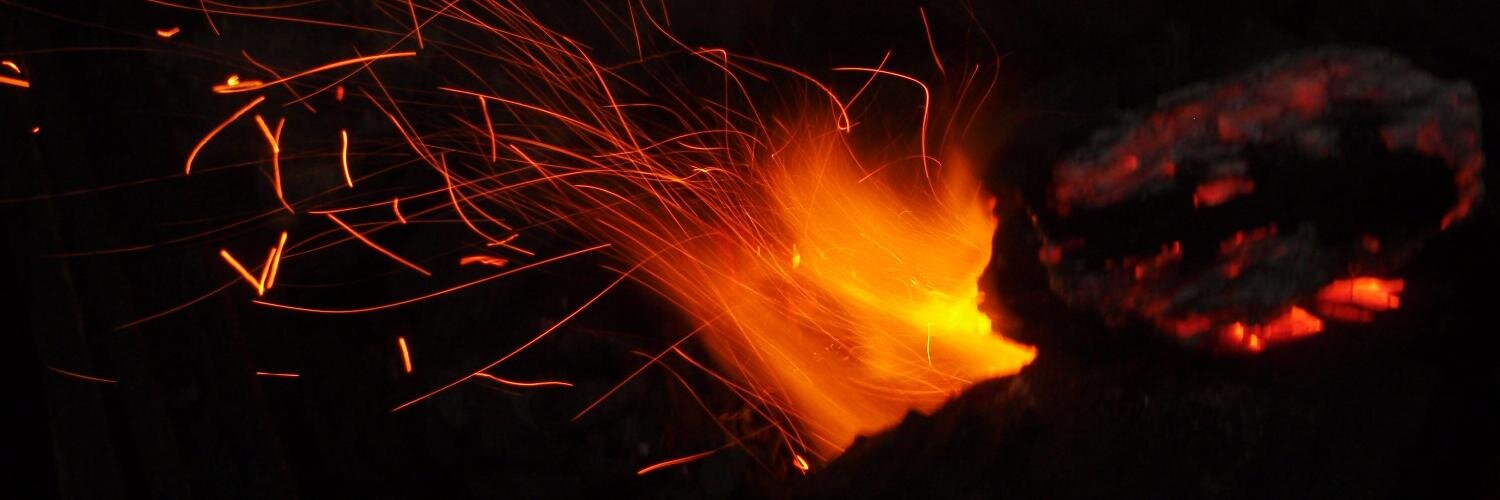
A high school girl in Mexico just won a gold medal for putting out fires with a speaker. It plays one deep, low hum and the flames die in about 5 seconds.
DARPA tried the same idea back in 2012 with a rig so big and clunky they never took it any further, and hers runs on a 12-volt battery and a speaker she can carry around.
Sound is just air being pushed back and forth. A low note at 30 hertz means the air around the flame is flipping direction 30 times every second.
Flames only exist in a thin layer where fuel vapor mixes with oxygen. Shake that layer hard enough and it keeps getting stretched thinner, the heat gets pulled away faster than the flame can make more, and eventually the flame rips right off the fuel. Whatever tears off is too cool to keep burning, so it just goes out.
DARPA's report put a number on how little it takes. Once the air at the flame is moving about half a meter per second, which is barely a breeze, the flame goes out, and pretty much any pitch can get there if you crank the power high enough.
Low notes just get you there way cheaper, because a speaker moves a lot more air on each push when the pitch is low. Two engineering students at George Mason figured this out by trial and error in 2015. They started with super high pitches, 20,000 to 30,000 hertz, and all the flames did was shiver. It only worked once they dropped down to 30 to 60 hertz, which is basically the bass on a hip-hop track.
Ángela Karime's build is a 12-volt battery, a frequency generator, an amplifier and a speaker, tuned to 30 hertz. She named it Vortex Tech and talks about it shooting out little rings of air, and that's real physics. When loud, low sound gets pushed through a narrow opening, the air curls up into rings like a smoke ring, and those rings carry a puff of air way farther than the sound would get on its own. In her tests it put out small flames from about 2 meters away.
She went through five prototypes and over 100 tests in about a year, and she says it's put out burning wood, flammable liquids, electronics and cooking oil.
The cooking oil one is a big deal. Throw water on a grease fire and it flashes into steam and flings burning oil all over your kitchen, which is exactly the kind of fire where you'd want something that doesn't put anything into the pan.
Now, sound can't cool anything down, so a big fire sitting on red-hot fuel can come right back the second the speaker shuts off. The George Mason guys worried about the same thing in 2015, and it's why this is still a prototype for small flames and the red extinguisher under your sink isn't going anywhere yet.
Space might end up being where this matters first. Up there water floats off in blobs, while sound works the same with or without gravity, and acoustics researchers have already published experiments on fighting fires with sound on spacecraft.
She's still in high school, and she's already working on a version that spots a fire and puts it out by itself. The gold in Indonesia also came with a special award that gets her into another international competition.
#URGENTE El centro de Los Ángeles acaba de convertirse en una escena sacada de una película, un dueño de un negocio en LA encerró a agentes de ICE dentro de su edificio durante una redada.
Ahora el FBI está en el lugar.
El pueblo se cansa de tanta pinche violencia del #ICE
#RTMasivo 👇🏼👇🏼👇🏼👇🏼
Trabajadoras sexuales bloquean Calzada de Tlalpan para exigir el cumplimiento de acuerdos relacionados con la ciclovía. La protesta mantiene cerrados todos los carriles hacia el sur, cerca del Metro Viaducto.
Hayley Williams: "If I could tell you anything: go to smaller shows than this, go to little shows at independent venues. Find your people, find your favorite music, and support that. We are all that we fucking have."
🎥: trufishgirly
🇦🇷3️⃣⚽️2️⃣🇪🇬 | MUNDIAL 2026: La señal de "X" con los brazos cruzados es el gesto universal de la FIFA para denunciar abusos racistas.
Cuando un jugador, entrenador o oficial del equipo hace esa señal, están informando al árbitro de que ha ocurrido un abuso racista. Está diseñada para activar el protocolo antirracista de tres pasos de la FIFA: primero detener el partido, luego suspenderlo si el abuso continúa, y finalmente abandonar el partido si no cesa.
Hoy durante el partido contra Argentina, el entrenador de Egipto, Hossam Hassan, hizo el gesto de "X" desde la banda.
En lugar de iniciar el protocolo, el árbitro amonestó a Hassan con una tarjeta amarilla y permitió que el juego continuara.