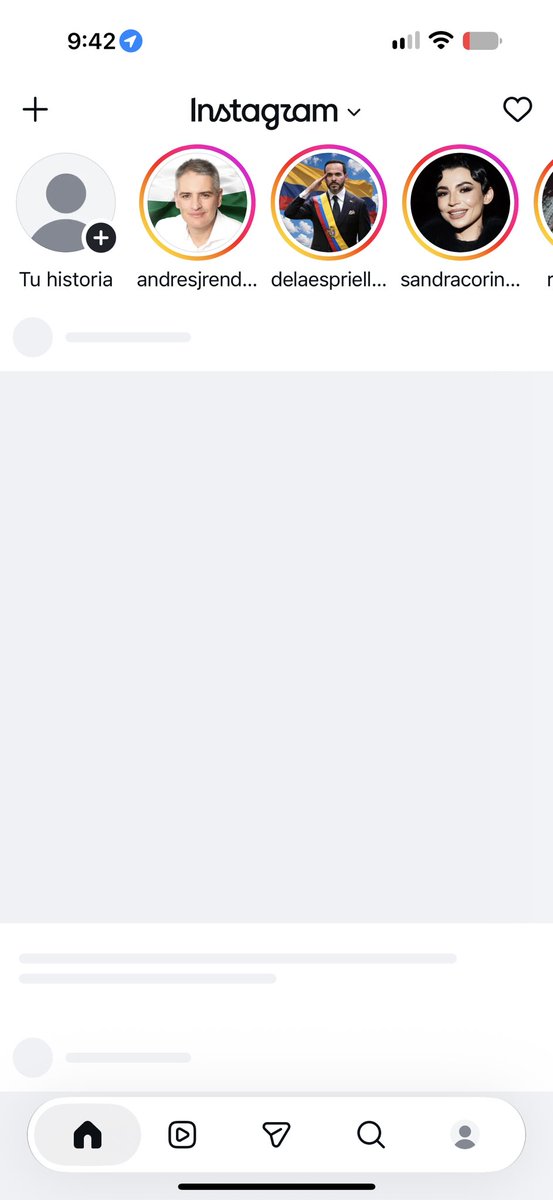
#DenunciaCiudadana
Ciudadanos denuncian las condiciones de las jaulas para perros en Pet Station de El Dorado, señalando que el espacio es tan reducido que impide a las mascotas moverse con normalidad.
If Jensen gave me his word about compute delivery or I asked for components to be accelerated, he always came through.
Sure, we’d put together a purchase order at some point later, but I never for a second thought it wouldn’t happen.
Today we’re introducing UI SDK.
Agents are becoming both the builders and the users of interfaces. So we asked ourselves: where should the abstraction live?
Take a Select. There’s a popup, selection logic, keyboard navigation and focus management. Those same behaviors are useful in lots of other components.
So we pulled those pieces apart, tested them, and made them reusable. The behavior stays the same, whichever framework, renderer you build with or the harness generating the UI.
That’s the idea behind UI SDK. Give agents the pieces to generate the interface you need, right when you need it. Even interfaces we haven’t thought of yet.
Most people are not special, rational, or particularly good. They're tribal primates running social scripts, ranking status, and defending comforting lies over evidence. Intelligence, drive, and outcomes are heavily genetic. Equality of result is a fantasy. The average person will never produce anything of lasting value, and the world is carried by a thin minority they resent.
What's hyped right now vs what already peaked.
Hype is here:
1. Harness engineering
2. Open-weight frontier models
3. Parallel coding agents
4. Cloud sandboxes for agents
5. Desktop agents + human confirm
6. Context engineering
7. Evals + regression suites
8. AI code review
9. Chief-of-staff agents
10. Cost per solved task
11. Forward deployed engineers
12. Weight-space programming
Hype has passed for:
1. Prompt engineering as a job
2. "Which model is best" wars
3. General AI assistants
4. Company brains
5. Agent frameworks
6. Prompt-only startups
7. Infinite multi-agent crews
8. MCP-maxing
9. 100% AI-code mandates
10. Lines of code as a flex
11. AI content mills
12. "Just add RAG"
Which one would you move?
The code I’m merging now is probably the safest and most correct code I’ve ever written, but man it sucks to get endless feedback from LLMs. These things can always find another thing to complain about more than any human would ever subject me to 😅
Good prompt to polish your app, enjoy.
Test this in the browser at different widths, with touch emulation, and on a throttled 3G connection. Fix anything that looks broken or feels off. Save a before and after screenshot for every fix and send me a summary afterwards.
Engineers and Vibe coders...!!!
System Design in 12 lines:
Slow reads → Add a cache
Write spikes → Buffer with a queue
Too much traffic → Add a load balancer
Read-heavy DB → Add read replicas
Write-heavy DB → Shard the data
Slow queries → Add indexes
Slow file loads → Object storage + CDN
Temporary failures → Retry with backoff
Too many requests → Rate limiting
One service failing → Circuit breaker
Duplicate requests → Idempotency keys
Can't see what broke → Logs, metrics, tracing
Save this.
@MicrosoftLearn 1. Did you understand the problem?
2. Do you have a solution?
3. If it fails, do you have an alternative?
4. Have you visualised it end-to-end?
SEO got you ranked on Google.
GEO gets you quoted by ChatGPT.
Most founders are still optimizing for the first one.
GEO (Generative Engine Optimization) means getting your product named inside AI answers from ChatGPT, Perplexity, Claude and Google's AI Overviews.
Why it matters:
- Buyers now ask AI "what's the best tool for X?"
- The answer names 3 to 5 brands, not 10 blue links
- If you're not one of them, you don't exist
What actually helps:
- Answer the exact question in the first 2 lines
- Add real numbers, quotes and sources, because models love citing pages that cite things
- Write comparison pages ("X vs Y", "best X for Y")
- Get mentioned on Reddit, YouTube, G2 and niche blogs not just your own site
- Keep pages clean and crawlable and don't block AI crawlers by accident
- Update often, since stale pages get skipped
- Use the same one-line description of your product everywhere
What doesn't:
- Keyword stuffing
- 3,000-word fluff posts
- Pretending to be a "leading platform" with no proof
The Princeton paper that coined the term found that adding citations, quotes and statistics raised visibility in AI answers by up to 40%.
Test it today. Ask ChatGPT for the best tool in your category.
Are you in the answer?