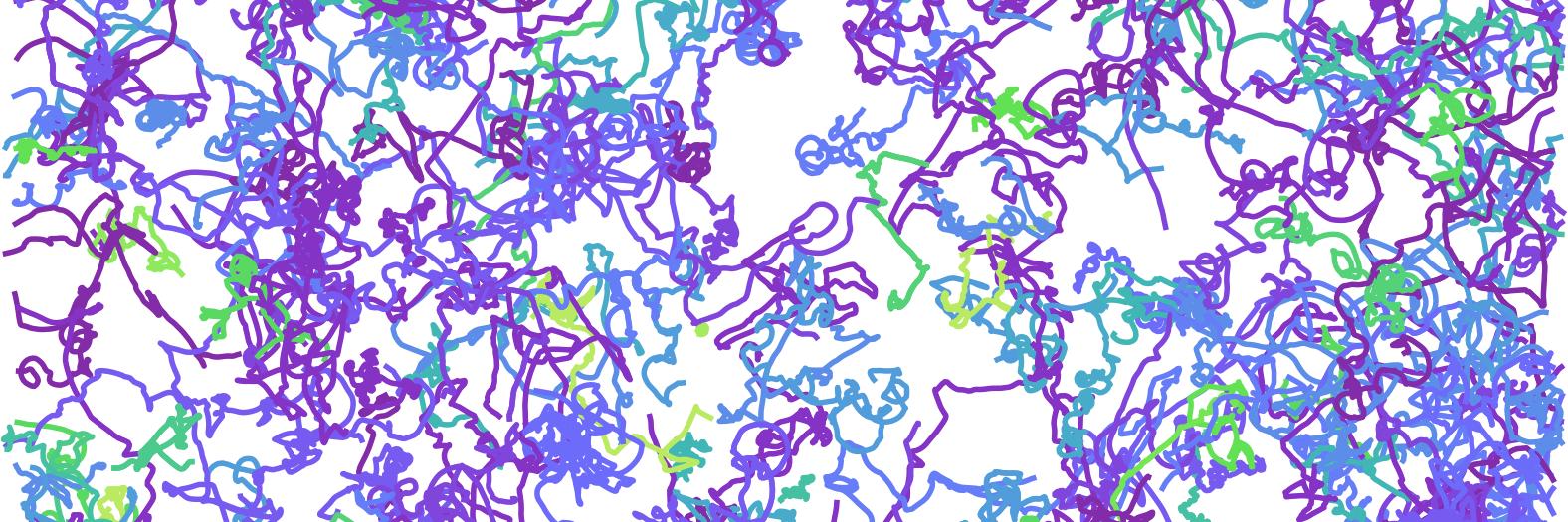
Another paper is out today in @NaturePhysics. Long thought to operate at the physical limits of sensing, E. coli chemotaxis turns out to be constrained instead by cells’ own noisy signal processing. With @machtagroup, @EmonetLab, @KeitaKamino
https://t.co/H6IFgGdZgV
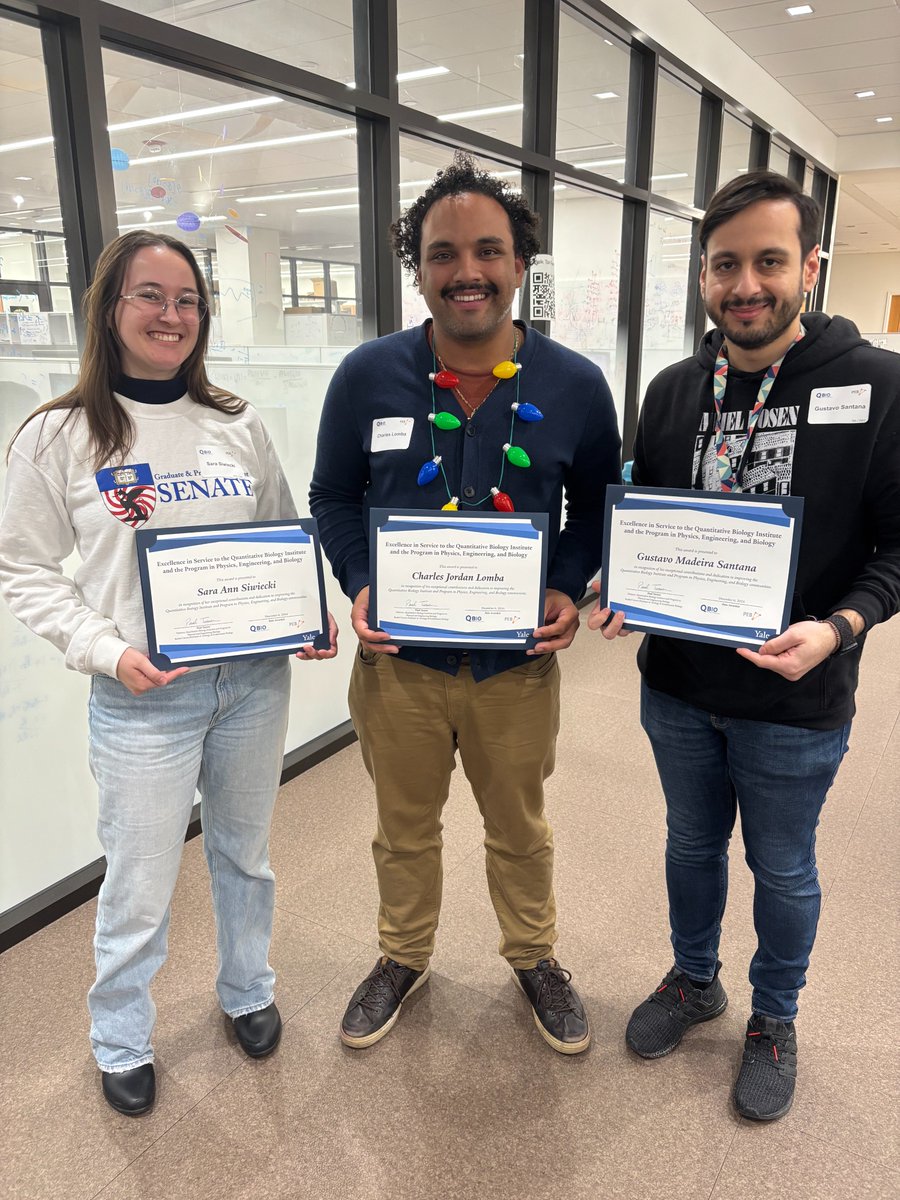
proud of @gumadeiras for receiving the Excellence in Service award at the @PEB_Yale/@QbioYale retreat! Gustavo's dedication to outreach and community-building is truly inspiring. Amazing scientist and making a real impact!
We also recognized three PhD students who have positively contributed to the PEB and QBio communities with our new Excellence in Service award - Congratulations and many thanks to Sara Siwiecki, Charles Lomba, and Gustavo Madeira Santana 👏👏👏
Finally, the preprint on my postdoc work from the past 3 years! With mentorship from @PaulTurnerLab and @EmonetLab, I developed a microscopic technique to measure attachment of viruses #phages to bacterial cells @YalePhage@QbioYale .
https://t.co/htw12nWx6V
#Drosophila’s olfactory neurons — crucial for odor-based navigation — can encode information about highly intermittent odor signals most efficiently when operating near bifurcation points, without needing any additional feedback control mechanism.
🔗 https://t.co/VFUOXEn3lU
I’ve studied the neural and molecular mechanisms of behavior using #Drosophila for over 20 years, and over my sabbatical I put together a list of questions, tips, and tricks that might be helpful for those entering the world of fly behavior. https://t.co/R6zNpxX567. 🧵
#QBioBreakfast chalk talk by Karah Edmonds, a brave summer undergrad researcher @EmonetLab
Karah is talking about the tug-of-war between collective behavior and individuality in a traveling wave of bacterial cells.
The 2024 @HHMINEWS Investigator Competition included a Research Culture & Mentoring component that assessed commitment to open science, inclusive mentoring, and professional service to institution, broader scientific community, and the general public 2/
Our new paper is out @CellSystemsCP. We asked how a cell population copes with multiple environmental signals using E. coli chemotaxis as a model. Turns out they can process two signals independently using a single signaling pathway!
https://t.co/EWE3DI6IKO
Applications for our support program for first-year STEM grad students is now OPEN!! 🧡
Mentors and first-year students can now apply for #CLGSEC!
Apps due June 17th for both mentors and mentees.
Apply here: https://t.co/zRYJYvrvSn
Yale News published a very nice piece about the first paper from the @butterwicklab now in @Nature, check it out! Big thanks to @MalloryLocklear for the opportunity to talk about our work.
@Yale@CAPES_Oficial
https://t.co/TPnY4YtiW0
We had a q-bio seminar this morning by Thierry Emonet from @MCDB_Yale on olfactory navigation here at IMB @IMBSinica, Academia Sinica. Thank you, @EmonetLab, for visiting us and for such an inspiring talk!
is the standard chemotaxis model wrong?
new paper from the lab by Trung Phan, @HenryHMattingly, with Lam Vo, Jonathan Marvin, @LoogerL. We use fluorescence imaging to study collectively migrating bacteria and develop an improved model. Check it out!
https://t.co/0KQIek8xBj
New year new us 🥂 Welcome to our newly launched PEB social media page! Follow us to stay updated on upcoming events, faculty and student spotlights, research news, and more!
Check out the first structure of a sweet taste receptor bound to a sugar molecule! The @butterwicklab found out how an insect chemoreceptor achieves very narrow tuning by coupling binding pocket stereochemistry and allosteric activation. https://t.co/gvwvwHw02N🧶Our findings: