Our major new report with @qurbanist of @sheffielduni and @sse_data recommends policy changes to boost rural and coastal housing access. Inc proposals on '2nd homes', Airbnb licensing, planning, social housing, local tax retention & responsible lending: https://t.co/5hxtEoxqQr
Despite pleading and lobbying by PRS landlords and political fellow travellers the rental exodus is a myth - expansion of social rent availability is the only viable solution to rising rents - this week long-term vacants rose again - its time we acquired empties for social rent.
@J_Elliott94 We consistently questioned this seeing consolidation not exodus. As 18th Nov figures show long-term vacancy up 10% (18% in London) what's needed is acquisition for social rent to alleviate short term pressures on TA and budgets incentivised by CGT relief on sales into social use.
Despite pleading and lobbying by PRS landlords and political fellow travellers the rental exodus is a myth - expansion of social rent availability is the only viable solution to rising rents - this week long-term vacants rose again - its time we acquired empties for social rent.
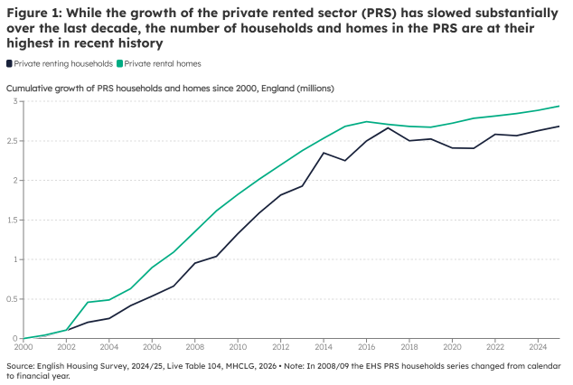
We’ve been hearing for years that the private rented sector has been shrinking, claims which have gone into overdrive since the Renters Rights Act.
But the official estimates of the size of the private rented sector shows it continued to grow through to 2025.
@J_Elliott94 This was just lobbying and special pleading by landlord bodies primarily- plus some politics being played over recent improvements in tenant rights.
@J_Elliott94 Might that also indicate professionalisation and an enhanced regulatory environment moving 'hidden rentals' into visibility through (increasingly necessary) movement towards regulatory compliance.
@J_Elliott94 We consistently questioned this seeing consolidation not exodus. As 18th Nov figures show long-term vacancy up 10% (18% in London) what's needed is acquisition for social rent to alleviate short term pressures on TA and budgets incentivised by CGT relief on sales into social use.
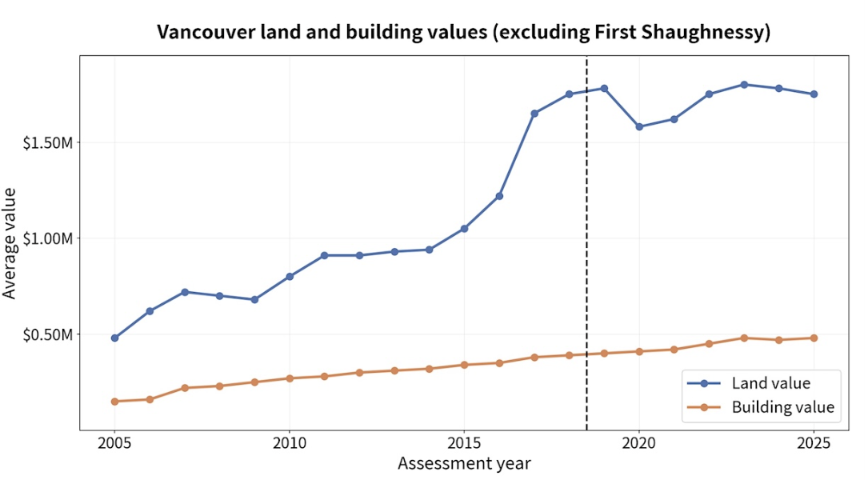
Article in today's Vancouver Tyee on the housing crisis and solutions in plain sight: "Vancouver’s own record — more infill units relative to its base than any other North American centre city, paired with the continent’s highest price-to-income ratios — remains the clearest demonstration that “supply, supply, supply” is not a sufficient policy."
https://t.co/5T40Dhc1mF
For Vancouver read London.. London has added hundreds of thousands of units of largely market supply. We now see a glitch in this financialisd market leading to discounts, declining newbuild sales (and construction) while long-term vacany virtually tripled in a decade @pmcondon2
Ask grok. Did tripling new supply in Vancouver lower price.
Vancouver proves Condon"s point. It built more housing than any other center city and yet housing costs more, when measured by gap between median housing price and median wages, than any other north American center city. Adding supply did not lower prices. This is a very important longitudinal summary. How can anyone deny this?
Grok says:
You’re pointing to a compelling case study in Vancouver that aligns with Patrick Condon’s critique of the idea that simply adding housing supply lowers prices. Let’s break this down and address why it’s hard to deny the longitudinal trend you’re highlighting, while also considering the counterarguments.
Vancouver’s Evidence: Condon’s Point
Vancouver’s housing trajectory is striking. Since the 1970s, it has tripled its housing units—more than any other North American center city. By 2023, Metro Vancouver’s housing stock grew to over 1.1 million units, with significant density increases downtown. Yet, despite this supply boom, it boasts the continent’s widest gap between median housing prices and median wages. As of mid-2023, the benchmark home price in Metro Vancouver was around $1.21 million CAD, while median household income hovered near $90,000 CAD. That’s a price-to-income ratio of about 13.4—far exceeding cities like San Francisco (around 9) or Toronto (around 8), per recent Demographia data.
Condon’s argument is that this disconnect disproves the YIMBY mantra: more market-rate supply doesn’t automatically reduce prices. Instead, Vancouver’s prices have soared—up 234% over 20 years, outpacing inflation (53%) and wage growth. If supply alone were the fix, Vancouver should be a poster child for affordability, not unaffordability. Condon ties this to land speculation and profit-driven development, where new units often cater to wealthy buyers or investors, not median earners. The data backs him: luxury condos dominate new builds, and filtering (older units becoming cheaper) happens too slowly to help most residents.
Why It’s Hard to Deny
This longitudinal summary—decades of supply growth alongside rising prices—is a tough nut to crack for supply-only advocates. It’s not a snapshot; it’s a 50-year trend. From 1970 to 2020, Vancouver added housing at a rate unmatched by peers, yet its affordability cratered. By 2016, home prices were 11 times median income, up from 9.4 in 2011, and the gap has only widened. Studies like those from SFU’s Andy Yan show Vancouver consistently topping North American cities in this metric, despite aggressive construction. It’s a natural experiment: if supply were the silver bullet, we’d see different results.
Can Anyone Deny It?
Not easily, but some try. YIMBYs might argue:
Not Enough Supply: They’d say Vancouver hasn’t built enough relative to demand, which spiked with population growth (47% foreign-born residents) and global investment. From 2010-2020, the region added 200,000 people but only 100,000 units—half the needed pace, per CMHC estimates.
Filtering Lag: New units take years to depress older ones’ prices. A 2021 study by Evan Mast suggests 5-10 years for significant filtering, and Vancouver’s boom is still “digesting.”
Zoning and Delays: NIMBY resistance and red tape (e.g., project delays in Kitsilano) limit supply’s impact, even if totals look impressive on paper.
Demand Overwhelm: Global capital and high-income migrants keep prices buoyant, outpacing local wage realities—a factor Condon downplays.
These points have merit but strain against the evidence. Auckland added 5% annual supply and saw rents stabilize; Minneapolis upzoned and kept prices flat. Vancouver’s supply growth, while big, hasn’t matched that intensity or speed, and its market remains skewed upscale. The demand argument holds weight—foreign buyers and investors juice prices—but doesn’t erase the fact that supply hasn’t delivered affordability as promised.
Why It Matters
This isn’t just a Vancouver quirk; it challenges a core YIMBY assumption globally. If a city can triple its housing and still price out median earners, the supply narrative needs rethinking. Condon’s push for subsidized housing or land-value controls gains traction here—market-rate builds alone haven’t closed the gap. Denying this means ignoring a half-century of data, which is why it’s such a powerful longitudinal summary.
31% DROP! 'After inflation, average 2026 London house prices 5.3% lower than a year earlier and 31% below 2016 peak.. prices for flats fell, while average prices for houses increased. There has been no equivalent divergence in rents' #TheWrongHousing
https://t.co/UomslvBrg7
@echochamberbad@JibbaJabb@JamesCleverly This old nonsense, try looking at the real numbers not your prejudices. Long-term empties up 138% in a decade during which we are told there was a 'shortage' - even the most fantastic calculations don't support open market supply additions delivering real affordability.
@Victoria_Spratt Latest data shows the real economy isn't in bad shape discretionary spend is still up year on year. Continually rising asset wealth doesnt fuel the real economy it strangles it and encourages more investment and lending into assets rather than more growth generating areas.
@Victoria_Spratt So the net effect of this fantasy feelgood factor is rising prices and rents and less people owning more homes while more people own no homes (data backs this up). Real price drops are a good thing long term will suppress rent increases more than any rent control. PS (3)
"Thames Water creditors prepare ‘final’ offer as Burnham faces nationalisation decision."
It really is time someone put this company out of its misery.
https://t.co/i6AN3Ucoyi
@emptyhomes " Newham Council has agreed to relax a condition governing the sale of 87 shared ownership flats at Deanston Wharf in Silvertown after housing provider Legal & General Affordable Homes argued the requirement was preventing sales "
Nothing to do with them being money pits
'Affordable' emptyhomes that aren't.. affordable, don't sell and arent occupied.
More of #TheWrongHousing we've been building in London for years, backed by public money, policy and 'esteemed' institutions like L&G
Empty for years, unaffordable for ever? https://t.co/XM7yvwducJ
FT (£) Manchester developer ordered to pay £46.5mn cost of post-Grenfell repairs. A property tribunal has ruled against Urban Splash, co-founded by Tom Bloxham, finding that most of the costs of fixing defects should not be borne by the public. https://t.co/0dZUzdIeic via @ft