Food for thought!
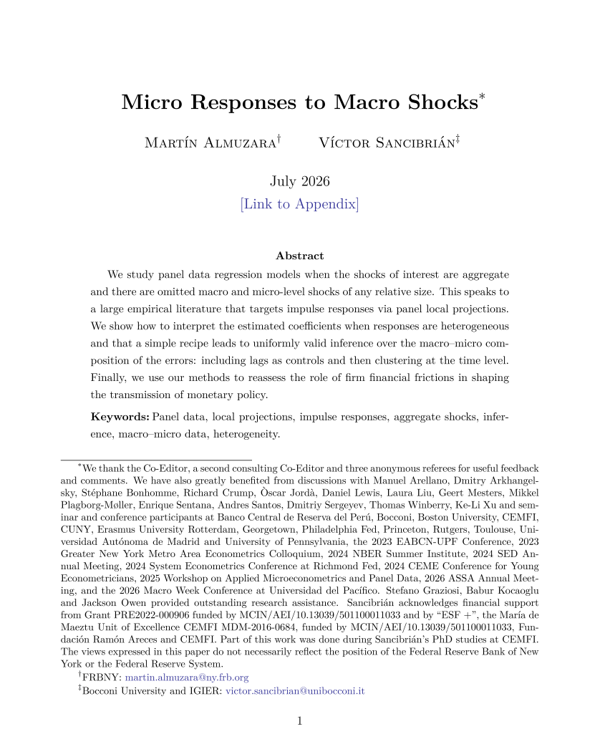
"Micro Responses to Macro Shocks" by Martín Almuzara and Víctor Sancibrián.
"We study panel data regression models when the shocks of interest are aggregate and there are omitted macro and micro-level shocks of any relative size. This speaks to a large empirical literature that targets impulse responses via panel local projections. We show how to interpret the estimated coefficients when responses are heterogeneous and that a simple recipe leads to uniformly valid inference over the macro–micro composition of the errors: including lags as controls and then clustering at the time level. Finally, we use our methods to reassess the role of firm financial frictions in shaping the transmission of monetary policy."
https://t.co/2XageVD9QN
This past week I've written about shadow yields, the idea that central banks are keeping gov't bond yields artificially low in a number of places. You can do that, but you can't force foreign investors to then buy your debt. So foreign ownership falls...
https://t.co/0kdnV9PEUA
Fiili piyasa faizlerinde sıkılık sürüyor. TCMB fonlamayı değiştirmedi, petrol yükseliyor; faizlerde indirim başka bahara kalacak gibi... Faizlerin aylık basit denkleri:
ANTHROPIC ENGINEER:
"DON'T PROMPT CLAUDE. BUILD A SYSTEM THAT PROMPTS ITSELF."
In this free workshop, he explains why most people use Claude the wrong way.
And how to turn one AI into an entire team of AI agents.
He covers:
• Proper CLAUDE.md setup
• Plugins almost nobody uses
• Advanced prompt caching (95% cache hit rate)
• Why starting every chat from scratch is a mistake
Worth more than most paid Claude courses.
Watch this and bookmark it.
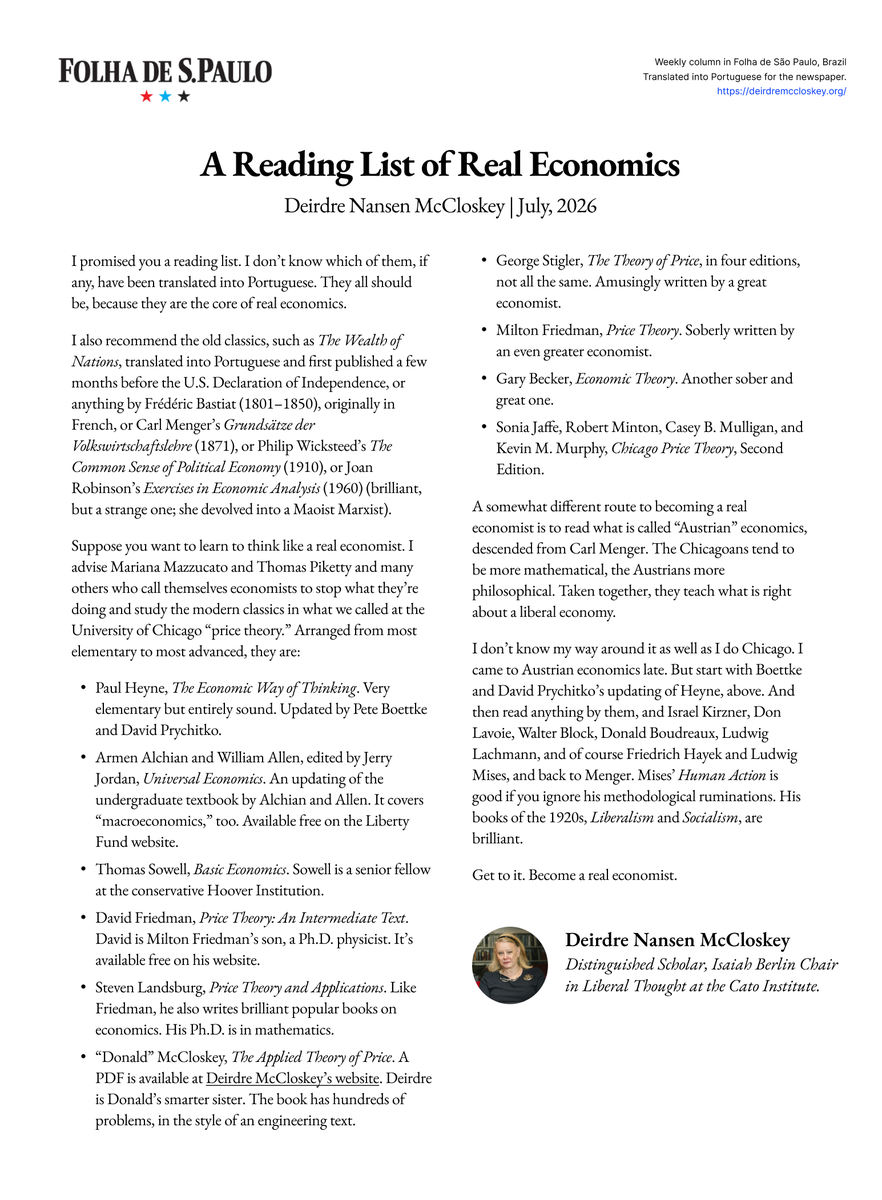
I promised you a reading list.
I recommend the old classics, such as The Wealth of Nations, first published a few months before the U.S. Declaration of Independence, or anything by Frédéric Bastiat (1801–1850), originally in French, or Carl Menger’s Grundsätze der Volkswirtschaftslehre (1871), or Philip Wicksteed’s The Common Sense of Political Economy (1910), or Joan Robinson’s Exercises in Economic Analysis (1960) (brilliant, but a strange one; she devolved into a Maoist Marxist).
Also, study the modern classics in what we called at the University of Chicago “price theory.” Below, I list them from most elementary to most advanced.
A somewhat different route to becoming a real economist is to read what is called “Austrian” economics, descended from Carl Menger.
The Chicagoans tend to be more mathematical, the Austrians more philosophical.
Taken together, they teach what is right about a liberal economy.
My latest column for @folha
Many would adopt human enhancement technologies but want them regulated. And those who wouldn't adopt don't want them banned. Demand and governance have different determinants, from Giovanni Immordino, @Mario_Macis, Immacolata Marino, and Fabrizio Panebianco https://t.co/vvBLDuFzjk
TÜİK, 2025 yılı Yükseköğretim İstihdam Göstergeleri'ni açıklamış.
İş bulma süresi en kısa olan yedi meslek grubunun tamamı bakım ekonomisi (eğitim, insan sağlığı ve sosyal hizmet faaliyetleri) içinde yer alıyor.
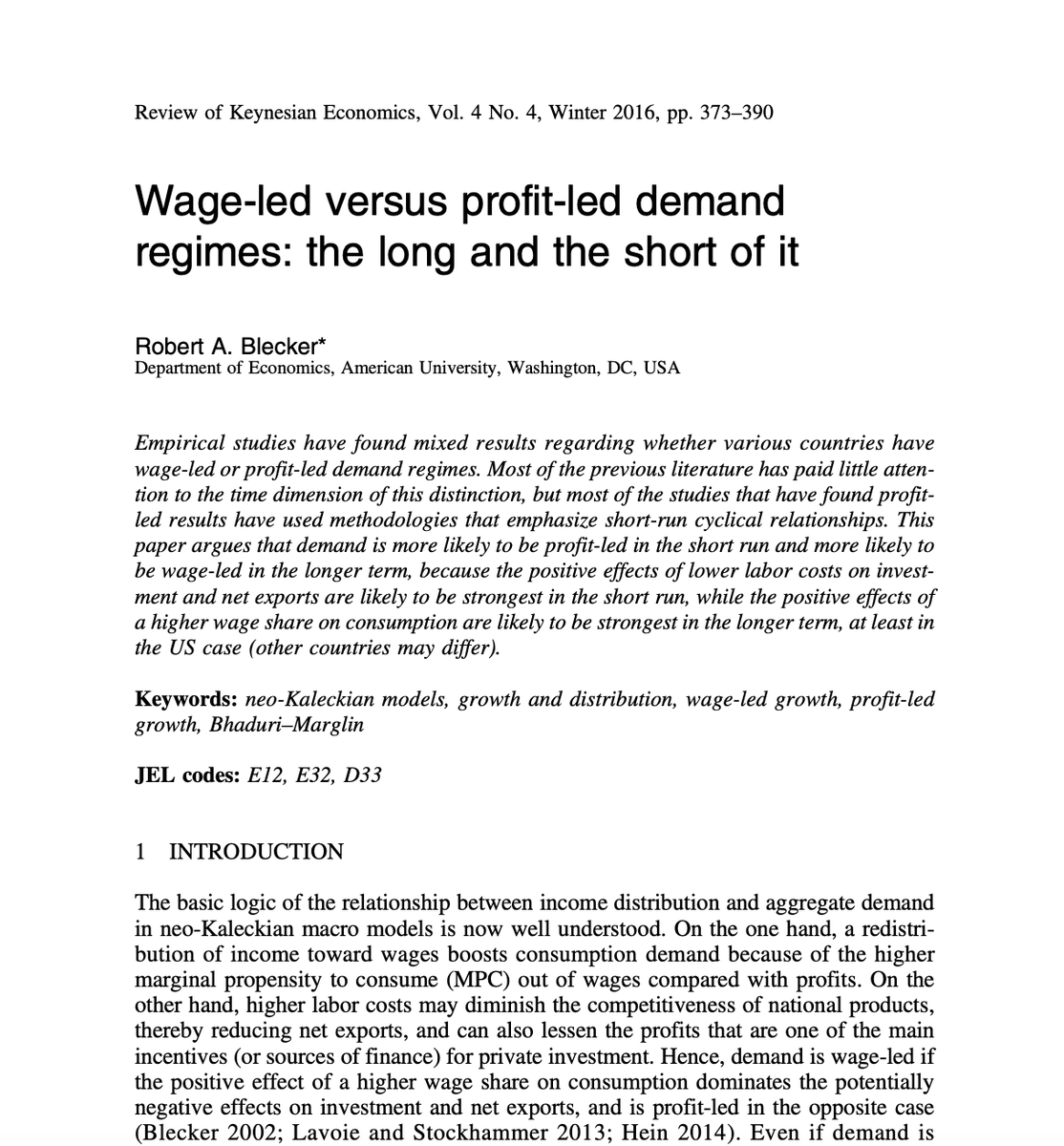
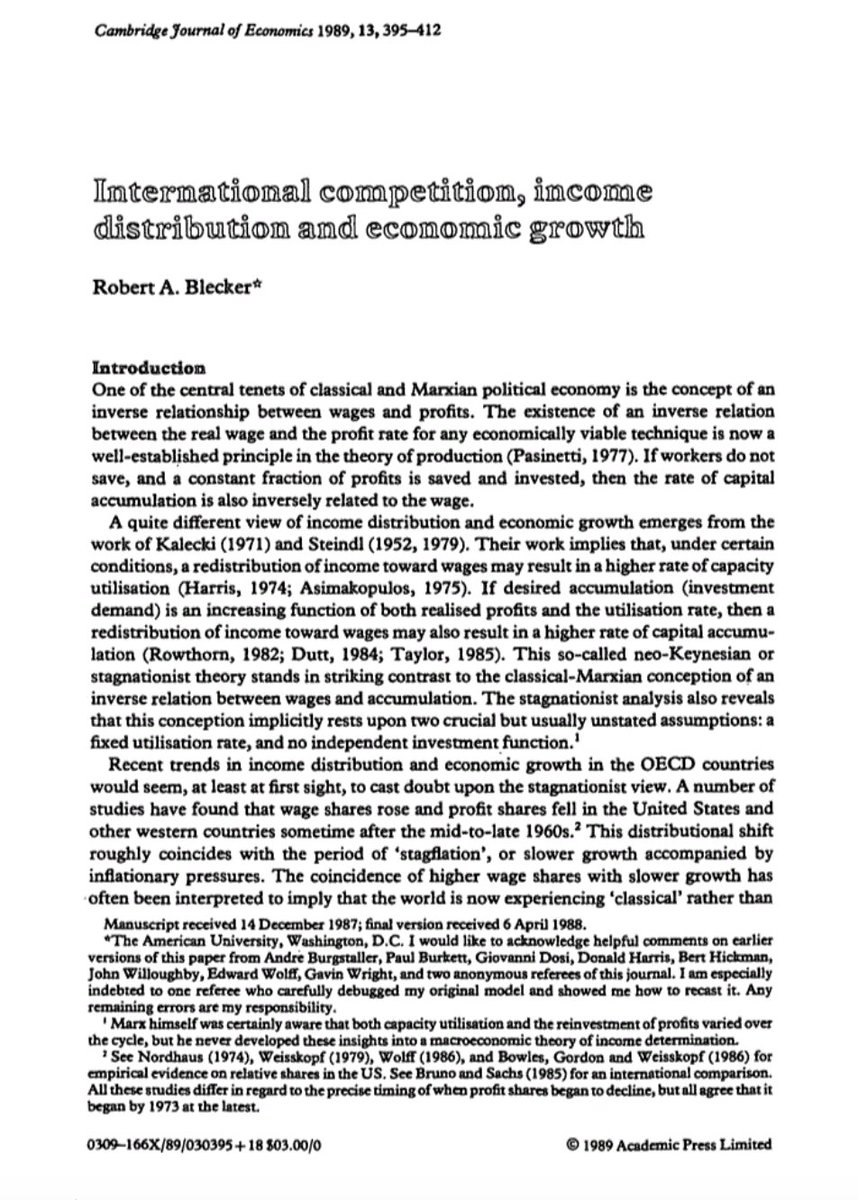
I just learned that we lost Robert Blecker.
He was a great economist and a great person. He really was one of my favourite economists. 😢 I learned a lot from his work. You should read Blecker if you haven't. I You should use his work in your macro lectures if you don't already.
Do you frequently use time-series data on the Turkish economy? The CBRT package prepared by Prof. Erol Taymaz of METU can help you download data from the Central Bank of the Republic of Turkey. The CBRT database covers more than 40,000 variables. For more https://t.co/lx0HOVK1rj
Merkez bankası özelinde duygu analizi yapabilecek bir LLM ile tanıştırayım: CentralBankRoBERTa. Mimarisini çok sevdim. LLM gerçekten ayrı ve güzel bir dünya.
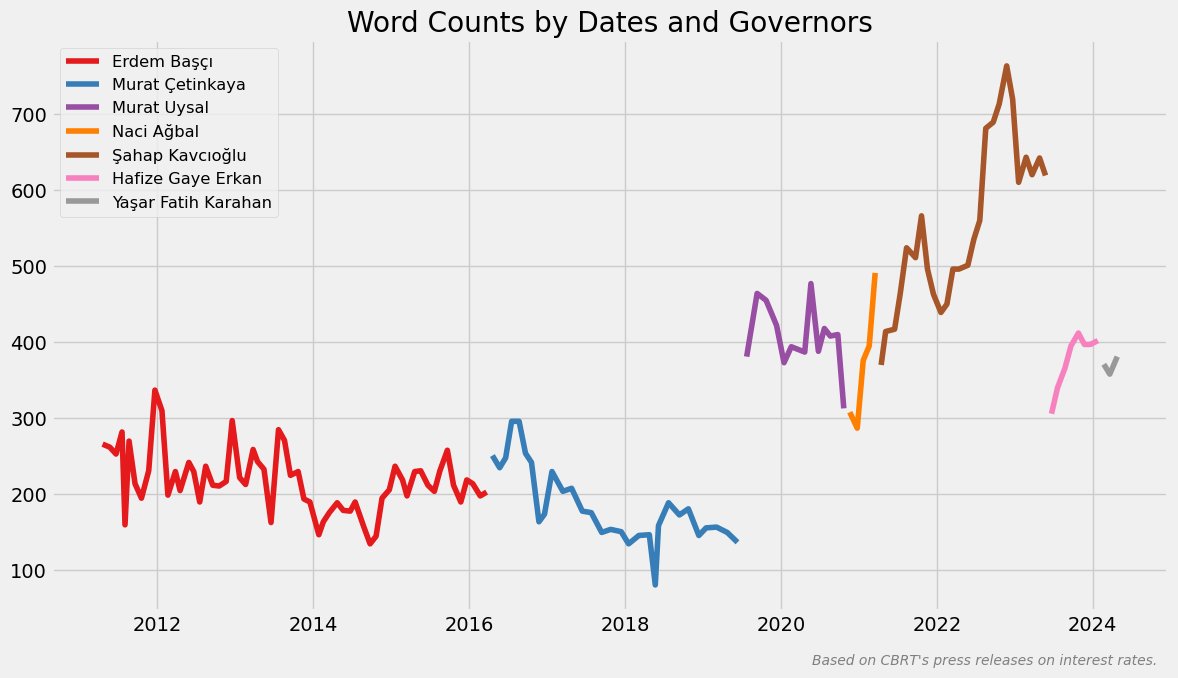
Aşağıdaki post ile şunları yapıyoruz:
* Tarihlere ve başkanlara göre kelime sayıları
* Başkanlara göre kelime bulutları
* Tarihlere göre metinlerdeki pozitif/negatif duygu değişimleri
@Merkez_Bankasi 'nın Faiz Oranlarına İlişkin Duyuru Metinlerinin İçerik Analizi
https://t.co/mLN8qFeb9l
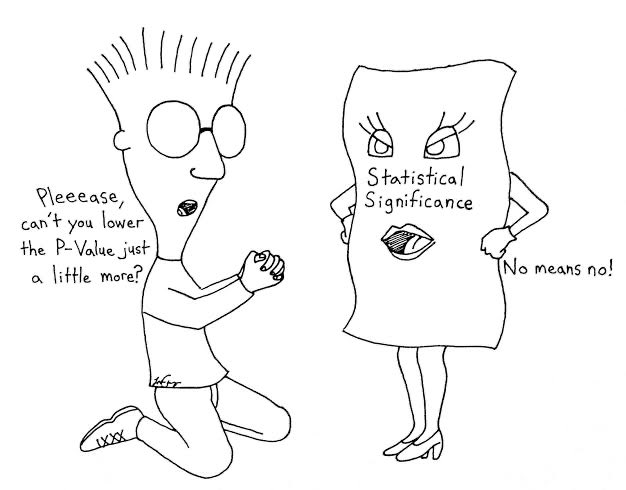
Why We Use p<0.05
🔹 Ever wondered why scientists often use p<0.05 as the threshold for statistical significance? Let's dive into its history, implications, and alternative approaches.
🔹 The p<0.05 threshold can be traced back to Sir Ronald A. Fisher in the 1920s. He suggested the 5% level as a convenient boundary for significance. However, it's important to note he never intended for it to become a rigid rule.
🔹 The p value tells us the probability of obtaining our observed results (or more extreme) if the null hypothesis is true. So, p<0.05 implies there's less than a 5% chance our results happened due to random variation alone.
🔹 However, there are critiques. Relying solely on p<0.05 has led to "p-hacking" - tweaking experiments to achieve this threshold. It's also been implicated in the replication crisis, where many scientific studies couldn't be reproduced.
🔹 So, is p<0.05 the correct way to test a hypothesis? Well, it's a tool. When used correctly and with understanding, it can provide valuable insights. But, like any tool, it has limitations.
🔹 Some suggest a more flexible approach:
•Using different thresholds depending on the field or study.
•Looking at effect sizes alongside p-values.
•Emphasizing confidence intervals to provide a range of plausible values.
🔹 Bayesian statistics is another approach. Instead of frequentist's p-values, it provides a direct probability statement about the parameter in question using prior information and observed data. This can sometimes offer a more intuitive understanding.
🔹 In conclusion, while p<0.05 has historical significance and is widely used, it shouldn't be the sole determinant of a study's validity. Science is ever-evolving, and so should our methods and understanding of data interpretation.
🔹 As always, critical thinking is key! Don't just take p<0.05 at face value. Dive deeper, understand the context, and consider alternative methods when interpreting results.
#DataScience #Statistics
We are excited to announce the 1st Istanbul Applied Micro Workshop!
Date: January 4, 2023
Venue: Kadir Has University Cibali Campus
See the program below. For those who want to attend, please send me an email at: [email protected]
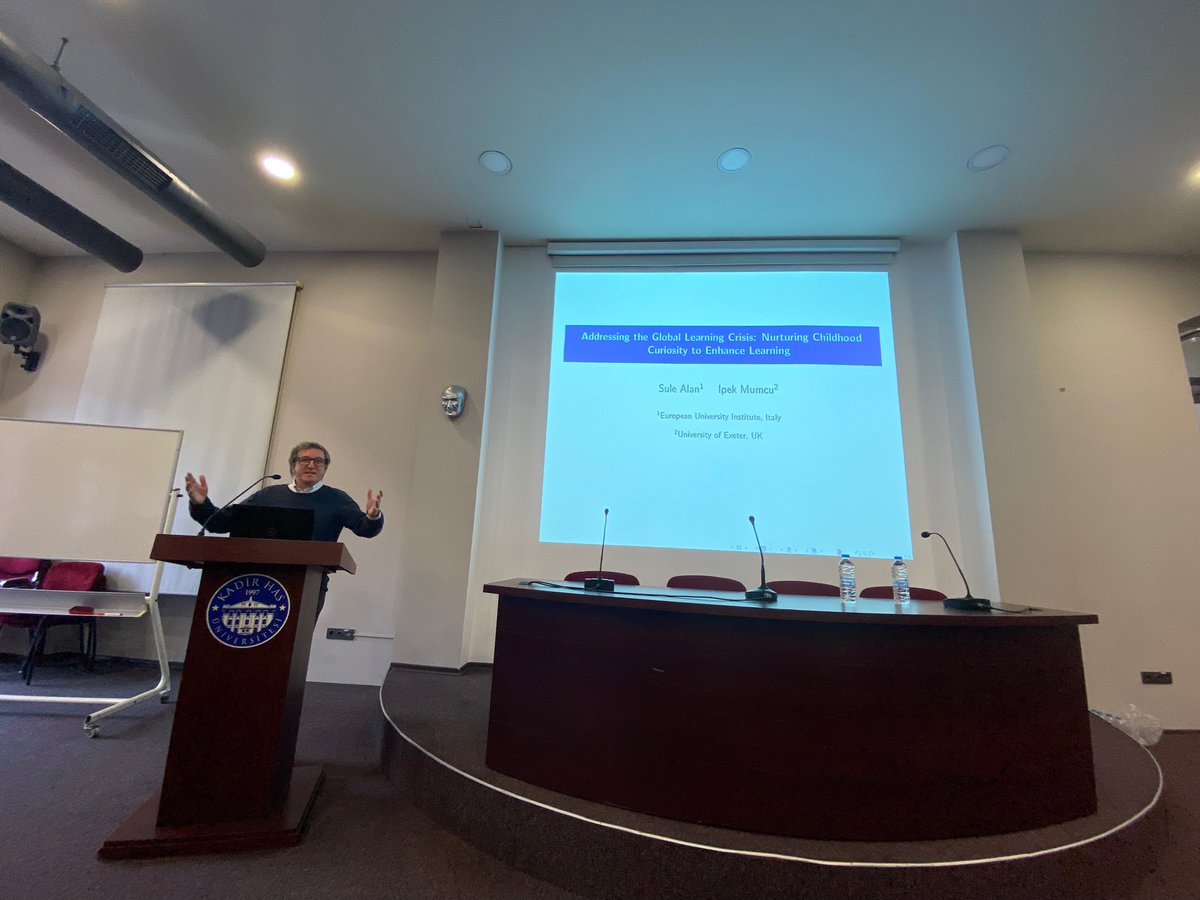
Beyond excited to see our paper published at the @QJEHarvard ! This has been a fantastic journey thanks to my coauthors @sulealan_econ and @MattSutter_MPI . Here is a thread 👇
Why is the Middle East and North Africa so Patriarchal? The inspiring @_alice_evans is our next host at Khas Contemporary Debates. Join us next Wednesday!
Day: April 6
Time: 6pm TSİ/4pm BST
Registration link: https://t.co/h6O9UzfQVf