@denniswittrock describes how startups can better respond to the need for more organizational structure by knowing real alternatives to conventional hierarchy, and when to make a deliberate operating system change. #holacracy#startups#selfmanagement
https://t.co/yWvzWIgOOs
Four reasons why decentralized business management is booming according to @EntEurope:
1. Self-Sufficiency
2. Leadership Skills
3. Easier scaling:
4. Efficient management
▶️https://t.co/Zj9qtq2mol
What #DAOs are great at:
₿Sharing treasury with high transparency
👑Distributing ownership from day 1
What mature #selforganization practices are great at:
📝Doing clear, efficient, consent-based governance
What encode's PowerShiftDAO is great at:
🔗Linking both
One of the pillars of mature self-organization is role clarity. If #DAO contributors cannot agree upon the exact set of explicit expectations that anyone can have on a specific role, things will get really difficult.
Healthy boundaries are one of the main values of mature self-organization practices. Boundaries help people:
1) understand what is expected
2) know how they can really make a real contribution
3) feel safe
Many #DAOs want to create permeable spaces and end up creating fear/chaos.
Things you can create in seconds: a smart contract, wallets, a #DAO infrastructure in a Dapp.
Things you cannot create in seconds: a cohesive and uplifting culture, competencies for decentralized work, tailor-made and clear agreements, decision-making rulesets, a legal entity...
Decentralization needs clarity. Clarity about:
1) The higher purpose of an organization and each of its parts
2) Scopes of accountability and authority
3) Legitimate expectations in the people context
4) Processes and pathways
No #DAO can be successful without this clarity.
Seeing a #DAO as a "movement" instead of a company with legal personhood is an alluring idea. But here is what a movement can't have:
1) limited liability
2) bank account
3) credit card
4) intellectual property
5) real-world assets
6) capacity to (be) sue(d)
7) signed contract
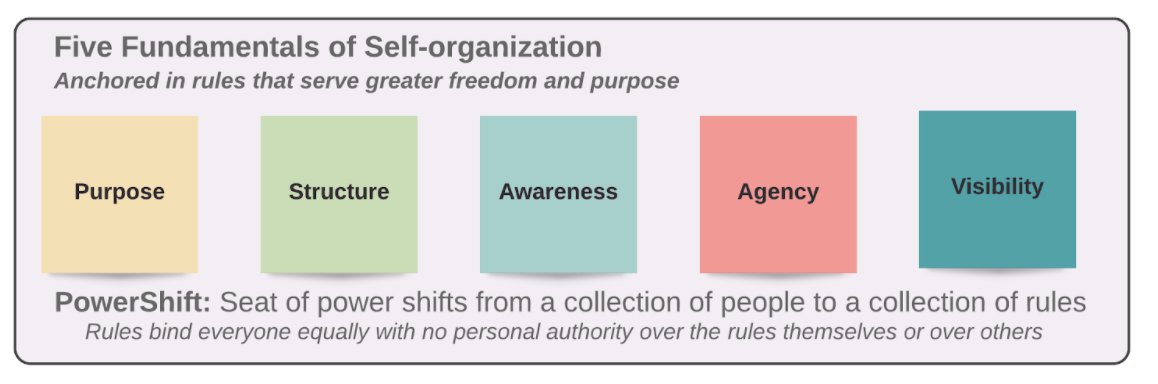
What do you need to shift the seat of power in a company from being held by a small collection of people to being anchored in a set of rules for everyone? @encodeorg's Tom Thomison outlines the five fundamentals: https://t.co/aOla3CsABH
What is type of organization is a good fit for a DAO? Those that are willing to surrender power and authority to a ruleset. Watch the full recording: https://t.co/WEHjr4Y90s
"There is an intuition that the #DAO is a game-changer. But it is still very unsophisticated on how it handles very easy business issues" - @TomThomison, Founding Partner at https://t.co/EXNAZpKlGY. Watch the full recording: https://t.co/WEHjr4Y90s
"If a #DAO becomes successful, now what? Because we have all these equal members generating turnover or revenue, but also generating liability. However, most DAOs are not legally anchored, so if anything goes wrong, everyone is liable" @TomThomison Watch: https://t.co/WEHjr4Y90s
#DAO ‘s - some serve people, some serve a purpose/product/service, most try to do both without realising it and without a clear context distinction = painful.
Self-organizing companies: 21st-century governance in a 20th-century ownership and financial framework.
DAOs: 21-century ownership and financial model in a 20th-century governance system.
Is there a better way to design and govern DAOs? Join us tomorrow in this conversation and find out more about the PowerShiftDAO™, the DAO framework that unites the best of Web3 and Self-Organization.👉https://t.co/vprUOcUhKd @restartlab_io
Current DAOs beautifully decentralize ownership and compensation, but implement old and obsolete systemical features of centralized systems like majority voting, fusion between economic power and decision-making authority, and purposelessness.
The term DAO is like a compass
(it points us in the right direction)
Use it to navigate unknown territory
But think too hard about it and you'll never actually get to the final destination