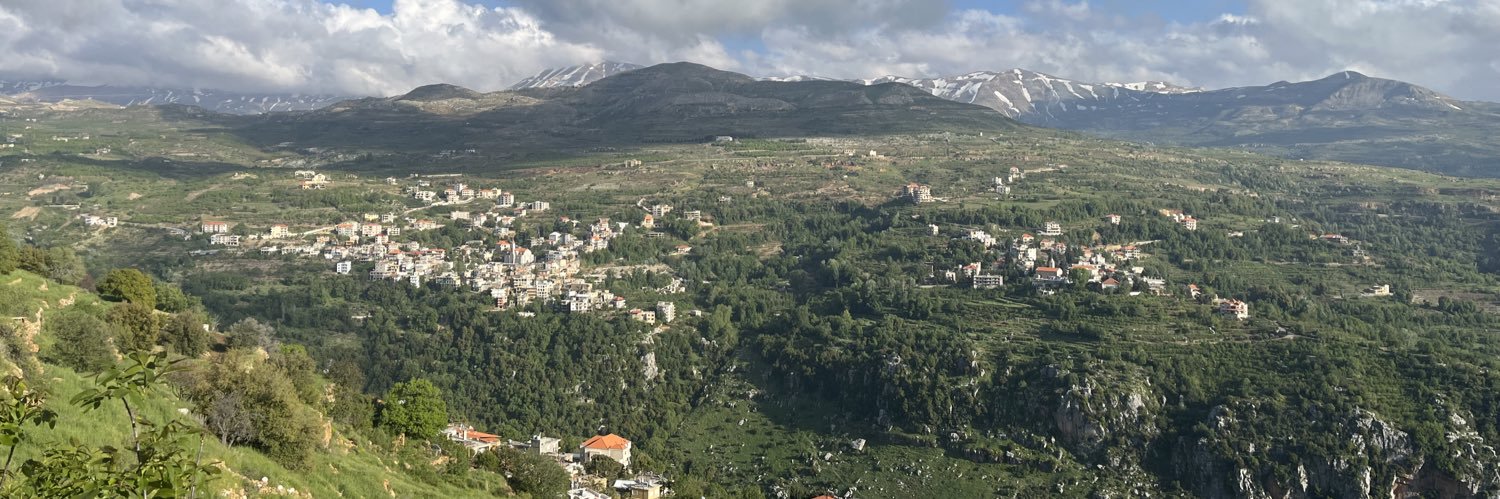
Partout au Moyen-Orient, les chrétiens d’Orient continuent de subir les conséquences de la guerre, des persécutions, de l’instabilité et de la pauvreté. Beaucoup ont donc été contraints de quitter les terres où vivaient leurs ancêtres et où leurs Églises proclamaient l’Évangile depuis les premiers siècles du christianisme. Lorsqu’une famille chrétienne est contrainte de quitter sa patrie, une communauté s’affaiblit, une tradition vivante est menacée et la présence de l’Église s’amenuise. C’est pourquoi soutenir les chrétiens d’Orient dans leurs terres natales est une œuvre d’espérance essentielle.
Across the Middle East, Christians continue to face the effects of war, persecution, instability, and poverty. Many have been obliged to depart from the lands in which their ancestors have lived and in which their Churches have proclaimed the Gospel since the earliest centuries of Christianity. When a Christian family is forced to leave its homeland, a community is weakened, a living tradition is placed at risk, and the presence of the Church is diminished. For this reason, accompanying Christians of the East in their homelands is an essential work of hope.
Seigneur de la vie, pardonne-nous d’accumuler au lieu de partager, d’utiliser les biens comme un pouvoir et non comme un service. Nous te prions, Seigneur, que ton Esprit nous enseigne à utiliser ce que nous possédons — argent, temps, talents, opportunités — comme des instruments de fraternité. #PrionsEnsemble sur https://t.co/dF5KXC46cQ
Arabized Levantines mocking the Lebanese for having “European” names: Philip the Apostle, born in Bethsaida, Galilee, 2,000 years ago, and Emperor Philip the Arab, born in Shahba, Syria, 1,800 years ago:
“Hold our beers.” 🍻
Grammar lesson du jour:
Lebanese Tefƹíla / Tefƹíle 🇱🇧
Lebanese has a distinctive noun pattern often describing an action, an object or the result of an action.
The final vowel generally follows a phonological rule:
• -a after guttural or emphatic consonants
• -e after other consonants
This vowel pattern exists in Syriac.
Words ending in -a (due to guttural and emphatic preceding consonants)
• Tefríƹa —Lounge wear
• Terbíƹa — CV axle; driveshaft (car part)
• Tesríḥa — Hairstyle
• Tesmíƹa — Oral recitation
• Teƹlíɂa — Comment; remark
• Tenfíƹa — Favour; preferential benefit
• Tejlíṭa — Nonsense; ridiculous blunder
• Tezbíṭa — Fix; adjustment
Words ending in -e
• Toswíne — Railing; balustrade
• Tetbíle — Marinade; seasoning
• Teḳčíbe — Wooden enclosure; wooden structure
• Tetḳíte — Storage space above the roof
• Terkíbe — Arrangement; combination
In the US it’s the Indian Summer - inspiring Dassin’s L’été indien - in Italian it’s called L’estate di San Martino, while in the Levant, it is the summer-like weather falling between 2 autumn months with the same name: Tečrín the First (October) anf Tečrín the Second (November)
The Levant exported the name to Europe and now it is totally left out from the picture (also note that one of the famous “John”s in History is Hanibaal of Carthage)
Any Lebanese citizen should dedicate some time to pay the Lebanese National Museum to check out native gems like the Sarcophagus of Ahiram of Byblos featuring the entire Phoenician alphabet, the anthropomorphic sarcophagi of Sidon-Ƹain l Ḥelwe featuring ancient Egyptian and Ancient Greek elements and signed by the artisan who made them with a phoenician letter, the gilded bronze figurines of the Byblos obelisks temple and the Maronite medieval mummies
@kelme_lb Bèḍ Sèd Bèt, accent grave.
Lèč, èč, Rmèč...
But I tend to write baiḍ, bait... So the dual and plural form (and other declinations) are easier. Bas haik/hèk/hék