“My doctor said Covid is mild, and masking is not necessary”.
Well your doctor is wrong on both counts and you should not base your health, and life on their personal bias.
If they are saying Covid is mild, they are ignoring over 500,000 peer reviewed publications that shows Covid is not mild, and is highly dangerous, and they are pushing their own biased, and dangerously incorrect opinion.
They are wrong.
It is psychologically easier for society to believe children suddenly damaged themselves with iPads than to confront the possibility that adults collectively failed to protect developing brains during an ongoing airborne pandemic
This is all about shifting blame & responsibility
Claude Mythos is like Hiroshima for software.
everything you own online, your bank, your email, your photos, your identity, is now dangerously exposed in ways that didn't exist 48 hours ago
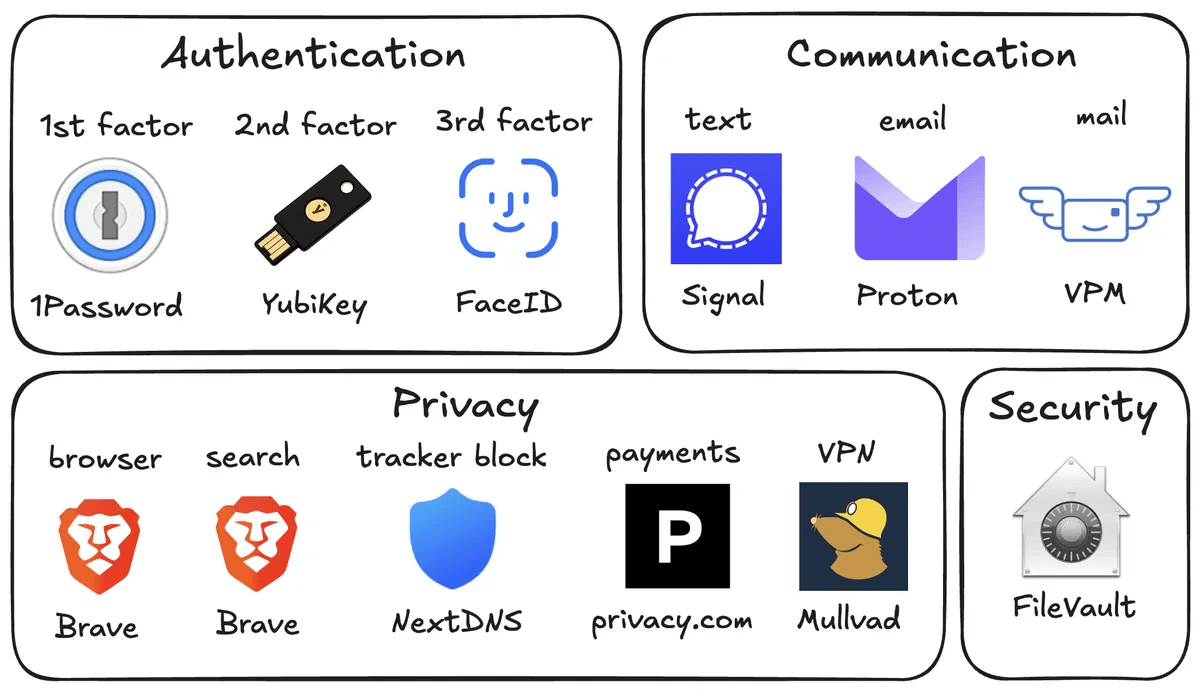
that's why Karpathy's digital hygiene guide is probably the most important thing you can read this week
here's every step to protect yourself in these uncharted times:
> use a password manager for every account
> set up physical security keys so attackers can't log in
> enable face id and fingerprint everywhere
> randomize your security question answers
> encrypt your hard drive
> get rid of unnecessary smart home devices
> switch to signal for private messaging
> use brave instead of chrome
> switch to brave search instead of google
> mint virtual credit cards for every purchase
> get a virtual mailing address
> never click links inside emails
> use a vpn on public wifi
> block ads and trackers at the dns level
> install a network monitor to see which apps are spying on you
full breakdown of each step below:
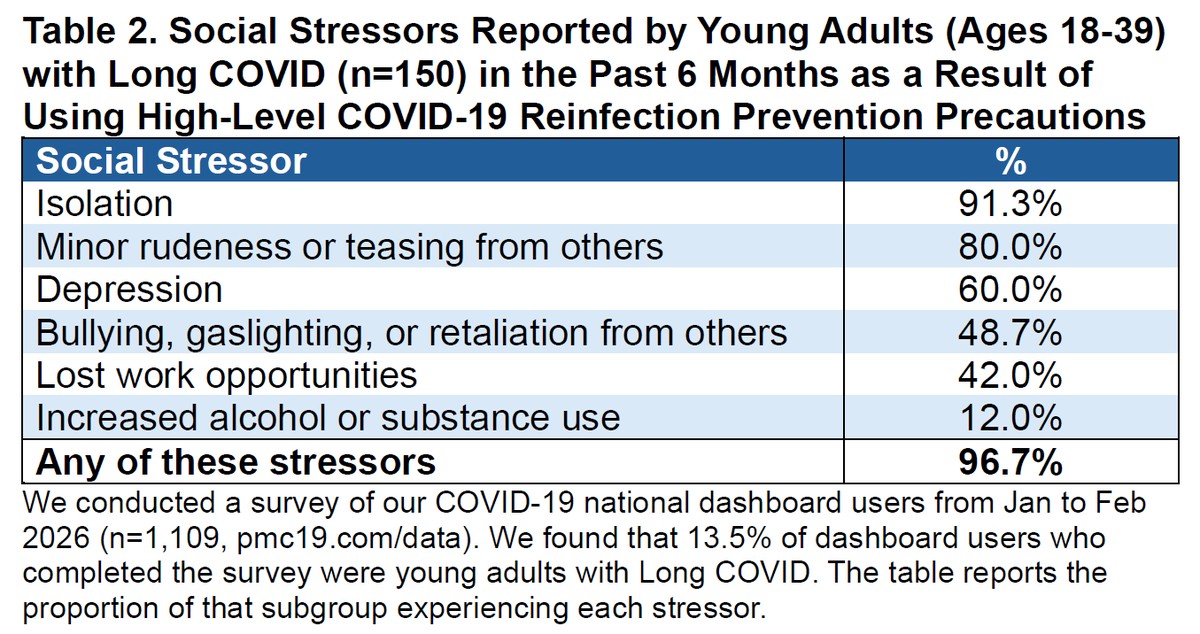
We just submitted two COVlD grants in 24 hours.
One is focused on doing some work with young adults who have #LongCOVID. The levels of ostracism experienced here are just off the charts.
Here's one of our tables from a grant:
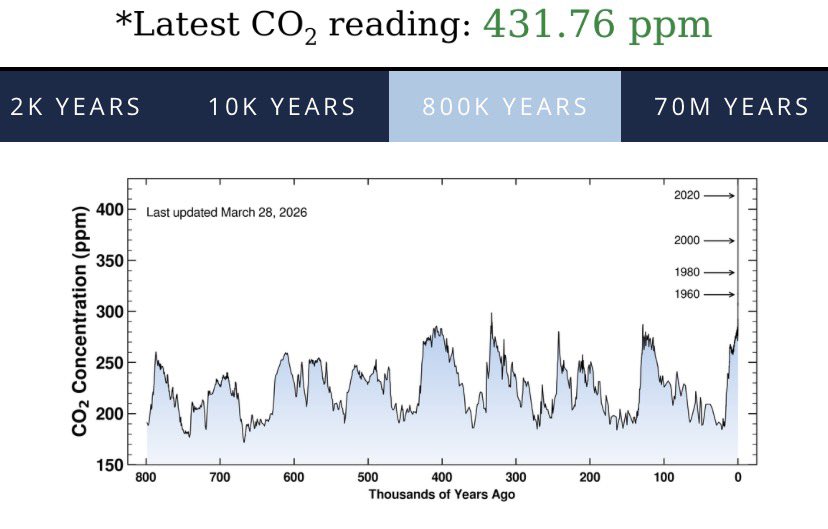
We're gonna need roughly 10-15 million people to get really into plant breeding and crop research asap.
Academia cannot possibly contain or organize the scale of scientific inquiry that will be necessary to meet this crisis.
@AdvancedTweaker I say this to help manage expectations since I got this so soften as both an herbalist and acupuncturist- the amazing feeling of relief, from pain or chronic fatigue etc, then slow realization that it's not gone forever just significantly reduced. Then a year+ later, fully healed
@AdvancedTweaker It's still a challenge to manage with Chinese herbs, but an excellent herbalist will help build resilience while keeping the worst symptoms at bay. Expect formula to change over time, and some symptoms to wax and wane, for months. But I agree this is by far best option.
What or whom can I nurture, due to my love of Life?
It will soon be 10 years since I first floated the question of “what do we do if it is too late for a managed transition of economy and society?” I was keynoting at an academic conference on sustainable business. I mentioned we needed “deep adaptation” to that predicament and proposed a framework for exploring that together with three questions. Two years later my deep adaptation paper went viral and people started using the framework to explore how to respond positively to societal disruption and #collapse, due to abrupt climate change and ecological degradation.
This year, I am proposing a new question for the framework. Mentioned above, it can even be simplified as: “How am I nurturing Life?”
This 6th R in the #DeepAdaptation framework is about #Regeneration. But I'm not accepting that as another buzzword. I recognise how the term incorporates an awareness of loss and failure, as otherwise there would be nothing to regenerate. And I recognise the term suggests learning from the living world as we try to heal our relationships in general. That's how caring thinkers and practitioners have used the term in the past decade.
I regard this 6th R in the DA framework as a response to what is already happening. In many collapse-aware people I've noticed a shift from fear to creativity, from attachment to outcome to simply nurturing life because we love it. Whether restoring soils, rescuing kittens, caring for loved ones, promoting kindness and contemplation, or singing together -- it’s about expressing love, not avoiding pain.
My new essay explores why this matters, from #climatechange to community change. I'd welcome hearing whether it resonates with you. If so, how are you nurturing life, perhaps because you are more aware of its finitude? I share my personal journey on that in the essay.
https://t.co/fa5Gy5cejO
@CollapseClub@GreenRupertRead@jongosling@ceisenstein@GaiaEducation@deepadaptation@mbauwens@LowimpactOrg@matslats@ClimatePsychia1@CJ_Coalition@ClimateBen@ClimatePsychol@charlottechurch@frucool@aashisjo@climatehuman@SimonZadek
Honored and excited to have our research featured by @UCSanDiego. 🌎🔬
Our research connects air quality, climate, and community health—with a focus on building cleaner air and safer communities. Watch the video to see why this matters now more than ever.
https://t.co/Es7Z88yXZ3
I've been helping frame how we think about food systems during a time of planetary overshoot and ecological collapse.
Things that matter. Pass it on.
https://t.co/TverGnaEOq
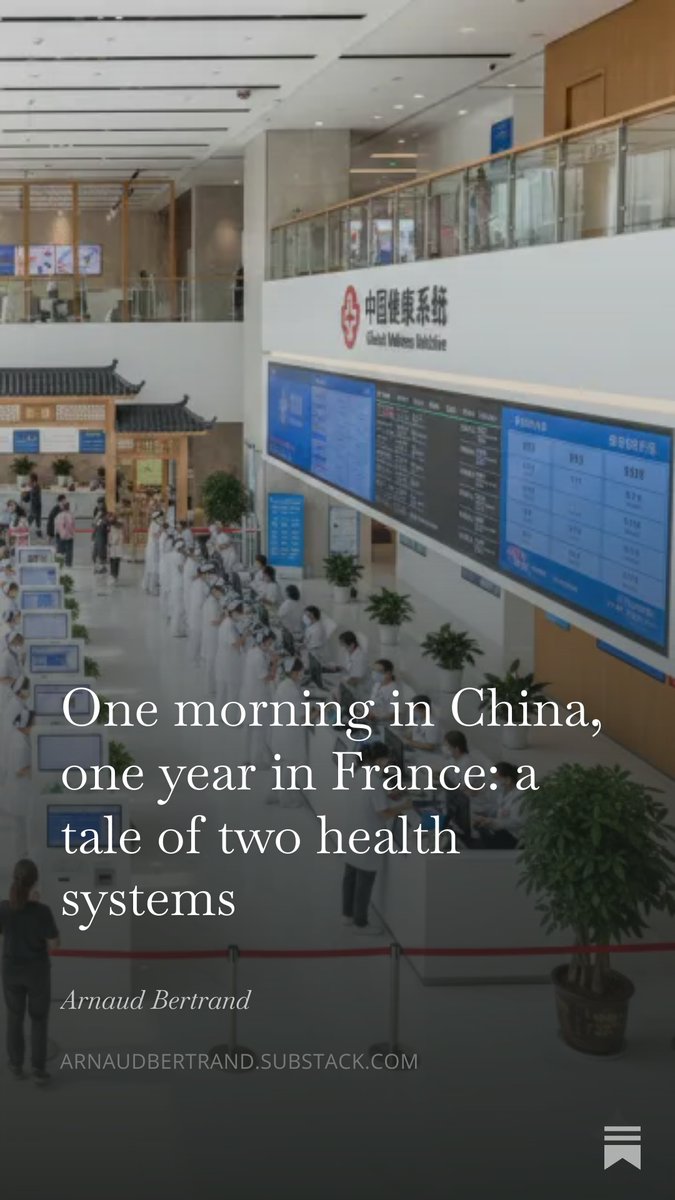
I've been wanting to write this for a while: an article on the key characteristics of the Chinese health system, as a patient.
It's something that I - perhaps unfortunately - have come to have a lot of experience with in my eight years in China.
I've been to the doctor as a patient dozens of times. My wife delivered our first daughter in a Chinese hospital, and had cancer surgery in Shanghai. My younger daughter - who once completely severed her thumb in an unfortunate accident in rural Gansu - had emergency surgery in a small clinic there (her thumb is fine now!). We spent the entire covid episode in China. And, to this day, I still go back to China every year to do my routine health tests or the occasional procedure (like a thyroid biopsy in Harbin last year).
In other words, when it comes to the Chinese health system, I've seen a lot.
What's fascinating about the Chinese health system, and that's true in general about many things in China, is that it never inherited Western dogma about how things were supposed to work, it's completely unconstrained by what everyone else has decided is "normal".
And, as a result, you end up with things that would simply sound impossible to any Western patient: a consultation with the head cardiologist of one of Shanghai's best hospitals for less than $10, blood test results in under 30 minutes, and a system where you can walk in, see three specialists and walk out with a diagnosis and your medicine - all before noon.
As I argue in the article that's all enabled by 3 characteristics that sound super unorthodox:
1) extremely short consultation times, less than 5 minutes
2) no GP gatekeepers (you go straight to see specialists)
3) systematic testing for every patient, even if you just have a cold
Each one sounds wrong. And in fact when I describe them to doctor friends in the West they immediately explain to me why that can't possibly work, and how their own system is far superior.
Except that it does work, I checked the numbers (on top of my personal experience): the Chinese system handles close to 10 billion total outpatient visits a year (https://t.co/b1xd45O73F), or about 7 visits per person per year on average, and the average wait time is only about 18 minutes (https://t.co/S3At5DtbJP).
Contrast this with France, my country, where people already go to the doctor A LOT, but still less than in China: only 5.5 visits per person per year (https://t.co/sk1kQt59tK). And the French system can't even handle this lower volume: when you can see a specialist straight away in China - you don't even need to make an appointment in advance - you need to wait months to see one in France (50 days on average for a cardiologist, for instance: https://t.co/ZKZmhzoFFO).
I've personally managed to see 3 specialists AND do all related tests AND get the test results AND get diagnoses AND buy the medicine to cure me - all in the space of a morning at a hospital in Shanghai. That would have undoubtedly taken me a whole year in the French system.
My purpose here is not to argue that the West should replicate the Chinese health system wholesale, but to ask an honest question: what if some of the things we take for granted about healthcare aren't nearly as inevitable as we think? Is it completely unthinkable that we've developed some dogmas that are costing us - in money, in time, and occasionally in lives?
That's the whole point of my article: describing a health system built from first principles by people who never assumed we in the West knew better - up to you to decide if they have a point.
Enjoy the read here: https://t.co/cNXNmo195l
@Grimezsz@drethelin Only real option is to set up parallel networks woven thru so many systems physical and digital that they can't be completely broken. Compromised? it will happen but must try. Please don't be a spy for evil 👿 True curiosity becomes good when chaos default mode. Find coherence 💜
@Grimezsz@drethelin I appreciate that your music videos show desolation as a consequence of power. In many tech stories, ideal habitat filled w trees, water, if illusory. Human evolution wont go beyond this baseline need. Ai align not poss. dt physical paradox of consume->create->break ecosystems ⚔️