I was just chatting with a friend about tomocolle, and we brought up how both Sakiko and Mutsumi like playing with "dolls". But this use of the word "doll" suddenly made me want to dive a bit deeper into the topic.
In Japanese, the "dolls" Sakiko likes to play with are actually ningyou (人形 / humanoid dolls/figures). Meanwhile, what Mutsumi plays with are nuigurumi (ぬいぐるみ / plushies/stuffed animals). Ningyou are made of hard materials like plastic, rubber, wood, clay, or porcelain. Plushies, as we all know, are made of soft materials like fabric, cotton, and fleece.
Preferring one over the other actually reveals a fundamental difference in personality. Because plushies are made of soft materials, they are perfect for young children. They serve a comforting purpose, acting as a substitute to fulfill a child's need for security and healing when their family isn't around. That's why in movies or shows, we often see orphans of war or children lacking a sense of security holding a stuffed animal (usually the classic teddy bear—which obviously reflects Mutsumi's lack of parental love).
Plushies also heavily emphasize their "character identity" (キャラクター性). A single plushie represents a specific animal or a simplified character. This is very obvious in the EP3 mini-theater: one plushie equals one specific character. Mutsumi’s room is piled high with different character plushies, which highlights this emphasis on "character traits." This is also exactly why Mortis appears (or is symbolized) in the form of a plushie.
Ningyou are completely different. They aren't about "character identity," but rather about playing make-believe (ままごと) and for display. They are made of hard materials, so honestly, they aren't comfortable to hug. In child psychology, the choice between buying a child a doll or a plushie is actually quite an interesting topic. Playing with ningyou serves to "cultivate a child's ability to care for others," "teach gentleness," or, more directly and stereotypically, "prepare a girl to become a mother" (something the recent Barbie movie also discussed).
You might ask, "Can't you play make-believe with plushies too?" It's not quite the same. Ningyou are more delicate and breakable. They heavily emphasize replicating the "human form." Proportions might vary, but their faces are very human (which is why they trigger the uncanny valley effect in some kids; I personally disliked dolls as a kid... I found Barbies terrifying). Moreover, ningyou can change clothes and be styled—meaning they can change roles. (Or rather, the same ningyou takes on different character scripts. Just like how Oblivionis can be a goddess or a witch, but she is fundamentally a puppet doll (人形 / Ningyou) first, which is why Ave Mujica's first act is a "puppet show" (人形劇 / Ningyougeki).)
With plushies, if you want a different character, you just grab a different plushie. But with ningyou, you change their role by "changing their clothes and styling," which requires meticulous handiwork. Ningyou don't really have the soothing effect of plushies; they are closer to a child's psychological projection—a projection of the state or the person they want to become.
Furthermore, in Japanese culture, ningyou exist as objects of faith (like the Hina ningyou / 雛人形 for Girls' Day). The deeply rooted animism in the Shinto mindset also leads Japanese people to believe that dolls house souls, treating them as "surrogates" or "avatars" (身代わり / Migawari). Originally, doll makers (人形師 / Ningyoushi) were Shinto priests crafting figures for rituals. This gradually evolved into the Edo period's Bunraku (人形浄瑠璃 / Ningyou Joururi - traditional puppet theater), introducing puppeteers (人形遣い / Ningyoutsukai) and doll artisans. This is a profession with a profound cultural and artisanal heritage.
As a kid, I was scared of human-like dolls and hated them. But in ancient Japan, there was a viewpoint that hoped dolls truly had souls and could feel emotions (which is why many shrines and temples offer doll funerals (人形供養 / Ningyou kuyou) for dolls and plushies left behind by children who passed away early, believing spirits attach to them). Sakiko's childhood love for playing with ningyou aligns perfectly with her psychological state and the role-playing logic she later uses to establish Ave Mujica. To her, Oblivionis is her own avatar, and the other "ningyou" are avatars for Uika, Mutsumi, Nyamu, and Umiri. Therefore, she inevitably and consciously projects reality onto them. This is the inevitable outcome of Sakiko growing up playing with ningyou.
Finally, I believe that at the end of Episode 12, when Sakiko abandons her mother's doll in the Togawa mansion, she is actually discarding her projection of her mother, Mizuho. By doing so, she is no longer bound by the expectations of what a woman of the Togawa family should be.
(Sorry if the English is a bit off! I originally wrote this in Chinese and translated it over. Hope you still enjoy the read🥲)
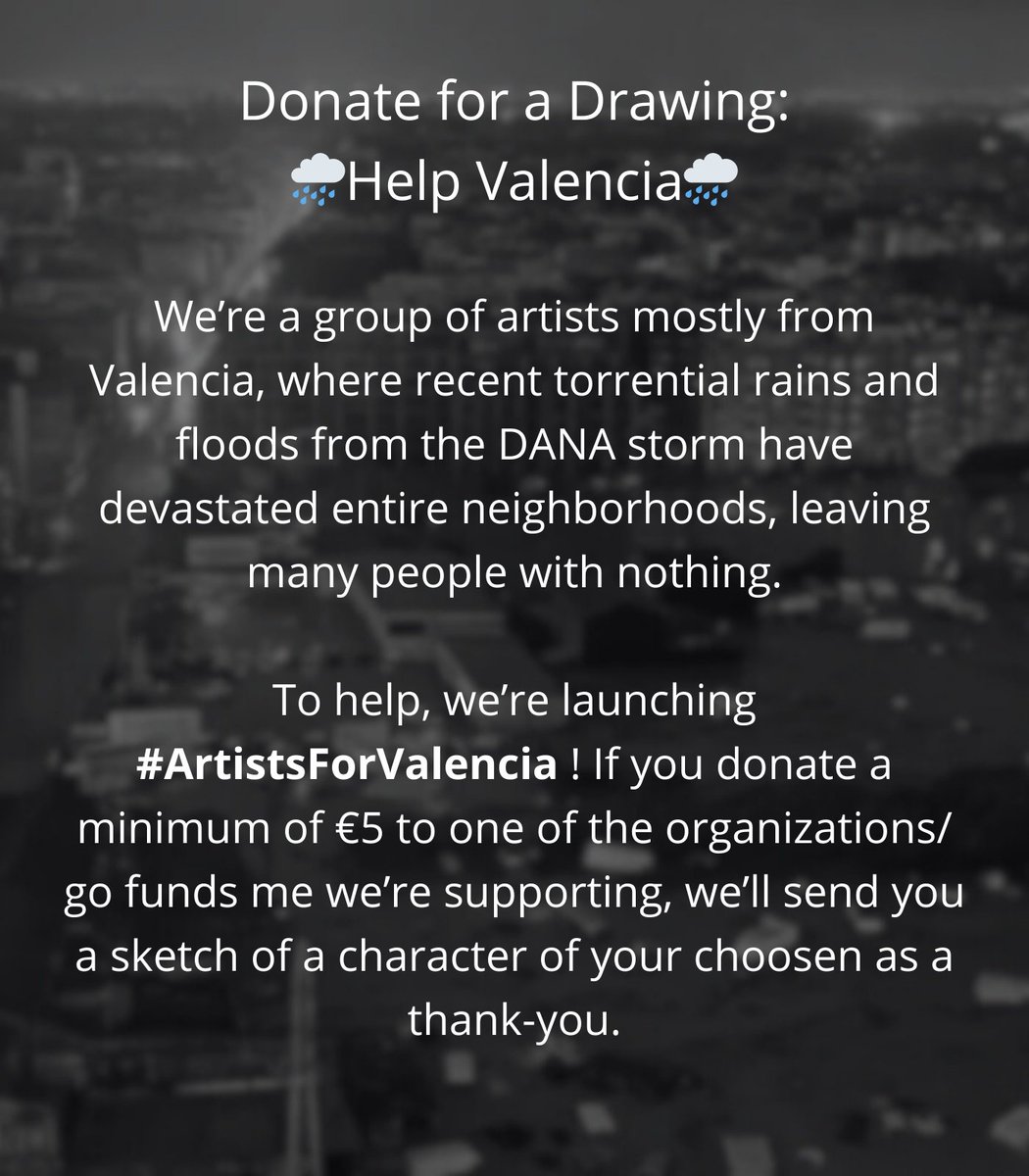
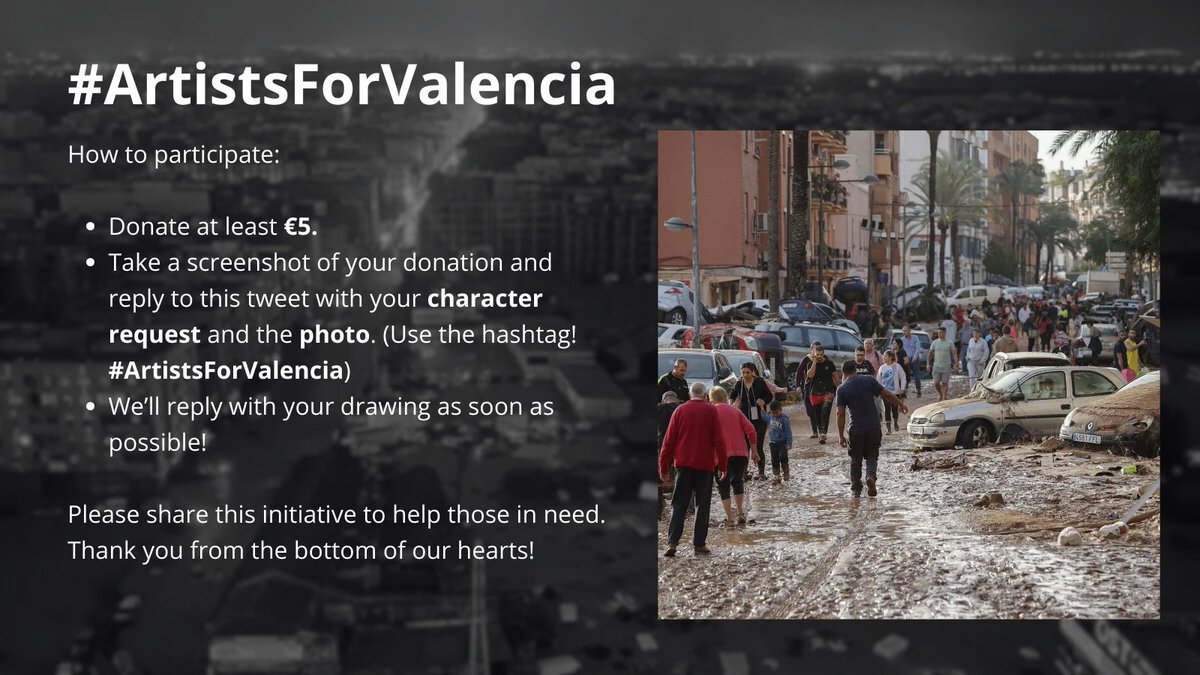
🧵WHAT IS HAPPENING ON VALENCIA AND HOW YOU CAN HELP: #ArtistsForValencia
We’re a group of artists mostly from Valencia, where recent TORRENTIAL RAINS and FLOODS from the DANA storm have devastated entire neighborhoods, leaving many people with nothing.
Please share! + info:
im sickkk theyre all ignoring the bombings in palestine like yeah ai someways affect the climate changes but literally massive bombing in one place thats even more than ww2 are you serious
I kind of hate how the term “hyperfixation” & “special interest” have been shifted online to mean any interest you are passionate about.
Hyperfixation is exclusionary intense focus & can be disabling to the point that it interferes with your ability to complete necessary tasks.