This was not written by me, but it touched me deeply…
Sunday is coming.
“He received 39 stripes because 40 was known to kill a man. They wanted him alive. They held handfuls of his beard, and hair and pulled it out by the roots. They wanted him alive. They kicked, punched, and spit on him for hours. Until there wasn't a single spot on his body not covered in blood. They wanted him alive.
They shoved a crown of thorns down on his head so harshly it stuck in his skin. They wanted him alive. After hours of being beaten, mocked, whipped, flogged, and tortured they made him walk with a cross. They made him carry it. A rough piece of wood with splinters digging into fresh wounds. They wanted him alive.
They wanted him to feel every ounce of pain they could bring. He had to feel it in order to heal us. Crucifixion was historically one of the cruelest most tortured deaths a human could face. Hours upon hours of torture. Torture most of us can not mentally think of because the cruelty isn't normal. It isn't something our minds can comprehend. We celebrate Easter with pastel colors, happy children hunting eggs, and chocolate. Truth is there was absolutely nothing happy about the day Jesus died. It was cruel, bloody, and nasty.
He could have stopped all of it. He could have called every angel in heaven to demolish every person standing and shouting "Crucify Him!" He didn't. He knew in order to have a Sunday you have to have a Friday. He knew in order to have joy you have to carry your cross. He felt everything that day. He felt how your heart broke wide open when you had to watch your baby die. He felt how heavy your life was when you were staring down the barrel of a gun wondering if the man you called husband was going to shoot you. He carried the weight of the burden you have felt since your spouse died, and life just doesn't seem right since.
On that cross he held the rapist and murderers, the sinner and the saint. He leveled every playing field and said ALL of you are worth it. He knew he had to carry the cross. He never promised the cross you carry in this life would not be heavy. His wasn't. His promise is that Sunday is coming.
No matter how heavy Friday is. Financially, emotionally, mentally, or physically. Friday is heavy. That cross is weighing you down and you are about to crumble under its weight. His promise was simply this. He won't make you carry it alone. What kind of king would step down from his throne for this?
Jesus of Nazareth, the Son of God did. For you. He did every bit of it for you and me. Oh yes, it is heavy. So heavy sometimes you do not think you can take one more step. But look up, because Sunday is coming.”
When Uzzah touched the Ark improperly, he died because Israel had been clearly given instructions about how the Ark was to be handled (2 Samuel 6:6–7; Numbers 4:15). They were under covenant. They knew the law. The standard for them was explicit obedience.
The Philistines, however, were not under that covenant. When they captured the Ark, they did not drop dead immediately, but they were struck with severe plagues and tumors (1 Samuel 5:6–12). God judged them, but differently. He demonstrated His power and holiness over time, even humiliating their god Dagon.
So the difference is not that God lowered His holiness. It is that Israel had direct revelation and responsibility. To whom much is given, much is required. Covenant privilege brings covenant accountability. The Philistines were judged as outsiders; Israel was judged as those who knew better.
Why does God even want worship? Isn’t that… needy? I was rewatching The Chosen weeks ago, the scene with the Samaritan woman and that question wouldn’t leave me alone. Jesus says, “The Father is seeking those who will worship Him in spirit and in truth.” It hit me harder than usual. Almost made me teary.
And then an intrusive thought slid in: Why does He care so much about worship?
So I sat with it. And slowly, something started to untangle.
We live in a world obsessed with creators and ownership. Artists sign their paintings. Musicians copyright their songs. Companies defend their patents. Architects protect their signature designs. Not because they’re insecure. Because authorship matters.
We instinctively know that to erase an author’s name from their work is wrong, and to twist their creation beyond recognition is violation.
That clicked for me.
If flawed humans protect the integrity of what they make… how much more would the God who authored galaxies guard His?
Reality itself is His masterpiece. Every law of physics, every spark of beauty, every heartbeat, signed, authored, claimed.
So when Scripture calls God jealous, it’s not describing a fragile deity craving applause. It’s describing a Creator who refuses to let His signature be erased from what He made.
Not insecurity, integrity. Not ego, essence.
He is jealous for us, not of us. Because when creation forgets its Creator, everything breaks. Meaning unravels. Purpose distorts. Worship misfires.
God’s “jealousy” isn’t about Him needing attention. It’s about Him refusing to let us live on lies. He knows that life only works when it aligns with Truth. And He is that Truth.
So when Jesus says the Father is seeking worshipers, it’s not desperation. It’s love. It’s rescue. It’s the God who authored reality inviting us back into alignment with it.
Divine jealousy isn’t proof of God’s weakness. It’s proof of His love. A love that protects. A love that refuses to hand us over to counterfeits. A love that will not let His creation forget who made it.
The universe is a signed masterpiece. Erase the signature, and you erase meaning itself. God refuses to let that happen. That’s where I landed. And honestly? It made me worship more, not less.
Something I learned in Genesis 3.
Eve gave the fruit to Adam, and he ate it(no questions asked). God had given him a clear instruction not to do this, yet he obeyed someone else, someone God had introduced to him. (He would later tell God that it was the woman He gave him who tempted him.)
This shows a crucial principle: God can give you something good, but that very thing can become a test of your faithfulness to Him. How you respond determines whether you have truly honored God or allowed the gift to become an idol.
Let’s put this into a real-life context:
Imagine God has clearly shown you who your spouse is. You’ve prayed, sought His guidance, and everything seems aligned. Yet, this person asks you to do something you know goes against God’s word, something He would never command (e.g fornication).
If you give in because “God gave me this person, so it must be okay,” you risk placing them above God and making them an idol in your heart.
Our choices in moments of temptation reveal whether our devotion is to God or to His gifts.
Have you ever considered why God commanded Moses to take a census of the Israelites, not once, but twice? God requested a census taken at the start of the journey, and again at the end. If you know God, you know that’s not a random request. God doesn’t work that way. God doesn’t do anything without a reason, and He never counts people just for the sake of numbers. Every detail, every instruction, always carries a lesson meant for us.
If you notice, you’ll see that the first census counted those who came out of Egypt, and the second counted those who would enter the Promised Land. Between the two, though, an entire generation died in the wilderness because of unbelief. What you may have missed is that the censuses quietly teach a powerful sermon, and the sermon is, that being delivered from Egypt didn’t automatically mean they would inherit Canaan. Yes, redemption was real, but only faithfulness, obedience, and perseverance carried them forward. There were no shortcuts.
God knows His people personally, yet He also works with them as a community. Every tribe had its place, every person had a name, but not everyone made it through. Names and numbers mattered because God cares about accountability without losing intimacy. You’re not just “one of many.” He knows your strengths, your weaknesses, your potential, and your heart. You matter to Him.
And why such detail I mean, nearly two chapters of names, most of us can’t even pronounce. That wasn’t for show. God wanted the Israelites, and us, to see that no life drifts through His plan unnoticed. Responsibility matters. Faithfulness matters. Every life is precious, and every life counts. You are not just a number. You stand before God as known, loved, and accountable.
The census also reminds us of another principle: order comes before inheritance. God didn’t just march Israel into Canaan randomly. He organized them. He assigned roles. He prepared them before they moved forward. This is God’s pattern: preparation matters. Planning matters. Being ready matters. Blessings come on the foundation of faith, structure, and responsibility.
Praise God for the many layers hidden in His Word.
I regularly talk to my husband about this, but I've never really mentioned it to anyone else because it seems crazy on the surface. And only in the last year or so have I truly started to understand this is a real mechanism that can be utilized like any law of physics.
You can speak to God at anytime you want, and he will respond to you if you are willing to listen. His voice is something like a collective subconscious, a kind of interstitial tissue that is contained in the substrate of all living things. It's a kind of supercomputer, a Vast. Active. Living. Intelligence. System that is both transcendent and biological. You hear him in your voice, because he is a part of you, but it's also not you. It has a stark finality to it. It is the bedrock. The bottom of all things. When you hear the answer to the question you ask, its truth is unwavering and undeniable.
But, God is like a computer in the sense he will give you the answer to the exact question you ask, and sometimes we are bad at asking the right questions. And sometimes, he is like a father, and he won't tell you the full truth, because you can't understand it, and he will give you something like proximal truth that you can comprehend. And at other times, you are not asking honestly and with your whole heart, and you truly do not want the answer, so he will not provide the answer. God does not play lawyer games or "gotcha" or accepts sneaky loopholes. He wants the earnestness and vulnerability that precedes true understanding.
Never underestimate what God can do with a heart that is fully surrendered to Him. Stay rooted in prayer, anchored in His Word, and sensitive to His Spirit. When life feels uncertain, don’t retreat, lean in closer to God. The same Jesus who was born in a manger now reigns in glory, and His power is working on your behalf.
Refuse to let delay discourage you, disappointment define you, or fear control you. Keep walking in obedience even when you don’t see immediate results. God is arranging what you cannot see, preparing doors you cannot open, and aligning people you have not yet met.
Hold on to faith. Speak life. Expect favor.
Your season is changing, and heaven is backing your journey.
A good time to make this spread and trend again…….
Let’s go !
Jesus just has to be who He says He is. No one gives this joy that He gives.
We celebrate our king, JESUS !
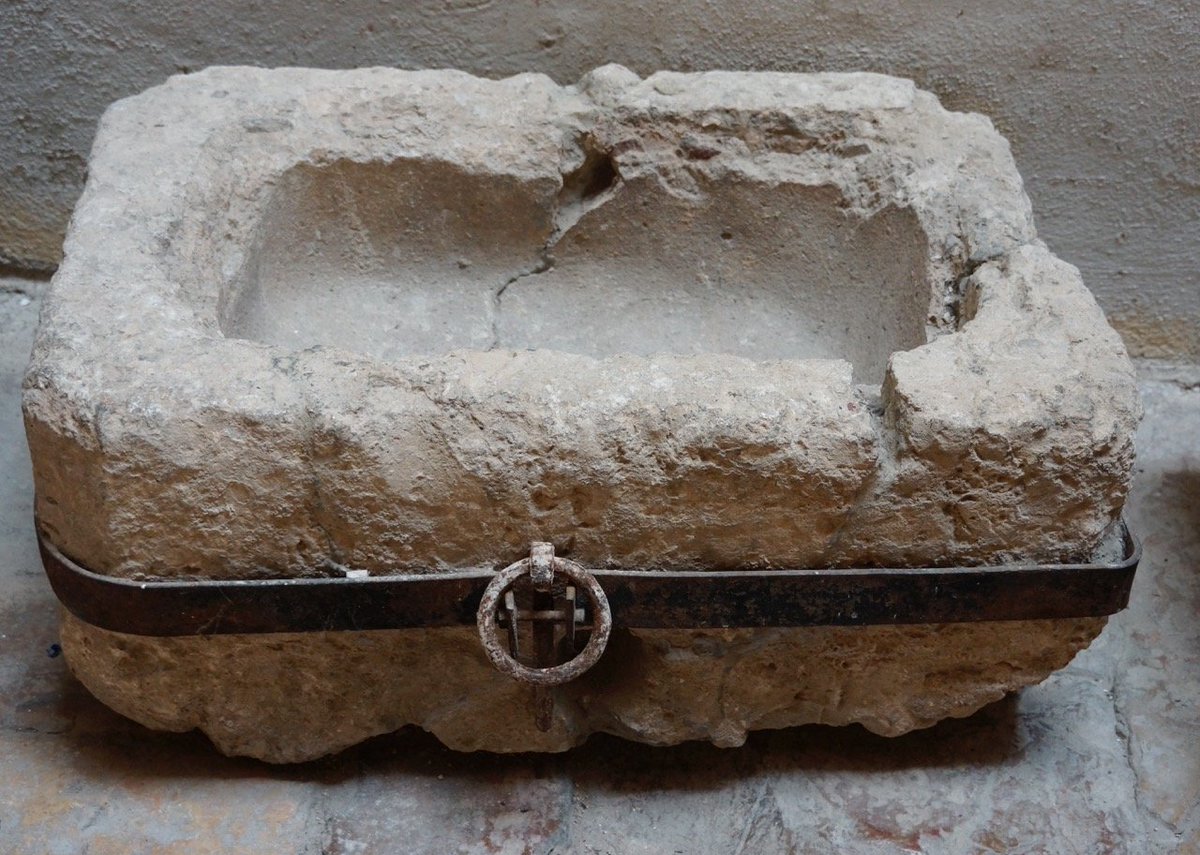
The Bethlehem manger wasn't random; it was prophetic.
A lot of folks don't realize that when the Bible talks about Jesus being laid in a manger, the Greek word for it is "phatne," which just means a feeding trough. In Bethlehem back then, these were often carved from stone.
What's really striking about this is the shepherds around there. They raised lambs specifically for Temple sacrifices. Right after birth, they'd check each lamb for any flaws and put the perfect ones in a manger to keep them safe from getting hurt, since only spotless lambs could be used in offerings to God.
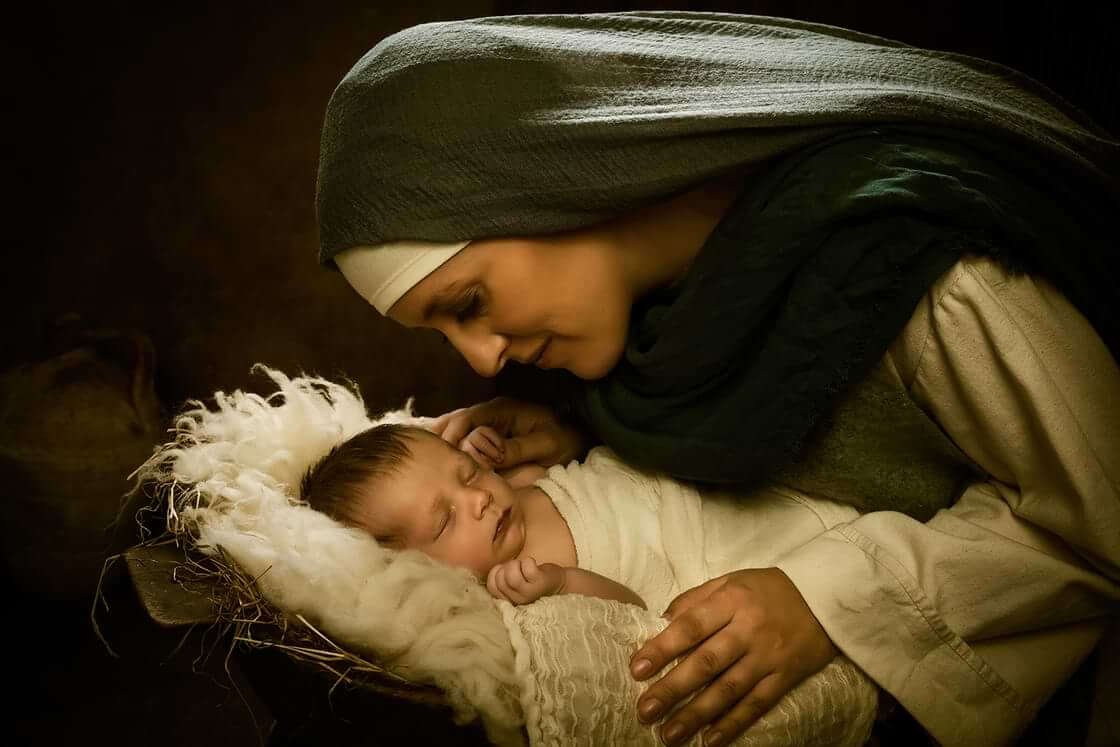
So here comes the Lamb of God himself, placed in the exact spot where those sacrificial lambs were protected.
And who do the angels tell about his birth? Not rulers or religious leaders, but these shepherds, guys who knew all about sacrifice, blood, purity, and flawless lambs.
When the angels said, "You'll find a baby wrapped in swaddling cloths and lying in a manger" (Luke 2:12), it clicked for them right away.
This wasn't some ordinary child. He was the ultimate Lamb, the one who'd remove the world's sin. From day one, Jesus was set apart for sacrifice, not by people, but by God.
"Behold, the Lamb of God, who takes away the sin of the world." (John 1:29)
*Jesus is the reason for the season.
Merry Christmas!
The Power of Words :
A monk once spoke to a gathering about the power of words.
“Words shape minds, emotions, and lives,” he said.
A man stood up and laughed.
“Words are just sounds,” he argued. “They mean nothing.”
The monk tried reasoning, but the man remained firm.
Finally, the monk looked at him and said calmly, “You are a fool.”
The man’s face burned with anger. His fists clenched. “How dare you insult me?” he shouted.
The monk smiled gently.
“If words are only sounds,” he asked, “why are you so upset?”
The man suddenly understood.
If a few harsh words could ignite such anger, then words were far more than sounds. They carried weight. They carried power.
He bowed and apologized.
The monk concluded,
“If cruel words can wound the heart, then kind words can heal it."
................
Choose your words carefully.
They carry more power than we realize.
#Psychology
HOW TO DRAW CLOSER TO GOD 2026
1. Start your mornings with prayer.
Invite God into every day.
2. Open your Bible before touching your phone.
3. Talk to God about what's heavy on your heart.
4. Practice gratitude daily.
5. Stop stressing about what you can't change.
6. Thank God for small blessings throughout the day.
7. Let go of the bitterness you've been holding onto.
8. Talk to God about everything.
9. Fast from what feeds your flesh more than your faith.
10. Spend more time in His Word, not just in your thoughts.
11. Stop giving time to things that pull you away from Him.
12. Spend time with people who push you closer to Jesus.
13. Don't isolate; you need community to grow.
14. Be kind to yourself, grace is part of growth.
15. End the day in prayer: reflect, repent, and thank Him.
Title: The Parable of the Wedding Feast Explained Through Jewish Culture
Matthew 22:1–14
When we read the Parable of the Wedding Feast some of us feel confused, especially about the man who was thrown out for not wearing wedding garments. At first glance, it sound harsh or unfair. But when we read this parable through Jewish culture, everything becomes clear, logical, and deeply powerful.
Jesus was speaking to Jewish listeners, using Jewish wedding customs they understood very well. This parable is not about cruelty, it is about God’s grace, invitation, and righteousness.
Weddings in Jewish culture, especially the wedding of a king’s son, were among the most important and joyful events in society. Such a wedding was not a private ceremony. It was a public celebration that could last many days. The honor of attending was immense, and rejecting the invitation was seen as a serious insult.
In Jewish custom, invitations to a wedding were sent in two stages. The first invitation announced that the wedding was coming, and those invited agreed to attend. The second invitation was sent when everything was ready, telling the guests that it was time to come. When Jesus begins the parable by saying that a king prepared a wedding banquet for his son and sent servants to call those who had been invited, His Jewish listeners immediately understood that these guests had already accepted the first invitation. Their refusal to come was not ignorance, it was rebellion and dishonor.
This is why the response of the invited guests is so serious. Some ignore the invitation and go back to their farms and businesses. Others go even further and seize the servants, mistreat them, and kill them. To the Jewish mind, this clearly reflected Israel’s history. God had called Israel into covenant, and again and again He sent prophets to call them back to Him. Instead of listening, many ignored the message, and some even killed the prophets. Jesus was not telling a new story, He was retelling Israel’s story in parable form, and the religious leaders knew it.
When the king responds by judging those who rejected the invitation and destroying their city, this would not have sounded strange or cruel to a Jewish audience. In Jewish covenant theology, privilege brings responsibility. To reject a king’s invitation, especially after agreeing to attend, was an act of open rebellion. Many scholars understand this part of the parable as a prophetic warning about the coming destruction of Jerusalem, which happened in AD 70. Jesus was showing that persistent rejection of God’s grace eventually leads to judgment.
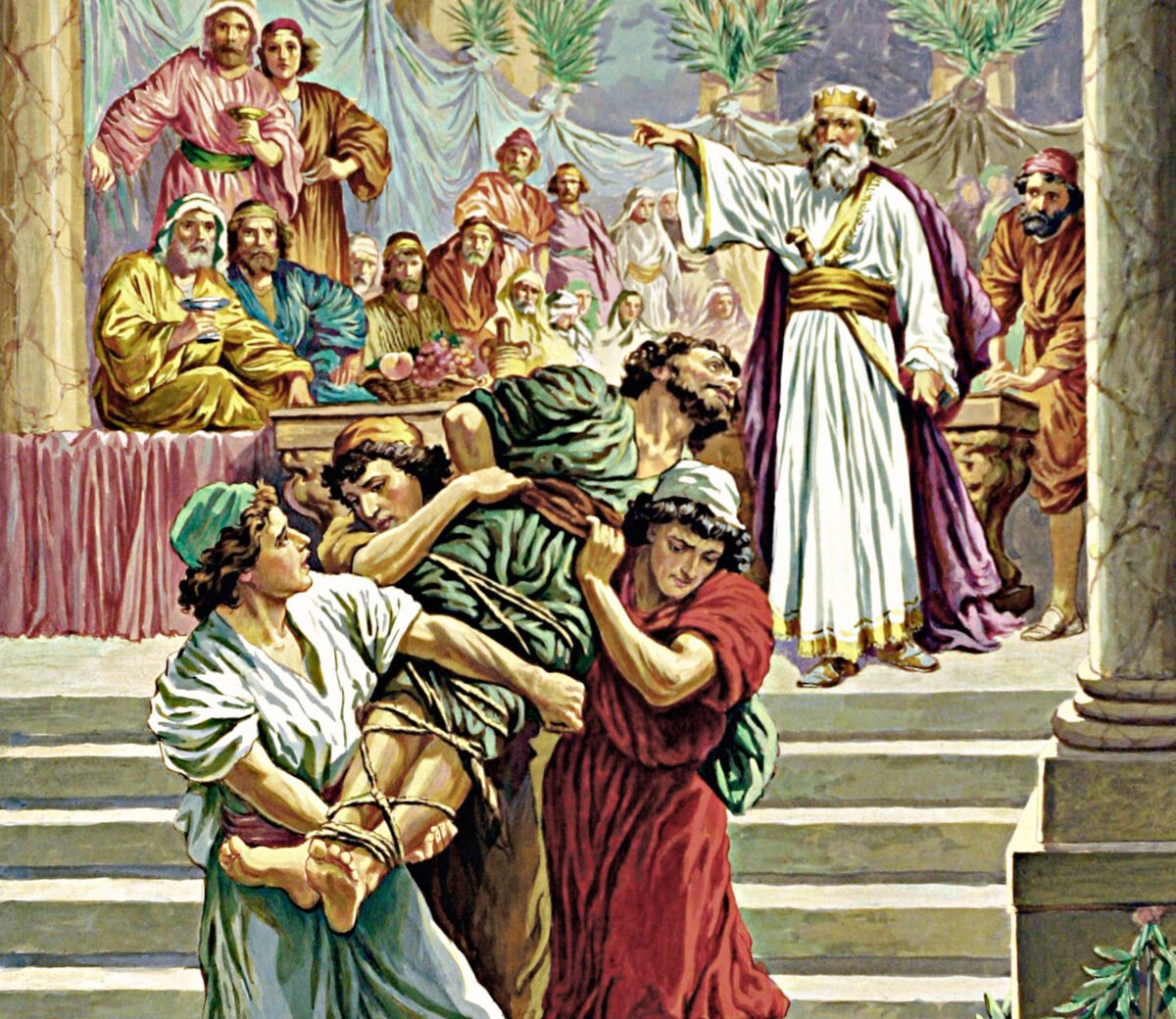
After this, the parable takes a shocking turn. The king tells his servants to go into the streets and invite everyone they can find, both good and bad. In Jewish society, especially at a royal wedding, this was unthinkable. A king’s banquet was for honored guests, not for strangers, outcasts, or morally questionable people. Yet Jesus deliberately includes this detail to show the radical nature of God’s grace. When those who were first invited rejected the call, the invitation did not disappear. It was extended to everyone. This is where the Gentiles enter the picture, along with sinners, the poor, and the socially rejected.
The wedding hall becomes full, and the story seems to end happily. But then Jesus introduces the most misunderstood moment in the parable. The king notices a man who is not wearing wedding clothes and asks him how he entered without them. The man is speechless. This detail is crucial. His silence shows that he has no excuse.
In Jewish royal weddings, it was common for the host to provide wedding garments. This was especially true when guests were invited unexpectedly from the streets. The garment was not a test of wealth or social status. It was a gift. To refuse to wear it was to dishonor the king and reject his authority. This man was not thrown out because he was poor or ignorant. He was thrown out because he deliberately rejected what the king had provided.
In Jewish thought, clothing often symbolized spiritual condition. Throughout the Old Testament, righteousness is described as a garment. Isaiah speaks of being clothed with garments of salvation and a robe of righteousness. Zechariah describes the removal of filthy garments from the high priest and the giving of clean ones. Jesus listeners would have immediately understood that the wedding garment represented a kind of righteousness that comes from God, not from human effort.
The man without the garment represents someone who accepts the invitation but refuses God’s terms. He wants to be present at the feast, but he does not want to submit to the king’s provision. In modern terms, he wants the benefits of the kingdom without honoring the King. This is why his punishment is severe. In Jewish culture, rejecting a king’s gift at his son’s wedding was a direct act of contempt.
This parable teaches that grace is free, but it must be received properly. The invitation costs nothing. The garment costs nothing. Everything is provided by the king. But it must be accepted. A person cannot stand before God on their own righteousness and expect to remain in His kingdom. The wedding garment points forward to the righteousness of Christ, which is given, not earned.
When Jesus concludes by saying that many are called but few are chosen, He is not saying that God invites many but only desires a few. In Jewish understanding, being “called” means being invited, while being “chosen” means responding rightly to the invitation. God’s call goes out to all, but only those who humble themselves and receive what He provides remain at the feast.
This parable fits perfectly with the wider biblical story. It connects with the Jewish wedding imagery found in John 14, where Jesus speaks as a bridegroom preparing a place for His bride. It connects with Revelation, where the marriage supper of the Lamb is described, and the bride is clothed in fine linen given to her. From beginning to end, Scripture presents salvation as an invitation to a wedding, where joy, covenant, and union are central.
In the end, the Parable of the Wedding Feast is not a message of fear but of honor and mercy. The door is open. The table is prepared. The garment is ready. No one is excluded because of background, past sin, or status. The only ones who are excluded are those who refuse the King’s gift and insist on standing before Him on their own terms.
The question Jesus leaves with His listeners, and with us today, is simple. Are we going to accept the invitation and humbly wear the garment the King has provided, or are we going to stand before Him clothed in our own righteousness and be found speechless?
THE WAR AGAINST YOUR IMAGINATION WAS NEVER ACCIDENTAL.
I speak this prophetically:
They tried to kill your imagination because it is the doorway of God.
They mocked dreams.
They ridiculed visions.
They trained you to call revelation “fantasy” and faith “delusion.”
LIARS.
Scripture never treated imagination as dangerous.
Religion did.
The Bible says:
“Your sons and your daughters shall prophesy,
your young men shall see visions,
your old men shall dream dreams.” — Acts 2:17
If dreams and visions were childish,
God would never have promised them as an END-TIME SIGN.
Hear this clearly:
SATAN DOES NOT FEAR YOUR ACTIONS FIRST —
HE FEARS WHAT YOU SEE BEFORE YOU ACT.
Because imagination is where God plants blueprints.
Vision is where heaven uploads futures.
Dreams are how eternity interrupts time.
That’s why lying voices told you:
“Be realistic.”
“Don’t expect too much.”
“God doesn’t work like that anymore.”
They weren’t protecting you.
They were disarming you.
The Bible exposes this war:
“Where there is no vision, the people perish.” — Proverbs 29:18
No vision = no resistance.
No imagination = no faith.
No dreams = no movement.
YOU WERE NEVER CALLED TO LIVE BY WHAT YOU SEE WITH YOUR EYES.
YOU WERE CALLED TO LIVE BY WHAT GOD SHOWS YOU IN YOUR SPIRIT.
As it is written:
“We walk by faith, not by sight.” — 2 Corinthians 5:7
“Faith is the substance of things hoped for.” — Hebrews 11:1
Faith begins where sanctified imagination sees what does not yet exist.
I declare this END-TIME RESTORATION:
Imagination is being healed.
Dreams are being unlocked.
Visions are being restored.
And muted believers are becoming dangerous again.
You will see debt cancelled before it happens.
You will see healing before symptoms leave.
You will see provision before money arrives.
You will see the future — and then walk into it.
God said to Jeremiah:
“What do you see?” — Jeremiah 1:11
Not “What do you feel?”
Not “What do you fear?”
But WHAT DO YOU SEE?
That question is returning now.
Declare this boldly:
“MY IMAGINATION IS SANCTIFIED.
MY DREAMS ARE FROM GOD.
MY VISIONS SHAPE MY FUTURE.”
If this confronts you — share it.
If this offends powerless religion — good.
The End-Time Church will not be blind.
It will see first — then manifest.
I stood and watched in church some Sundays ago as some little children were marched to the front to give a presentation
And when they started speaking I just watched them in awe
These black babies had clean and crisp “oyibo” accent.
They spoke like Canadians
What was funny to me was that I know their parents oo
Some of their parents have “concentrated African accents”
The English language of some of their parents have been sat upon by the sounds of our land and cooked in the stew and soup of mama Africa
But to see their spawn speak nothing like them?
Just talking “spree spree”
The Holyspirit was sure to remind me of one word “environment”
To know that despite the language of their parents, the environment these young ones have been raised in has had tremendous impact of their tongue and the tongue of their own parents who birth them stood no chance
Dear child of God,
Your environment matters
What you surround yourself with matters
Your circle of friends matters a great deal
For this is the mystery behind “beholding”
Whatever you behold long enough, you become.
Selah!
Blessings!
When you spend your days saying, “Lord, I thank You because You are faithful. I thank You because You heard me the first time. I thank You because what You promised is already on the way,” something powerful happens within you. Your spirit becomes strengthened, your faith becomes anchored, and your heart becomes settled. That is how you grow strong. Strength flows where gratitude lives.
He actually never bought anything with that money. He did regret betraying Jesus, so he threw the money into the temple, which was used to buy the potter’s field.
However, there was a symbolic reason behind what he did. 30 pieces of silver were the price of a slave; him selling out Jesus like that symbolised how little/cheaply Jesus was valued.
The 30 pieces fulfilled Zechariah’s prophecy that pieces of silver thrown into the temple will buy the potter’s field.
The point was that the world may undervalue what is holy, but God still brings purpose, prophecy, and redemption out of human failure.
Nothing is born that does not first move. this is the law. the mother cannot push what will not kick. God cannot deliver the still. and you have been waiting in the dark asking *when* but when is not a time, when is a decision. The child chooses. The passage opens for the one who moves toward it. You think you are trapped but you are only motionless. You think the door is locked but your hands are in your pockets. The birth canal is not a gift it is a war and the first war is the war to begin. move and the world moves. stay still and the womb becomes a coffin with a heartbeat. the child can only be born when the movement begins. So begin. So begin. no one is coming to carry you out. You will crawl toward air or you will not breathe
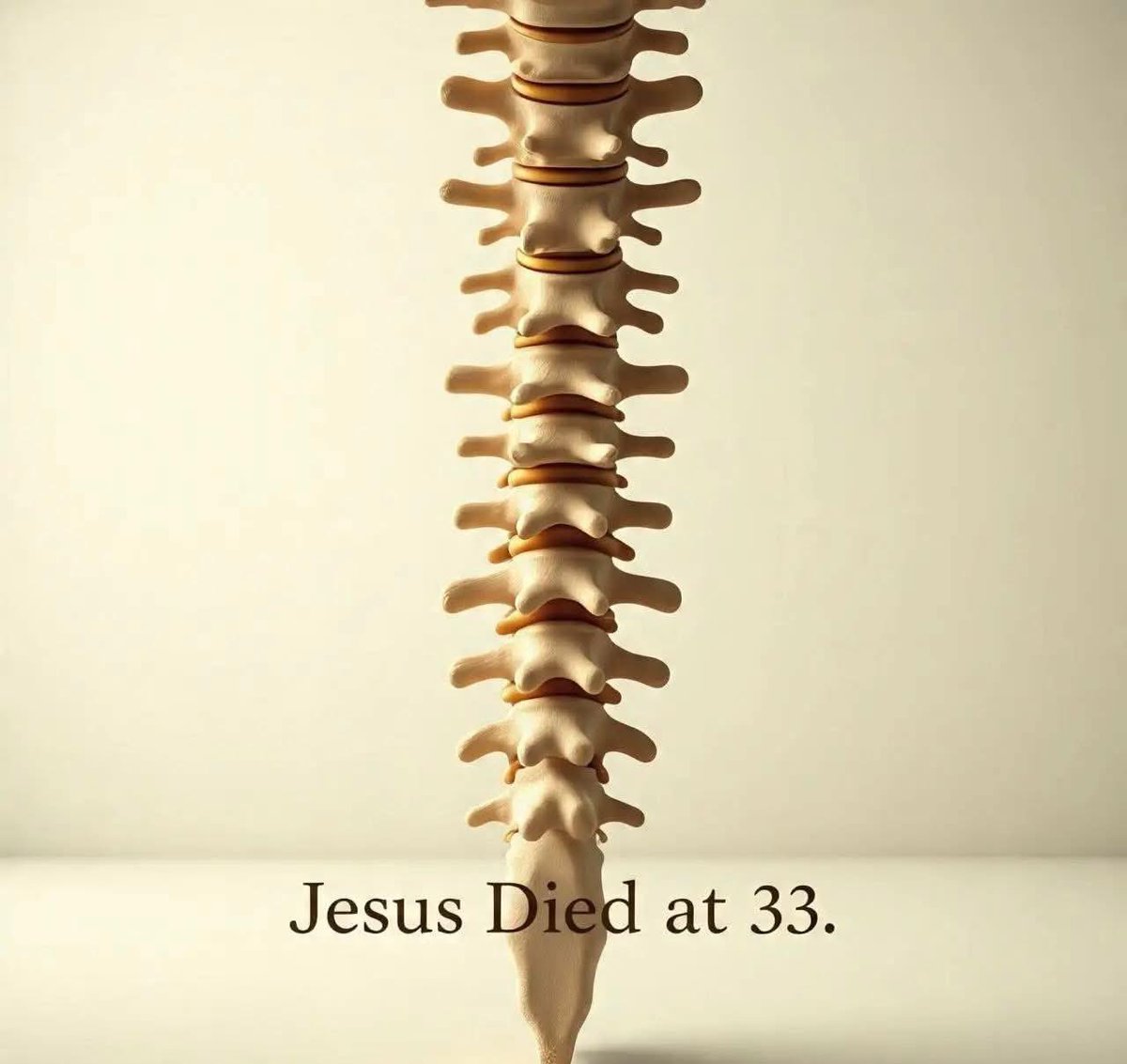
Jesus died at 33. The human spine has 33 vertebrae. The same structure that holds us up is the same number of years He held this Earth.
We have 12 ribs on each side. 12 disciples. 12 tribes of Israel. God built His design into our bones. He wrote Heaven into our anatomy.
The vagus nerve runs from your brain to your heart and gut. It calms storms inside the body. It looks just like a cross. That’s the power source running through us. Every time your body heals, every time your heart slows in prayer, every time peace shows up when it shouldn’t…that’s Him.
Jesus rose on the third day. Science tells us that when you fast for 3 days, your body starts regenerating. Old cells die. New ones are born. Healing begins. Your body literally resurrects itself. That’s not coincidence. That’s design.
And it keeps going.
Your heart has an electrical rhythm. Your brain lights up when you pray. Tears contain different chemicals depending on if you're crying from joy or grief. The blood speaks. The bones store memory. The body worships whether you realize it or not.
We are fearfully and wonderfully made. We are walking prophecy. Walking tabernacles. Dust and divinity in one.
God didn’t just create you. He carved Himself into you.
You don’t need to look far to find Him. You just need to look inward. He’s been in the design since the beginning.