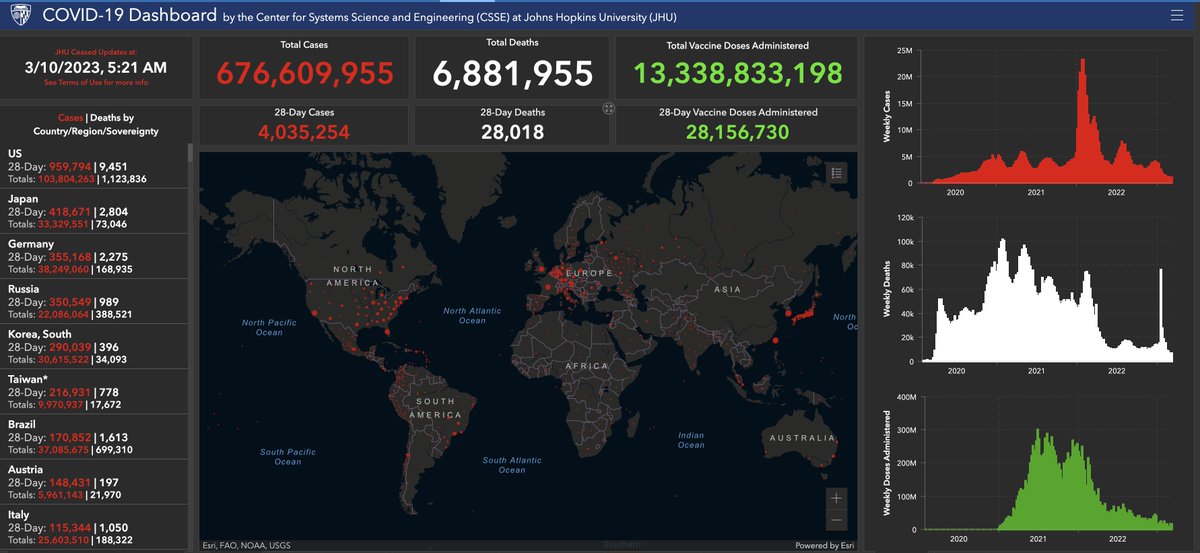
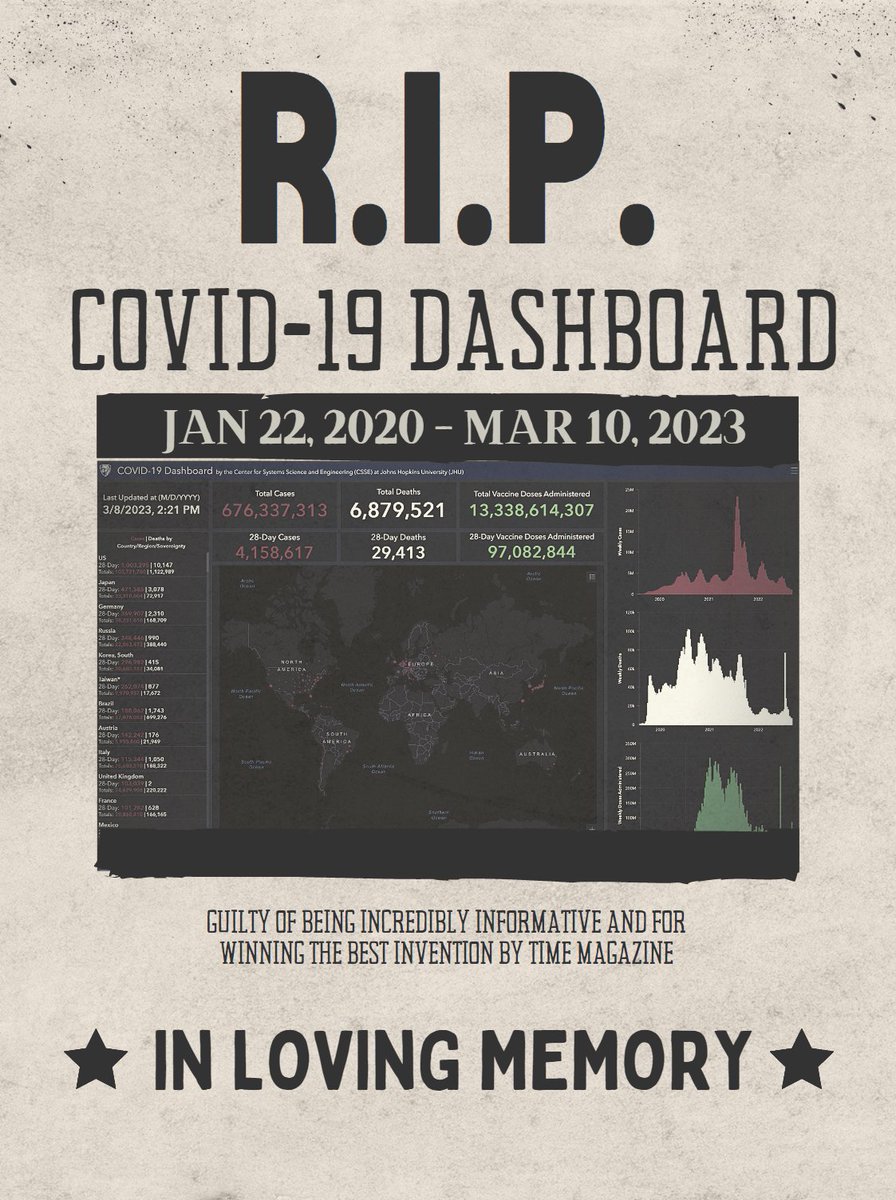
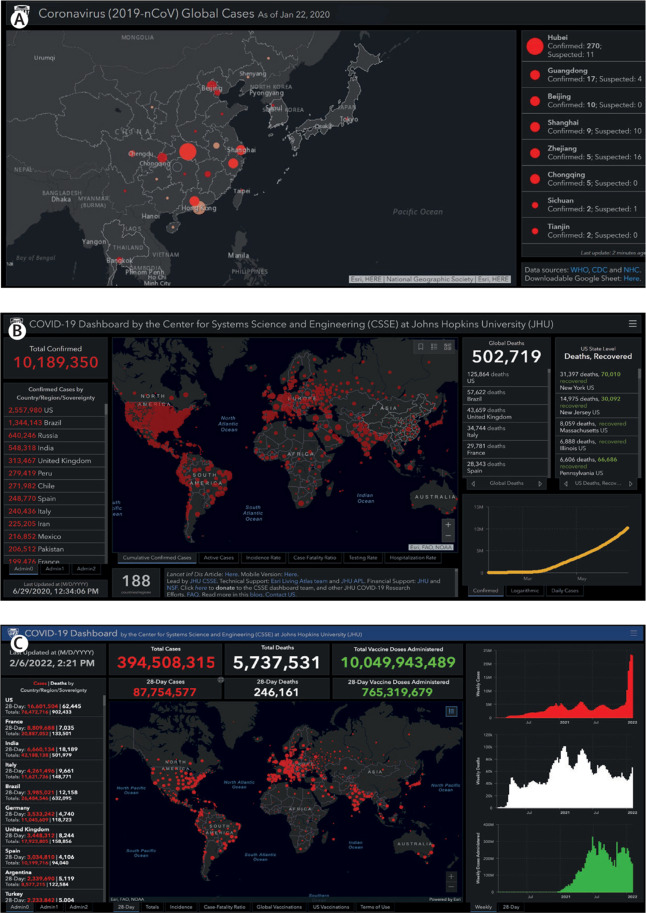
Today marks the anniversary of the termination of @JohnsHopkins COVID-19 Dashboard, a milestone in our journey thru the pandemic. While the #coronavirus may no longer dominate headlines as it once did, our commitment to advancing research on infectious disease remains steadfast.
"We find that political affiliation, as determined by the proportion of votes received by the Republican candidate in the 2020 presidential election, has the strongest association with our response variable, the percent of the population that received no COVID-19 vaccine."
Which factors are highly associated with COVID-19 vaccine uptake? Check out our latest work: “A population level study on the determinants of COVID-19 vaccination rates at the U.S. county level” @SciReports@JHUCaSE@JohnsHopkinsSPH https://t.co/F8p5Nt3SM5
Yesterday, the #COVID19 Emergency Committee met for the 15th time and recommended to me that I declare an end to the public health emergency of international concern. I have accepted that advice.
With great hope I declare COVID-19 over as a global health emergency.
The World Health Organization declares an end to the Covid-19 pandemic’s emergency status, a milestone as the virus becomes a routine illness around the world https://t.co/wL4ZwDDiu7 via @WSJ
@timeshighered@paddywjack “That’s a miracle because in our team everyone got Covid except me,” he said. “I…designed the dashboard but I was never a dot on the dashboard.”
Now everyone knows that I didn’t get the covid. Vaccine works!
The Johns Hopkins University School of Medicine’s Coronavirus Resource Centre ceased collecting and reporting coronavirus data on 10 March – three years after the global dashboard was created by a graduate student and his advisor. @paddywjack reports https://t.co/i9QQe3WZa3
A map seen around the world.
The @JohnsHopkins University COVID-19 Dashboard has undergone its final update. This map received 14.8 billion views on its biggest day, March 20, 2020. Please join us in thanking @JohnsHopkins for their work. @EsteGeraghty
https://t.co/cc9Zl1oOpC
After three years of collecting and reporting #COVID19 data, the @JohnsHopkins Coronavirus Resource Center has officially ceased operations.
Thank you to all of the researchers, faculty, and staff who made this effort possible.
https://t.co/9VCC6PmCYZ
Time to say goodbye! Our @JohnsHopkins#COVID19 Dashboard will stop updating on March 10. Over the past three years, nearly 40% of the people on this planet have visited our map. We appreciate all your trust and support!
After a three year commitment to providing the public with the most up-to-date research and analysis of the pandemic, the @JohnsHopkins Coronavirus Resource Center will cease operations on March 10.
https://t.co/I8jmWAE8YP
When Lauren Gardner and Ensheng Dong created a dashboard to track COVID-19 cases, they thought its audience would be fairly small.
It quickly became the go-to data source for media, governments, nonprofits, industry and the public around the world.
https://t.co/CMvqU6ZQvi
GO HOP! Johns Hopkins University is #7 among universities in the U.S. according to the latest undergraduate rankings from @usnews, rising two spots from last year's #9 rank. https://t.co/KD7Mx6xy5w
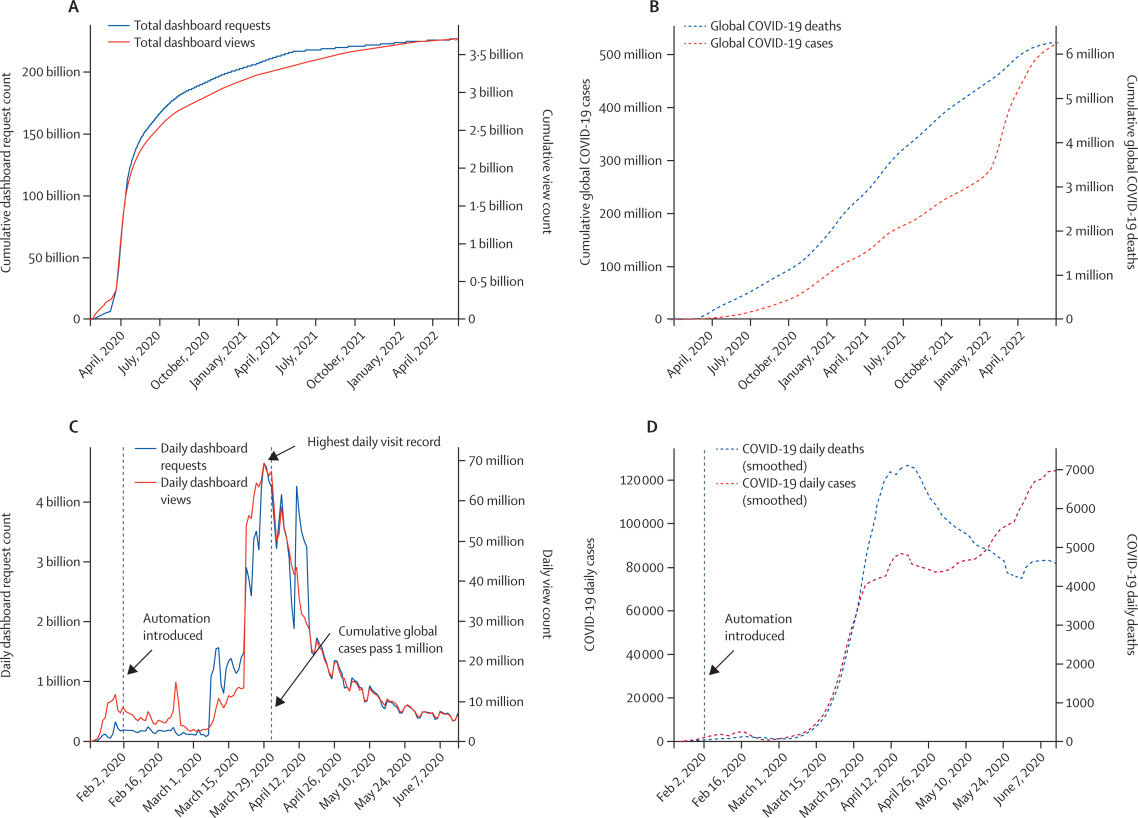
Our latest in @TheLancetInfDis. High-level technical summary of the JHU COVID-19 dashboard system, case studies on challenging data practices, and more (see appendix). Congrats to all involved on a monumental effort and to co-first author @energeticod
https://t.co/JLzxf4FVjH
Happy to share our latest article about stories behind the @JohnsHopkins#COVID19 dashboard. By far, we have received over 226 billion feature layer requests and 3.6 billion page views! https://t.co/w3EoyJzfm4