Despite the energy shocks linked to the Middle East conflict and Russia’s war of aggression against Ukraine, Latvia’s economy has remained relatively resilient.
To accelerate economic growth and convergence, Latvia should ⤵️🧵
Despite the energy shocks linked to the Middle East conflict and Russia’s war of aggression against Ukraine, Latvia’s economy has remained relatively resilient.
To accelerate economic growth and convergence, Latvia should ⤵️🧵
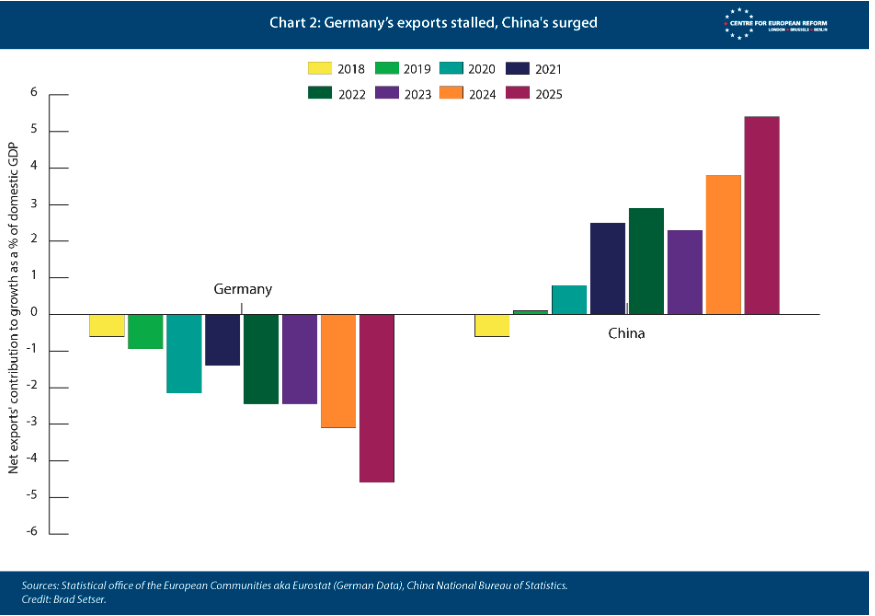
Germany is the epicentre of the China Shock 2.0 reverberating in global markets
In a new paper, @Brad_Setser and I show the shock is a key driver of Germany’s economic malaise. And it's accelerating
Berlin needs to stop admiring the problem, and join efforts to fight back
1/
Gender equality strengthens economies by unlocking talent and boosting productivity.
The OECD Forum on Gender Equality 2026, will explore how to harness digital & #AI-driven change for gender equality, so the benefits reach everyone.
🔗 https://t.co/JZidrLiy8V | #OECDgender
In 2025, the United States, the People's Republic of China (China) and Brazil received the most foreign direct investment (FDI), while the United States, Japan and China were the biggest investors abroad.
Explore key FDI trends in the new #OECD report ➡️ https://t.co/yw0BxnDGNh
Since I have posted so much on Marx vs. Weber, modernity, and development over the last few weeks, I have posted an updated slide deck of my lectures on Karl Marx and the Marxian Tradition (together with @ferarteaga) here:
https://t.co/TOGm7jXMKG
This is a long deck: 437 slides in the last compilation! (It also takes a few seconds to upload.) If I were to teach it carefully, with plenty of class discussion, I would require a whole semester. Even then, some topics (e.g., the Frankfurt School) receive only a cursory treatment because I focus more on economics and political economy, broadly construed. I hope to extend the discussion of those someday.
However, I cover topics rarely seen in these courses, such as Hans-Georg Backhaus and the Neue Marx-Lektüre, because most of the work is not translated into English and must be read in the original German.
I don’t have an equivalent slide deck on Max Weber, as I haven’t lectured on him. Hopefully, one day I will.
Comments and feedback are very welcome.
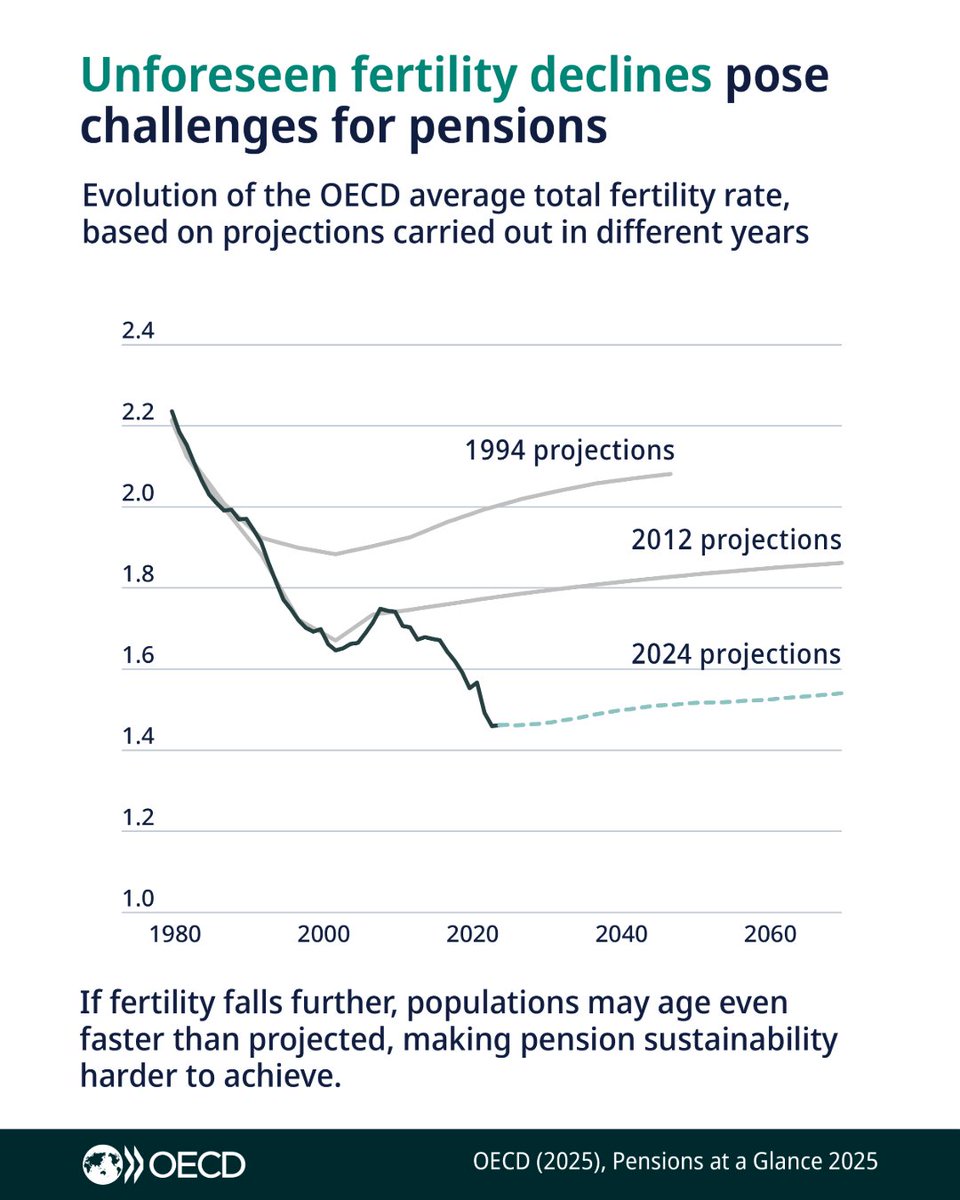
Fertility rates have been consistently overestimated in past projections.
As a result, populations are ageing even faster than expected, putting additional pressure on pension systems.
Discover more in the OECD’s latest report on #pensions: https://t.co/Wdu2hD1Qus
Had an interesting conversation with a group of Turkish friends living in Europe about white collar Turks who move here, then move back to Turkey because they don’t like it. The reason we came up with is that they’re used to being part of a ruling class in Turkey, served hand and
The old exportweltmeister has been dethroned -- and its economy is suffering at the hand of the new exportweltmeister (China).
That is the story told by both a new ECB paper and the FT in an excellent new piece
1/
Thrilled that my Minimalist Market Design monograph is forthcoming in the Econometric Society Monograph Series. The revised and much expanded version is now available on arXiv: https://t.co/au0wAOwWEo
This thread unpacks the framework — scholarly, reflective, personal. (1/20)
This new article on GDP by @pfitzsimmons has a lot of problems.
It seems to me the author first misunderstood a chart, then started making criticisms of the calculation of GDP, some legitimate and some simply wrong, and ended up with unfounded conclusions.
A longish thread 🧵
US tariffs update: Imported goods cost 5% more, domestic goods 3% more than pre-tariff trends predicted. Data now runs through Aug 8 — and we push the history back to Jan 1, 2024 (Appendix), showing a full year of stability before tariffs broke the trend. https://t.co/BFAmW0frQF
📦 Can industrial policy work? Yes—the East Asian experience shows it can (at least partially).
But its success rests on a key condition: labor control.
🇯🇵🇰🇷🇹🇼 Japan, South Korea, and Taiwan industrialized rapidly under authoritarian or semi-authoritarian regimes. Wages and labor rights were systematically repressed to favor capital accumulation and export competitiveness.
This was especially stark in South Korea during the 1980s–1990s, when unions clashed with the state and business. (If you’ve watched Squid Game, it’s in the backstory of Seong Gi-hun.)
⚠️ Authoritarianism wasn’t incidental—it was functional.
Not all authoritarian regimes succeed with industrial policy, but successful cases relied on the ability to suppress real wages and labor rights.
🇦🇷 This is why Latin America’s Big Push programs failed: their political base—urban working-class voters (e.g., Peronistas)—couldn’t sustain the wage repression required. The strategy collapsed under its own contradiction.
💥 You can’t push industrialization with cheap labor and depend politically on those who demand higher wages. The internal logic breaks. Latin America’s populism was a road to nowhere.
As far as I can tell, there are no examples of country-wide industrial policy success where real wages (and consumption) were not kept relatively low.
🇨🇳 China is not so different today.
🧾 Consumption as a share of GDP remains exceptionally low—even compared to countries at similar stages of development.
That wouldn’t be the case if China were a democracy. High savings and low consumption are features, not bugs, of its growth model.
🤔 That’s why I’m puzzled when advocates defend industrial policy from a progressive position that favors high wages and democratic institutions. You can’t have your cake and eat it too.
📚 This point isn’t new: @pseudoerasmus has made it for years. And long before him, it was central to Marx, Gerschenkron, and Dobb—and deeply embedded in the logic of socialist Big Push programs, from Stalin to Mao.
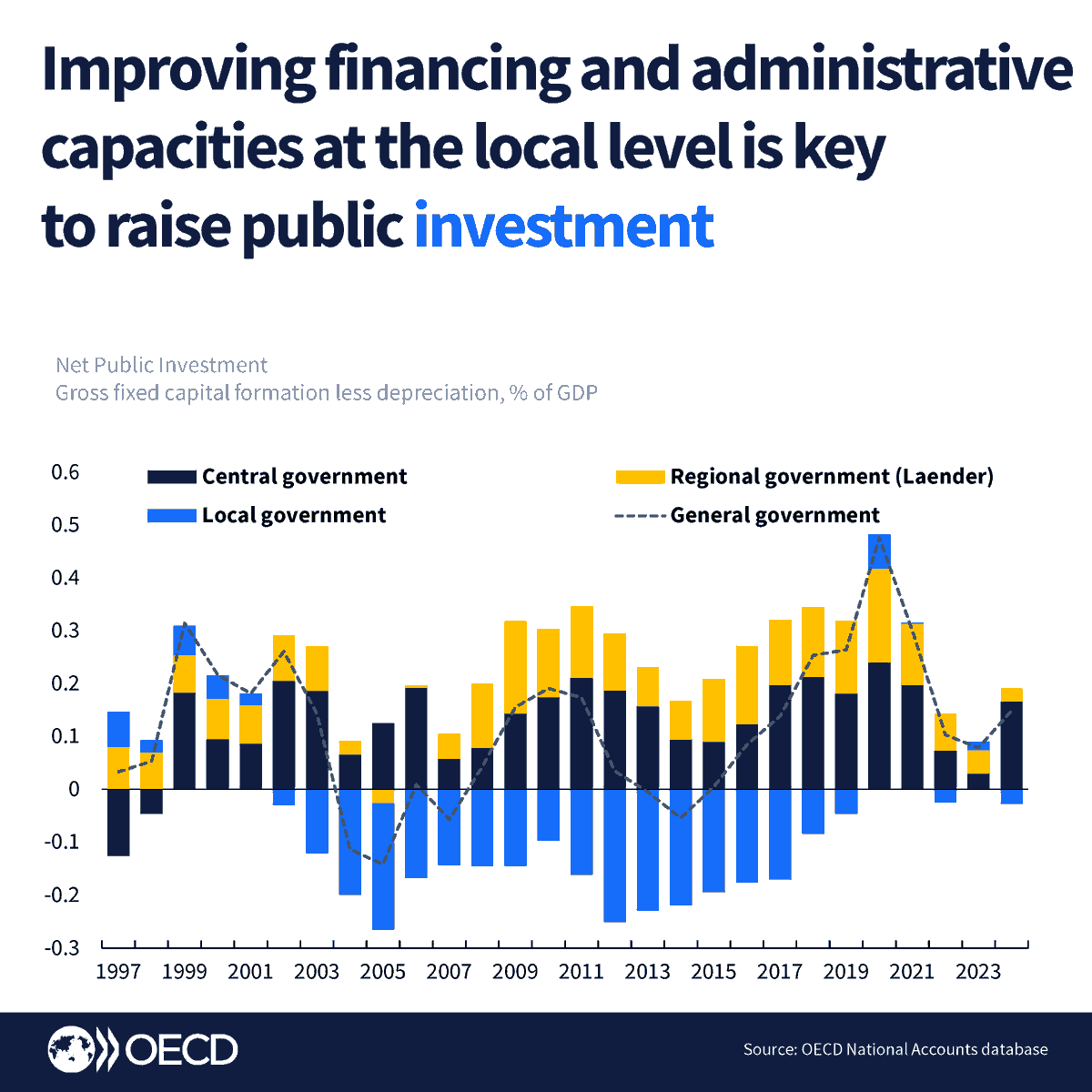
#Germany: Weak financial and administrative capacities of municipalities have weighed on local public investment.
Improving local revenues and strengthening cooperation across municipalities is key to foster regional development.
https://t.co/yWC9cQwaZ1
#Germany: Labour shortages have become a major barrier to reviving economic growth.
Increasing work incentives for women, and lower-income and older workers through the tax and transfer system and improving education and training policies is key.
https://t.co/yWC9cQvD9t
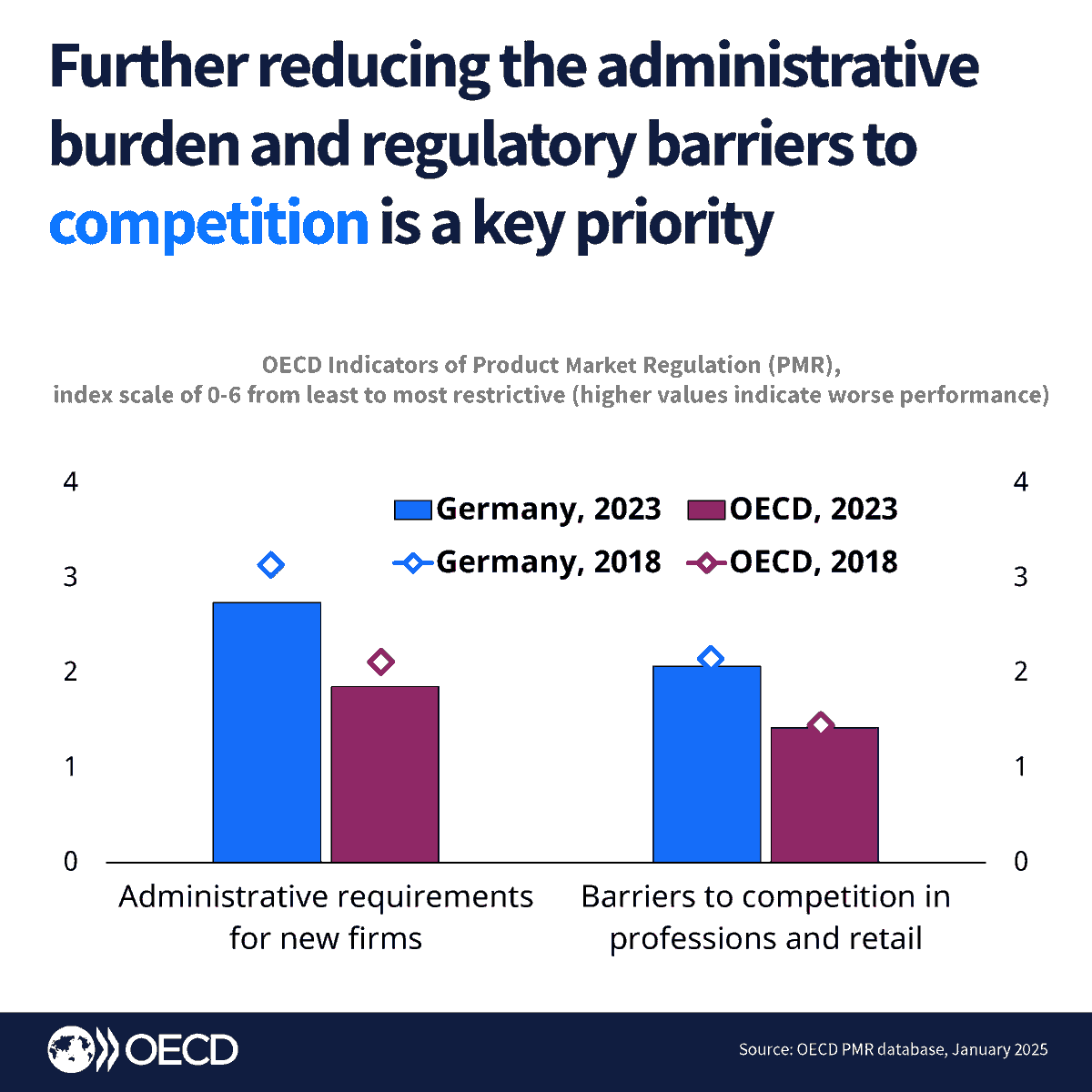
High admin. burdens make it harder to start a company in #Germany than in other @OECD countries.
Expanding efforts to review, simplify & harmonise regulations & administrative procedures across levels of government is key to reviving business dynamism.
https://t.co/yWC9cQvD9t
New @OECD Economic Survey of #Germany
Germany needs reforms after a decade of low growth.
To revive business dynamism and economic growth: Reduce administrative burdens for firms and regulatory barriers to competition and tackle skilled labour shortages.
https://t.co/yWC9cQvD9t