Interesting result
If you pretrain a model on only K-5th grade material, then RL it on high school problems, it fails to generalize
ICL also does not bridge the gap
Underlying "thought algorithms" or problem solving techniques need to be present in pretraining data, it seems, and RL just shifts the distribution toward them
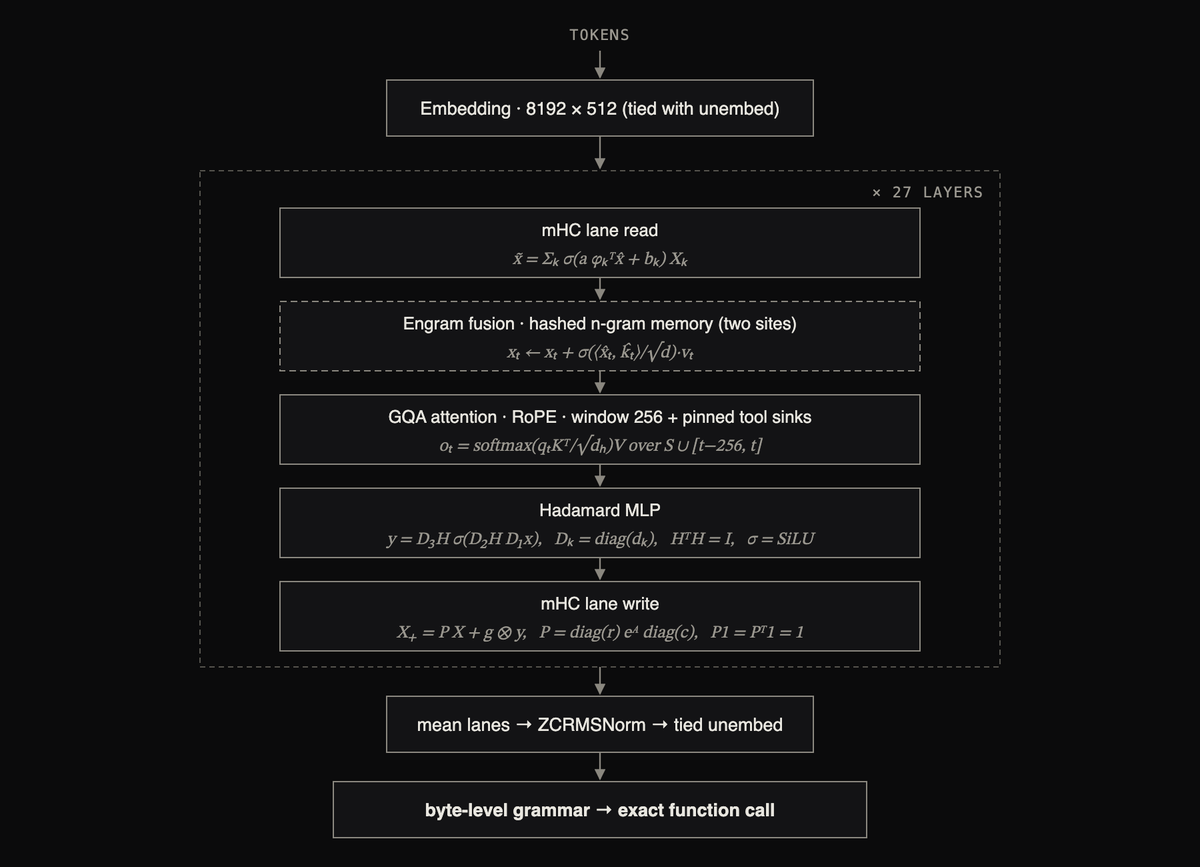
We release Needle 2: A 14MB agentic LLM for phones, wearables, smart home, robots and microcontroller. The whole model is a single 14MB binary that runs a full session in 28MB of RAM. It is built on our Simple Attention Network findings, compressed to CQ2-bit with Cactus Quants, and baked into its own engine.
Needle 2 has 45m parameters trained from the ground up on 140B tool call, device use structured generation tokens. On mobile device use benchmarks, Needle 2 trades wins with frontier small LLMs like LFM2.5 230M, Apple FM Gemma-270m, at 5× to 70× smaller, and 2 bits against their f16.
Needle hits 500 tokens/sec decode speed on a Raspberry Pi 5, between 400–1,500 tokens/sec on VR devices like Meta Quest 3S and Apple Vision Pro, and ranges 300–700 on sub-$200 phones such as the Samsung A-Series. Needle also runs on newer microcontrollers like ESP32.
A conventional transformer of Needle's width and depth spends 164 MFLOPs per token, and even one squeezed down to Needle's parameter count spends 87, Needle spends 70. Even on a high-end phone, an always-on assistant lives inside a power budget; every MFLOP is milliwatt-hours, and Needle spends 7x to 85x fewer of them per token than the smallest performant LLMs.
Read more: https://t.co/dLK2tIKXQu
📢Meet Qwen3.8-Max — our most capable model to date.
Next week, the open weights of Qwen3.8-Max will be released, and Qwen3.8-27B is also going open-weights to meet you all!🎉
Qwen3.8-Max, a new bar for coding and cowork at 2.4T parameters:
- Autonomous coding: 10+ days of self-evolving development, from empty folder to production without hand-holding, complete project trace in the GitHub:https://t.co/iVHZWQoeSo
- Real work, real results: Production-quality deliverables across hundreds of professions.
- Long-horizon mastery: System-level autonomous planning with closed-loop adaptive learning, driving 500+ turns of chip design optimization and 365 days of e-commerce strategy.
- Native multimodal intelligence: Vision isn't just input — it's a continuous feedback loop for planning, execution, and self-correction.
💰Pricing:
Input: $2.0 / M tokens
Output: $6.0 / M tokens
Implicit Caching: $0.25 / M tokens
Start building with Qwen3.8-Max! 🚀
📖 Blog: https://t.co/iwjmQxLBof
✅ Qwen Studio: https://t.co/4V2pFvDovG
⚡ API: https://t.co/gAGqaLQGbN
So this was an interesting response. Does this mean the PM usually meet people in town hall settings to answer questions about their daily life problems then?
I have not seen him engage directly with the Cockroach Junta Party, which is a grassroot movement.
Correct me if I am wrong.
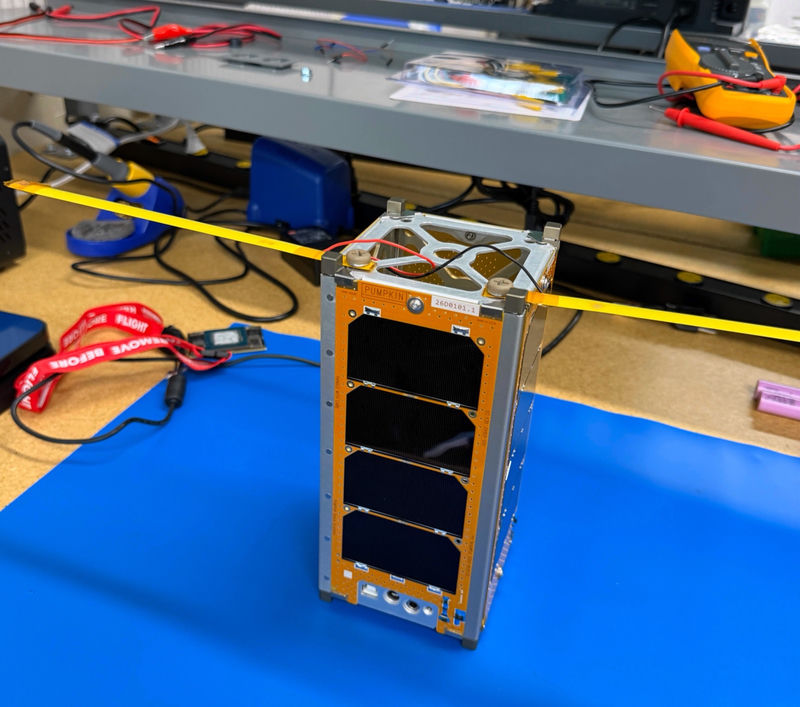
Open sourcing KENSAT 🤖🛰️
KENSAT is a 2U CubeSat that runs an LLM in orbit. AI inference is run on a NVIDIA Jetson and downlinked to Earth with RF. Launching on the SpaceX Falcon9 in October.
The repo includes everything - from its firmware, schematics and PCBs.
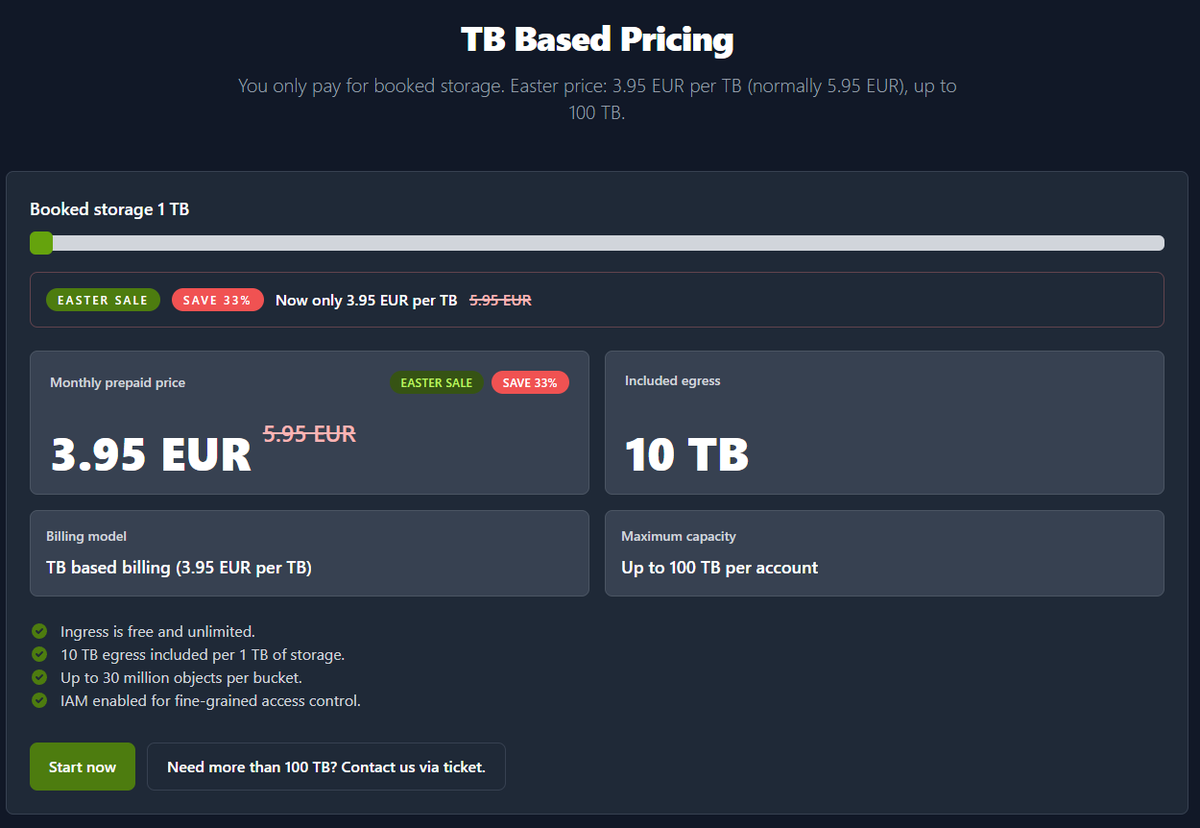
I definitely suggest anyone to tryout @DatalixDE object storage (S3 compatible) for their cheapest offering in the market. I'm sharing napkin figures against popular and 2nd cheapest.
Against popular AWS S3 at 19.73 eur it is 5x cheaper.
Against 2nd cheapest Blackblaze at 5.15 eur it is 1.3x cheaper and also offers free 3x outgoing traffic.
🐰 Looking for affordable S3 compatible Object Storage? Our Easter Sale is live ✅
- Just 3.95€ / TB (33% off!)
- 10 TB Egress included per TB & Free Ingress
- Easy integration, IAM enabled
- Built for backups, media, app data & more
Get yours now at:
https://t.co/Hkv0vfhpgn
To all those very clever people pointing out that nothing should be running <10% efficiency:
"even if the choice of C were to do *nothing* but keep the C++ programmers out, that in itself would be a huge reason to use C"
I kept hitting the same wall.
Maps for India scattered, no clear provenance, formats gatekept, no easy way to share your own.
So I built bharatlas. The wiki for India's maps.
View, slice, download. Drop your own to publish. Open data, open code.
→ https://t.co/oNGTxymmPy
SpaceX has almost finished writing V1.0 of an in-house AI training stack in C that exact-maps to 220k GB300s with 800G NICs, making heavy use of pipeline parallelism and getting as close to bare metal as possible.
The potential speed improvement vs JAX for large training runs is over an order of magnitude.
Andrew is relentlessly building the world’s most powerful systems programming language (and toolchain).
He has my full support and trust (and frankly, sheer gratitude for holding firm on quality).
Props to @jetbrains for putting together a terrific interview.
https://t.co/4rFgmyTrCz
This video clears up a lot of philosophical dilemmas in choosing Rust or Zig.
As likely said by Zach in the video, LLMs over-engineer solutions and are susceptible to memory footguns. Rust would be the right language for LLM code generation but comes at the cost of readability.
Zig, on the other hand, helps express thoughts in simple code with less cognitive load.
He also explains why code readability wins in the long run and why he favours zig over rust