شفت ذي الصورة قبل اتابع الانمي وضحكت
لكن بعد مشاهدة اول حلقتين من الانمي عرفت ان هالشخصية ساكن لحاله ببيت مع 4 بنات صغار مايتجاوزون 10 سنوات
Lore accurate لان محد بيسوي هالشي الا واحد من هالدولة
In 1483, the Timurid Emir of Samarkand, Sultan Ahmed Mirza, sent two rare lions as a gift to the Ming Emperor. Previous embassies had also brought lions as gifts, which the Chinese court found useless and expensive to keep. So, when the envoys Paluwan and Hoja Mahmad arrived at the border with the lioness Hasinah (Beauty), they were stopped and left waiting for months. During that time, they commissioned this near-life-size painting which they sent with their pleas to the imperial court.
If you zoom in, you can find their names in gold Chinese characters. There are also verses by the Emperor at the top along with the date of the event and the imperial seal.
The Arab world is by far the most heavily targeted by discussions regarding “ethnic purity” but everyone always ignores other regions of the world when it comes to this subject
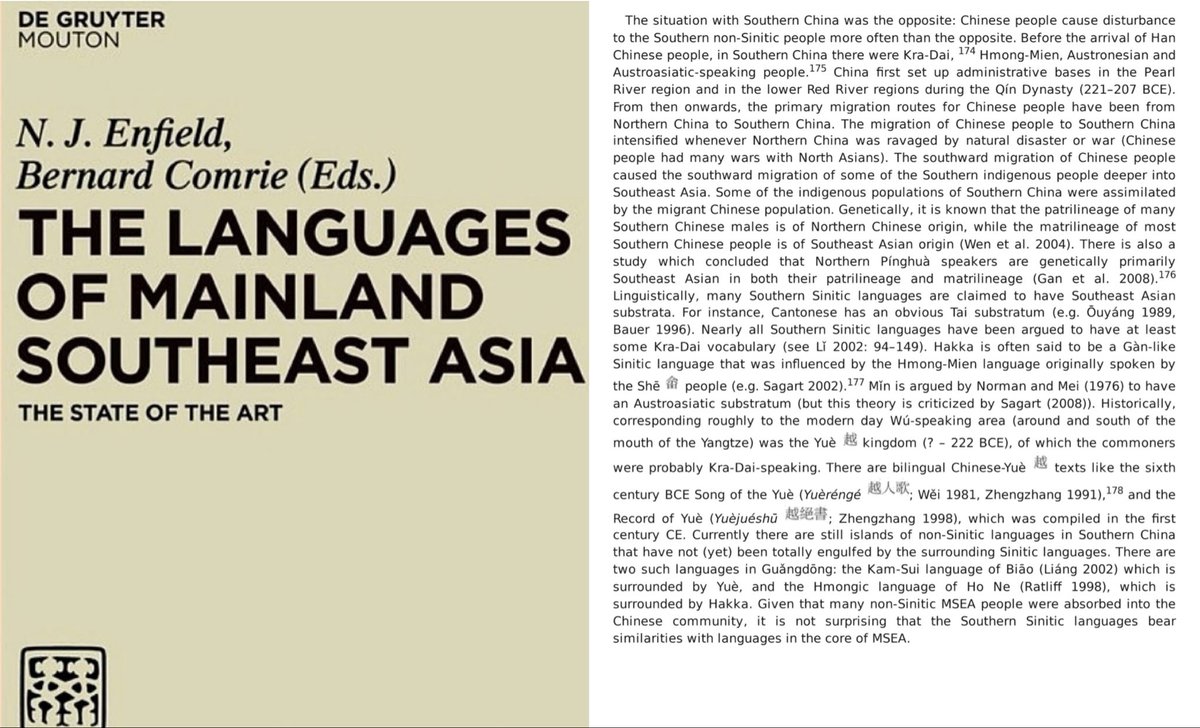
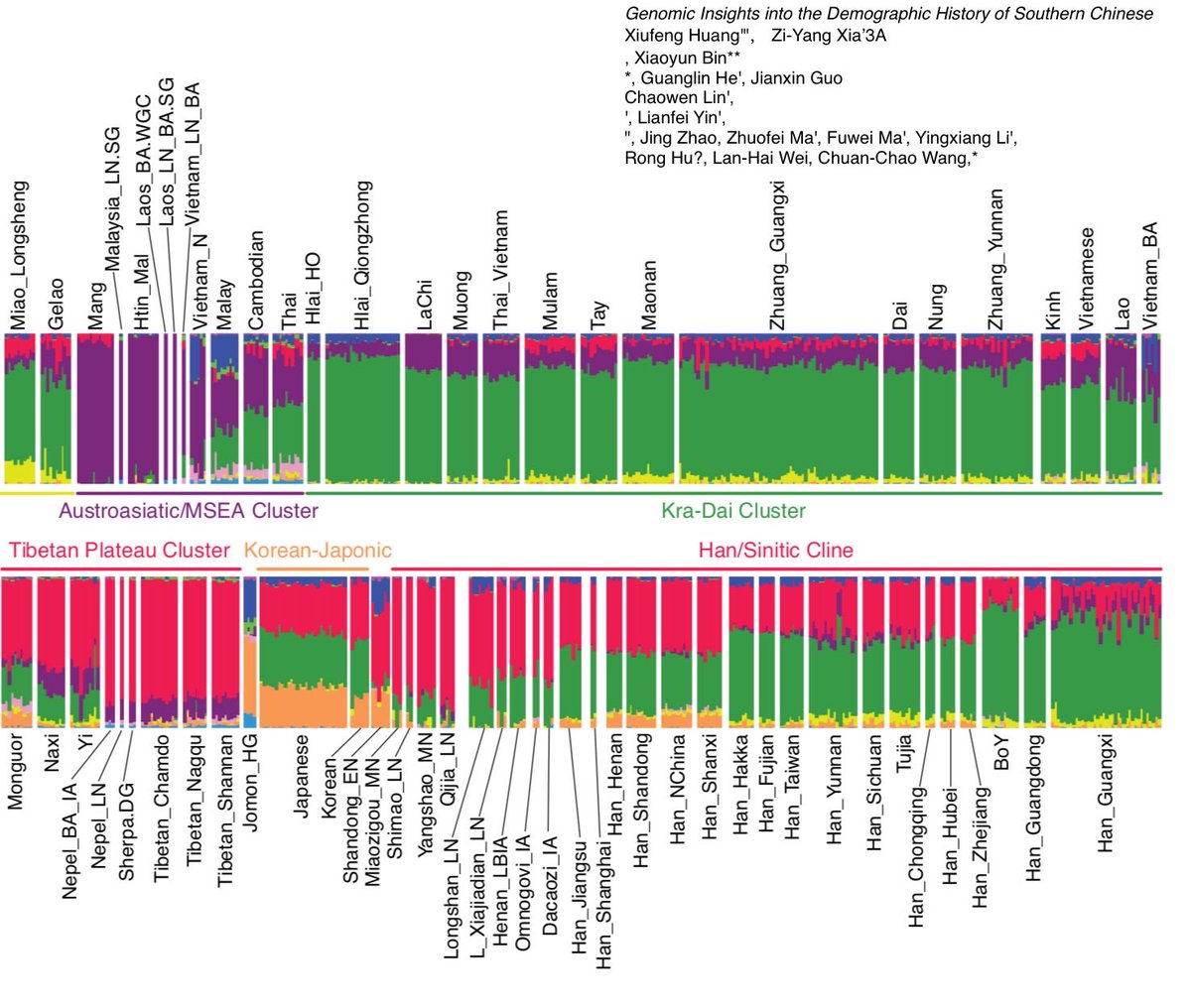
“Han” Chinese is an umbrella term for a very diverse group of people. The original “Han” (Chinese speakers) lived around the Yellow River in Northern China but Southern China was inhabited by indigenous Austronesian, Austroasiatic and Kra-Dai speaking peoples known broadly as “Baiyue/Yue”. These groups were more closely related to modern Vietnamese, Thai & Filipino people. Han Chinese empires would eventually conquer the South and assimilate these indigenous groups into Han Chinese culture in a process of Sinicization that lasted over a thousand years. To this day, there still exists a clearly identifiable North v South divide in China in terms of culture, language and genetics. The South has many of its own languages like Cantonese, Hakka and Min which are distinct from Mandarin and retain vocabulary/features from the indigenous Pre-Han languages of Southern China. In terms of genetics, southern “Han” (Guangxi, Guangdong & Hainan) carry high Kra-Dai ancestry and cluster close to Krai-Dai and Vietnamese speakers.
“Han” originally referred to a specific Chinese dynasty that ruled from 2nd Century BC to 2nd Century AD. Between the 6th-15th Century AD, “Han” was used in diverse ways. During the Mongol period (1271–1368 AD), Chinese society was structured into a four-tier caste system where the term “Han” functioned as a political classification rather than a strict ethnic identity. The third-tier “Han” caste encompassed not only modern Han Chinese from the north but also other nearby cultural groups such as Koreans. The southern Han Chinese were relegated to the lowest caste known as “Nanren”. This division demonstrates that under Mongol rule, “Han” was a regional and political designation rather than an ethnicity.
Until the 19th Century, people in China typically identified with their region or hometown rather than a “Han” ethnic identity that transcended municipal and regional boundaries. A “Han” ethnic identity was constructed in the 19th/20th Century by Chinese revolutionaries in opposition to the Manchu regime. Inspired by European forms of nationalism, Chinese revolutionaries strived to create a clear racial boundary between the unitary Han race and the race of the oppressive Manchu. It was in this period that the terms zu (racial lineage) and minzu (nation) were first coined in the Chinese language. The invention of the Han as a blood-related group, the invention of a common ancestor for all Han (initially the Yellow Emperor, later Peking Man, and now Yuanmou Man), and the creation of a linear Han national history were among the key priorities for anti-Manchu revolutionaries. These nationalizing strategies also included the introduction of new chronologies, new national celebrations, a national anthem and flag, and the unifying cult of Sun Yat-sen himself as the "father of the nation".
Even today the term “Han” remains vague in its meaning. Rather than being defined by specific cultural factors or lineage, “Han” in modern China basically refers to any Chinese person who is not a member of an officially recognized minority group
“In the 1980s and 1990s prominent scholarly works conceived of Han Chinese identity as an empty category that primarily defines those who are not one of China's 55 officially recognized ethnic minority groups. Similarly, Stevan Harrell contended that gathering and analysing data on Han Chinese as a category is challenging, since Han Chinese identity is generally an 'unmarked characteristic that can be delineated only in contrast to the ethnic other."
“Han Chinese, as a category, holds considerable commonality with the category of whiteness. Both are comparatively recent social constructions that fused together large subgroups of people, who themselves possessed their own distinct cultures and languages”