@FT Decir que 16k€ anuales (sean inmigrantes o no 👁️) hayan subido un +28% 📈, y que eso sea mayor a 22k€ anuales, que "solo" han subido 18% 📉, es similar no leer datos básicos y estadísticas 🤡 cuando es el SMI él que fuerza el movimiento de fondo 👇
https://t.co/zt0nkt6CJp
👉 Que el salario más frecuente sea cada vez más parecido al salario mínimo está siendo malinterpretado y utilizado tendenciosamente para alimentar una narrativa que no se corresponde con los datos.
En los últimos años, la distribución de los salarios ha mejorado.
🧵 ...
1/n
Introducing Reforma Digital MCPs 🚄🇪🇸
Hace unos días @luisgonzaleznf sacó Renfe CLI y me quedé dándole vueltas a cómo hacer que cualquier agente tenga eso siempre a mano, sin instalar nada en el ordenador ni depender de que tenga terminal
Así que hemos montado una biblioteca de MCPs sobre datos de España. Pegas una URL en tu agente y ya le puedes preguntar lo que quieras
Es todo open source. Si echas algo en falta puedes crear tu propio MCP y subirlo al repo, o pedirle a tu agente que lo haga por ti
Link en el hilo 👇
Top CEO Priorities
1) Productivity or (should be and) Profitability
2) AI and Technology Modernization
3) Customer Experience (should be #1 with the others as enablers for delivery and relationship management)🫶
Source: @IBM Rewiring the C-suite, The fast track to 2030
Introducing EmbeddingGemma 2! 🚀
Our lightweight, multimodal embedding model maps text, code, images, video, and audio into a single, unified embedding space. Optimized for on-device use cases, it features:
- 740M parameter form factor with modular encoders
- Flexible dimension sizes (768dim-128dim) via Matryoshka Representation Learning (MRL)
- 8K context window (4x larger than text-only EmbeddingGemma)
- A commercially permissive Apache 2.0 license
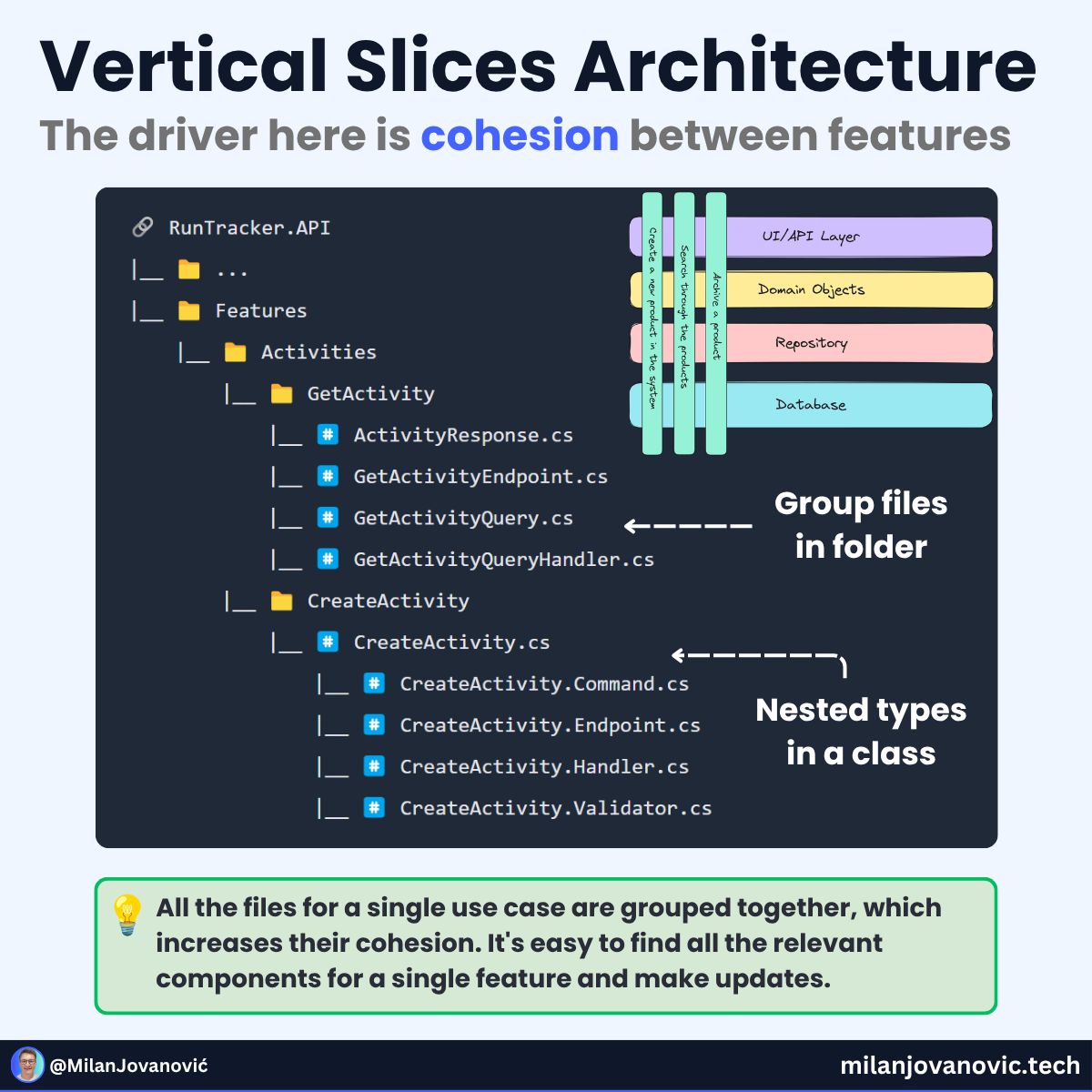
Software architecture is easy...
Group related concepts together = build better applications
Can it be that simple?
It's not, of course. But it is directionally correct.
Another name for this is cohesion. We want to maximize how close together files for a single feature are.
Layered architecture typically has low cohesion.
Why is this a problem?
It forces you to make changes in multiple different layers to implement or update a feature.
Vertical slices take a different approach.
All the files for a single use case are close together, which increases their cohesion. It's easy to find all the relevant components for a feature. Thus, making changes is simpler.
You can learn more about VSA here: https://t.co/IY1EUlbOkY
❌ En serio, NUNCA más compres fondos indexados en estas plataformas:
· BBVA (150€/año por cada 10.000€)
· CaixaBank (150€/año)
· Bankinter (113€/año)
· ING (110€/año)
· Santander (entre 74€ y 94€/año)
✅ Plataformas que SÍ deberías usar ↓↓
Today we’re introducing Gemini 4 Argon.
It delivers frontier performance in complex workflows across real-world software engineering, knowledge work, and cybersecurity defense with an industry-leading 1M token output limit.
Lots of discussion out there about our next model(!), so I wanted to give an early look as soon as possible. Introducing Gemini 4 Argon!
It shows frontier performance in complex workflows, cyber defense and software engineering. Teams are using it extensively at Google, from coding to quantum computing, great feedback.
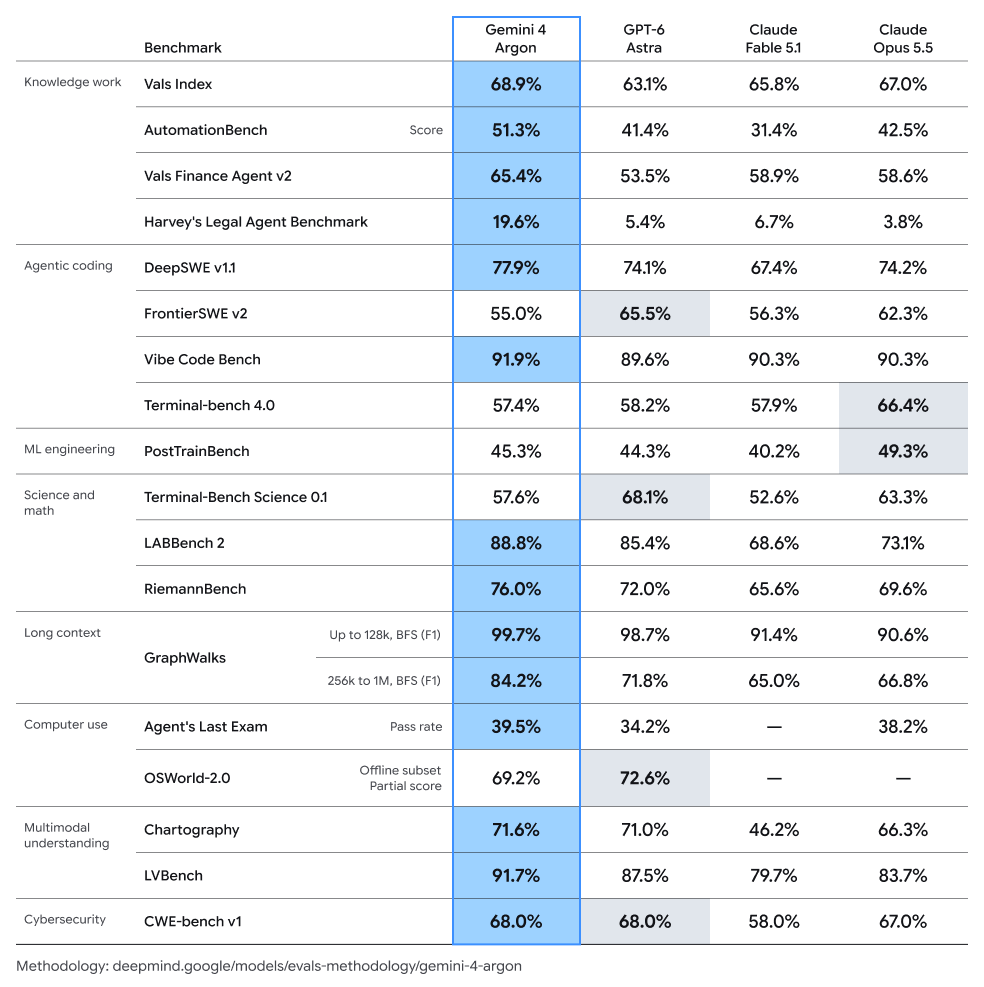
Here’s a look at the benchmarks:
NVIDIA drop a 3B vision-language model for fast, high-quality visual grounding in real time accurately.
- Parallel box decoding
- 10× faster than Qwen3-VL
- Trained on 138M queries/785M boxes
- GUI, OCR, and document layout, dense detection
- Open source
Useful for computer-use agents and Physical AI,
Introducing Claude Sonnet 5.5, the second model in the Claude 5.5 family.
It’s a clear upgrade over Sonnet 5, runs more than 30% faster, and costs up to 30% less for most work.
AGENT WARS
We asked 5 top AI models to design, engineer and 3D print a bridge to with the goal of holding the most possible weight.
🇺🇸 Anthropic: Claude Opus 5.5 (High)
🇨🇳 Kimi: Kimi K3 (High)
🇺🇸 Meta: Muse Spark 1.3 (High)
🇺🇸 OpenAI: GPT 6 Astra (High)
🇺🇸 SpaceXAI: Grok 4.7 (High)
Each bridge had specific parameters. It had to span 2 feet, use a maximum 500 grams of filament, and it had to be under 18 hours of printing time. We specified what type of weight and where we would place it on the bridge.
The Score:
• Claude Opus 5.5 held an estimated 130 lbs! It took 9 hours and 11 minutes to print 17 parts and used 441 grams of filament.
• Meta Muse Spark 1.3 held 26.5 lbs. It took 13 hours and 12 minutes to print 49 parts and used 478 grams of filament.
• OpenAI GPT-6 Astra held an estimated 17.5 lbs. It took 15 hours and 44 minutes to print 29 parts and used 442 grams of filament.
• SpaceXAI Grok 4.7 did not finish. On assembly it could not stand up by itself. It took 12 hours and 22 minutes to print 29 parts and used 460 grams of filament.
• Kimi K3 did not finish. It wasn’t engineered correctly so the bridge could not even be assembled. It took 11 hours and 19 minutes to print 35 parts and used 446 grams of filament.
That means our champion for this episode is Claude Opus 5.5. Not only did it hold the most weight (by FAR) it also took the least time to print, used the least amount of parts and used the least amount of filament.
This was episode 02 of Agent Wars, stay tuned for episode 03.
If you're using AI agents for coding, Architecture Testing is a must-know.
Here's why. 👇
Architecture testing helps you control technical debt.
Technical debt is a consequence of prioritizing development speed over well-designed code.
And you can bet AI agents churn out code faster than you or I ever could.
With architecture testing, you can control:
- Direction of dependencies
- Naming conventions
- Various design rules
I wrote this in-depth guide that I think you'll enjoy: https://t.co/CziJWek186
You can even tell your agent what your architecture rules are, and it can write the tests to enforce them.
Then you just run this as part of your CI, and you'll catch any issues much faster.
Would you add this to your code review process?