Honored to see that my article on Xi Jinping's latest book has now been published in Beijing Review, China's only national English-language news magazine established in 1958 at the behest of Zhou Enlai: https://t.co/SMyExD1PxM
That's probably the greatest compliment that could be paid to the article, given that my objective - as I initially wrote in the article itself - was to understand the book and Xi's governance philosophy on its own terms. Beijing Review publishing it is China essentially validating that.
Too many so-called "China watchers", when they write about China, have an adversarial and cynical approach by default: they don't even consider that the country could be sincere in its endeavors, instead they start from the assumption that every policy has a dark hidden agenda and every speech is propaganda.
Bit by bit, this leads to a situation where they don't even listen anymore and instead build a closed loop of their own assumptions, citing each other, referencing their own frameworks, constructing a phantom China that exists nowhere outside their publications. The real China only breaks through when something can be clipped out of context and misinterpreted to confirm what they'd already decided was true.
Needless to say, that's not intellectual honesty - not even remotely.
Imagine someone did this to what you had to say about yourself: if everything you said all the time was assumed to be a lie, and the only time you were quoted was when your words could be weaponized against you. And if, in the field of "[your name] analysis", the people who were the most effective at misrepresenting you in a way that served the pre-existing consensus were the most published and the most promoted.
You'd understand immediately that this system isn't designed to understand you.
Now that's of course not to say that everything China says about itself is true, just like anything anyone or any country says about themselves. We all embellish things and focus on what makes us look good.
But the starting point of understanding anyone - a person, a culture, a civilization - has to be listening to what they actually say, not deciding in advance that it's all a performance. You can be critical after you've listened. You can't be critical instead of listening.
Otherwise you end up in exactly the situation we're currently in with China: in perpetual surprise at everything they do, because - guess what - they don't act upon our caricature of them but, like all of us, upon their own self-understanding.
We actually used to understand that, not sure at what point it got lost in the slow intellectual decay of the West. For instance, in the 1970s, game theorist Anatol Rapoport wrote (https://t.co/fjPtZONCK1) that "a pre-requisite in a genuine debate is a complete understanding by each of the opponents of the other’s position. The criterion for such understanding must be not one’s own feeling that one has understood the other’s position but the other’s feeling that his position has been completely understood."
As such, Rapoport wrote, an essential rule of genuine debate should be to require that one starts their own response by presenting the other's argument so clearly and fairly that they'd reply positively to the question "Has your side been presented well?"
Even in old medieval Europe, Thomas Aquinas - one of the most influential thinkers in the history of Catholic theology and Western philosophy - argues in his "Summa Contra Gentiles" (in Book I, Chapter 2) that the best method of refutation is to know the opponent's position from their own words and teaching - to have been so immersed in it that you can argue from within it.
He describes this as "the method that the ancient Doctors of the Church used in the refutation of the errors of the Gentiles" and says that they were particularly effective in converting "Gentiles" because "they themselves had been Gentiles, or at least had lived among the Gentiles and had been instructed in their teaching."
I'm obviously not suggesting that China needs to be converted to anything - they're not Aquinas's equivalent of "Gentiles" - or that they're opponents in some sort of debate. I'm merely making the point that this principle - genuinely listening and understanding the other **on their own terms** as a first step - is one of the oldest in Western intellectual history.
Which is why, again, it's a compliment if China looks at a piece of analysis and says "yes, that's what we meant." It is a first step, the step that's so sorely missing in our contemporary approach to the country.
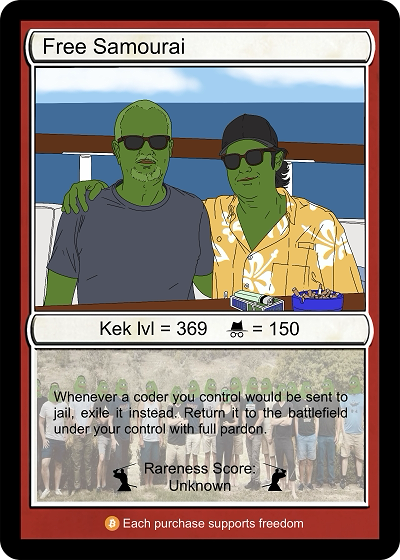
BREAKING 🚨🚨🚨 NEW SOVEREIGN WAY TO SUPPORT @SamouraiWallet!!! Own Proof of Bushido "They lived the code. You prove it with sats" through immutable L2 Bitcoin (NFTs). Every sat will be donated to @keonne@SamouraiDev 17,660 sats
https://t.co/dHzGFX5rAy
https://t.co/Sj31R3tg1C
Using just five simple ingredients, Dr. Paul Saladino demonstrates how to make natural, fluoride- free toothpaste "that will whiten your teeth like crazy".
@Ke_Ga@MikeCarlton01@nytimes That was an Israeli backed thug gang operation in another time and place.
Here's the full picture of the latest Israeli killing cage extermination operations.
https://t.co/gKHhc6UJLp
This was an autopsy.
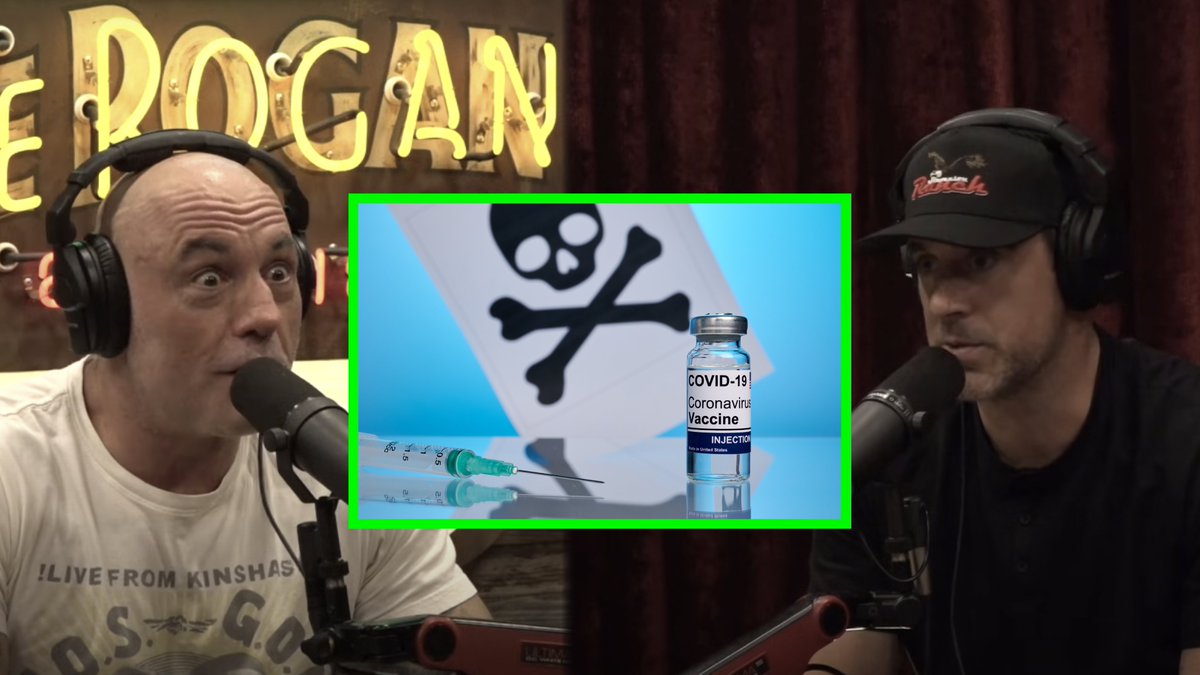
The conversation Big Pharma hoped would never hear——just happened.
Two of the most outspoken Vaxx skeptics in one room.
Joe Rogan and Aaron Rodgers didn’t only question the narrative.
They dismantled it.
But it was one statistic that Rogan dropped about vaccine deaths that made everyone question just how deep this goes.
🧵 THREAD
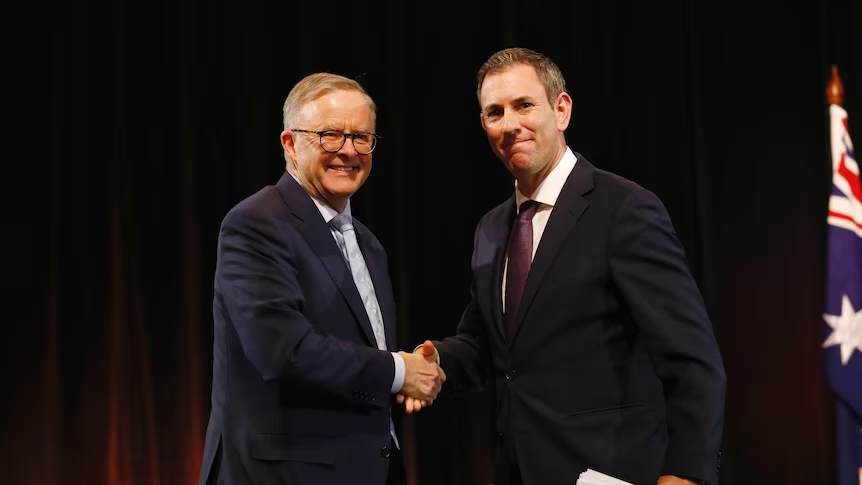
🚨 Labor’s new super tax will hit Australians with more than $3 million in retirement savings.
But former state premiers, judges, and top bureaucrats and judges? They’re exempt.
A thread 🧵
Commitment bias.
Committing to a professional practice position based on falsehoods, putting your reputation and career on the line, the cognitive dissonance when confronted with a contrary body of evidence is too much for all but the strongest of wills and cleanest of minds.
Dr. Peter McCullough: The average doctor is willfully blind because they've taken the vaccine themselves and promoted it to family members and patients.
"And now it is psychologically impossible for them to come to the internal recognition that this has been a disastrous mistake for their own health, and for the health of their family and their patients."
@T_Rizzeal@IranObserver0 Do those lasers help them lift FA-18's off the sea floor after throwing them one off in an emergency turn? Because they didn't stop whatever forced them to make an emergency turn.
17/ Things I expect to see in the next round of updates:
1. NFT integration from #pepepaint
2. Trading of in-game items and NFTs
3. Ways to burn #pepecoin in game
4. More buildings & locations unlocked
5. Integration of mini game Golden tickets for rewards
9/ I also came across a throwback to the @vitalikbuterin tweet from 2017 about the Enterprise PepeCoin Alliance between the ETH foundation and @pepecoins
Mixed with a naughty meme
Ngl, base humour done well makes me laugh 😆
@SaharMilani_SF@xlolayoub@IranObserver0 This is objectively and factually correct, consistent with Iran's long term stated policy position.
Yet I wager that hardly anyone in the USA could articulate this simple statement correctly.
It is indeed "one of the most extraordinary Truth posts of Trump's presidency" in the sheer level of gaslighting at play: he's trying to make one of the biggest and clearest humiliations in US history look like a win.
But there's no amount of lipstick that can disguise this pig. What happened is remarkably similar to the 2022 Liz Truss fiasco in the UK: Trump came out with a remarkably foolish and terribly executed policy that created a market panic—including in the bonds market—and he had to walk it back.
But unlike the British system that—for better or worse—can get rid of woefully incompetent Prime Ministers (that is, more incompetent than the average), the U.S. is stuck with Trump.
And unlike Liz Truss, Trump remains insulated by a circle of sycophants like Lutnick who reframe humiliating capitulations as 'extraordinary' triumphs, and a voter base that interprets even his most flagrant policy failures as masterful 4D chess moves.
Fact is, even after this retreat, the U.S. is in a far worse position than it used to be.
Contrary to what Lutnick and Trump are saying, what this episode proved beyond doubt is that the world is NOT ready "to work with President Trump to fix global trade". In fact, besides Israel's Netanyahu, I haven't seen a single country on earth come out publicly to support Trump's plan.
Sure, a couple of weaker countries who are heavily dependent on trade have reluctantly come forward to find a way to mitigate the damage Trump would do to their economies but to conflate this with enthusiastic cooperation is pure fantasy.
What we're witnessing instead is damage control by nations caught in the crossfire of his insane economic policies. And you can be sure that the long-term strategy of these countries will now be to reduce dependencies and trading links to the U.S. in order to avoid being caught in a similar situation in the future.
More importantly, the countries that together make up about 50% of trade with the U.S.—namely Canada, the EU and China—have all announced retaliatory tariffs and measures, which a) means that Trump's claim that countries other than China "aren't retaliating in any way, shape, or form against the United States" is a complete lie and b) shows that his approach has accomplished the remarkable feat of uniting geopolitical rivals in opposition to him.
Which is undoubtedly why his new approach seems to be to single-handedly focus on China, with a retreat to the good old U.S. strategy of trying to get others to help them contain China.
This has zero chance of working either, for 2 main reasons.
The first one is that if Trump has demonstrated one thing in the past 3 months, it's that he's fundamentally unstable and unreliable, and so is the United States. His chaotic governance sends a clear message to the world: America's word means nothing beyond the next Truth Social post.
If the notion that a country would take the risk of putting all its eggs in the American basket was already delusional before his presidency; it is now beyond absurd. What he's done is transform America from a cornerstone of global trade into a risk factor that must be hedged against.
The second one is that the "deal" on the table for these countries is absolutely repugnant, from their standpoint.
I mean, think about it: the "deal" would presumably be for these nations to abandon or significantly reduce their economic relationship with China—their largest trading partner in many cases—in exchange for a trading relationship with the U.S. that is worse than it used to be, with 10% additional tariffs. In effect it's asking countries to sacrifice their economic sovereignty and strategic flexibility for a lesser punishment.
It's a lose-lose proposition that might play well on Truth Social, but will get you laughed out of the room in the world of international relations. Unless you're say a tiny country that has the misfortune of being too weak and dependent on the American market.
But even in this latter case, these countries might amuse Trump in the short-term but they'll undoubtedly put in place long-term strategies to de-hitch themselves from the US crazy train as fast as possible in the medium term.
So all in all, what we're looking at here is not a strategic masterstroke but the desperate flailing of an administration that didn't anticipate how markets and trading partners would respond to economic coercion.
Trump is "teaching the world a lesson" all right: he taught them that America is now the biggest threat they face for their prosperity and the result of this won't be to "work with him", but to hedge themselves as much as they can from the American madness he's unleashed.
History will remember this not as an "extraordinary" moment of American strength, but as the point when the world concluded that diversifying away from the American market was no longer just economically prudent but existentially necessary for their own economic security.
@rektfencer The exporting countries don't pay the import fees.
The American importers pay the tariffs to the US government and pass the increased cost onto the American businesses and consumers.