@allenholub Even worst,too many preachers telling nothing for a high fee... But get their attention quota.
Too many "certifications" as exchange of passing some hours listening to those people.
Too many channels offering the same info or knowledge... But presenting It as "original".
@allenholub In that kind of cases where collaboration and agilty is a real thing, the worst thing to happen is the arrival of new big boss-manager that wants to spread this Spirit... But making It "his initiative" and introducing "small changes".
@allenholub That's the first thing you have to show. Some teams are so used to have someone who drive them by ordering around that when you tale them that they request someone. So you sugest and just tell them "Try this way. If It doesn't work, feel free to change and get what you need".
Algo tan aparentemente lógico como difícil de encontrar en muchas de esas organizaciones pero que implica también mucha simplificación de procedimientos preexistentes, una proceso de negociación intensivo y cierto nivel de agnosticismo sobre marcos de trabajo y métodos.
8/8
Cuando llegas a una empresa y vas con el cartel de "agile" todos esperan que les digas qué hacer y cómo hacerlo. Que les proporciones una serie de instrucciones casi mágicas o un marco de trabajo para que puedan hacer su trabajo mejor.
Entonces dices que eso no funciona así.
1/8
Was asked: What are the pros and cons of an "Agile" approach? Here's my list, but bear in mind that I am NOT talking about Scrum or SAFe or Kanban. I don't see those frameworks as even slightly Agile, at least not inherently. You cannot be agile while at the same time slavishly following a set of prescribed rules, and if you're not agile, you cannot be Agile.
Advantages:
* lower risk
* faster revenue
* guarantee that you'll build something people will want (higher sales)
* lower dev costs
* faster idea-to-customer's hands ("lead") time
* happier employees, so low churn
* higher quality
* lower complexity (== lower maintenance and modification costs)
Disadvantages:
* (none)
So, how how do you get those advantages? Here are a few of basics:
* Work very small—ideally, you release at least daily to at least a subset of your users. The instant something is saleable, sell it.
* Focus on what your customers find valuable. Talk to them frequently and do that directly, not through an intermediary.
* Build exactly what's needed—not one semicolon more.
* Get feedback early and often, then immediately adapt and adjust to what you learn. That applies to both the product and your dev process.
* Quality is not optional—you work faster in bug-free code.
* Work incrementally. To do that, you must use an appropriate software architecture (see "Conway's Law"). Change must be easy.
* Create a work environment that puts people first. See Dan Pink's "Drive" and Richard Sheridan's "Joy Inc."
This is all relatively easy when a company has the will to do it and genuine leadership (as opposed to management). A siloed company with command-and-control management and a focus on projects rather than the entire product probably won't be able to pull it off.
Ser pragmático analizando qué funciona, qué no y qué sr puede mejorar aportando acciones concretas con el fin de mejorar la colaboración interna, externa y con el cliente, la entrega de valor, la visualización del trabajo, la orientación al usuario y la adaptación al cambio.
7/8
No necesitas un propósito vital, ni fluir, ni encontrar tu ikigai en el desayuno. Probablemente necesitas dormir ocho horas, que nadie te exija brillar, una buena dosis de silencio y que no te vengan con frases motivacionales antes del café.
Y ya si eso, pensarás en tu camino.
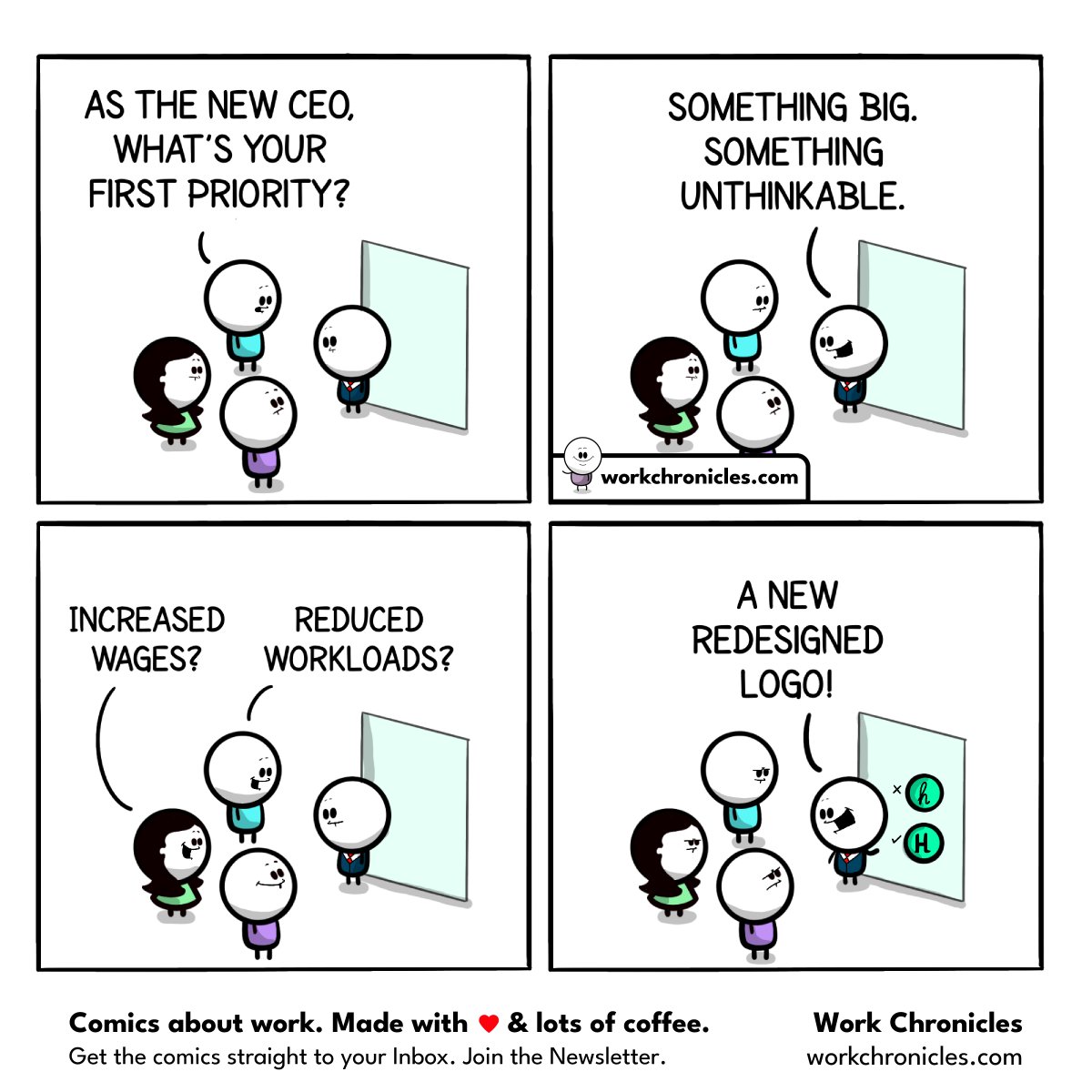
He vivido esta situación de forma repetitiva hasta pensar que era Bill Murray en el día de la Marmota. Personas con un sueldo muuucho mayor que el mio, plantean un avance inaudito con un cambio de imagen corporativa, una remodelación de las oficinas o una campaña de marketing.
@david_bonilla Madre mía, esto seguro que es un efecto colateral de los adults only hotels. Existe la posibilidad de que esta persona de niño no pudo acceder a uno y ahora se toma la revancha.
En cualquier caso, parece que vivimos en un mundo donde está prohibido crecer...
No es muy recomendable criticar la realidad desde la no implicación. No usar la neutralidad para no mojarse y eludir la responsabilidad del cambio. Si uno quiere impulsar el cambio ha d estar necesariamente implicado.
“El antropólogo es un especialista que critica y ama la realidad desde la implicación, ya que no se acomoda nunca a la realidad.”
José Luis Anta Félez. Antropólogo y profesor universitario.
5 signs your company believes in work-life balance:
1. Work fits around life. Not the other way around
2. You’re trusted to manage your time (like an adult)
3. A sunny day is a valid reason to take off
4. Output > hours worked
5. Burnout isn’t a badge of honor
📸 @lizandmollie
En la mayoría de los usos del chatbot de chatgpt éste de convierte en una alternativa mucho más útil que el buscador de cualquier navegador. Al final las personas solo quieren respuestas fáciles a dilemas más o menos importantes.
En mis 30 años de vida laboral no he tenido nunca un onboarding que calificase de satisfactorio. Por norma general he tenido que buscarme las castañas prácticamente solo mientras algunos ponían barreras de cristal que había que romper. Este meme es literal.